 Drapehaus
Drapehaus
Preparing the room
Drapehaus
Preparing the room
Comfort Meets Design.
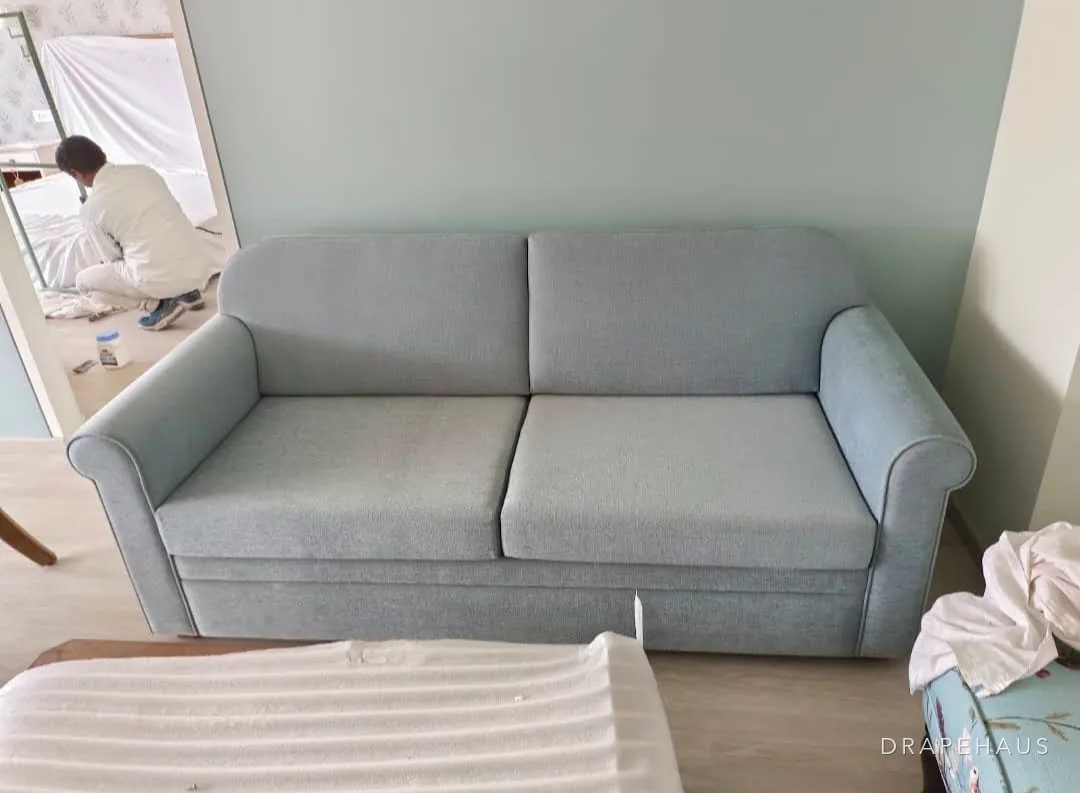
Seating made to size, which matters in Goan houses where rooms are rarely the proportions furniture is manufactured for. Frames are built first and covered second, in fabric rated for how the sofa will actually be used.
Durability scale (Martindale rubs, BS 2543)
15k
20k
25k
30k
40k
Who uses it
Where it lives
How it is used
Durability to ask for
30,000+ rubs
Severe domestic / general contract
Removable covers
Yes
zipped, washable, and a spare set
Fibres that suit
Avoid: Anything you cannot clean in place, on a piece used every day. Rub count is one number among several — weave, colour-fastness and how a fabric handles humidity matter as much. We bring samples to see in your room.
Our sofa collection
In short
By the Drapehaus studio · How we write
Is it right for you?
A sofa is the one piece of furniture most people use every day, and in coastal Goa it has to cope with more than daily use. Monsoon humidity on the coast sits between 83 and 91 per cent for four months, houses are often closed for weeks at a time, and older rooms rarely match the proportions that factory sofas are designed around. A sofa made to size answers all three: it is built for the room, from materials chosen for the climate.
Made-to-measure seating suits people who plan to keep a sofa for a long time, who have rooms with awkward alcoves, deep windows or tall ceilings, or who let a property and need something that survives many guests. It is also the right route when the sofa has to climb a narrow stair or pass through an old doorway.
It is not the right route for everyone. If you need a sofa next week, or you expect to move house and change rooms soon, a well-made stock piece may serve you better. And if you already own a sofa with a sound hardwood frame, reupholstering it is often the more sensible choice.
Your options
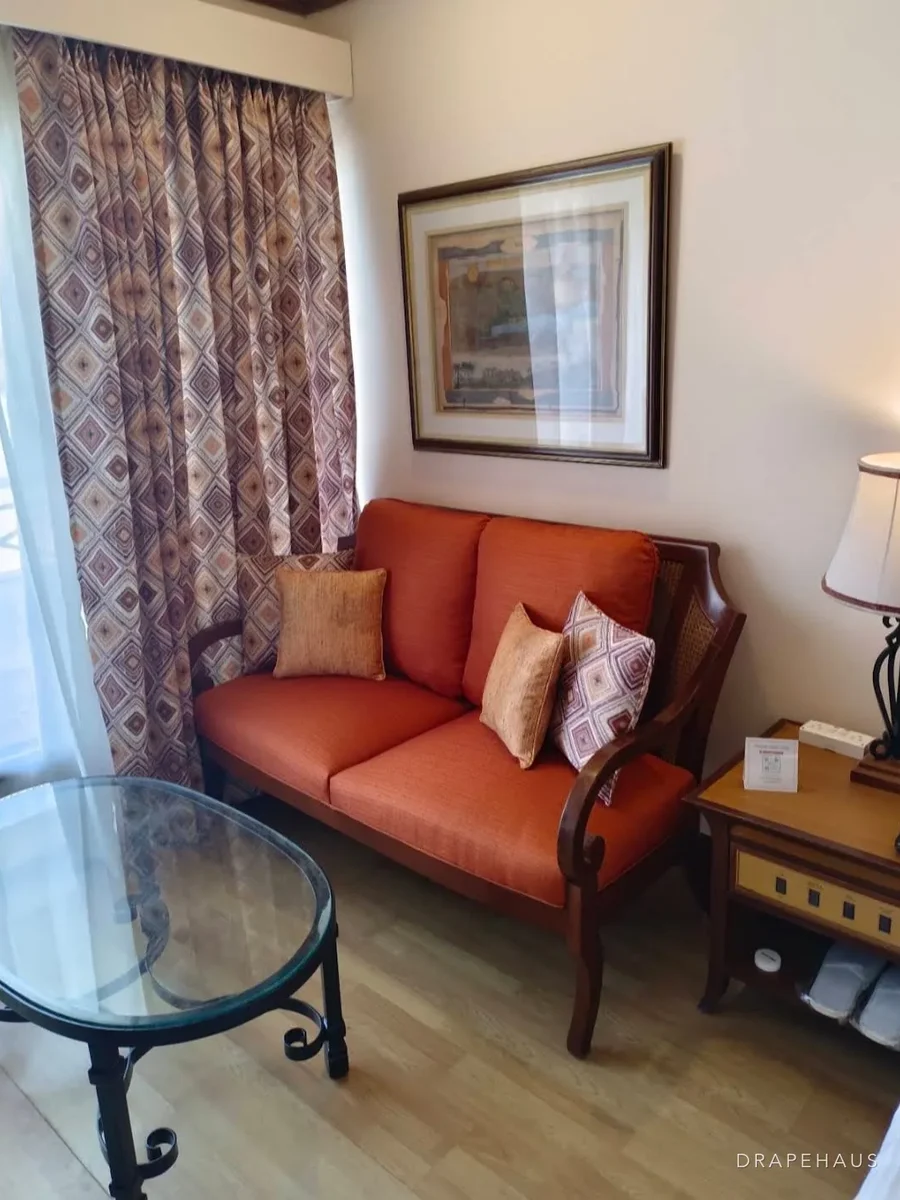
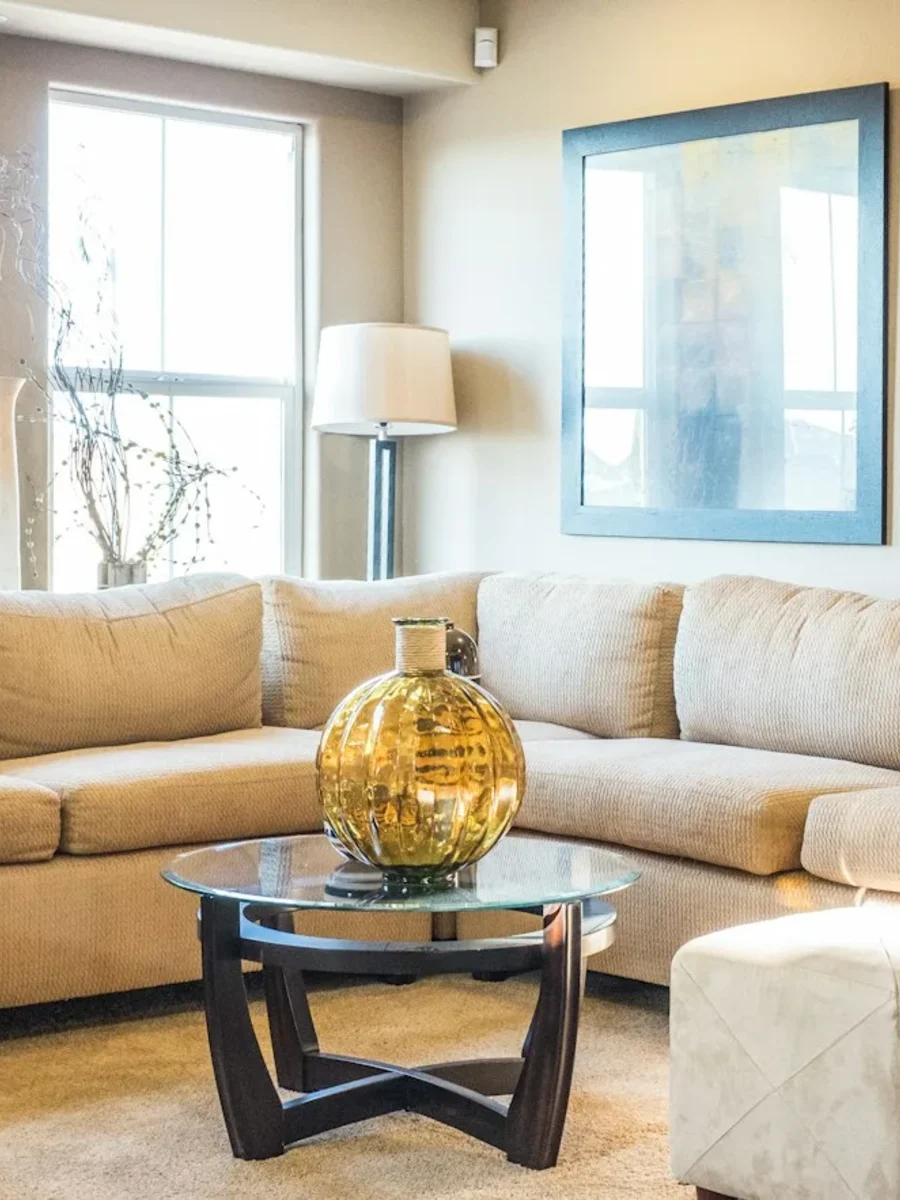
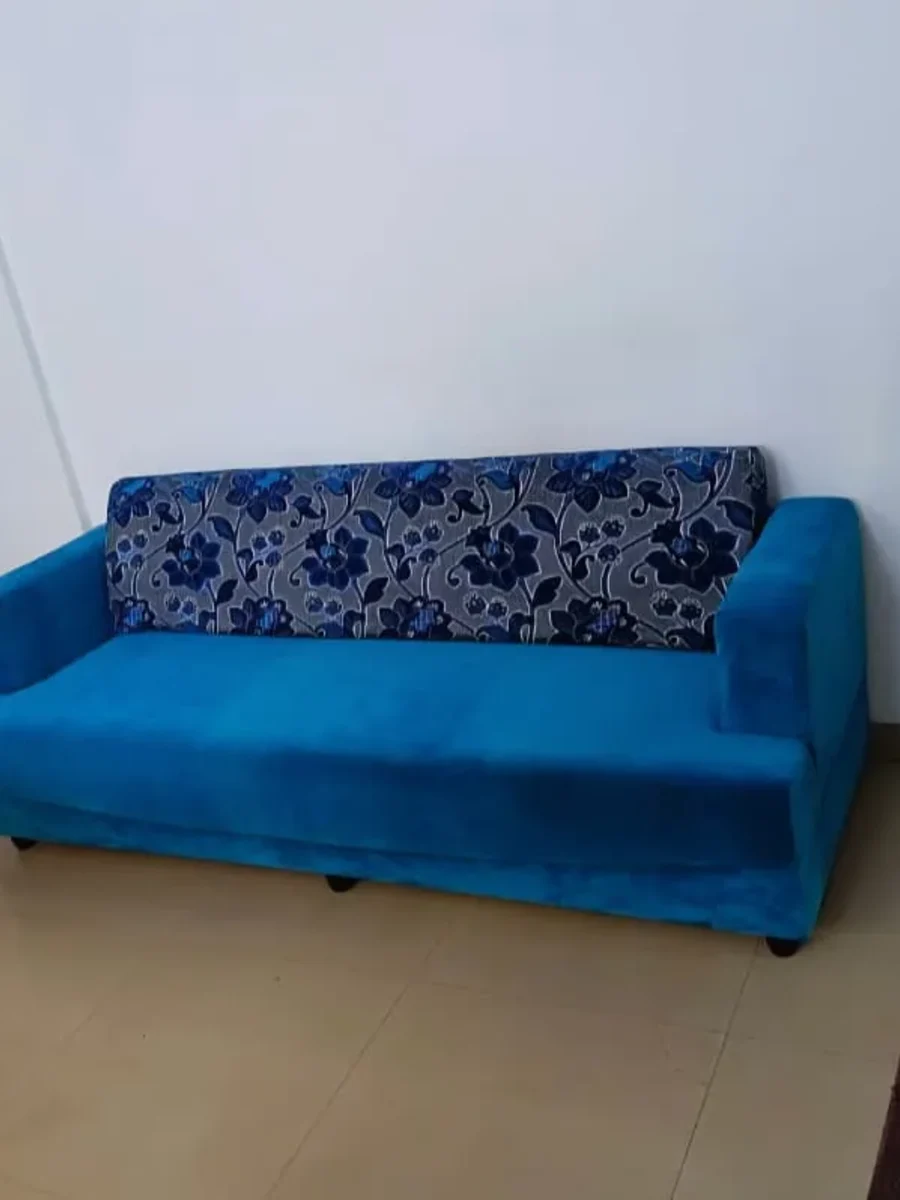
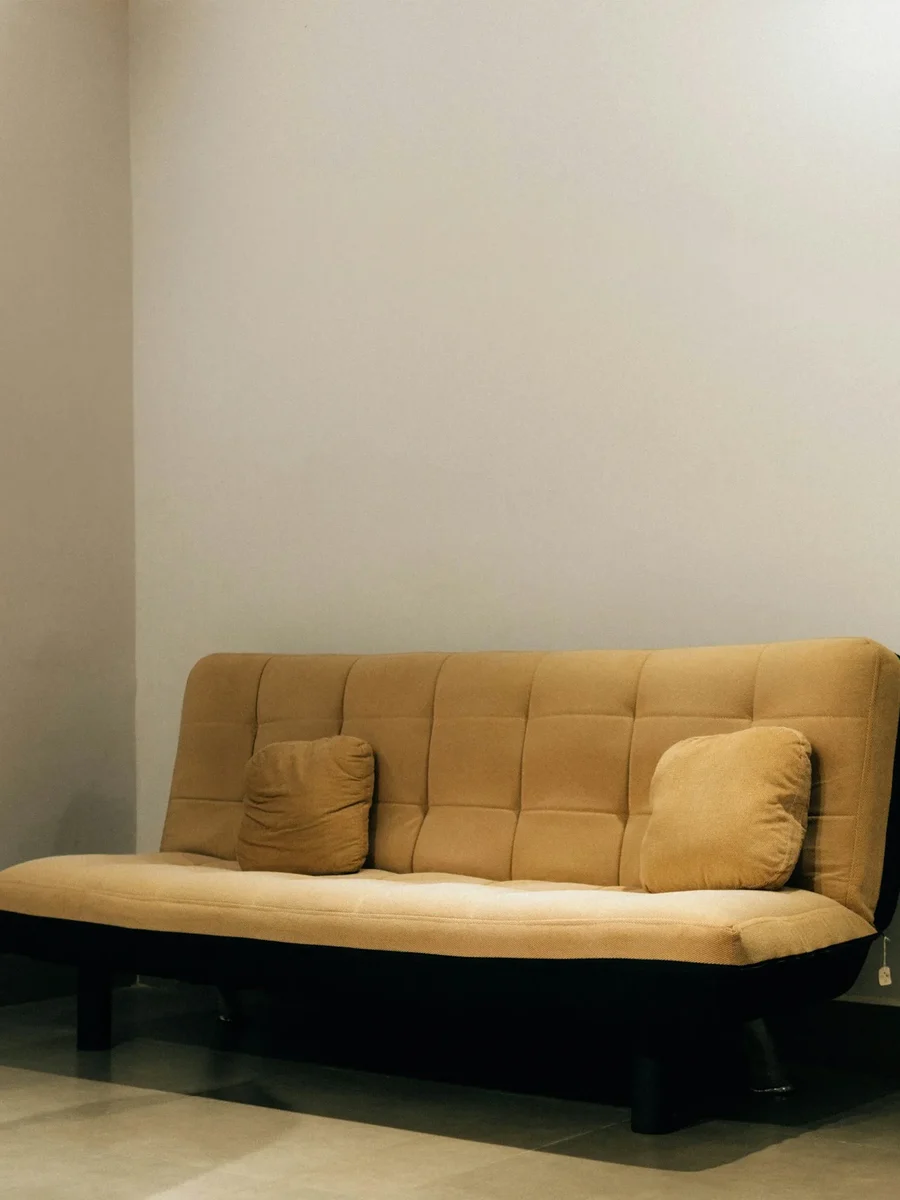
Most rooms point clearly to one type once you know how many people sit there, what else happens in the room and how the furniture has to arrive. Start with the use, not the style.
Swipe for all 4 →
The honest view
Fits the room exactly
The length, depth and scale are set by the room rather than a catalogue, so the sofa fills an alcove, sits under a window or holds its own in a high-ceilinged heritage room without looking undersized.
Built for the climate
Frame timber, foam, webbing and fabric are specified for humidity and salt air, rather than for the dry, air-conditioned showroom a mass-produced sofa was designed to be sold in.
Comfort set to you
Seat height, depth and firmness can be tuned to the people who use the sofa most, which matters for tall households, older family members and anyone who reads or works from the sofa.
Fabric rated for the use
Upholstery is chosen by Martindale rub count and fibre, so a family sofa or a rental lounge gets a fabric that will genuinely last the life of the frame.
It takes time
A made-to-measure sofa is built after the design and fabric are agreed, so there is a wait of typically several weeks. It is not the answer if you need seating immediately.
You cannot sit on it first
You are specifying rather than trying a finished piece. We bring foam and fabric samples and talk through seat dimensions, but some people prefer to test a finished sofa.
Harder to resell or reuse
A sofa built to one alcove may not suit the next house. Straight sofas and modular sectionals travel better than pieces made for a single wall.
Decisions to make
Frame, fill, fabric, arms, legs and covers are all choices. We guide each one, but it is more involved than choosing from a showroom floor.
Side by side
The four types solve different problems. This comparison covers the points that usually decide it: seating, flexibility, access and how well each suits a rental.
| Custom sofa | L-shaped / sectional | 2 & 3 seater | Sofa cum bed | |
|---|---|---|---|---|
| Seats | Set by design | Most people per piece | Two to three | Two to three |
| Layout flexibility | Moderate | Low, fixed to corner | High, easy to move | Moderate |
| Access through old doors | Planned per piece | Easy in sections | Easy for most lengths | Heavier, needs checking |
| Removable covers | Possible | Possible per section | Possible | Strongly advised |
| Sleeping | No | Chaise for naps | No | Proper bed |
| Rental suitability | Good | Good in family villas | Very good | Very good |
| Best room | Formal drawing room | Open-plan family room | Any room | Study or guest room |
Swipe to compare →
A custom sofa can be any of the other shapes. The difference is how far the design starts from your room rather than a fixed pattern.
Rather see it in your own room?
We bring samples to the house, measure every window, and specify for the light and exposure you actually have.
Room by room
The main sofa earns a made-to-measure frame most of all. Choose a sectional for an open-plan family room, or a pair of straight sofas facing each other for a formal drawing room.
A compact two-seater at the foot of the bed or in a window bay gives a place to sit that is not the bed. Keep the depth modest so the room still flows.
A sofa cum bed turns a study into a guest room when needed. A firmer, more upright seat suits reading and laptop work better than a deep lounging sofa.
An open verandah takes driven rain, salt and strong light. Use outdoor-rated fabric, quick-draining foam and a frame that tolerates wetting, or bring cushions in during the monsoon.
A sofa cum bed with washable removable covers adds a sleeping place. Choose a fabric of at least a severe domestic rating, since use by many guests adds up quickly.
Tall rooms swallow small furniture. A long sofa, a deep sectional or a pair of sofas set at the right scale stops the seating looking lost beneath the ceiling.
In depth — tap a heading to read
Upholstery fabric is graded by the Martindale abrasion test, which rubs the cloth until it shows wear. Under BS 2543 the classes run from light domestic at 15,000 rubs, through general domestic at 20,000 and heavy domestic at 25,000, to severe domestic or general contract at 30,000 and severe contract at 40,000. The class tells you how the fabric will hold up to real use, not how it looks on the swatch card.
For an occasional sofa in a formal room, general domestic is enough. For the family sofa that is sat on every evening, aim for heavy domestic or above. A rental villa lounge or a homestay sitting room should be treated as contract use, because many different guests produce far more wear than one household.
Rub count is only half of the decision here. Monsoon relative humidity on the Goan coast runs between 83 and 91 per cent, well above the 60 per cent the US EPA gives as the level at which mould becomes likely. Fibres that absorb moisture, such as cotton, linen and viscose, hold that damp and give mildew somewhere to grow. Polyester, solution-dyed acrylic and good blends absorb very little and dry quickly.
Choose the fibre for the climate and the rub count for the use. A fabric has to pass both tests.
Start from how the room is used rather than how many seats you want. Mark out the walkways first: the route from the door to the garden, the path to the dining table, the space in front of a cupboard. The sofa goes where it does not block these, and its length follows from what is left.
Scale matters as much as length. A low, compact sofa looks lost in a heritage room with a high ceiling and deep window reveals, while a large sectional crowds an apartment living room. We look at ceiling height, window proportion and the size of the other furniture before settling on arm height and back height.
Older Goan houses have narrow doors, steep timber staircases and sharp turns at landings, and a sofa that fits the room may not fit the route to it. We measure every doorway, stair width, headroom and turn on the way in, including gates and garden paths, before the frame is designed.
Where the route is tight there are several answers. Sectionals are built in pieces that join in the room. Straight sofas can be made with bolt-on arms or legs, or with a back that detaches. In a few cases the only practical route is through a window or balcony, which we identify at the survey rather than on the delivery day.
Measure the narrowest point on the route, not just the front door. It is usually a landing or an internal doorway.
A house closed for the monsoon has no air moving through it and no one noticing the first signs of damp. Upholstery absorbs moisture slowly and releases it slowly, so a sofa can smell musty after a few weeks shut up even if the room looks dry. Dehumidifiers, or at least regular airing by a caretaker, protect the upholstery as much as anything else in the house.
For rental villas and homestays we think in terms of turnover. Removable covers in a durable, washable fabric let housekeeping restore the sofa between guests. Darker or mid-tone colours and fine patterns hide wear better than pale plains, and a spare set of covers keeps the room in service while one set is being cleaned.
Living with it
Salt, sand and grit work into the weave and abrade the fibres every time someone sits down. A soft brush attachment once a week removes it before it does damage.
Rotate seat and back cushions so wear and foam compression spread evenly. Loose fibre-filled backs need plumping daily to keep their shape.
Run fans or a dehumidifier, and do not push the sofa hard against an external wall, where it will pick up condensation from the laterite.
Strong UV through windows fades colour and weakens fibres. Draw sheers in the afternoon, or place the sofa out of direct light.
Clean it, let it dry fully, cover it with breathable cotton sheets rather than plastic, and arrange airing while you are away.
Avoid these
The sofa fits the wall but not the staircase. Measure every door, turn and landing on the way in, and design the sofa around the tightest one.
A beautiful linen that suits a dry climate can mildew here within a season. Check the fibre and the Martindale rating, not just the colour.
Very deep seats look inviting but leave shorter people perched on the edge. Match depth to the people who sit there, or plan for back cushions to bring it forward.
Two sofas can look identical and last very different lengths of time. Ask what the frame is made of, whether it is kiln-dried and how it is treated.
A sofa used by many guests needs cleaning more often than a family sofa. Without removable covers, every stain means professional cleaning in place.
Checklist
Made to size
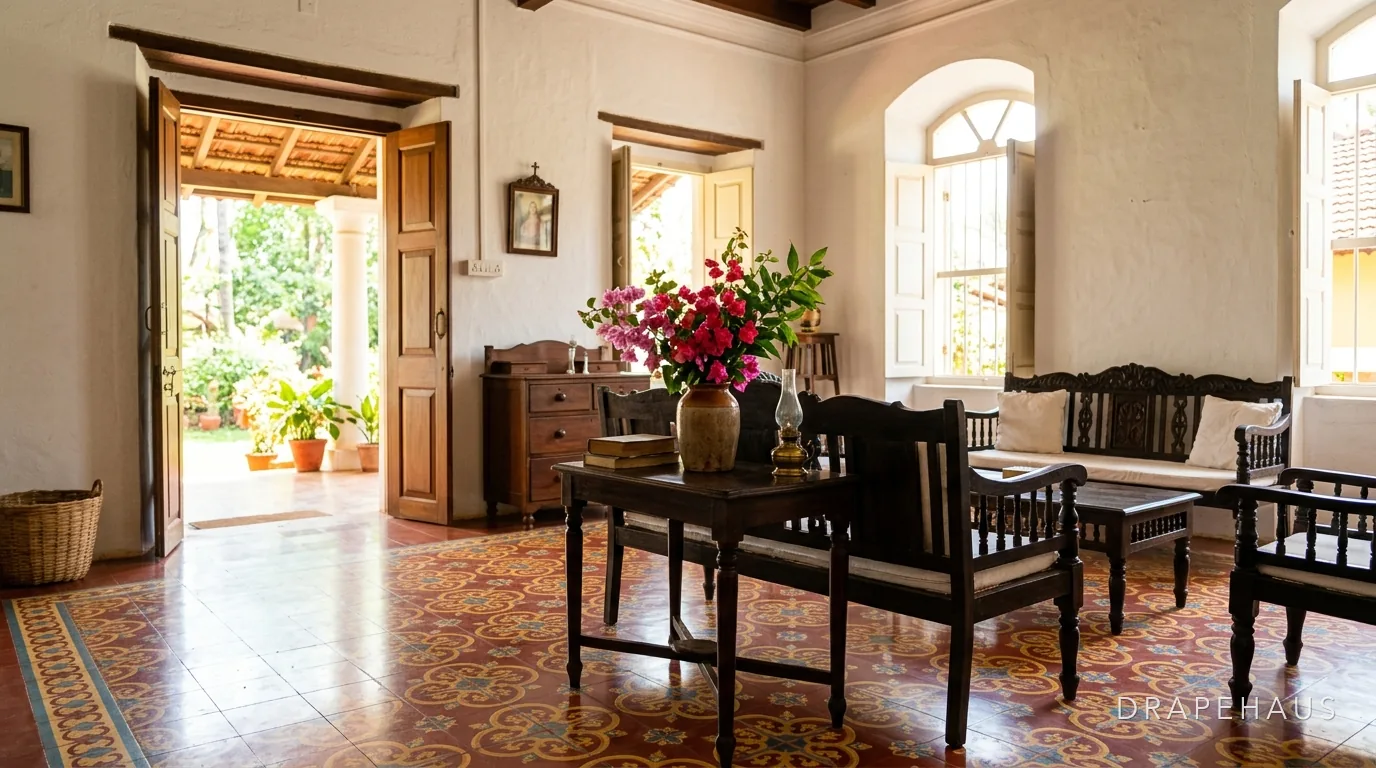
We measure the room, the doorways and the stairs before a frame is built, so the sofa fits the space and actually gets into it. Depth, seat height and cushion firmness are set to how you sit, and covers can be made removable for washing.
Our work
From the Journal
All articlesFAQ
Yes. Every sofa is built to the room's measurements, including doorway and stair access.
Often, yes — if the frame is sound, reupholstering it costs less than replacing it. See our upholstery work.
Performance and blended fabrics resist damp and fading better than pure natural fibres, especially near the sea.
A kiln-dried, treated hardwood frame with high-density foam and a synthetic or performance upholstery fabric. Polyester, solution-dyed acrylic and good blends absorb very little moisture, so they resist mildew far better than pure cotton or linen during the monsoon, when humidity stays well above the level at which mould becomes likely.
For an everyday family sofa, aim for heavy domestic, 25,000 rubs on the Martindale scale or more. Occasional seating can use general domestic at 20,000. A rental or homestay sofa should be treated as contract use, at 30,000 to 40,000 rubs, because many different guests wear it faster than one household.
A sectional seats more people in less floor space and suits an open-plan family room. Two sofas facing each other suit a formal drawing room and conversation, are easier to rearrange, and are simpler to carry through narrow doors. Think about how the room is used most evenings before you decide.
Usually, yes. We measure the route before designing the frame, then build in sections, with bolt-on arms or legs, or with a detachable back so each piece passes the tightest point. In rare cases a window or balcony is the better route, which we identify at the survey.
Next step
We come to the house, measure the room and every door, stair and turn on the way to it, and talk through how the sofa will be used. We bring fabric and foam samples so you can see the colours in the room's own light and feel the seat firmness. Once the design, fabric and covers are agreed, we build the frame, upholster it and deliver and place it. Book a home visit and we will start from the room itself.
Fabrics for the climate
Specified for salt, sun and monsoon.
Measured on site
Every window, every time.
Fitted by our team
The people who plan it, fit it.
Rooted in Goa
A local workshop serving North and South Goa.