 Drapehaus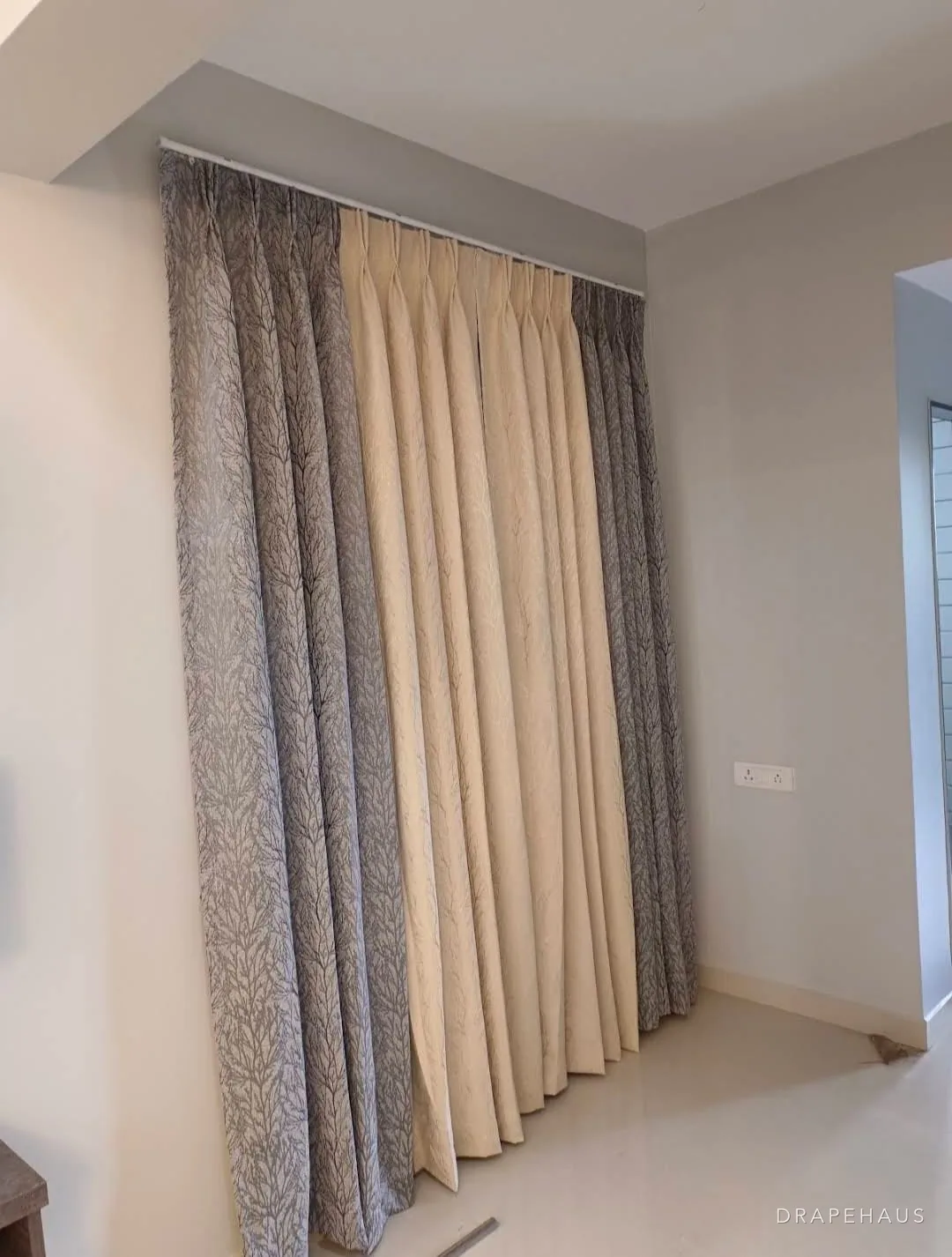
Drapehaus
Preparing the room
Drapehaus
Preparing the room
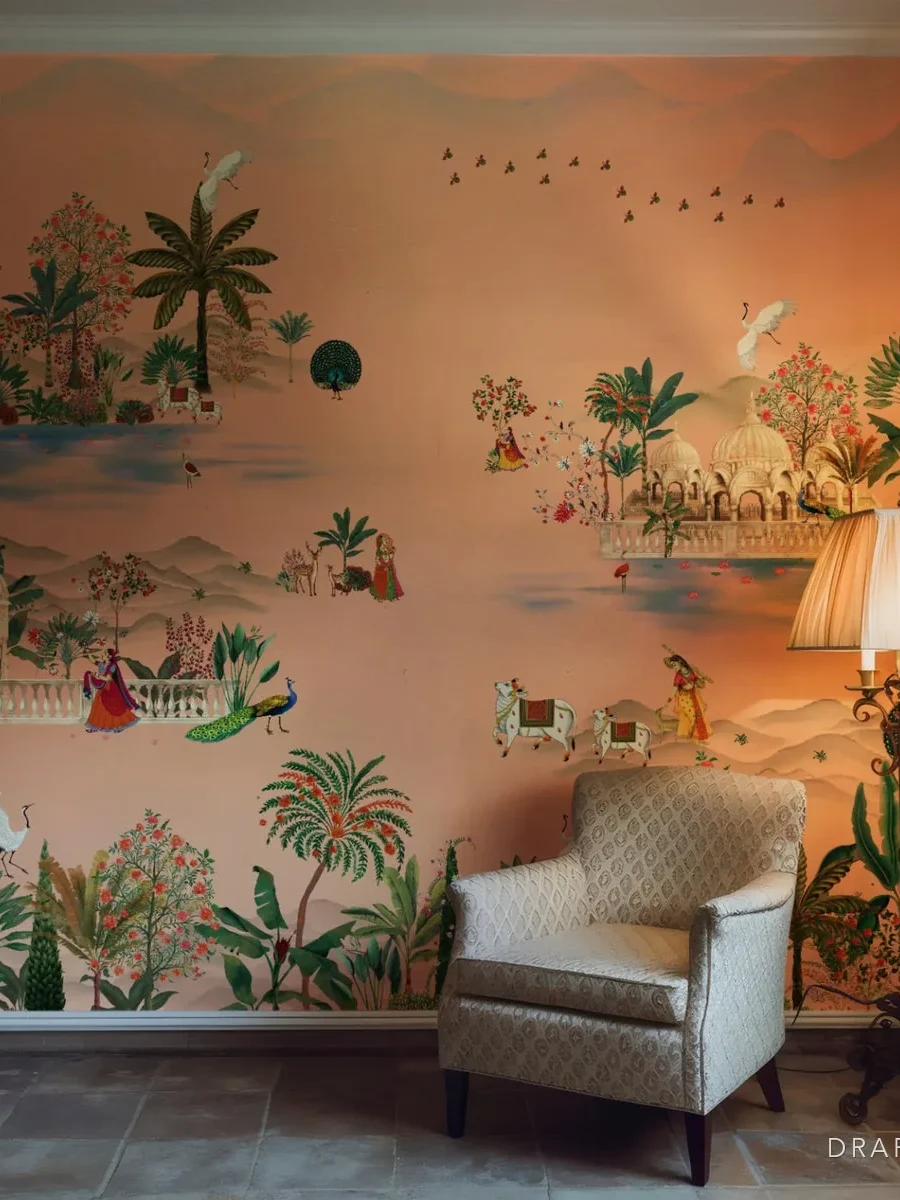
Textures that Tell Stories.
Wallpaper in this climate lives or dies on two things: whether the wall behind it is dry, and whether the paper and adhesive can cope with humidity. We assess the wall first, then choose the covering — for homes and for commercial spaces alike.
Pattern
Walls (width in metres)
Roll width
Pattern repeat
Rolls to order
5
4 + 1 spare, same batch
Drops
12
3 per roll
Wall area
17.4 m²
before doors and windows
An estimate for planning, assuming 10 m rolls. Doors and windows rarely save a whole drop, so they are not deducted. We measure and count drops on site before anything is ordered.
Our wallpaper collection
In short
By the Drapehaus studio · How we write
Is it right for you?
Wallpaper is a printed or textured covering bonded to a prepared wall with an adhesive. That definition matters here, because every part of it is a moisture question. The paper responds to the air in the room, the adhesive is organic unless it is treated, and the wall behind is either dry and sound or it is not. When all three are right, wallpaper gives a room pattern, depth and warmth that paint cannot reach.
It suits rooms that are lived in and ventilated, walls that stay dry through the monsoon, and owners who want a room to carry a strong idea: a botanical dining room, a textured bedroom, a quiet stripe in a study. It also suits hotels and restaurants that need a finish that can be repeated room after room and scrubbed after a busy season.
Choose something else if the wall has a history of damp that has not been traced, if it is an old lime-plastered wall that needs to breathe, or if the room will sit closed and unventilated for months with nobody running a dehumidifier. In those rooms a limewash, a breathable mineral paint or a textured plaster will outlast any paper, and we will say so at the visit.
This page is the overview. The two pages beneath it go deeper: home wallpaper covers feature walls, whole rooms and pattern matching, and commercial wallpaper covers contract-grade durability, fire performance and specifying for many rooms at once.
Your options
Most wallpaper decisions come down to where it is going and how hard that room will be used. These are the routes we most often specify, from a single wall in a bedroom to a full hotel corridor.
Swipe for all 6 →
The honest view
Pattern and texture paint cannot give
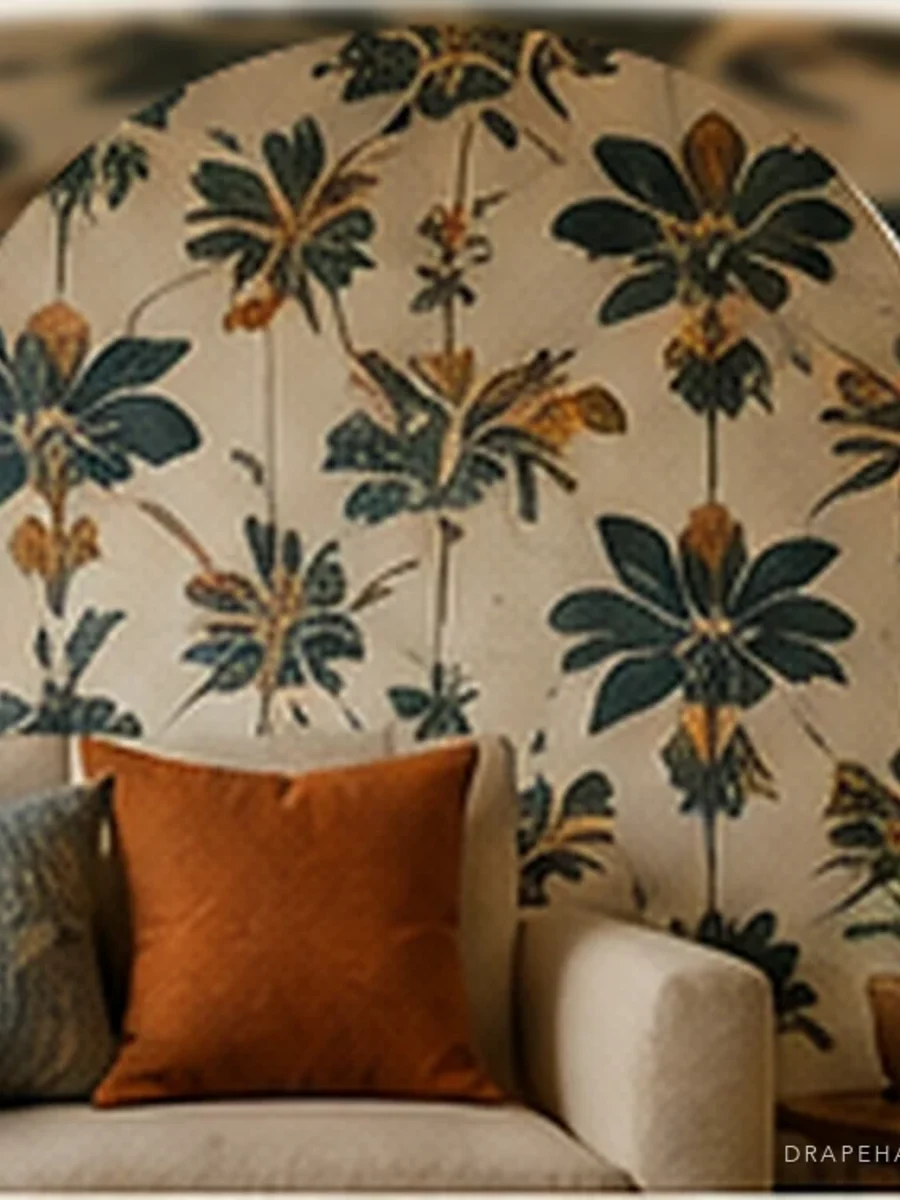
Printed pattern, woven texture and depth of colour change how a room reads in a way no paint colour can. A single wall of the right paper can carry a room's whole scheme, from the curtains to the cushions.
Hides minor surface imperfections
A textured or heavier paper disguises small undulations and hairline cracks in older plaster that would show under flat paint, provided the plaster itself is sound and dry.
Washable options for hard-working rooms
Vinyl and contract coverings can be wiped and, in the heavier grades, scrubbed. For children's rooms, corridors and hotel rooms, that makes wallpaper more practical than painted walls that need regular touching up.
Repeatable for multi-room projects
A recorded paper, batch and hanging method can be reordered and matched when rooms are refurbished later, which gives hotels and rental portfolios a consistent finish across many rooms.
Removable when properly hung
Non-woven papers hung over a proper wallcovering primer usually strip off dry in whole lengths, so a room can be refreshed without damaging the plaster beneath.
Unforgiving of damp walls
Any moisture in the wall shows as lifting seams, bubbles or black spotting. A paper cannot fix damp; it only hides it until it fails. The wall has to be tested and put right first, which can add time.
Some papers seal walls that need to breathe
Vinyls and heavily coated papers stop a wall releasing moisture into the room. On lime plaster over laterite, that traps water behind the paper and can damage the plaster itself.
Closed houses are a hard test
A house shut for the monsoon with no airflow or dehumidification can grow mould behind or on a paper within weeks. Owners who leave for the season need a plan for the wallpapered rooms.
Repairs depend on a spare roll
Colour varies slightly between print batches. A damaged drop can only be replaced invisibly from a roll of the same batch, so a spare needs to be kept, stored flat and dry.
Side by side
The choice is rarely wallpaper or nothing. These are the four finishes we weigh most often for a wall in a coastal house, on the criteria that decide how they will live.
| Home wallpaper | Commercial wallcovering | Paint | Limewash | |
|---|---|---|---|---|
| Pattern and texture | Widest choice | Good, more restrained | Colour only | Soft, clouded texture |
| Tolerance of humidity | Good if substrate suits | Good, sealed surface | Good with right paint | Excellent, breathes |
| Suits heritage lime walls | Breathable papers only | Rarely | Mineral paints only | Yes, natural partner |
| Cleaning | Wipe or dust | Scrubbable grades | Wash or repaint | Dust; refresh coats |
| Knocks and scuffs | Moderate | High resistance | Touch up easily | Touch up easily |
| Fire performance on record | Rarely needed | Specified where required | Depends on paint | Mineral, non-combustible base |
| Refresh cycle | Long if wall is dry | Long, reorderable | Short and simple | Recoat as it weathers |
Swipe to compare →
On a sound, dry internal wall, wallpaper is usually the richest finish. On a wall that has to breathe, limewash is usually the most durable one.
Rather see it in your own room?
We bring samples to the house, measure every window, and specify for the light and exposure you actually have.
Room by room
A feature wall behind the sofa or a texture through the room works well in a lived-in, ventilated space. Keep delicate papers off walls opposite large west-facing openings, where strong sun and humid air meet.
The wall behind the bed is the classic wallpaper wall. It is usually internal, protected from rain and out of direct sun, and a bedroom with air conditioning keeps humidity down through the monsoon.
Choose a washable non-woven or light vinyl that can be wiped clean, and a pattern with enough life in it to outlast a phase. Avoid anything textured or delicate at hand height.
Only a washable vinyl on an internal wall, well away from the shower, with an extract fan and fungicidal adhesive. A powder room with no shower is far easier to paper than a full bathroom.
Possible on a wall away from the hob and sink, in a wipeable vinyl. Steam, grease and splashes defeat anything else, and a tiled splashback still does the hard work.
A study is often the best room in the house for a whole-room paper: a stripe, a grasscloth-effect vinyl or a small repeat that makes the room feel enclosed and calm, and it is usually air conditioned.
A single feature wall in a durable, washable paper gives a guest room character without much risk. Specify something reorderable and keep a spare roll, because guest rooms take knocks from luggage.
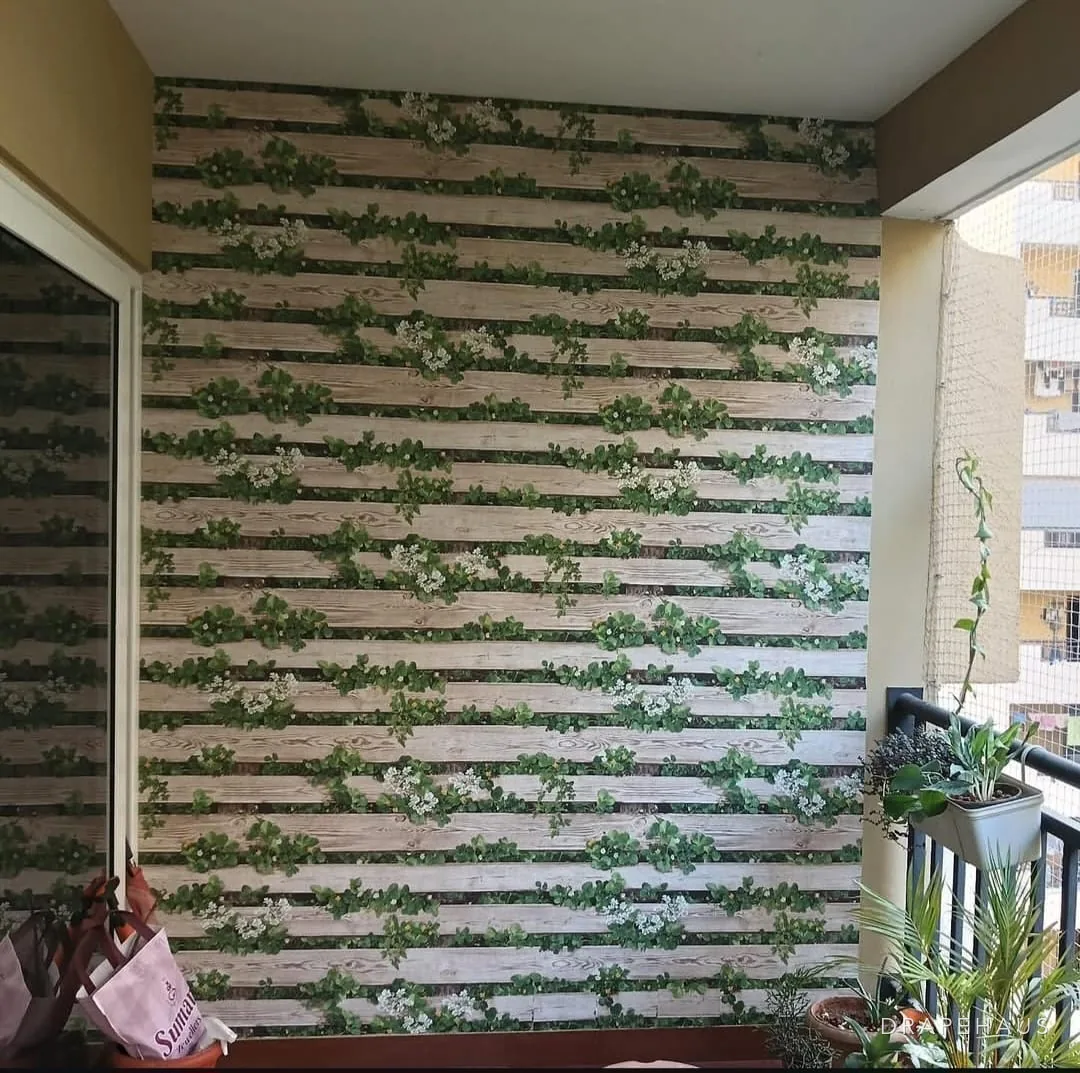
Open to rain, salt and changes in humidity, a verandah is not a place for wallpaper. A limewash, textured plaster or painted finish will stand up to the weather far better.
In depth — tap a heading to read
The first question is not which pattern but which wall. Internal walls, between two rooms of the same house, stay the driest and are the natural home for fine or delicate papers. External walls are more variable: a wall sheltered by a deep verandah may be perfectly dry, while one facing the monsoon wind can take in moisture from June to September. We read each wall separately before recommending anything.
The second is how the room is used. A bedroom or study with air conditioning holds a steadier humidity and can take a paper-backed or natural covering. A living room with doors open to the garden swings with the weather, so a non-woven substrate that moves less is the safer choice. Bathrooms, kitchens and children's rooms need a surface that can be wiped. Hotel rooms, corridors and restaurants need a contract grade that can be scrubbed and repeated.
The third is how long the room will be left alone. A room that is lived in every day will look after its wallpaper through ordinary use and airflow. A room in a second home that stands closed for months needs either a covering that tolerates humidity well or a plan to keep the air moving.
Most domestic wallpaper comes in a standard roll of 0.53 m wide by 10 m long, although designer and contract papers are also made in other widths and lengths. The number of full-height drops you get from a roll depends on the height of the wall and on the pattern repeat, because every drop has to start at the same point in the design. A tall wall with a large repeat can waste a surprising amount of each roll.
That is why we measure on site and calculate from the actual wall rather than from floor area. We count drops, allow for the repeat and for trimming at ceiling and skirting, and add a spare for future repairs. All rolls for one room should come from a single print batch, because colour can vary slightly between batches, and the batch number is recorded so it can be matched later.
Order every roll for a room from one batch, plus a spare, and record the batch number.
The substrate is the base the design is printed on, and it decides how a paper behaves. Non-woven blends cellulose and synthetic fibre; it is stable, hung by pasting the wall and strips dry. Traditional paper is pure cellulose; it expands when pasted and moves with the seasons. Vinyl adds a plastic surface to a paper or fabric backing so it can be wiped. Grasscloth and silk are natural materials laminated to paper, beautiful and demanding.
In a humid coastal house, non-woven is the default for living spaces, vinyl for wet rooms and contract use, and the natural coverings are kept for sealed, air-conditioned rooms. Our journal piece on luxury wallpaper in humid homes goes into how each one behaves at monsoon humidity; the two pages beneath this one show how that plays out in a home and in a commercial building.
A papered wall is one layer in a room that also has curtains, blinds, rugs and upholstery, and the scheme works when those layers are chosen together. The simplest rule is that only one of them should carry the dominant pattern. A strong botanical paper wants plain or textured curtains in one of its colours; a patterned curtain wants a quiet paper behind it.
Scale matters as much as colour. A large-scale paper next to a small, busy curtain print reads as clutter, while two patterns of clearly different scale, a wide stripe with a small geometric, can sit together comfortably. Because we make the curtains, blinds and upholstery as well, we bring the paper, fabric and trimming samples to the room together and look at them in its own light, morning and afternoon.
Goa's monsoon is the defining test. India Meteorological Department normals put morning relative humidity at 87 to 91 per cent from June to September, and even the afternoons stay above 80 per cent. Mould is generally expected once surface humidity sits above about 70 to 80 per cent for long periods, so a wallpapered wall in an unconditioned room spends the whole season in mould territory.
The practical answers are straightforward. Test the wall and fix any damp before ordering. Use a wallcovering primer and an adhesive with a fungicide. Choose the substrate for the room's humidity, not only for its look. Near the sea, keep salt-laden air off delicate papers by closing up in onshore wind, because salt holds moisture wherever it settles.
The biggest single risk is the house closed for the season. With no airflow and humidity climbing, mould can appear on or behind a paper within weeks. A dehumidifier on a timer, or a caretaker who opens up on dry days, is what keeps the wallpaper intact until the owners return.
A rental villa or hotel room is used harder than a home and judged more quickly. Luggage scuffs corridor walls, chairs knock dining-room walls, and housekeeping cleans more often and less gently. That points to washable and scrubbable grades, papers used on the walls that give the most effect for the least exposure, and a pattern that does not show small repairs.
Just as important is being able to repeat the finish. We record the paper, colourway, batch, adhesive and hanging method for every room, keep a note of spare rolls on site, and plan hanging around bookings, often in the quieter monsoon months when the house can be ventilated and the wall conditions are easiest to judge.
Living with it
Most wallpapers only need a soft brush or a microfibre duster every few weeks. Dust left on a paper in humid air becomes grime that is harder to lift, so regular dusting saves heavier cleaning later.
Washable papers take a barely damp cloth; scrubbable vinyls take a soft sponge with mild soap. Natural and delicate papers take a dry brush only. Test any cleaning on a hidden corner first.
A lifting seam or a small bubble in July is an early warning of moisture in the wall. Note where it is, dry the room, and have it looked at before it spreads rather than simply re-pasting it.
If the house stands empty in the monsoon, run a dehumidifier in wallpapered rooms or arrange for them to be aired on dry days. Keep furniture a hand's width off papered walls so air reaches behind it.
Keep spare rolls flat, wrapped and in a dry, air-conditioned room, with the batch number noted. A spare stored in a damp storeroom will not be usable when you need it.
Avoid these
The paper looks fine for a few months, then lifts and spots. The fix is to take moisture readings first, trace and cure the damp, and only then order the paper.
A sealed vinyl stops lime plaster breathing and traps water behind it. On these walls use a breathable paper or, more often, a limewash or mineral finish instead.
Area calculations ignore the pattern repeat and the height of each drop, and often leave the job a roll short from a different batch. Measure each wall and count drops instead.
Falling for a grasscloth and then finding the only available wall faces the monsoon leads to disappointment. Assess the walls first, then choose from what those walls can carry.
A beautifully hung room closed for four months without air can grow mould. Decide before hanging who will air the room or run a dehumidifier while the house is empty.
Checklist

Wall assessment first
Before anything is hung we check the wall for damp, salt and a sound surface. No wallpaper fixes a wall that is carrying moisture — it just hides it until the paper lifts. Where an old lime-plastered wall needs to breathe, we will say so and suggest a finish that lets it.
Our work
From the Journal
All articlesFAQ
Always. We look for damp, salt and loose plaster, because no wallpaper survives on a wall that is carrying moisture.
Washable vinyls for bathrooms and kitchens; breathable papers for living rooms and old plastered walls that need to release moisture.
Yes — hotels, restaurants, offices and retail, with contract-grade and fire-rated coverings where needed.
Yes, in the right rooms and on the right walls. A non-woven or vinyl paper, hung on a dry wall with a primer and a fungicidal adhesive, lasts well in a ventilated or air-conditioned room. The failures come from damp walls, the wrong substrate for the room, or a house left closed without airflow through the monsoon.
It depends on the wall's width and height and the pattern repeat, not just its area. With a standard 0.53 m by 10 m roll, you divide the wall width by the roll width to get the number of drops, then work out how many drops each roll yields once the repeat is allowed for. We measure on site and add a spare.
On a dry, sound wall in a room with sensible humidity, a good paper lasts many years and is usually changed for fashion rather than failure. Its life is shortened by damp in the wall, direct strong sun on light-sensitive papers, and seasons of closed-up humidity. The wall and the room decide its life more than the paper does.
It can, in an air-conditioned or dehumidified room, and the monsoon is when damp problems show most clearly, which is useful for judging a wall. Adhesive dries more slowly in humid air, so the room needs to be kept dry for a few days after hanging. External walls are best judged and papered once the rains have eased.
Non-woven papers hung over a wallcovering primer usually strip off dry in full lengths, leaving the wall ready for the next finish. Traditional papers and vinyls may need soaking or steaming. Paper hung straight onto unprimed plaster is the hardest to remove, and can take the surface of the plaster with it.
Paint gives colour and is easy to change; wallpaper gives pattern, texture and depth that paint cannot. For a bedroom headboard wall or a dining-room end wall that is dry and internal, wallpaper usually gives the stronger result. For a wall that takes rain or needs to breathe, a limewash or mineral paint is the better choice.
Next step
A Drapehaus visit begins with the walls themselves. We take moisture readings, check the plaster and note which walls stay dry through the monsoon, then bring paper samples to see in the room's own light alongside any curtain or upholstery fabrics. From there we measure each wall, calculate the rolls from the repeat, specify the primer and adhesive, and hang the paper ourselves once the wall is ready. If you are considering wallpaper for a home or a commercial space, book a home visit and we will start there.
Fabrics for the climate
Specified for salt, sun and monsoon.
Measured on site
Every window, every time.
Fitted by our team
The people who plan it, fit it.
Rooted in Goa
A local workshop serving North and South Goa.