 Drapehaus
Drapehaus
Preparing the room
Drapehaus
Preparing the room
Sofas
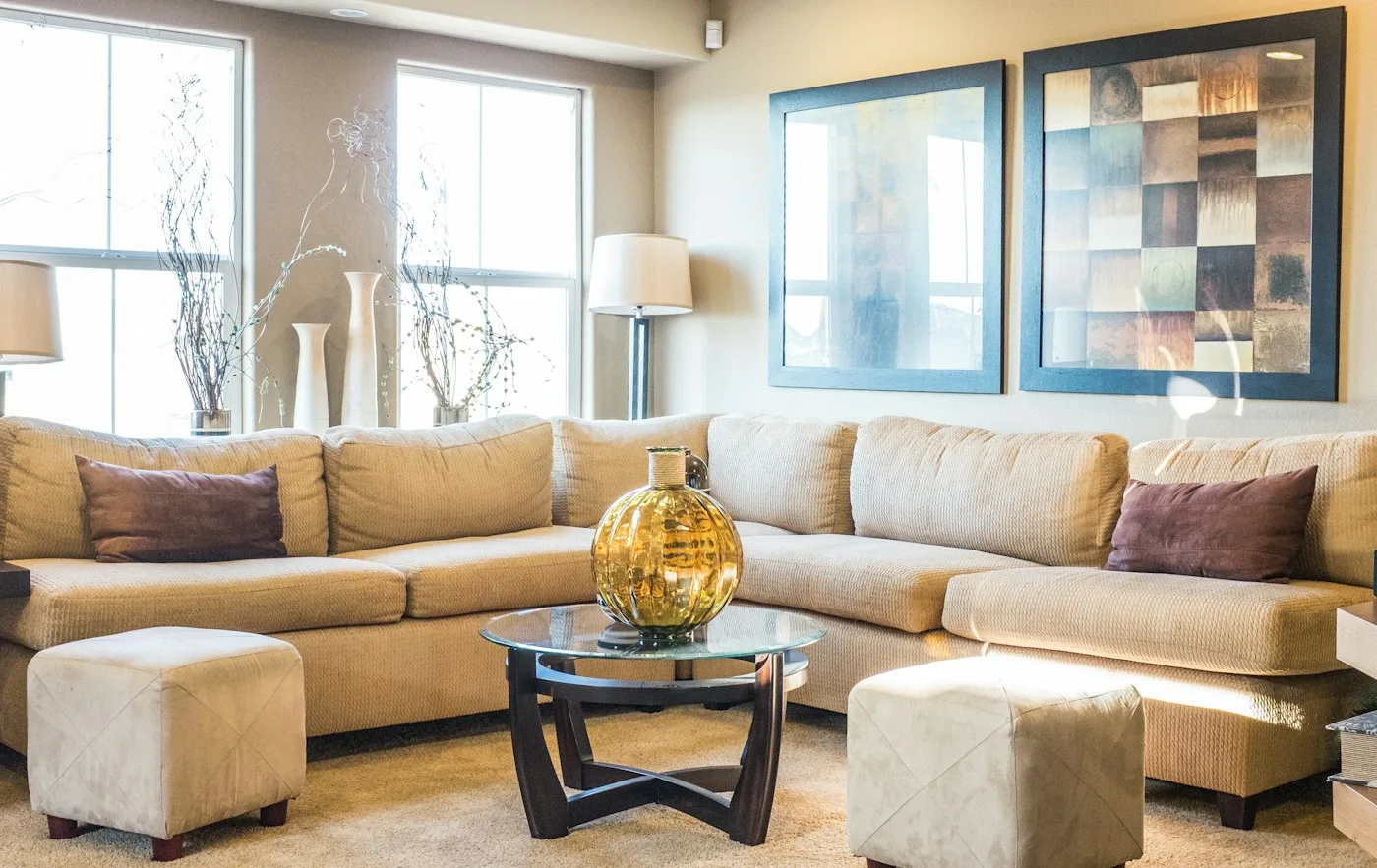
Corner and sectional sofas seat the whole family and define a living area in an open-plan room. Made to size, they fit the corner exactly rather than nearly.
Durability scale (Martindale rubs, BS 2543)
15k
20k
25k
30k
40k
Who uses it
Where it lives
How it is used
Durability to ask for
30,000+ rubs
Severe domestic / general contract
Removable covers
Yes
zipped, washable, and a spare set
Fibres that suit
Avoid: Anything you cannot clean in place, on a piece used every day. Rub count is one number among several — weave, colour-fastness and how a fabric handles humidity matter as much. We bring samples to see in your room.
In short
By the Drapehaus studio · How we write
Is it right for you?
An L-shaped or sectional sofa does two jobs. It seats more people on less floor area than separate sofas and chairs, and it draws a boundary in an open-plan room, marking where living ends and dining or circulation begins. In a villa where the family gathers in one large room, that combination is hard to beat.
It suits households who watch films together, who have children sprawling across cushions, or who entertain informally. It also suits rooms with a clear focal point, such as a television wall or a view to the garden, that everyone faces.
It is less suited to formal drawing rooms built for conversation, where facing pairs of sofas work better, and to rooms with many doors or windows on the walls a corner sofa would need. If you rearrange furniture often, choose straight sofas instead.
The details
We plan the configuration around the room — which side the chaise goes, where the TV and the windows are, and how people move through the space — then build the sections to fit.
Sectionals are made in parts so they can be carried up stairs and through narrow doors, which matters in apartments and older houses.
Your options
The configuration follows from the room's corners, its focal point and how people move through it. These are the forms we build most often.
Swipe for all 5 →
The honest view
Most seats per square metre
A corner uses space that separate sofas leave empty, so an L-shape seats a family in a room that could not take two sofas and a pair of chairs.
Defines open-plan space
The back of a sectional forms a soft wall, separating the living area from dining or circulation without closing the room down.
Built in carryable pieces
Because a sectional is made in sections, each part can be sized to pass the narrowest door or stair on the route in.
Room to lie down
A chaise or deep corner gives space to stretch out, which a straight sofa of similar length does not.
Fixed layout
A corner sofa suits one arrangement. If you move house or want to reorganise the room, an L-shape is harder to reuse than two straight sofas.
The corner seat
The seat where the two runs meet is often the least comfortable, with no room for legs. Plan for it rather than counting it as a full seat.
Heavier visual weight
In a small room a large sectional can dominate. A chaise version or a lower back reduces the bulk.
Joints need care
Sections are held by connectors. Poorly fixed joints let pieces slide apart, so the connection hardware matters as much as the upholstery.
Side by side
A sectional is one way to seat a family. Here it is set against the two common alternatives: a sofa with armchairs, and two sofas facing each other.
| L-shaped sectional | Sofa and armchairs | Two facing sofas | |
|---|---|---|---|
| Seating for its footprint | Highest | Moderate | Moderate |
| Conversation | Good, side by side | Good, varied positions | Best, face to face |
| Watching television | Excellent | Good | Awkward for one side |
| Rearranging | Difficult | Easy | Easy |
| Open-plan zoning | Strong | Weak | Moderate |
| Getting it into the house | In sections | Easy | Easy |
Swipe to compare →
Rather see it in your own room?
We bring samples to the house, measure every window, and specify for the light and exposure you actually have.
Room by room
The natural home for a sectional, especially an open-plan family room with a television wall or a garden view that everyone faces.
A generous U-shape or deep L-shape anchors the floor of a tall room and stops the seating from feeling adrift in the volume.
Too large for most studies. A compact chaise sofa can work in a generous room, but a straight sofa or sofa bed is usually more practical.
Only in a very large bedroom with a separate sitting area. In most bedrooms a sectional crowds the bed and the circulation around it.
Possible on a deep covered verandah with outdoor fabric and quick-draining foam, but upholstery exposed to driven rain will suffer.
In a family rental villa, a sectional in the main living room seats a whole group. Choose contract-rated fabric and removable section covers.
In depth — tap a heading to read
Begin with the focal point. Decide what the sofa faces, whether a television, a view through open doors, or a feature wall, and set the longest run of seating opposite it. The shorter return then encloses the space on the side where least traffic passes.
Next, trace how people move. In an open-plan villa there is usually a path from the entrance to the garden and another towards the dining table and kitchen. A chaise or return that cuts across either route becomes an obstacle that everyone walks round, so the configuration should follow these paths, not fight them.
Finally, look at windows and doors on the two walls the sofa will use. A low back can pass beneath a window sill, and a return can stop short of a door, but both need to be fixed in the drawing before anything is built.
Draw the chaise side on the plan after you have marked every door swing. It is the decision people most often reverse.
Many older Goan houses have narrow front doors, internal doorways with low heads, and steep timber stairs that turn tightly at a landing. A sectional's great advantage is that none of these limit the finished size of the sofa, only the size of each piece.
We measure the route at the survey, including the gate, the front door, every internal door, the stair width and headroom, and the turning space at each landing. Each section is then sized so it can be carried on its side or end through the tightest point with room for hands.
Where even single sections are too large, the backs can be made to detach, or a long run can be split into two shorter pieces joined invisibly under the cushions. We identify this before the frame is built, never on the day of delivery.
The connection between sections is the detail that separates a good sectional from a frustrating one. We use metal connectors fixed to the frames beneath the upholstery, which lock adjacent pieces together so they behave as one sofa.
On smooth stone and tiled floors, which are common in Goan houses, even well-joined sections can creep over time. Discreet non-slip pads under the legs help, as does a large rug that the whole sectional sits on. We also make sure seat heights and cushion depths match exactly across every joint, so there is no ridge where two sections meet.
A sectional in a family room takes the heaviest wear of any sofa in the house. We recommend heavy domestic fabric at 25,000 Martindale rubs as a minimum, and 30,000 or more for a rental villa living room where many guests use it.
Because a sectional is large, it is also a large area of fabric to clean. Removable covers made section by section let you wash the chaise, where feet and sunscreen tend to go, without stripping the whole sofa. Mid-tones and textured weaves hide daily wear better than pale plains, and synthetics or performance blends cope best with monsoon humidity near the sea.
Living with it
Every few months, lift the seat cushions and check that the section connectors are fully engaged, particularly after cleaning the floor.
Seat cushions of the same size can be swapped between positions so the most-used seats do not wear faster than the rest.
Feet, sunscreen and hair oil concentrate on the chaise. Wash or spot-clean its cover more frequently than the rest of the sofa.
A large sectional is a lot of fabric and foam. Run a dehumidifier or fans, and lift cushions occasionally so air reaches the platform beneath.
When cleaning under it or moving it, separate the sections first rather than dragging the joined sofa, which strains the connectors.
Avoid these
A chaise that faces away from the television or blocks the garden door is the most common regret. Decide the side from the room plan, not the showroom.
The corner position is rarely comfortable for a full evening. Plan the seat count without it.
Very deep sectionals swallow floor space in two directions at once. Check the depth on both runs against the walkways.
A sectional is made in pieces, but those pieces still have sizes. Measure every door and landing before the design is fixed.
Checklist
More in sofas
Seating made to size, which matters in Goan houses where rooms are rarely the proportions furniture is manufactured for.
Our work
Our process
One team from the first visit to the last bracket, so nothing is lost between the person who specified it and the person who fits it.
FAQ
We build sectionals in separate parts that join in the room, so they can be carried through standard doors and up stairs.
Yes — the configuration is planned around your room before it is built.
Size it from the room rather than a seat count. Mark the walkways and door swings first, then fit the longest run opposite the focal point and the return along the side with least traffic. A made-to-measure sectional can then be built to the space that is genuinely left.
It can be, because a corner sofa uses space that separate pieces waste. In a small room choose a compact chaise version with a lower back and slim arms, so it seats well without dominating. Avoid deep U-shapes, which need far more floor area than they appear to.
A corner sofa seats more upright sitters; a chaise gives space to stretch out and leaves the room feeling more open. Families who watch films together often prefer the chaise, while households that entertain groups tend to choose a full corner.
Ours do. Each section is a complete piece of furniture, joined to the next by metal connectors beneath the upholstery. That lets us carry them through narrow doors, and lets you separate them to clean underneath or rearrange the room.
Firm connectors between the frames are the main answer, and they should be checked every few months. On smooth tiled or stone floors, add non-slip pads under the legs or set the whole sectional on a large rug, which holds the pieces together and anchors the seating area.
Next step
We visit, measure the room and every door and turn on the route in, and sketch the configuration with you: which side the chaise goes, what the sofa faces and how people will move around it. We bring fabric samples to see in the room's own light and foam to test. Then we build each section to pass the tightest point, deliver, join and level it in place. Book a home visit to plan yours.