 Drapehaus
Drapehaus
Preparing the room
Drapehaus
Preparing the room
South Goa · Guesthouses and lets
Colva runs from village homes to guesthouses and short-let apartments, and the specification changes completely between them. Most of our work here is for properties that have paying guests in them.
What we see in Colva
Homes in Colva — tap a heading to read
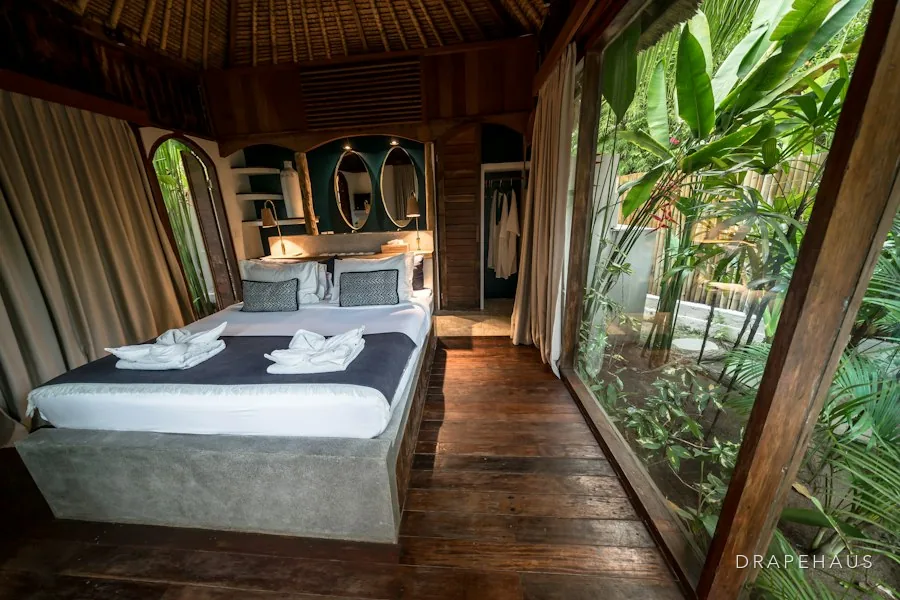
Colva is one of the busiest beach villages in South Goa, a short drive west of Margao and immediately north of Benaulim, and its housing reflects that. Close to the beach, many family homes have become guesthouses, with rooms added on upper floors or at the back of the plot. Behind them sit small apartment blocks let by the week or the season, and further in, the older village houses that were here long before the tourist trade arrived. It is a place where almost every building is working for its keep in one way or another.
That changes the brief. A family living in its own home can live with a curtain that needs a gentle hand. A room with a new guest every few nights cannot. The treatments have to survive being pulled hard by people who will never see them again, stand up to frequent washing, and still look right in the listing photographs at the end of the season. Anything fragile, fussy or hard to clean becomes a cost to the owner long before it wears out, which is why we steer guest rooms towards simpler constructions.
So the work in Colva is less about a single beautiful room and more about systems: one fabric and one track type across several rooms, spares that match, and fittings that a housekeeper can take down and wash without calling anyone. The owner's time is the scarcest thing in a busy guesthouse, and good furnishings should save it. A well-planned set of rooms can be opened, cleaned and closed each season with very little thought, which is exactly what an owner juggling bookings needs from them.
Planning work in Colva?
We measure on site and bring samples to see in your own light — so the choice is made in the room, not from a photo.
Rooms that face the sea take hard afternoon light and glare off the sand. Guest rooms in a busy village face a different problem: street lights, passing traffic and neighbours' windows a few metres away. Real blackout matters here, and real blackout depends on geometry as much as on fabric. Light leaks at the sides and top of a curtain, so the track has to run wide and close to the ceiling, or the blind has to sit in side channels. A good blackout fabric hung badly still lets a guest wake at dawn.
Salt travels further inland than most owners expect, so even a guesthouse several lanes back from the beach will see rusting brackets and stiff runners if the hardware is ordinary steel. We fit aluminium tracks with stainless fixings as a matter of course. They take no longer to install than steel and a great deal less effort to live with, because they keep running smoothly and do not bleed rust onto freshly painted walls between seasons. Where a balcony door takes spray on windy days, we also look at the seals and sills, since a damp frame will spoil a new curtain quickly.
Then there is the monsoon, which normally arrives in the first week of June and stays until mid-October, with morning humidity close to 90 per cent. Guest rooms that close for those months are the ones that grow mildew, on curtains first and then on mattresses and upholstered chairs. Fabric that can be washed and dried quickly, curtains that come down before the rains, and rooms that are aired before they reopen make the new season far easier to start, and save a round of replacements in October.
Colva is next door to our workshop in Benaulim, so we can usually visit within a few days. For a guesthouse we measure every room in one visit and list them room by room, noting where windows are the same size and can share a specification. That keeps the order simpler, and it means a replacement curtain in three years' time will match its neighbours. For a family home, the visit is more leisurely: we look at how each room is used and where privacy and shade matter most.
We bring samples to the property, including blackout linings, wipe-clean blind fabrics and screen mesh, and we are happy to hold them up against your actual windows in the evening, when blackout matters most. Everything is made at our workshop and fitted by our own team, and for let properties we time installation for when rooms are empty, usually in the quieter months before the season begins. We dress each curtain, test each blind and leave the room ready for guests. If you are unsure about a colour, we can leave a sample with you for a few days to see it morning and evening.
Many owners in Colva ask us to handle the monsoon for them: take the curtains down in late May, wash and store them, fix anything that has broken, and rehang it all in October before the first guests arrive. For owners who live elsewhere, we coordinate with the manager or caretaker, work to the access they can give, and send photographs of each room when it is done, along with a short note of anything we noticed that may need attention before the season.
The first request is almost always blackout for guest rooms, followed closely by insect screens. Fitted mesh on windows and sliding screens on balcony doors let guests keep the windows open at night without the fan and air conditioning working harder, and a room that is aired at night stays drier through the humid months. For rooms near a busy lane, a sheer layer behind the blackout gives privacy in the daytime while still letting light in, so guests are not forced to choose between a dark room and an exposed one.
Next come washable, robust fabrics: removable sofa covers in lounges and common areas, bedroom curtains that can go through a machine, and roller blinds that wipe clean. We also make simple headboards and cushion covers that tie a room together without adding anything fragile. Where a property is registered for tourism and the owner or insurer asks for flame-retardant fabrics, we specify those, so that the choice is made at the start rather than discovered at an inspection. Covers come off for washing.
Families who live in Colva year-round ask for the same things any Goan household does: good curtains for a new flat, re-upholstery of a much-loved sofa, a rug for the front room, screens that finally keep the mosquitoes out. We enjoy that work as much as the larger jobs, and since we are only a short drive away, small orders are no trouble. We treat a single bedroom in a family home with the same care as a full guesthouse, because the people living in it will notice every detail.
What we make in Colva
The homes we work in here
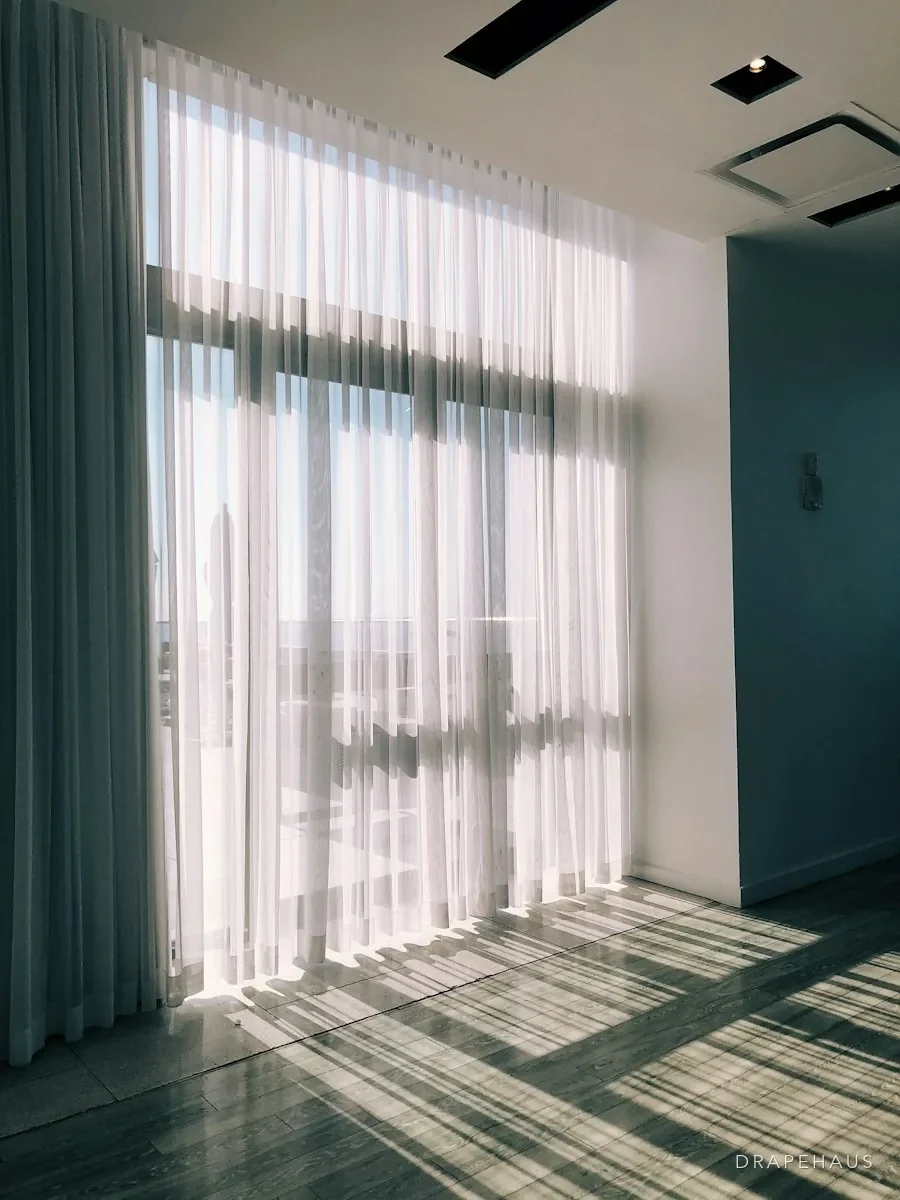
Guest turnover, genuine blackout and fabric that survives being handled by strangers.
Read the guide
Let unfurnished or short-term, maintained remotely, and specified for tenants rather than owners.
Read the guide
Balcão, small deep windows, thick walls and a way of living that curtains should not fight.
Read the guideFrom the Journal
All articlesFAQ
Yes, a good share of our work in Colva is for properties with paying guests. We specify blackout, washable fabrics and insect screens room by room, keep a record of what went where so replacements match, and time fitting for when rooms are empty. If your property is registered with the Tourism Department and has fire-safety requirements, we can specify flame-retardant fabrics to suit.
Blackout fabric is only half of it. Light leaks round the edges, so we mount the track close to the ceiling and extend it well past the window on both sides, or fit blinds in side channels. Where there is a gap under a door or above a pelmet, we will point it out. Done properly, a guest room can be dark enough to sleep past sunrise.
Yes, if they are specified that way. We use headings and hooks that lift off a track without tools, fabrics that can be machine washed, and removable linings where needed. We show your housekeeping staff how to take them down and rehang them, so routine washing never needs a call-out.
Usually within a few days. Our workshop is in neighbouring Benaulim, so Colva is a short drive for us. In the weeks just before the tourist season and just before the monsoon we are at our busiest, so if you are preparing rooms for a season opening, it helps to call a month or so ahead.
If the rooms will be closed, take them down in late May, clean them and store them dry with some airflow, not in sealed plastic. Closed rooms in the monsoon stay very humid, and fabric left hanging against walls tends to mildew. We can do the whole cycle for you, including rehanging in October once the rooms have aired.