 Drapehaus
Drapehaus
Preparing the room
Drapehaus
Preparing the room
North Goa · Market town family homes
Mapusa is the headquarters of Bardez taluka and one of the largest towns in Goa, about 13 km north of Panjim and known across the state for its Friday market. Its homes are mostly family houses and town apartments, with older Goan houses in the surrounding wards and villages. We visit Mapusa by appointment from our workshop in Benaulim.
What we see in Mapusa
Homes in Mapusa — tap a heading to read
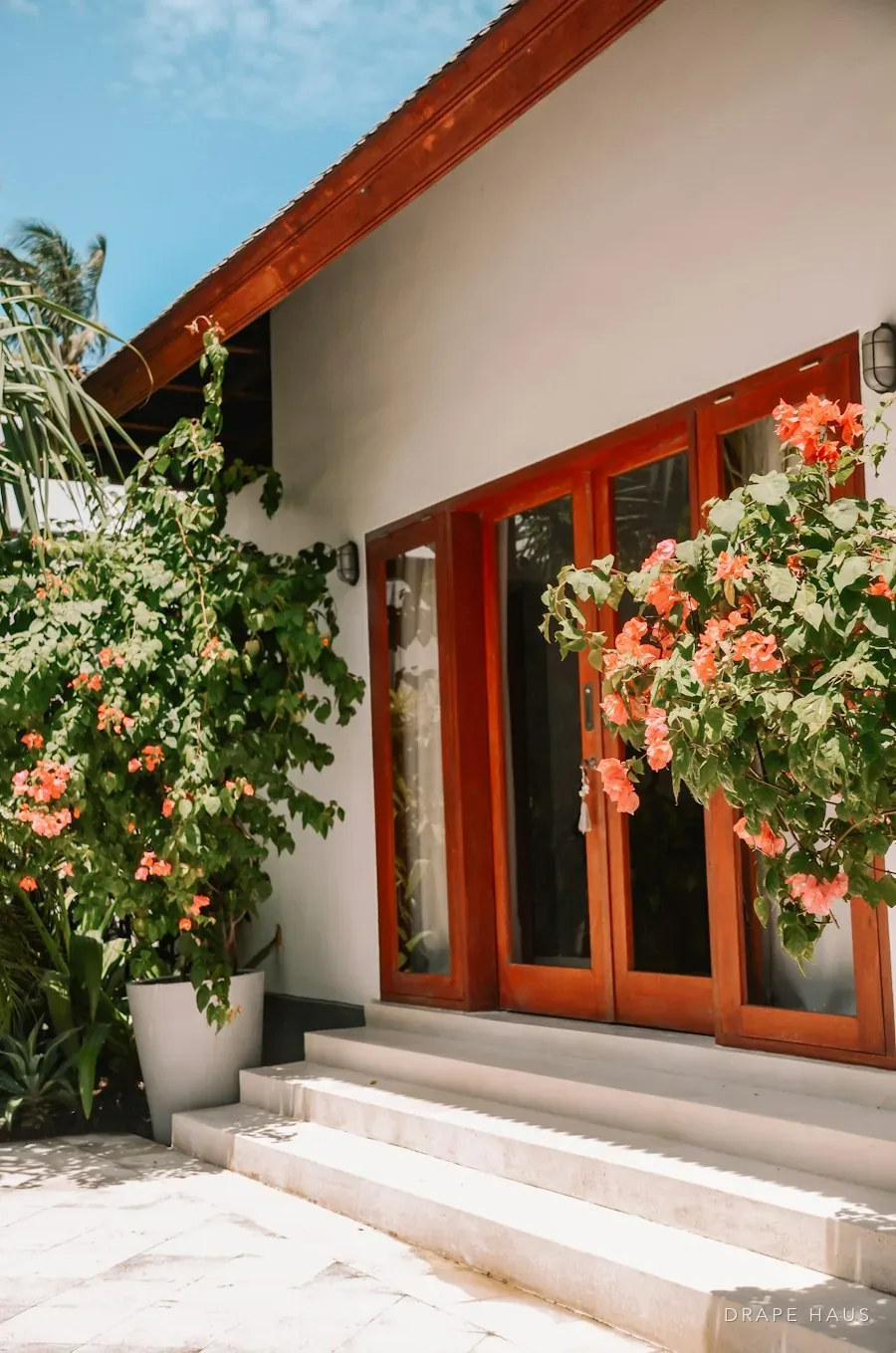
Mapusa is the working heart of Bardez. It is the taluka headquarters, one of the largest towns in Goa and, under Portuguese rule, the administrative centre for the whole of Bardez. Its market draws people from the surrounding villages every Friday, and the town has the offices, schools, hospitals and shops that the rest of Bardez relies on. That makes it a place where people live rather than holiday: most of the homes we visit here are family homes, lived in all year, and often by more than one generation.
In and around the town centre, most people live in apartments, from older blocks of a few storeys to newer buildings on the approach roads. These flats tend to be practical and well used, with aluminium sliding windows, grilles and small balconies that often double as a drying space. On the edges of town, and in the wards and villages that surround Mapusa, there are independent family houses of many ages, from Goan houses with tiled roofs, verandas and tall shuttered windows to modern bungalows built in the last twenty or thirty years.
Each kind of home asks for something different. A town flat needs privacy from the building across the street and curtains that can be washed often. An older house needs fittings that respect lime-plastered walls and timber shutters, and fabrics that suit high ceilings. A newer bungalow often has larger glazed openings than either, and the heat and glare that come with them. We look at each of these on its own terms rather than applying one idea to every window. Often a single house has all three, where an older core has been extended over the years.
Planning work in Mapusa?
We measure on site and bring samples to see in your own light — so the choice is made in the room, not from a photo.
Mapusa is a little inland from the Bardez coast, but it is not spared the monsoon. The heaviest 24-hour rainfall recorded at any IMD station in Goa, 461.8 mm, fell at Mapusa on 15 June 1996. That is an extreme, but the ordinary season is demanding enough: around 91 per cent of Goa's rain falls between June and September, and humidity stays very high throughout. In a closed room, that moisture works its way into curtains, cushions and the backs of sofas, and mildew follows.
Being away from the sea does bring some relief. Salt is less of a problem here than in Candolim or Anjuna, so ordinary powder-coated tracks and brackets usually last well if they are good quality. The main exposure is sun. In the dry months, west- and south-facing rooms in Mapusa can become very hot by the afternoon, particularly in upper-floor flats with little shade outside. Lined curtains, solar-screen blinds and a sensible choice of colour make a real difference to how usable these rooms are.
Town life adds its own considerations. Homes close to the market and main roads deal with noise and dust, and with neighbours who are only a few metres away. In these homes we often suggest a sheer or a light net for daytime privacy with a heavier curtain or blind for the evening, and fabrics that can go through the wash regularly without losing their shape. Insect screens are popular too, because they let windows stay open without letting in mosquitoes after the rains. We make them to measure so that they close properly on older, slightly uneven frames.
Our workshop is in Benaulim, in South Goa, so Mapusa visits are by appointment. We usually group them with other homes in Bardez, which lets us make the trip worthwhile and give you a realistic date. On the first visit we measure every window, check walls and ceilings for sound fixing points, and bring fabric, lining and blind samples to the house. Seeing them against your own walls and in your own light is the best way to choose, and it avoids surprises when the work is fitted.
Everything is made to measure in our own workshop. When it is ready, we come back to install it with our own team, protect floors and furniture while we work, and show you how each track, blind and screen operates. In older houses we take particular care with fixings, looking for timber lintels or sound plaster, and we position poles and tracks so that original shutters can still close. In flats we will ask about the building's rules before fitting anything outside the window.
Many Mapusa families have relatives abroad or in other cities, and some homes are managed for owners who are away. We are happy to work with whoever holds the keys, to agree choices by photographs and calls, and to send pictures once the work is done. After installation we come back for adjustments and repairs, and we offer monsoon take-downs for homes that will be closed through the wettest months, so that curtains are cleaned and stored dry until October, then rehung once the rains have withdrawn.
The most common request in Mapusa is practical: a full set of curtains and blinds that will stand up to family life. Bedrooms usually need blackout, living rooms need privacy from the street or the flat opposite, and kitchens and bathrooms need blinds that cope with steam and splashes. Many people also ask for curtains that can be taken down and washed at home, and we make them with that in mind, choosing fabrics and linings that behave well in an ordinary machine. Children's rooms are another steady request, where hard-wearing fabrics and simple blinds usually serve better than anything delicate.
Reupholstery is a large part of our work here. Many Mapusa homes have solid, well-made furniture that has been in the family for years, and it is often better to recover a good sofa or set of dining chairs than to replace it. We can replace foam and webbing, repair frames and recover in a fabric chosen for humidity and daily use. We also make new sofas and rugs to measure when a room needs something that will fit exactly, such as a corner sofa for an awkward living room or a runner for a long passage.
Older houses bring their own requests. Owners of Goan houses often want to dress tall windows without hiding the shutters or the proportions, or to replace curtains that were hung too low and too narrow years ago. We usually suggest poles or tracks set high and wide, simple lined or unlined curtains in natural fabrics, and insect screens made to fit old timber frames. Whatever the home, we will tell you honestly what we think is worth doing, and what is better left as it is. In an old house, a well-kept original feature is usually worth more than anything we could add.
What we make in Mapusa
The homes we work in here
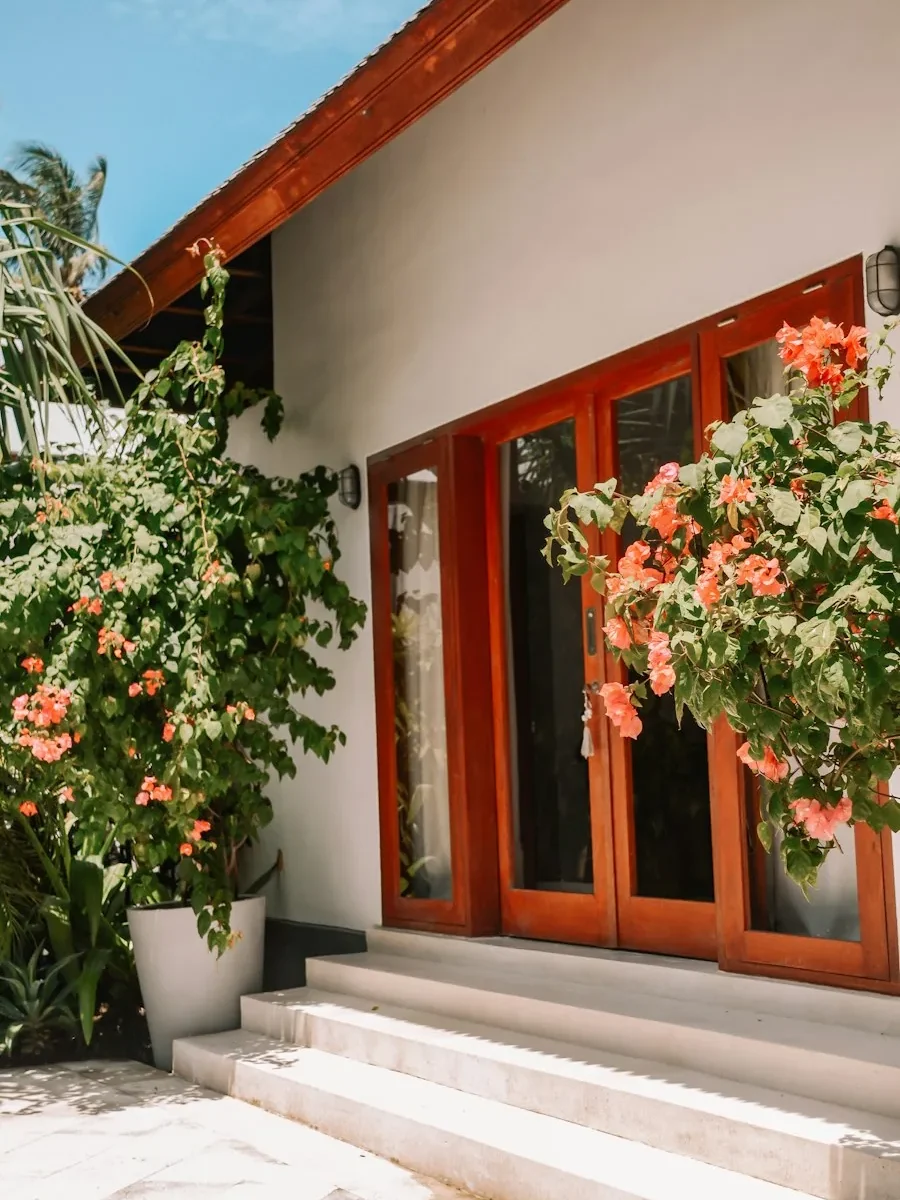
Balcão, small deep windows, thick walls and a way of living that curtains should not fight.
Read the guide
Society rules, concrete you cannot always drill, and standard openings that still are not standard.
Read the guide
Deep reveals, tall shuttered openings and oyster-shell windows that modern curtain advice gets wrong.
Read the guideFrom the Journal
All articlesFAQ
Yes. We work in Mapusa town and the surrounding wards and villages of Bardez. Our workshop is in Benaulim, in South Goa, so Mapusa visits are by appointment and we usually group them with other homes in the area. We measure, bring samples to your home, make everything in our own workshop and fit it ourselves.
Yes. Good older furniture is often worth keeping. We can replace foam, webbing and springs, repair frames where needed, and recover the piece in a fabric chosen for Goa's humidity and daily use. We will look at the piece first and tell you honestly whether it is worth doing.
Yes. We choose fabrics and linings that wash well in an ordinary machine, and we make the curtains so that hooks and weights come out easily. Washable curtains are particularly useful in Goa, where dust in the dry months and humidity in the monsoon both call for regular cleaning.
Yes. We make insect screens to measure for timber, aluminium and uPVC frames. For older timber windows, which are rarely perfectly square, we measure each opening individually and choose a screen type that fits without damaging the original frame. Where the timber is soft or damaged, we will point it out before fitting anything.
It depends on how many Bardez visits we already have planned, because we group them to make the journey from Benaulim worthwhile. We will give you a realistic date when you call. If you need the work finished before a family event or the monsoon, tell us early and we will plan around it.