 Drapehaus
Drapehaus
Preparing the room
Drapehaus
Preparing the room
Sofas
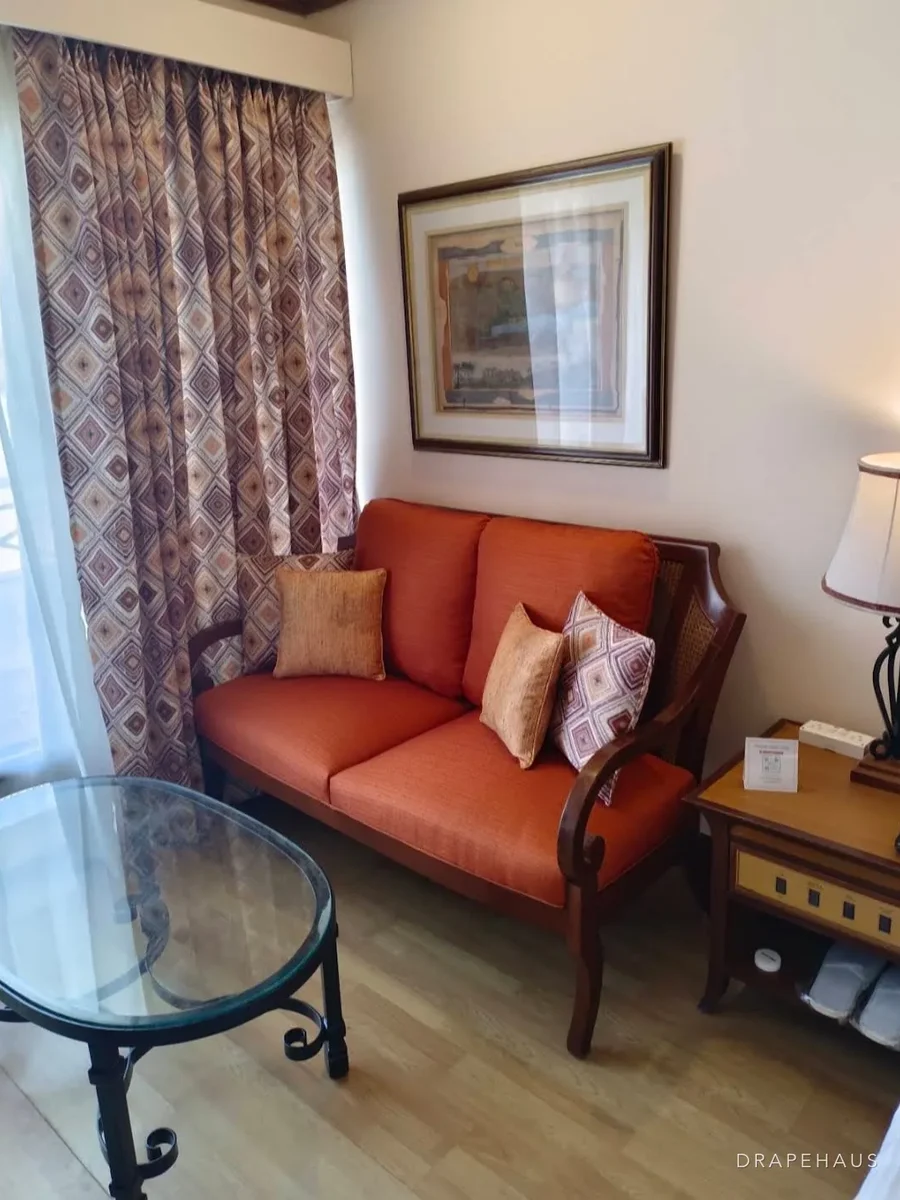
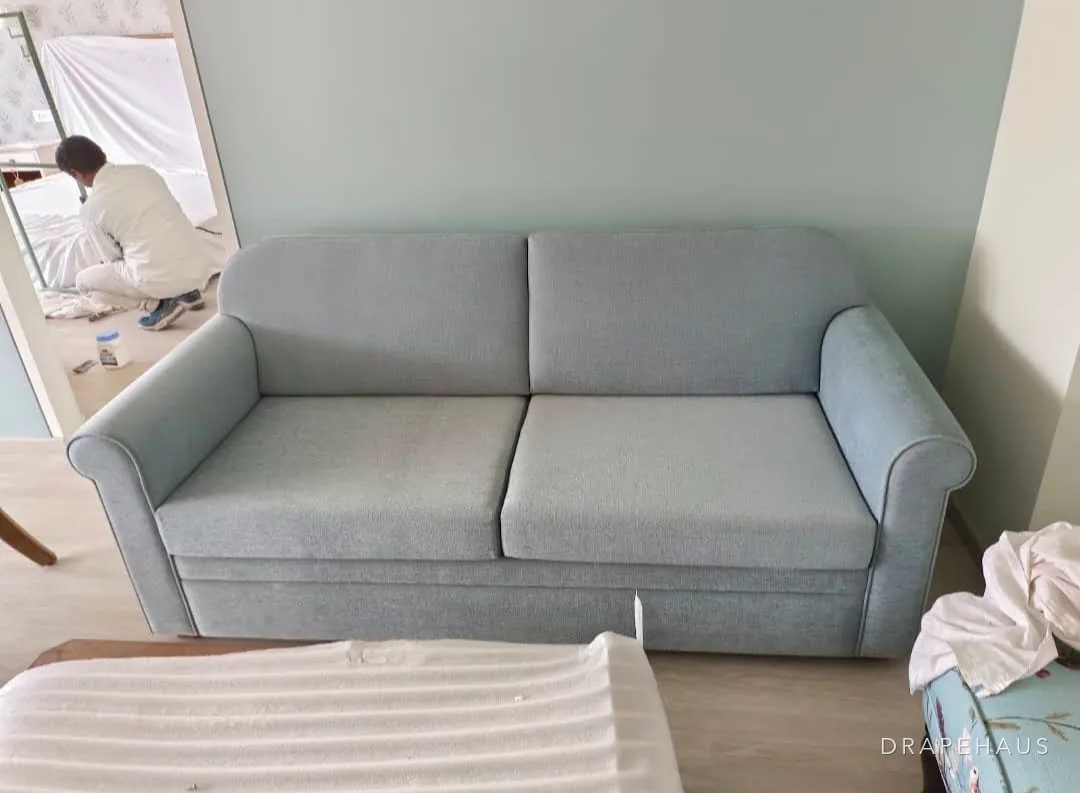
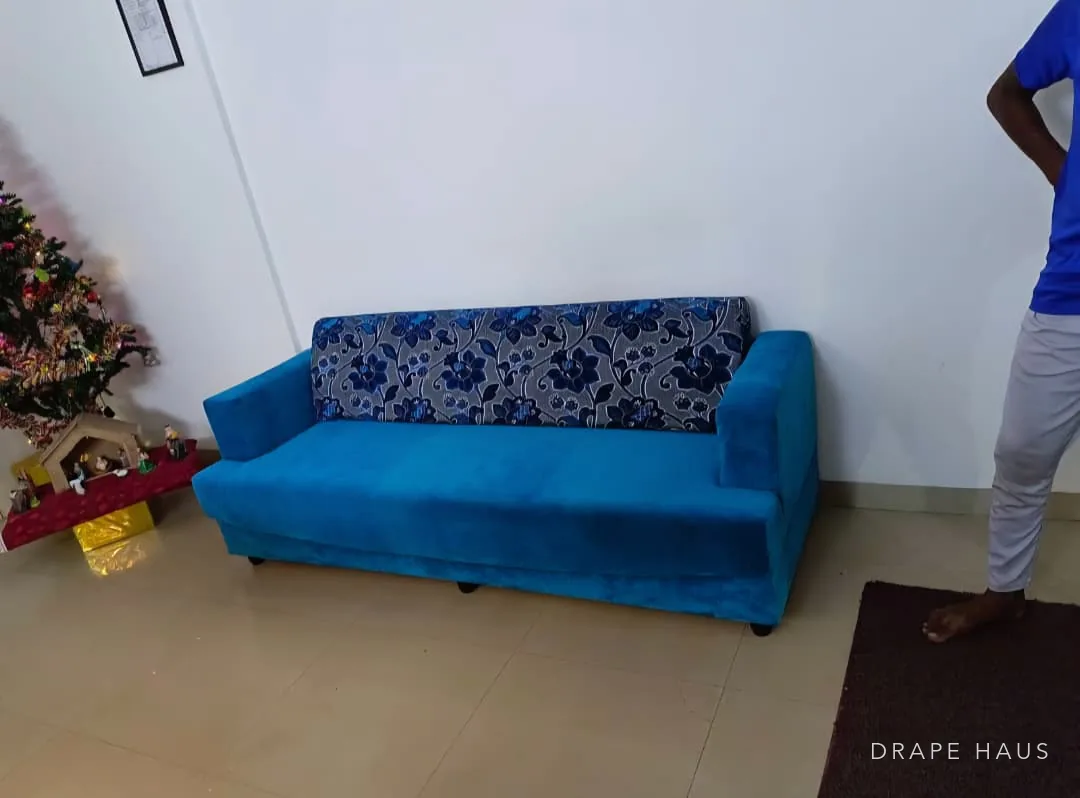
The classic sofa, made to the length the wall actually allows — not the nearest catalogue size. Ideal for apartments, bedrooms and pairs facing each other across a room.
Durability scale (Martindale rubs, BS 2543)
15k
20k
25k
30k
40k
Who uses it
Where it lives
How it is used
Durability to ask for
30,000+ rubs
Severe domestic / general contract
Removable covers
Yes
zipped, washable, and a spare set
Fibres that suit
Avoid: Anything you cannot clean in place, on a piece used every day. Rub count is one number among several — weave, colour-fastness and how a fabric handles humidity matter as much. We bring samples to see in your room.
In short
By the Drapehaus studio · How we write
Is it right for you?
A two- or three-seater is the most adaptable sofa there is. It sits against a wall, floats in the middle of a room with a console behind it, faces its twin across a coffee table, or tucks under a window. Because it is a single straight piece, it is also the easiest sofa to move, rearrange and carry through a narrow door.
Made to measure, the length is set by the space rather than rounded to the nearest catalogue size. That matters in older houses, where the gap between a door and a window might suit a sofa a little longer than a two-seater and a little shorter than a three.
Choose a straight sofa if you value flexibility, entertain for conversation rather than films, or furnish a bedroom, study or apartment. If you need to seat a large family on one piece in an open-plan room, a sectional will do that more efficiently.
The details
A two- or three-seater made to measure can be shortened for a tight wall or lengthened to sit under a window, and the arm, back and leg styles chosen to suit the room.
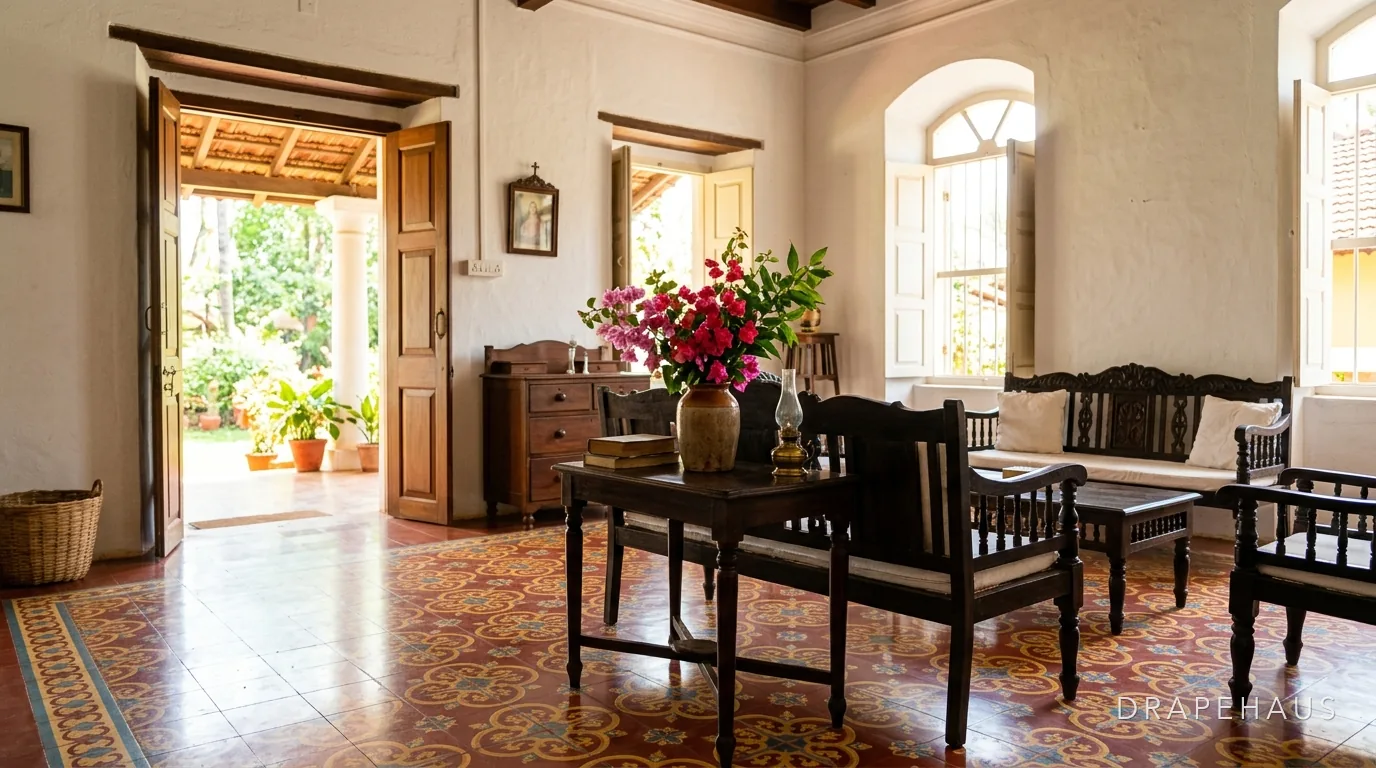
Pairs are a favourite in Goan drawing rooms — two matching sofas facing across a coffee table — and we make them to match exactly.
Your options
On a straight sofa, the arms, back and legs set the character. They also change how much seating you get for a given overall length, which is easy to overlook.
Swipe for all 5 →
The honest view
Flexible layout
A straight sofa can move to another wall, another room or another house far more easily than a corner piece, and it combines with armchairs in endless arrangements.
Easy access
Most lengths pass through standard doors and up stairs without needing to be built in sections, which suits old houses and apartments.
Exact length
Made to measure, it fits the precise gap between a door and a window, or the full width of a bay, instead of the nearest stock size.
Perfect pairs
Two sofas made together from the same fabric batch match exactly in colour and dimension, which is essential for a symmetrical drawing room.
Fewer seats per piece
A three-seater seats three comfortably. For larger households you will need armchairs or a second sofa, which take more floor area than a sectional.
Middle seat compromise
On a three-seater with two seat cushions, the middle sitter straddles the join. A single bench cushion avoids this but shows wear more evenly across one piece.
Limited for lounging
Without a chaise, stretching out means lying along the whole sofa. Choose a length that allows it if that matters to you.
Side by side
The names are loose, so it helps to compare them on use rather than label. A loveseat here means a compact, often more upright two-seater.
| Loveseat | Two-seater | Three-seater | |
|---|---|---|---|
| Comfortable sitters | Two, close together | Two with space | Three |
| Lying down | No | Curled up | Most adults |
| Best rooms | Bedroom, study, hall | Apartment living, study | Main living room |
| Access through old doors | Very easy | Easy | Usually easy |
| As a facing pair | Intimate | Good | Formal and generous |
| Seat cushions | One bench | One or two | Two, three or bench |
Swipe to compare →
Because we make to length, the choice is really about proportion and use. The sofa can be any length the room needs.
Rather see it in your own room?
We bring samples to the house, measure every window, and specify for the light and exposure you actually have.
Room by room
A three-seater opposite a pair of armchairs, or two sofas facing across a coffee table, is the classic arrangement for conversation and suits both formal and relaxed rooms.
A compact two-seater in a bay, under a window or at the foot of the bed gives a place to sit and read that is not the bed itself.
A firm, upright two-seater gives visitors a seat and you a change of position. A tight back keeps the room looking orderly.
A small sofa with removable, washable covers in a tight-woven synthetic stands up to play and spills.
Only on a covered verandah and only with outdoor fabric and quick-drying fill. Bring cushions in when monsoon rain drives in sideways.
A two-seater with removable covers gives guests somewhere to sit. Keep it simple, durable and in a mid-tone fabric.
In depth — tap a heading to read
The length of a straight sofa is set by the wall or window it relates to, less the clearance it needs at each end. We leave room for a side table or lamp at one or both ends where there is space, and for the swing of any nearby door, rather than running the sofa into the corner.
Under a window, a sofa usually looks best a little shorter than the window's width, or deliberately longer, spanning it with even margins. A sofa that almost but not quite matches the window looks like a mistake. We also check the sill height against the sofa's back so the back sits beneath the sill, not across the glass.
Proportion goes beyond length. In a room with a tall ceiling, a slightly higher back and a longer, more generous arm hold their own; in a low-ceilinged apartment, a lower back and slim arms keep the room open.
Two sofas facing each other across a coffee table are a mainstay of Goan drawing rooms, and they only work if they match. That means cutting both from the same fabric batch, because dye lots vary, and building both frames to identical dimensions so seat heights and arm lines align across the room.
We set the distance between the pair from how the room is used. Close enough to talk and reach the coffee table, far enough that people can pass between them without climbing over knees. The pair is normally centred on a feature such as a window, doorway or rug, and the coffee table sized to sit comfortably between them.
A pair can also be made in two lengths, a three-seater facing a two-seater, where the room is not symmetrical. Matching fabric, arms and legs keep them reading as a set.
Order a pair together, not one now and one later. Fabric dye lots change between batches.
A single bench cushion running the full length gives a clean, unbroken line and no gaps for crumbs or coins. It suits tight-backed and formal sofas. Its drawback is that it cannot be rotated between positions, so the most-used end wears first.
Two or three separate seat cushions can be swapped and turned to spread wear, and each is easier to remove and wash. On a three-seater, three cushions put each sitter on their own cushion; two cushions look more relaxed but leave the middle person on the join.
A straight sofa in a well-ventilated heritage room is one of the few places near the coast where a natural-look fabric can work well. A linen-look polyester, or a blend of linen with a synthetic, gives the texture of linen with far less moisture absorption. Pure linen and cotton remain a risk in closed houses and close to the sea.
Rate the fabric for the use. A bedroom two-seater used occasionally can be general domestic at 20,000 Martindale rubs; the main living room sofa should be at least heavy domestic at 25,000. Solution-dyed acrylic is the most fade-resistant choice for a sofa that sits in afternoon sun from a west-facing window.
Raised legs help too. Air moving freely beneath the sofa keeps the underside and the base fabric drier through the monsoon than a skirt that sits on the floor.
Most two- and three-seaters can be carried through a standard door on end, tilted and turned. The measurements that decide it are the sofa's depth and back height, against the door's width and height, and the diagonal of the sofa's side profile. We check these for every door and turn on the route.
Where a longer sofa has to pass a tight landing or a low doorway in an old house, legs can be made to unscrew and arms to bolt on, so the body of the sofa is smaller in transit. These fixings are built into the frame and are as strong as a solid joint once refitted.
Living with it
Move seat cushions between positions every few weeks so no single seat hollows faster than the others.
A soft brush lifts dust and salt from the weave. Vacuum along the arms and piping, where grit collects and wears the fabric.
The arm nearest a window takes the most UV and fades first. Draw sheers in the strongest afternoon light.
If your sofa has a skirt, lift it to vacuum beneath. Dust and damp trapped under a skirt encourage mould and insects.
When cleaning or washing covers on a pair, treat both the same way so their colour stays matched.
Avoid these
A sofa a little shorter than the window looks like a near miss. Go clearly shorter or span it with even margins.
Fabric dye lots vary. Order both sofas at once so they match exactly.
Scroll arms eat seat length. On a short wall, choose slim track arms to keep the seating usable.
A skirt traps damp air beneath the sofa during the monsoon. Choose raised legs for houses shut for long periods.
Checklist
More in sofas
Seating made to size, which matters in Goan houses where rooms are rarely the proportions furniture is manufactured for.
Our work
Our process
One team from the first visit to the last bracket, so nothing is lost between the person who specified it and the person who fits it.
FAQ
Yes. Making to measure means the length is set by your wall, not by a catalogue.
Yes — pairs are made together so the fabric and dimensions match exactly.
In practice the terms overlap. A loveseat usually means a compact two-seater where two people sit close, often with a more upright back. A two-seater tends to be a little longer, with room for two to sit comfortably apart. Made to measure, the length can be set anywhere between the two.
Long enough for three people to sit comfortably, with arm widths allowed for. Wide rolled arms need a longer overall sofa than slim track arms for the same seat length. We set the length from your wall and your arm choice, then check the seat width per person is generous.
In a humid house, visible legs are usually the better choice. Air circulates beneath the sofa, keeping the base dry, and cleaning underneath is easy. A skirted base suits some traditional rooms but should be easy to lift, and is best avoided in houses closed for the monsoon.
A single bench cushion looks clean and has no gaps, but it cannot be rotated to spread wear. Two or three cushions can be turned and swapped, and are easier to wash. On a three-seater, three cushions avoid putting anyone on a join.
Close enough that people can talk comfortably and reach the coffee table, and far enough that someone can walk between them without brushing knees. We set the exact spacing on site, from the room size, the coffee table and how people move through the space.
Next step
We visit, measure the wall or window the sofa relates to and every door and stair on the way in, and look at the room's proportions and light. We bring fabric samples to see in place and arm and leg options to compare. Once the length, style and fabric are agreed, we build and upholster the sofa, or a matched pair, and deliver and place it. Book a home visit and we will make it to your room.