 Drape Haus
Drape Haus
Preparing the room
Drape Haus
Preparing the room
Sofas
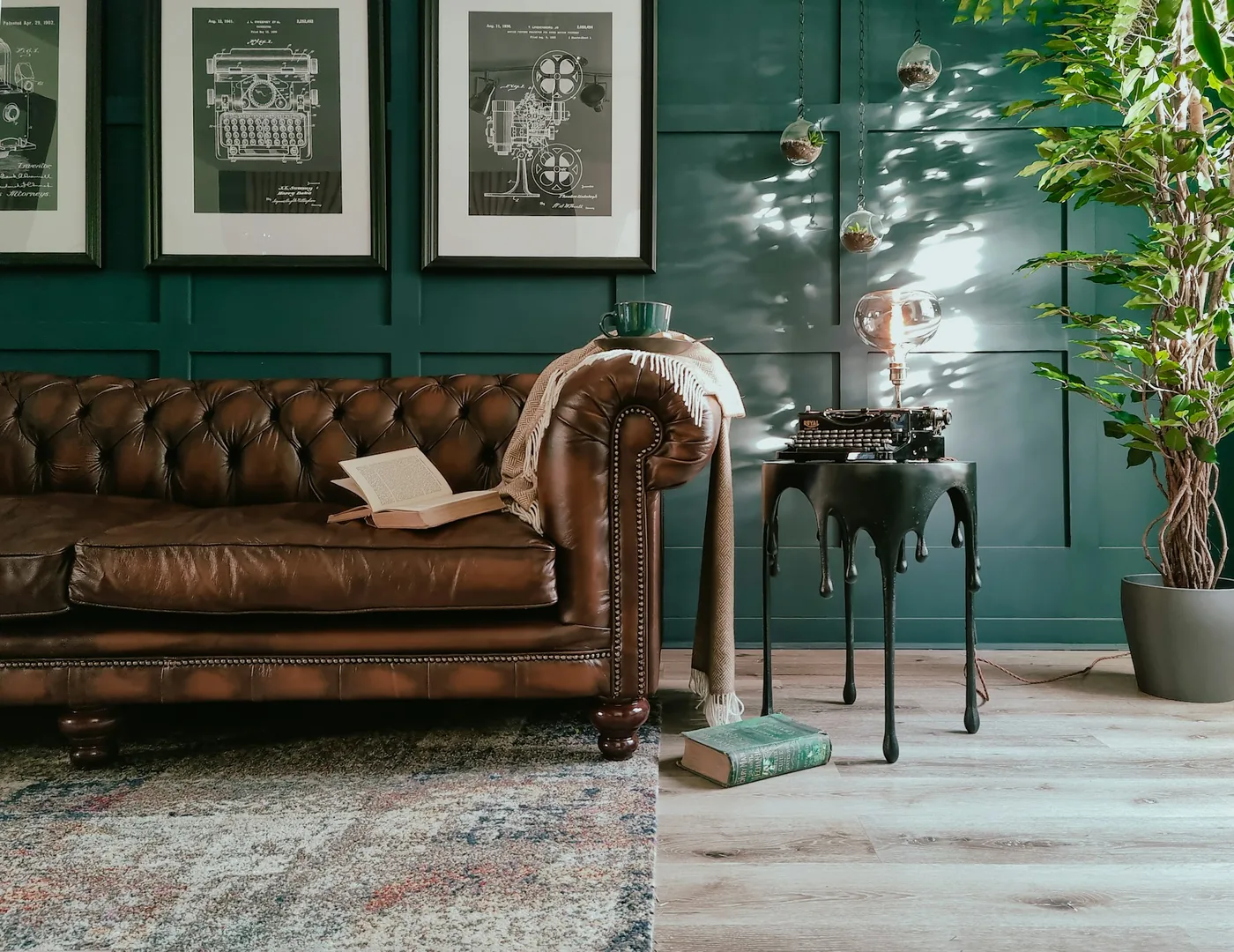
The chesterfield is recognisable at a glance: a deep-buttoned back, scrolled arms at the same height as the back, and a low, firm seat. We make them to the scale of the room, in leather, velvet or a textured weave, with the buttoning and trim specified for a humid coastal house.
Durability scale (Martindale rubs, BS 2543)
15k
20k
25k
30k
40k
Who uses it
Where it lives
How it is used
Durability to ask for
30,000+ rubs
Severe domestic / general contract
Removable covers
Yes
zipped, washable, and a spare set
Fibres that suit
Avoid: Anything you cannot clean in place, on a piece used every day. Rub count is one number among several — weave, colour-fastness and how a fabric handles humidity matter as much. We bring samples to see in your room.
In short
By the Drape Haus studio · How we write
Is it right for you?
A chesterfield is a statement of permanence. Its buttoned back and rolled arms give a room an air of formality and history, and in an old Goan house with tall ceilings, carved doors and a polished floor it looks as though it has always been there. Few sofa shapes sit as naturally in a heritage interior.
It suits people who like to sit upright and talk, who want a sofa that will be reupholstered rather than thrown away, and who are furnishing a drawing room, a library corner or a study rather than a family television room. A chesterfield also works as a single striking piece in an otherwise pared-back modern room, where its curves and texture provide contrast.
It is not the sofa for sprawling. The seat is traditionally shallow and firm, the arms are high, and there is little room to lie down. If the room is where the family watches films with their feet up, a deeper sectional or a softer straight sofa will serve better, and a chesterfield chair or small two-seater can still bring the look to a corner.
The details
A true chesterfield is a piece of upholstery craft rather than a shape. The back and arms are built up as one continuous curve, and the deep buttoning is worked by hand, each button drawn into a diamond pleat that holds the padding in place. Done well, the pleats run in straight lines across the whole sofa and stay crisp for years.
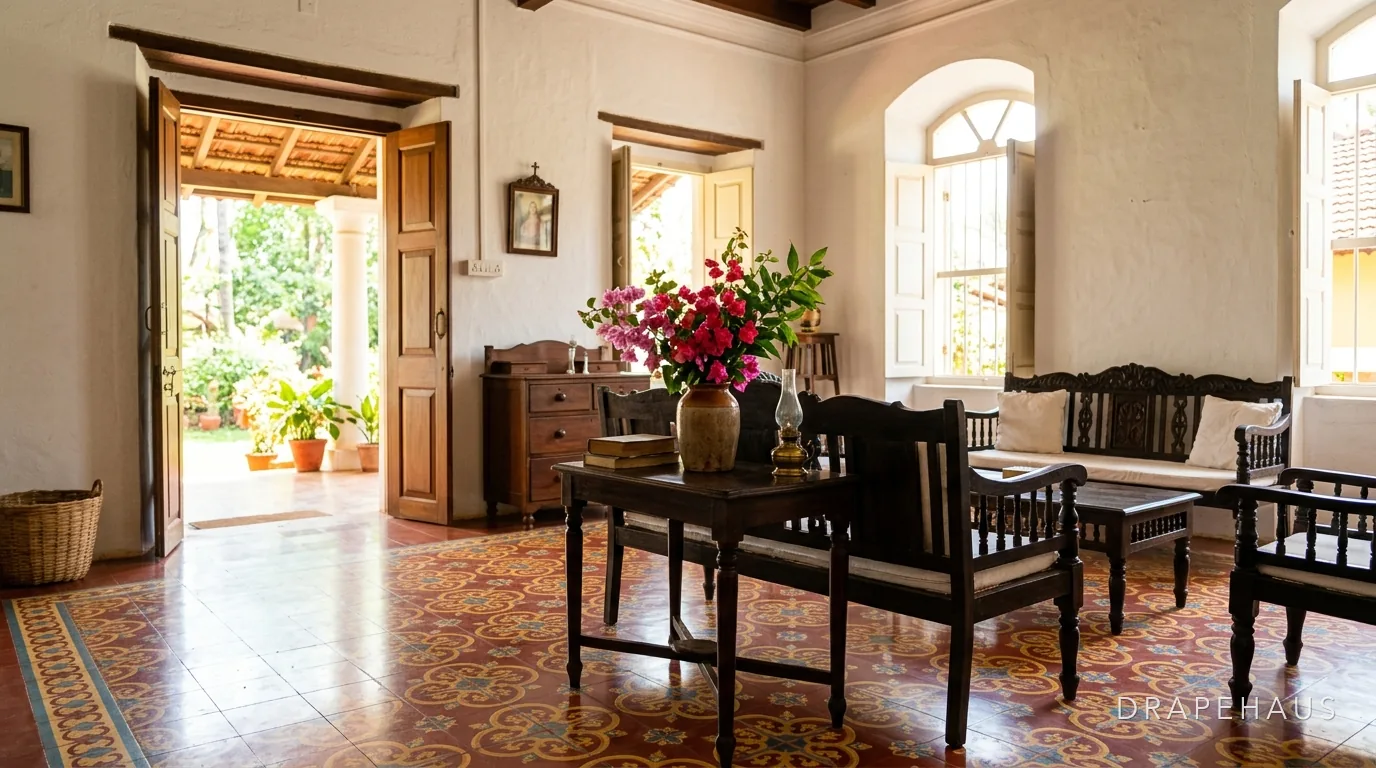
The form suits the heritage drawing rooms of old Goan houses particularly well: tall ceilings, wide windows with deep reveals and dark polished floors can carry a substantial, formal sofa that would overpower a modern flat. Made to measure, the length, depth and arm height are scaled so the sofa holds its place in a big room or stays restrained in a smaller one.
The climate shapes the details. Button pits collect dust and, in a closed monsoon house, can harbour mould, so we recommend materials and finishes that are easy to brush out. Brass nailhead trim tarnishes in salt air, so we discuss the finish before it is fitted. Leather needs ventilation and conditioning in humidity; our journal piece on fungus on leather sofas explains why.
If you have an old chesterfield with a sound frame, it can usually be re-buttoned and reupholstered rather than replaced, and the original proportions kept.
Your options
The classic form has many relatives. The differences are in what is buttoned, how the seat is made and how the arms are shaped.
Swipe for all 5 →
The honest view
Built to last generations
A well-made chesterfield has a heavy hardwood frame and hand-worked upholstery designed to be stripped and rebuilt, so the piece can outlive several coverings.
Sits well in heritage rooms
Its proportions and detail suit tall ceilings, dark timber and old tiled floors, where many modern sofas look thin and temporary.
Holds its shape
Deep buttoning locks the padding in place. The back and arms do not slump or need plumping, which keeps the sofa looking crisp.
Good posture
The firm, upright sit supports the back for conversation, reading and older family members who dislike sinking into soft seats.
Firm, not lounging
A shallow, firm seat and high arms make it a poor sofa for stretching out or napping.
Dust and damp in the pleats
Every button pit is a small pocket. In a humid house these collect dust and, left unbrushed in a closed room, can show mould.
Visual weight
The rolled arms and solid form are substantial. In a small, low room a full chesterfield can dominate.
Skilled upholstery
Hand-buttoning is time-consuming work, so a chesterfield takes longer to make than a plain sofa of the same size.
Side by side
The covering changes how a chesterfield looks, how it ages and how it copes with a coastal climate. These are the three main choices.
| Leather | Velvet | Textured weave or linen-look | |
|---|---|---|---|
| Character | Traditional, club-like | Rich, deep colour | Relaxed, softer |
| Buttoning definition | Very crisp | Crisp, catches light | Softer pleats |
| Humidity risk | Mould and drying if closed up | Pile can crush and hold damp | Lowest with synthetic blends |
| Cleaning button pits | Wipe and condition | Brush with the pile | Brush and vacuum |
| Sun near a window | Fades and dries | Can fade on the window side | Solution-dyed options resist fading |
| Ageing | Develops a patina | Shows wear on arms | Even wear, easy to recover |
Swipe to compare →
A synthetic velvet holds its pile and resists damp better than a cotton velvet, and keeps the deep colour that suits buttoning.
Rather see it in your own room?
We bring samples to the house, measure every window, and specify for the light and exposure you actually have.
Room by room
Tall ceilings, deep window reveals and old timber floors give a chesterfield the space and setting it was designed for. A facing pair suits a symmetrical room.
A chesterfield two-seater or a pair of chairs makes a calm reading and conversation area. Leather suits this room if it is used daily and aired.
A slim-arm version in velvet or a plain weave adds character against white walls and simple furniture without looking like a period set.
Too upright and firm for long evenings with feet up. Choose a deeper sofa here and use a chesterfield chair for occasional seating.
Possible in a woven fabric with loose seat cushions, but button pits need regular brushing that housekeeping may not give them. Plain-back sofas are easier.
Buttoning and rolled arms trap water and grit. A chesterfield is an indoor piece; outdoor seating should be simpler and quick-drying.
In depth — tap a heading to read
The traditional chesterfield's arms and back are the same height, so the sofa reads as a single low block. In a heritage room with a high ceiling and tall windows, a longer sofa with full, generous scrolls holds its own; a short one looks like doll's-house furniture against the volume of the room.
In a contemporary flat with lower ceilings, we reduce the scroll and the overall height, use a slimmer arm and raise the sofa on visible legs so floor shows beneath. That keeps the character while lowering the visual weight.
Length and arm width interact. Full rolled arms can take a large share of the overall length, so a chesterfield of the same outside size as a track-arm sofa seats fewer people. We set the length from the seats you need, not the reverse, and check it against the wall and windows at the survey.
Measure the window sill height. A chesterfield's level back looks best running below the sill, not cutting across the glass.
Leather is the classic chesterfield covering and it buttons beautifully, giving sharp pleats and a deep shine. It also needs more care in Goa than almost any other material. In a damp, closed room, the surface can grow white or green mould; in a dry, air-conditioned room or strong sun, it can dry and crack.
Leather does best in a room that is used and aired every day, out of direct afternoon sun, and conditioned a few times a year. If the house will be locked for the monsoon, leave ventilation running where possible, or choose a fabric instead. Our journal article on fungus on leather sofas sets out how to spot and treat early mould before it marks the hide.
Artificial leather is sometimes chosen to avoid these problems, but in a humid climate some coated fabrics peel and crack over time. We explain the differences honestly at the consultation and show samples of each.
Velvet is the other traditional choice, and the pile catches light along every pleat, giving buttoning real depth. A synthetic velvet resists crushing and damp far better than cotton, and comes in deep colours, bottle green, oxblood and ink blue, that suit the form.
A textured weave or linen-look fabric softens the chesterfield, making it feel more relaxed and less formal, and it is the lowest-maintenance covering in humidity. The pleats are slightly softer in a woven fabric, so we adjust the buttoning tension to keep the pattern defined. You can try colours on our sofa fabric simulator before seeing samples at home.
A ready-made chesterfield is built to standard proportions that may suit a modern flat but rarely suit a tall heritage room, and the frame and buttoning quality vary widely. Made to measure lets us set the length, the scroll size and the seat depth for your room and your sitters, and choose the covering for the house's climate.
Old chesterfields are often worth saving. Many have solid hardwood frames that will take another covering. Reupholstery, stripping back to the frame, replacing the springs, webbing and padding and re-buttoning by hand, keeps the original proportions and character of an inherited piece.
Living with it
Use a soft brush in every pleat and pit at least weekly, more often in the monsoon, to clear dust before it can hold moisture.
Apply a suitable leather conditioner a few times a year and wipe the hide with a dry cloth after humid weeks.
Brush velvet in the direction of the pile to keep it even, and turn any loose seat cushions so the crush evens out.
Look over the buttons every few months. A loose one is a quick repair; a lost one leaves a gap in the pattern.
Wipe nailhead trim with a dry cloth after damp spells so tarnish does not spread to the covering.
Avoid these
A chesterfield is firm and upright. If the room is for films and naps, choose a different main sofa.
A leather chesterfield left in a closed, humid house for months is a risk. Plan ventilation or choose fabric.
A short, slim chesterfield looks lost in a heritage room with high ceilings. Size it to the room's proportions.
Bare brass nailheads tarnish in salt air and can stain around them. Discuss the trim finish before it is fitted.
Checklist
More in sofas
Seating made to size, which matters in Goan houses where rooms are rarely the proportions furniture is manufactured for.
Our work
Our process
One team from the first visit to the last bracket, so nothing is lost between the person who specified it and the person who fits it.
FAQ
Deep buttoning on the back and usually the arms, scrolled arms at the same height as the back, and a low, firm seat. Some versions also button the seat or add nailhead trim, but the equal-height arms and back with diamond buttoning are the defining features.
It is firm and upright by design, which suits conversation and good posture rather than lounging. We can soften it with a deeper loose seat cushion and a slightly lower back angle while keeping the classic look.
It can be, in a ventilated, regularly used room. Leather left in a closed, humid house is prone to mould and drying out. Velvet or a textured weave is lower-maintenance if the house is shut for long periods.
The pleats and button pits do collect dust, and in humidity that can encourage mould. Brushing them out regularly with a soft brush and running a vacuum nozzle along the pleats keeps them clean.
Usually, yes. If the frame is sound, we strip it, replace the padding and webbing, re-button it in new leather or fabric and refinish the legs, keeping the original shape.
It is the defining feature of the design. The back and arms are built as one continuous scroll, which gives the sofa its solid, low profile and makes the buttoning run around the whole piece without a break.
Work a soft brush into each pleat and pit to lift dust, then run a vacuum crevice nozzle along the pleat lines. For leather, wipe with a barely damp cloth and dry it straight away. Do this more often in the monsoon, when dust and damp together encourage mould.
Yes. Synthetic velvets, textured weaves and linen-look fabrics all button well and suit contemporary rooms. A plain weave in a soft colour makes the chesterfield feel relaxed rather than formal.
A slim-arm two-seater or a single chesterfield chair works well in a small flat. We reduce the scroll and back height and raise it on legs so it does not dominate a low room.
Next step
We visit, measure the room, the window sills and the route in, and look at the room's height and light. We bring leather, velvet and woven samples so you can see how the buttoning catches the light in place, and discuss trim and care honestly for your house and how often it is closed. Then we build the frame, hand-button the upholstery and deliver the sofa to the room. Book a visit through our contact page, or ask us to look at an old chesterfield you would like restored.