 Drapehaus
Drapehaus
Preparing the room
Drapehaus
Preparing the room
Warmth Underfoot.
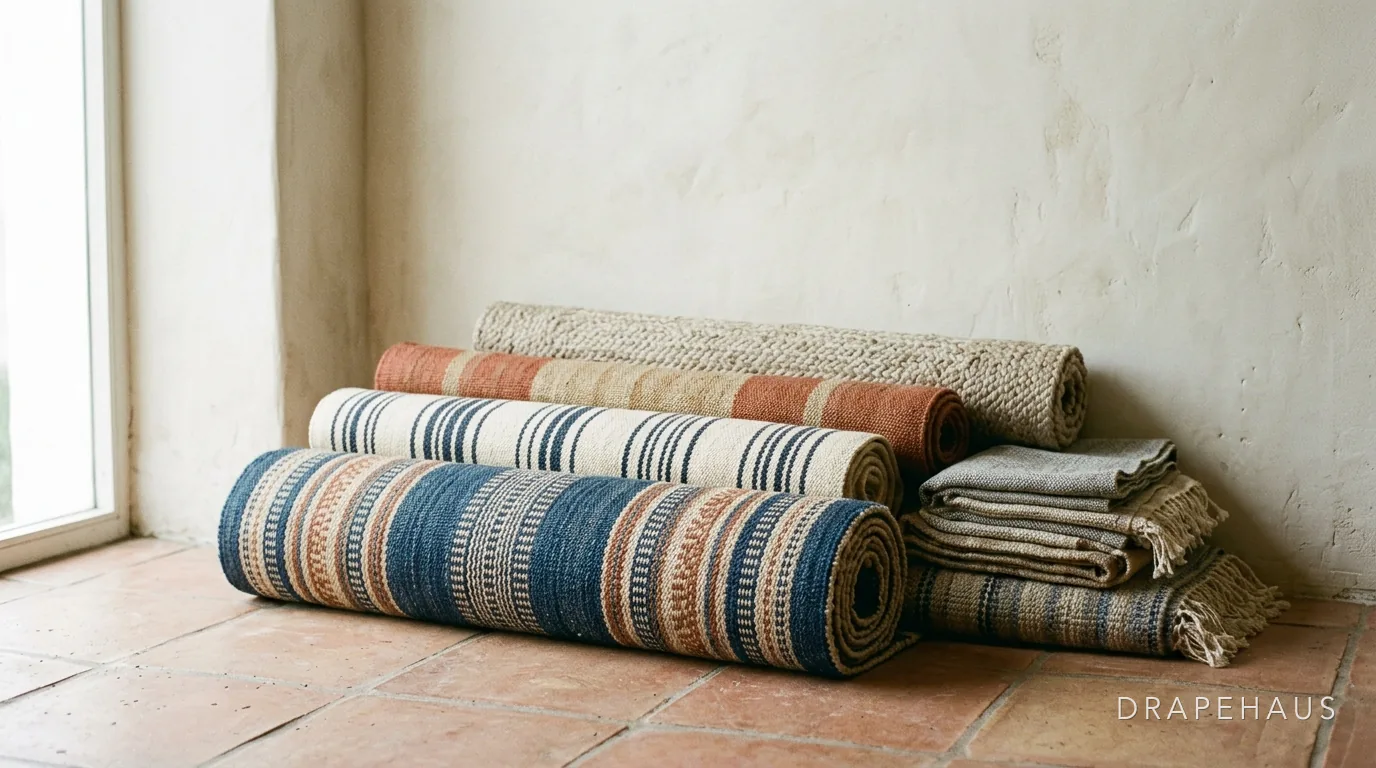
Rugs, runners and fitted carpet chosen for a humid climate. Most of what we supply in coastal Goa is rugs that can be lifted, aired and cleaned; in sealed, air-conditioned rooms fitted carpet comes into its own.
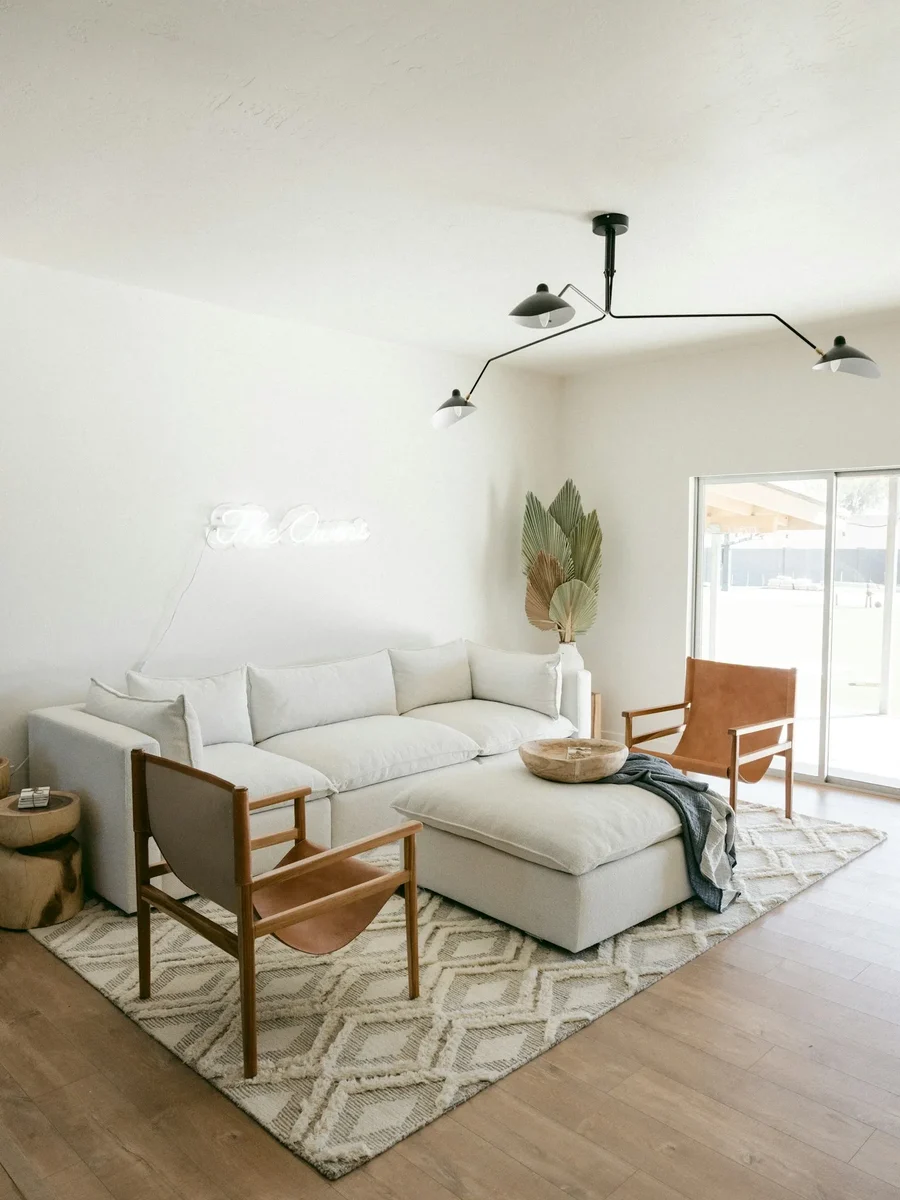
8 × 10 ft · advised
Room
Rug style
Standard sizes (ft)
Rug
8 × 10 ft
2.4 × 3.0 m
Floor border
3.0 ft
each long side
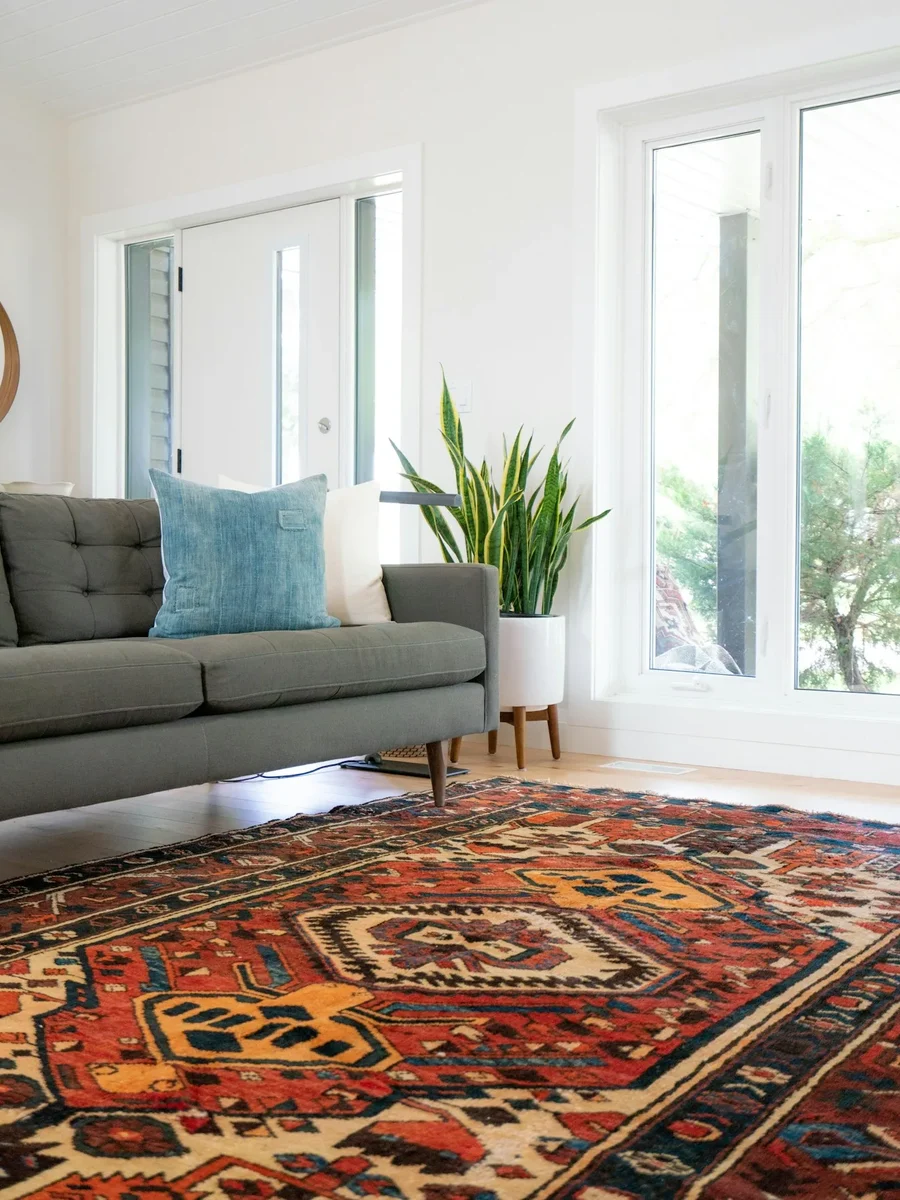
In a sitting area, the front legs of every sofa and chair should rest on the rug, with a margin of bare floor around it. We confirm the size on site, against the real furniture.
Our carpet collection
In short
By the Drapehaus studio · How we write
Is it right for you?
Every textile on a floor near the sea is working against the same two things: moisture from the air and grit from outside. Pile fibres hold humidity, and a rug lying on cool stone or tile can trap a thin layer of damp beneath it for weeks in the rains. So the first question is not colour or pattern but whether the piece can breathe, be lifted and dry out. The answer decides most of the rest.
For that reason the backbone of a coastal house is usually a set of loose rugs rather than fitted carpet: a wool or hand-knotted piece under the main seating, flatweaves where people come in from the garden or the beach, and a harder-wearing modern construction in rooms that see children, pets or a rotation of guests. Each can be taken up, shaken, rolled and stored when the house closes.
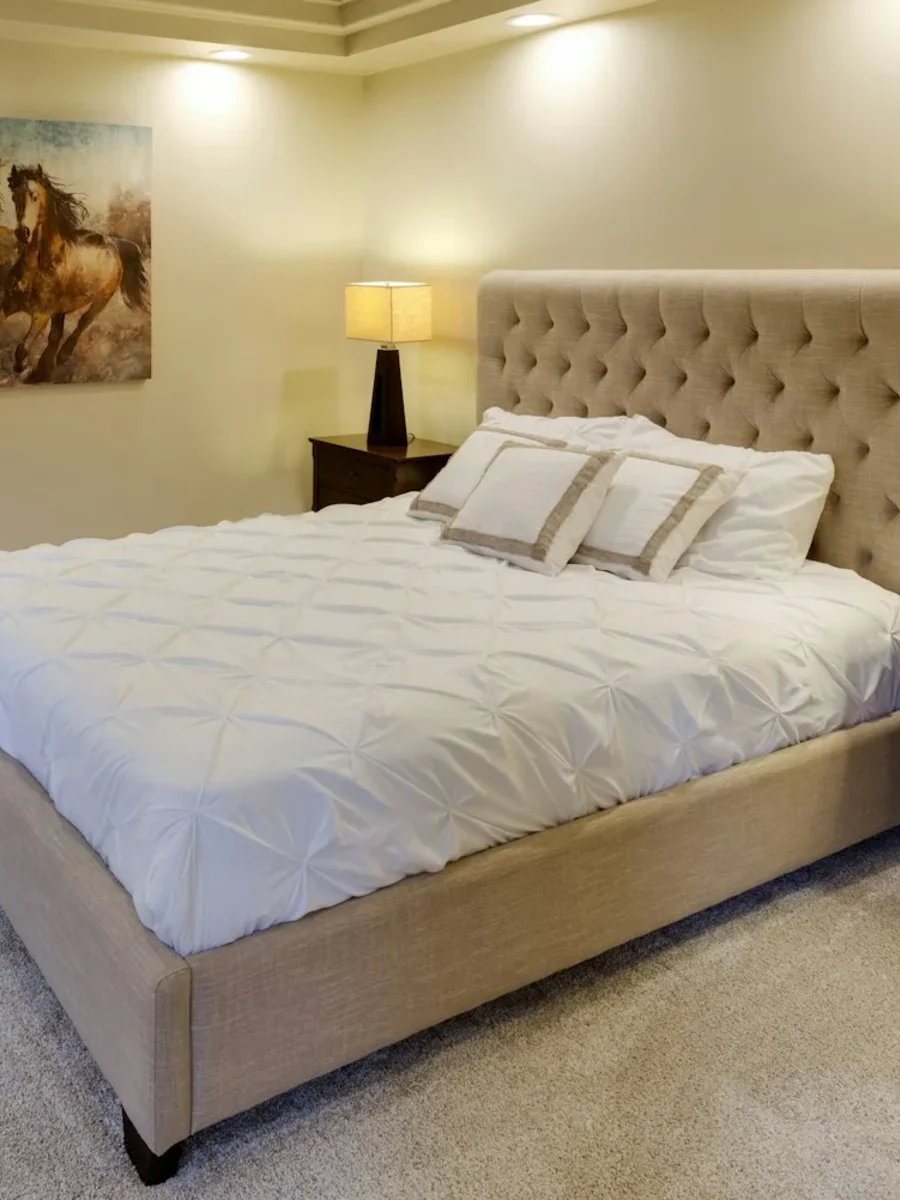
Fitted carpet still has a real place. In a bedroom, media room, study or hotel suite that is sealed and air-conditioned all year, humidity is controlled and carpet does exactly what it is good at: warmth, quiet and softness from wall to wall. Where a room is naturally ventilated, or the air-conditioning is switched off for months while the owners are away, we would steer you to rugs instead.
Your options
The categories below overlap, but each answers a different room and a different way of living. Most houses we work in end up with two or three of them.
Swipe for all 5 →
The honest view
They make a hard-floored room liveable
Stone, tile and polished concrete stay cool, which is why they suit the coast, but they are loud and echoing. A rug of the right size absorbs footfall and voices, softens the acoustic and marks out where people sit.
They define zones in open plans
In a long room that runs from dining to sitting to verandah, rugs are how you tell the eye where one area ends and the next begins, without adding walls, steps or furniture.
Loose rugs move with the seasons
A rug can be lifted, aired, cleaned and rolled for the monsoon, then relaid in a different room or orientation. That flexibility is worth more in a humid house than any single performance claim.
Colour and pattern without commitment
A rug brings a room its strongest colour or pattern at floor level, and can be changed or rotated far more easily than paint, tile or upholstery when the scheme moves on.
Pile holds moisture and grit
Any pile rug in a naturally ventilated room will absorb humidity during the rains and collect sand from outside. It needs regular vacuuming and the occasional airing, or it will start to smell and dull.
Rugs can slip and curl
On polished stone and tile a loose rug will creep and its corners can lift. A correctly specified underlay solves this, but it is an extra item to choose, and the wrong kind can trap damp.
Sun fades natural fibres
Strong low light through a west-facing door or window will fade wool, silk and cotton unevenly over a few seasons. It needs managing with placement, rotation and window treatments.
Fitted carpet is a narrow choice
In the right cooled room it is excellent, but in a ventilated room near the sea it is hard to dry, cannot be taken up for the monsoon and is the floor textile most likely to develop odour.
Side by side
How the five categories behave on the things that decide their life in a humid house. These are general tendencies; a specific construction can move a column one way or the other.
| Fitted carpet | Wool rug | Hand-knotted | Dhurrie | Modern synthetic | |
|---|---|---|---|---|---|
| Humidity tolerance | Only in cooled rooms | Good with airflow | Good with airflow | Very good | Very good |
| Can be lifted and stored | No | Yes, rolled | Yes, rolled | Yes, rolls small | Yes, rolled |
| Sand and grit | Holds it | Hides, needs vacuuming | Hides, needs vacuuming | Shakes out | Hides, cleans easily |
| Softness underfoot | Highest | High | Medium to high | Low | Medium to high |
| Stain resistance | Depends on fibre | Good | Moderate | Cotton washes | Very good |
| Acoustic softening | Most | High | High | Some | High |
| Suits rentals | Cooled suites only | Yes, with care | Rarely | Yes | Yes |
Swipe to compare →
If a room is not air-conditioned all year, start from the rug columns rather than fitted carpet.
Rather see it in your own room?
We bring samples to the house, measure every window, and specify for the light and exposure you actually have.
Room by room
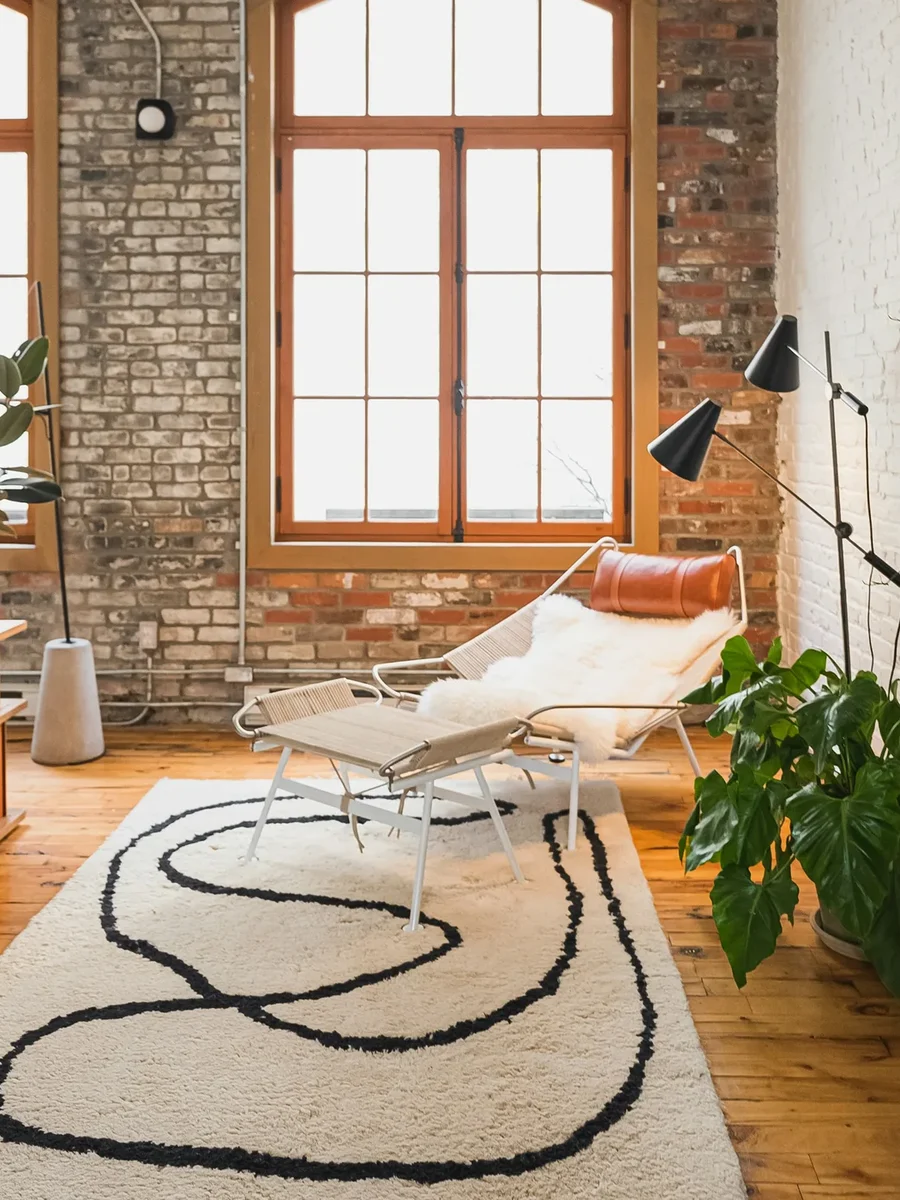
A large wool or hand-knotted rug under the main seating, sized so at least the front legs of every piece sit on it. Add a flatweave near garden doors to take the first of the traffic.
Either fitted carpet, if the room is sealed and cooled year round, or a rug under the lower two-thirds of the bed that extends well beyond the sides so feet land on it.
Washable cotton dhurries or a stain-resistant modern rug. Avoid silk and delicate hand-knotted pieces until the floor is no longer a play surface.
A flat or low-pile rug large enough that chairs stay on it when pulled out. Deep pile catches chair legs and crumbs; a fine antique suffers under constant chair movement.
Low-pile carpet or a firm rug that a desk chair can roll on. In a cooled study, fitted carpet or carpet tiles give the quietest room for calls.
Flatweaves or outdoor-rated synthetic rugs only, under cover. Take them in during the rains; driven rain and standing water will ruin any rug left out.
Only cotton bath mats or washable flatweaves that are hung to dry daily. Carpet and pile rugs do not belong on a wet floor in a humid climate.
In depth — tap a heading to read
The commonest error with rugs is buying one too small. A small rug floating in the middle of a room makes the furniture look as if it is drifting away from it. The rule we work to is simple: size the rug to the furniture group, not the floor. In a living room that means at least the front legs of the sofa and chairs sit on the rug; in a generous room, all four legs of every piece.
Standard sizes follow from this. A 5 x 8 ft rug suits a small sitting area or the side of a bed; 6 x 9 ft a compact seating group; 8 x 10 ft most living rooms with a three-seater and two chairs; 9 x 12 ft and larger an open-plan seating area or a king bed with bedside tables. Leave a margin of bare floor around the rug on all sides so it reads as intentional, and keep that margin roughly even.
From June to September morning relative humidity in coastal Goa runs at around 87 to 91 per cent, well above the 60 per cent the US EPA gives as the level beyond which mould becomes likely. Fibres such as wool and cotton take up moisture from that air, and a rug laid on a cool stone floor can hold a damp layer on its underside that never quite dries. The result is the musty smell many people associate with rugs in the rains.
The remedy is airflow rather than any particular fibre. Choose underlays that breathe rather than solid rubber sheets, lift or turn back rugs in the monsoon so the floor and the rug's back can dry, and run fans or dehumidifiers in rooms that stay shut. Salt air adds a second problem near the water: fine crystals settle in pile, attract moisture and act as a slow abrasive, which is one more reason for regular vacuuming.
A rug that can dry out fully every few weeks will survive a monsoon. One that stays damp underneath will not.
Layering a smaller pile rug over a larger flatweave is one of the most useful tricks in a coastal house. The flatweave, often a jute or cotton dhurrie, sets the size of the seating area and takes the grit, while the smaller wool or hand-knotted piece on top gives colour and softness where feet actually rest. It also lets a treasured rug of an awkward size work in a room that needs something larger.
Across a whole house, think of rugs as a family rather than separate purchases. Repeat a colour or a texture from room to room, vary the scale of pattern so neighbouring rugs do not compete, and let one piece in each sightline be the strongest. A hand-knotted rug in the main room reads better when the rugs around it are quieter.
An underlay stops a rug moving on polished floors, cushions its construction against stone and protects the floor finish. On stone and tile, a thin felt-and-rubber or open-mesh underlay grips without sealing the back of the rug. On old timber, check that nothing in the underlay will react with the floor finish, and lift the rug now and then so the boards can breathe. Fitted carpet needs its own underlay, chosen for the subfloor and the traffic.
Edges deserve the same attention. A made-to-size rug needs binding or serging that suits its construction, so the edge lies flat and does not fray when it is rolled for storage. The fringe on a hand-knotted rug is the ends of its warps, which hold the knots in place, and should be secured by a restorer rather than trimmed off when it wears.
Living with it
Weekly vacuuming with suction only, no beater bar on hand-knotted or wool rugs, removes the grit that cuts fibres at the base of the pile. Near the sea, do it more often; salt and sand are both abrasive.
Blot spills from the outside in with a clean white cloth and plain water. Rubbing spreads the stain and roughens the fibre. Leave anything larger to a specialist cleaner.
Turn rugs end to end once or twice a year to even out wear and sun. In the monsoon, lift a corner or turn rugs back on dry days so the floor and the back can dry.
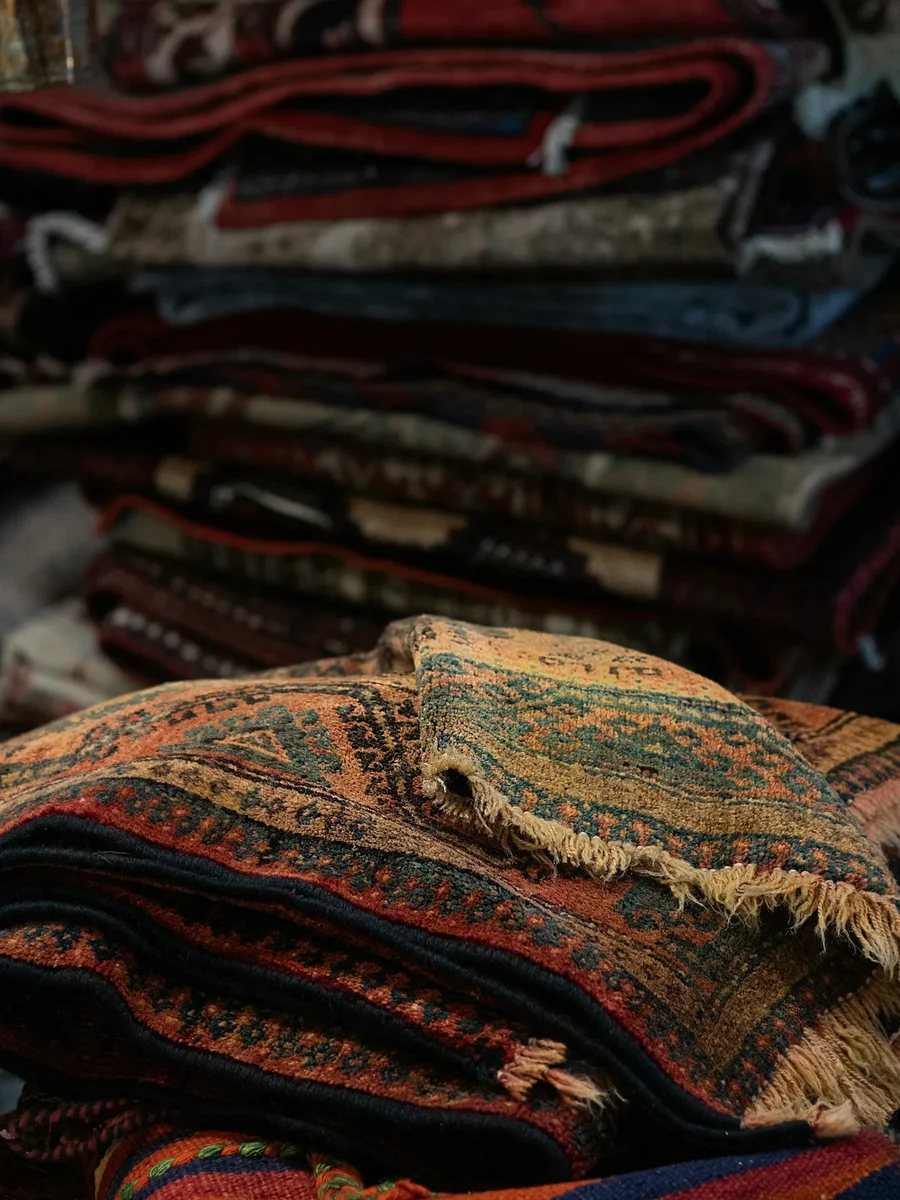
For a closed house, clean and dry each rug, roll it pile outward around a tube, wrap it in cotton rather than plastic and store it off the floor in a ventilated room.
Avoid these
Carpet laid in a room with open windows near the sea stays damp and cannot be lifted. Use rugs there, and keep fitted carpet for rooms that are cooled all year.
A rug that only fits under the coffee table breaks the room into pieces. Measure the furniture group and size up; if in doubt, the larger size is usually right.
A sealed rubber sheet stops slipping but traps moisture between rug and floor. Choose a breathable underlay that grips without sealing.
The first metre inside an outside door takes all the sand, water and traffic. Put a washable flatweave there and move the precious rug further in.
Checklist
Chosen for the climate
A rug that cannot be lifted is a problem in a house closed for the monsoon. We size rugs to the room and the furniture, bind and edge them to measure, and advise which pieces should be rolled and stored when the house is shut — and which can stay down all year in a cooled room.
From the Journal
All articlesFAQ
Rugs, in most rooms — they can be lifted and aired. Fitted carpet works well in sealed, air-conditioned rooms where humidity is controlled.
Yes. We supply rugs and runners to size, bound and edged to measure.
Clean them, let them dry fully, then roll them — never fold — and store them somewhere ventilated and off the floor.
Measure the seating group rather than the room. For most living rooms with a three-seater sofa and two chairs, an 8 x 10 ft rug lets at least the front legs of every piece sit on it. Larger open-plan seating often needs 9 x 12 ft or a made-to-size rug. Leave an even border of floor showing around the edge.
There is no single best fibre; airflow matters more. Flat-woven cotton and jute dry fastest, synthetics and blends absorb the least moisture, and wool buffers humidity well if it can breathe. Silk and viscose are the least forgiving. Pair any of them with a breathable underlay and a plan for the monsoon.
Use a rug underlay cut slightly smaller than the rug. On stone and tile, a thin felt-and-rubber or open-mesh underlay grips the floor without sealing the back of the rug. Avoid solid rubber sheets, which trap damp, and avoid adhesive tapes, which can mark stone and damage the rug.
It depends on traffic and fibre. A wool or hand-knotted rug in a busy living room usually benefits from a professional wash every year or two, ideally after the monsoon so it can dry fully. Lightly used rugs can go longer; washable cotton flatweaves can be cleaned at home as needed.
Next step
We start with a visit to the house. We look at the floors, the light and how each room is used, measure the furniture groups and note which rooms are cooled. We bring samples and rugs to see on your own floor, in the room's own light, and advise on sizes, fibres, underlays and what to do when the house closes. Then we source or make each piece to size, finish the edges and lay it. Book a home visit and we will plan the floors room by room.
Fabrics for the climate
Specified for salt, sun and monsoon.
Measured on site
Every window, every time.
Fitted by our team
The people who plan it, fit it.
Rooted in Goa
A local workshop serving North and South Goa.