 Drape Haus
Drape Haus
Preparing the room
Drape Haus
Preparing the room
Sofas
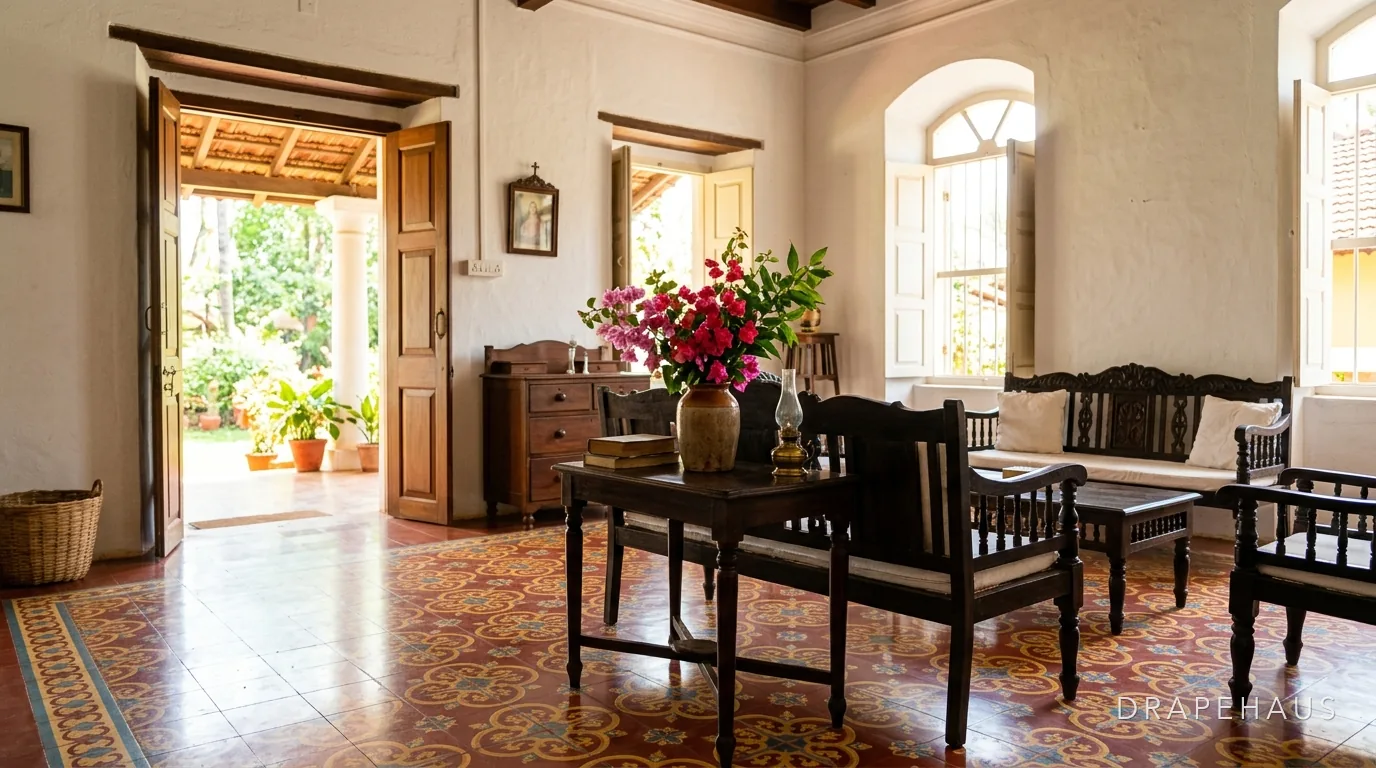
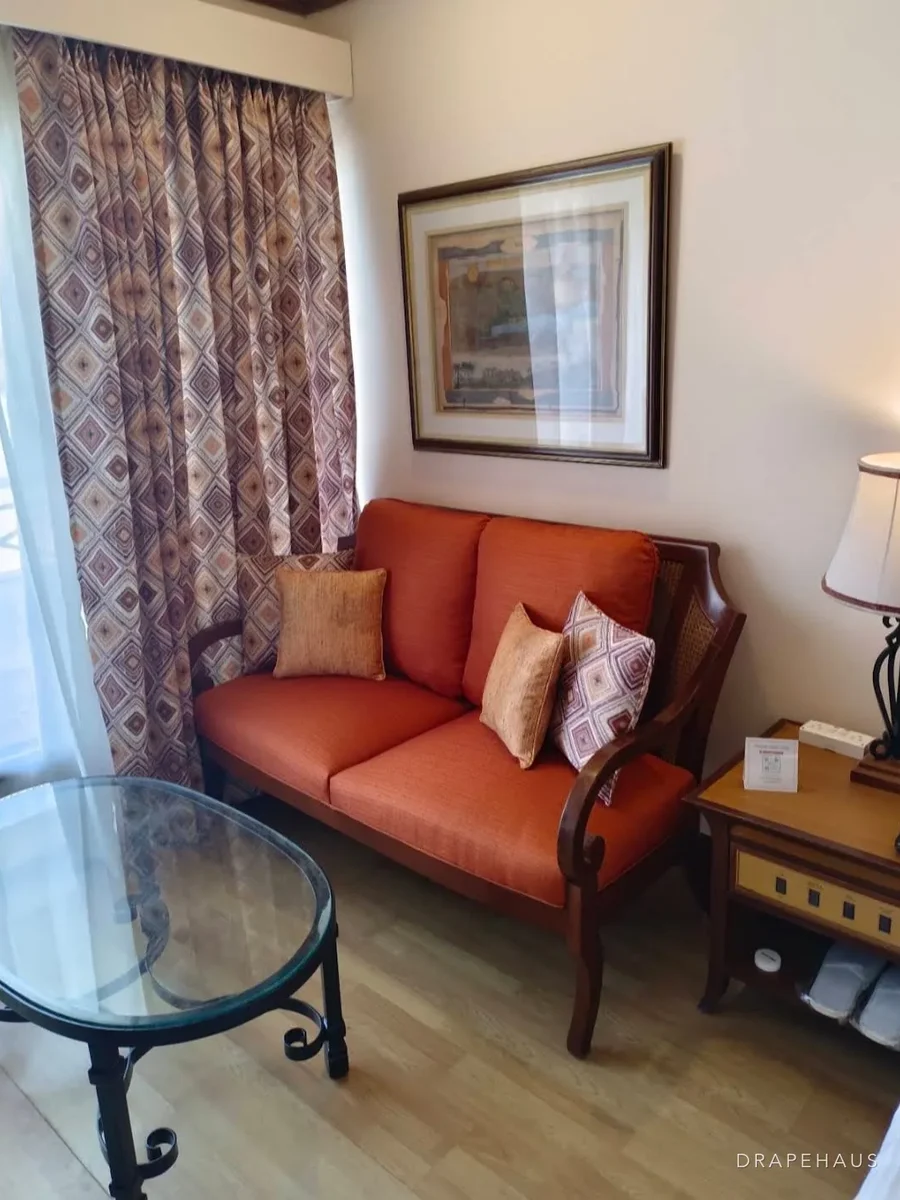
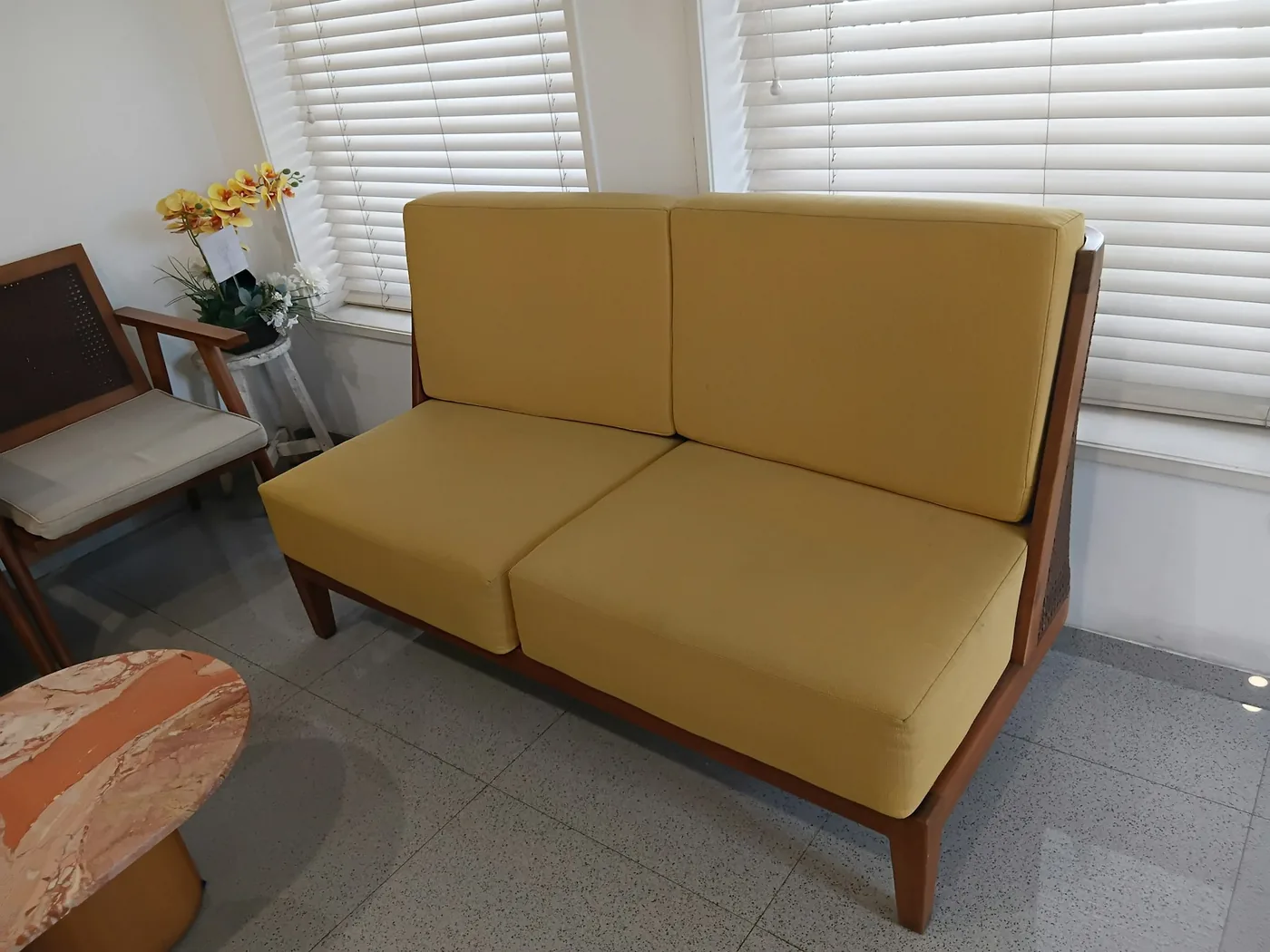
A wooden sofa shows its frame: carved arms, turned legs, a cane or slatted back, with loose cushions laid on top. It is the seating of the old Goan drawing room, and made properly it outlives the people who first sat on it.
Durability scale (Martindale rubs, BS 2543)
15k
20k
25k
30k
40k
Who uses it
Where it lives
How it is used
Durability to ask for
30,000+ rubs
Severe domestic / general contract
Removable covers
Yes
zipped, washable, and a spare set
Fibres that suit
Avoid: Anything you cannot clean in place, on a piece used every day. Rub count is one number among several — weave, colour-fastness and how a fabric handles humidity matter as much. We bring samples to see in your room.
In short
By the Drape Haus studio · How we write
Is it right for you?
A wooden sofa is a different object from an upholstered one. The frame is the design: you see the arms, the legs, the apron rail and often the back, and the cushions sit on top as a separate layer. That makes it lighter to look at, easier to clean around and far easier to refresh, because the cushions and covers can be replaced many times over the life of one frame.
It suits Goan houses particularly well. Wood stays cool to the touch in April and May, it does not trap heat the way a fully padded sofa can, and it belongs in rooms with lime-washed walls, red oxide floors and tall shuttered windows. Many families also have an old carved settee they would like to match or restore, and a new set can be designed to sit beside it.
It is a less obvious choice for a household that wants to sink into a sofa for a long film, or for very young children who will climb over hard arms. And it asks more of you in the monsoon: exposed timber needs its finish kept whole, or damp air finds the grain. If you want deep, enveloping softness, a fully upholstered sofa built to size is the better fit.
The details
The difference between a wooden sofa set that lasts and one that fails in three monsoons is almost entirely in the timber. We use seasoned hardwood with its moisture brought down before a single joint is cut, treat every member against termites and borers, and join it with mortise-and-tenon and dowelled joints rather than screws into end grain.
Because the wood is on show, the finish matters as much as the frame. A sealed polish that closes the grain keeps out the damp air that lets mould bloom on bare timber, and it is chosen for how it will age in a room with open windows, not a showroom.
The cushions are where comfort lives. Seats and backs are made to the frame's exact internal size, in foam densities set to how deep the seat is, and covered in fabric that can come off for washing after the wet season.
We make wooden sofas as single pieces or as matched sets of a three-seater, a two-seater and armchairs, from clean modern lines with slim arms to the deeply carved settee forms found in Portuguese-era houses.
Your options
Wooden sofas range from heavy carved pieces to light, almost Scandinavian frames. The style decides how much timber is on show, how the cushions sit and how much care the piece will need.
Swipe for all 5 →
The honest view
Cool and airy
Exposed wood and slatted decks let air move under and around the cushions, which is noticeably more comfortable in the hot months and helps the seat dry out in the wet ones.
Easy to refresh
Cushions and covers are separate from the frame, so new covers or new foam give the sofa a fresh life without touching the joinery.
Long-lived frame
A well-jointed hardwood frame can last generations, and if a joint loosens it can be reglued and pinned, which is rarely possible with a stapled upholstered frame.
Belongs to the house
Timber suits the materials of a Goan house, from laterite and lime plaster to oxide floors and wooden ceilings, in a way that heavy padded furniture often does not.
Firmer to sit on
Even with thick cushions, a wooden sofa is firmer than a sprung, fully upholstered one, and the arms are hard to lean on.
Finish needs upkeep
Polish wears on arms and edges, and worn patches let moisture and mould into the grain during the monsoon unless they are re-sealed.
Termite exposure
Wood on a floor in Goa is wood within reach of termites. Treatment, good timber and a yearly look underneath are not optional.
Cushions can slide
Loose cushions on a smooth deck tend to creep forward. Grip backing, ties or a raised front rail solve it, but it has to be designed in.
Side by side
Most people choosing a wooden sofa are weighing it against a fully upholstered sofa or a cane and rattan piece. Here is how they compare in a humid coastal house.
| Wooden frame, loose cushions | Fully upholstered | Cane or rattan | |
|---|---|---|---|
| Comfort for long sitting | Good, firmer | Best, softest | Moderate |
| Airflow in hot weather | Very good | Poor to moderate | Excellent |
| Refreshing the look | New covers easily | Full reupholstery | New cushions |
| Monsoon care | Keep the polish whole | Air the fabric and foam | Keep away from damp walls |
| Termite risk | Moderate, needs treatment | Hidden in the frame | Low for cane, frame varies |
| Lifespan of the frame | Very long | Long if hardwood | Moderate |
Swipe to compare →
A good compromise for many families is a wooden sofa in the living room and fully upholstered armchairs beside it, which mixes the cool frame with deeper comfort.
Rather see it in your own room?
We bring samples to the house, measure every window, and specify for the light and exposure you actually have.
Room by room
The traditional home for a carved settee or a matched set, where the timber suits the floors, doors and ceilings around it.
A slatted frame with thick, removable cushions handles daily use well, and covers can be washed after spills or the wet season.
Under a deep roof, a wooden sofa works if the timber is naturally durable and the finish is exterior-grade. Exposed to rain, it will not last.
Durable and easy to keep fresh between guests, provided the cushions have zipped covers and the frame finish is hard-wearing.
For long evenings of films, the firmer seat and hard arms are less comfortable than a deep upholstered or reclining sofa.
Rising damp and termites both come from below. Keep the sofa clear of the wall and check the legs and underside regularly.
In depth — tap a heading to read
The species gets the attention, but seasoning does the work. Freshly sawn hardwood holds a great deal of water, and as it dries it shrinks and moves. If a sofa is built before that movement has happened, the joints open, panels split and the frame racks out of square within a year or two.
We use timber that has been dried, by kiln or by long air-drying, to a moisture level close to what it will settle at in a Goan room, and then let it rest in the workshop before cutting. Dense heartwood of species such as teak and sheesham resists rot and insects naturally; paler sapwood does not, so we keep it out of structural parts.
Plantation and mango-type woods can make attractive frames at a lower spend, but they are softer and less resistant to insects, so they rely more heavily on treatment and a sound finish. We will tell you plainly which timber suits the piece and the room.
Ask how the timber was dried, not just what it is. A fine species that is still wet will fail before an ordinary one that is properly seasoned.
Goa's warmth and humidity suit termites and wood-boring beetles. Termites come up from the ground, through walls and floors, and eat wood from the inside, often leaving a thin intact surface. Borers lay eggs in the grain, and the larvae tunnel for months before adults emerge through small round holes, leaving fine powder beneath.
Protection starts with the timber choice and continues with treatment. We treat every frame member before it is polished, paying particular attention to end grain, joints and the feet, which are the points of entry. Legs can be fitted with sealed or capped feet so they do not sit directly on a damp floor.
After delivery, the best defence is attention. Once a year, tip the sofa and look at the underside and the feet. Powdery dust, small holes or soft, papery patches all need treating straight away; caught early, the frame can almost always be saved.
Bare wood breathes damp air in and out. In the monsoon, when indoor humidity can stay very high for weeks, that moisture feeds mould on the surface and lets the timber swell. A sealed finish slows the exchange, so the wood moves less and mould has nothing to grip.
We use a polish that closes the grain and choose its sheen to suit how the sofa will be used: matt or satin hides fingermarks and wear better than high gloss, and it is easier to touch up. On arms, where hands and elbows wear the finish fastest, we build up extra coats.
If white or greenish bloom appears on the wood, it is usually surface mould. Our journal piece on fungus on wooden furniture explains how to clean it safely and stop it returning; the short version is to dry it, wipe it with a mild solution, let it dry fully and then restore the finish so the grain is closed again.
The cushions decide whether a wooden sofa is used every day or admired from a distance. Seat cushions need to be thick enough to hide the slats and dense enough not to bottom out, and they should be cut to the exact internal size of the frame so they neither gape at the sides nor bulge at the front.
Back cushions can be loose, tied to the rails, or replaced by long bolsters, depending on the back's angle and height. A slightly reclined back with a firm cushion is the most comfortable for reading; an upright back suits formal conversation.
Covers should be removable with concealed zips, so they can be washed after the wet season or swapped for a lighter cloth in summer. Our sofa covers service makes fitted replacement covers for existing wooden sofas, and the sofa fabric simulator lets you try colours and weaves against the timber before you choose.
Living with it
Use a soft brush on carved and turned details. Water left in crevices is where mould and finish damage begin.
Leave a small gap between the sofa back and an outside wall so air circulates and damp from the wall does not reach the timber.
Touch up worn polish on arms and front rails in April or May, so the grain is closed before the monsoon humidity arrives.
Remove and wash cushion covers at the end of the wet season, and air the foam in shade before putting them back.
Check the underside and feet for powder, holes or mud tubes once a year, and treat at the first sign.
Avoid these
A frame made from unseasoned wood looks perfect on delivery and opens at every joint after its first dry season.
Cushions chosen to look neat rather than to sit on leave you feeling the slats within weeks. Comfort comes from depth and density.
High-gloss polish shows every scratch and wear mark on arms. A satin finish ages more gracefully and is easier to repair.
Legs standing in mopping water or against a damp floor draw moisture and insects into the frame. Sealed or capped feet prevent both.
Checklist
More in sofas
Seating made to size, which matters in Goan houses where rooms are rarely the proportions furniture is manufactured for.
Our work
Our process
One team from the first visit to the last bracket, so nothing is lost between the person who specified it and the person who fits it.
FAQ
A dense, naturally durable hardwood such as teak or sheesham, properly seasoned and treated. Seasoning matters as much as species: a good timber that is still wet will move, split and open its joints in the first dry season.
Untreated softwood and sapwood are at real risk in Goa. We use heartwood where it matters, treat the frame before finishing, and keep the legs off damp floors. Check the underside each year for powdery dust or small exit holes.
They are as comfortable as their cushions. A well-made set has a seat deep enough to sit back in, a back angle that suits reading or conversation, and cushions thick enough that you never feel the slats beneath.
Yes. We measure the frame, cut new foam to fit, and make fresh covers. If the frame itself is loose or damaged, we can also assess whether it is worth repairing.
Keep the polish intact, keep air moving around the frame and wipe the wood with a dry cloth through the wet months. Bare or worn patches are where mould starts, so re-polish them before the rains rather than after.
Both are dense, durable hardwoods. Teak has natural oils that help it resist moisture and insects and weathers well even under a verandah roof. Sheesham has a richer, more varied grain and polishes beautifully indoors. For a frame in a humid room, either works when properly seasoned and treated.
Under a deep roof, yes, if the timber is naturally durable and the finish is exterior grade. Where driven rain reaches it, choose a dedicated outdoor sofa with quick-dry cushions instead.
Often. We can reglue loose joints, treat for insects, restore the finish and make new cushions. Where the settee has a fixed upholstered seat, our reupholstery service rebuilds it. If termites have hollowed out structural parts, we will say so honestly.
A breathable, medium-weight weave such as a cotton-linen blend or a textured polyester blend works well on a slatted frame. In a sunny room choose a fade-resistant fabric, and near the sea a blend that dries quickly after humid weeks.
Next step
We visit the room, look at the floors, walls and any furniture you want the new set to sit beside, and talk through timber, style and how firmly you like to sit. We bring timber and finish samples to see in the room's own light, and fabric for the cushions. The frame is then built from seasoned, treated hardwood, finished and fitted with cushions made to its exact size. Book a home visit to start.