 Drapehaus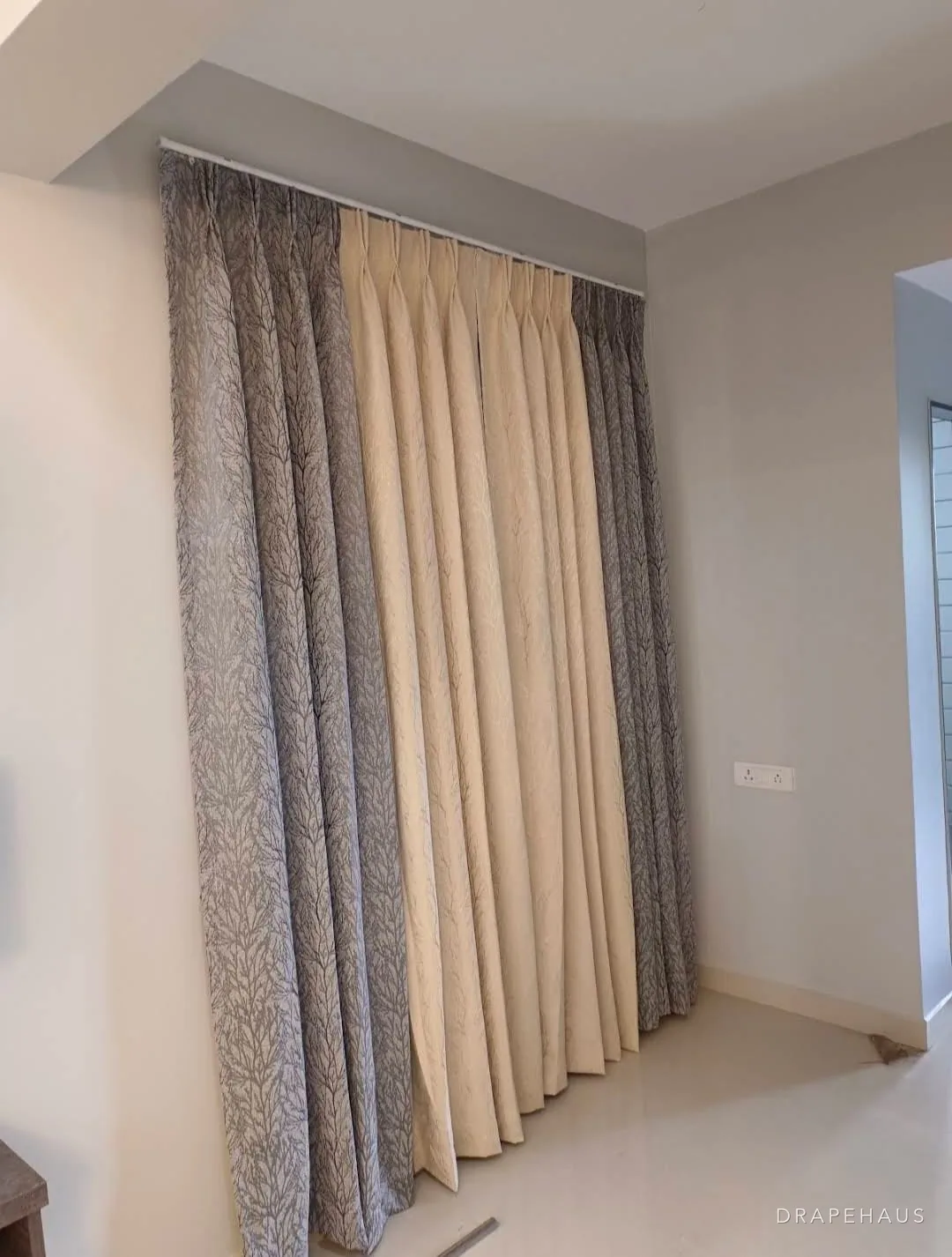
Drapehaus
Preparing the room
Drapehaus
Preparing the room
Vertical blinds simulator
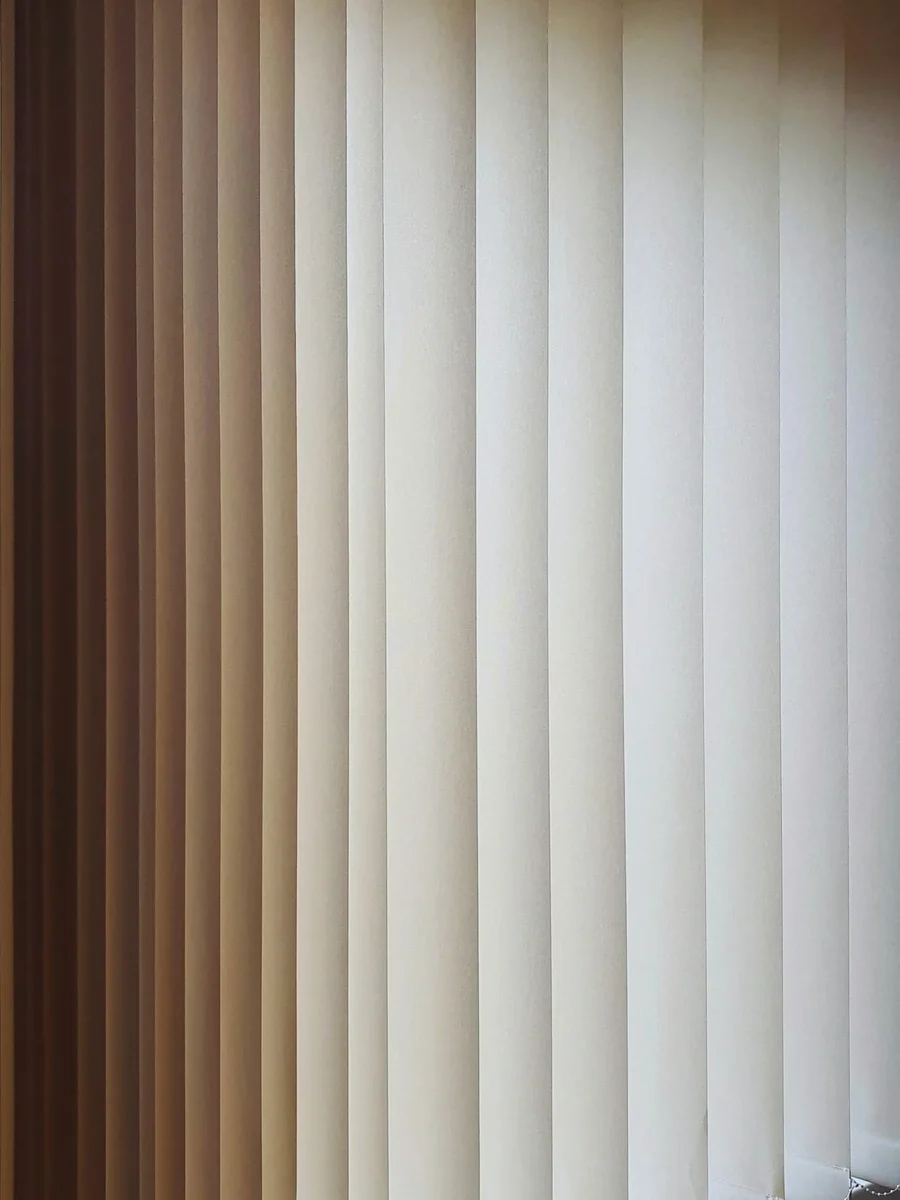
Vertical blinds hang as tall vanes from a track at the head of the opening. They turn to let light in and draw aside to clear the doorway. Turn them below.
Vertical · Midday
Treatment
Time of day
Vanes that turn and stack to one side — made for wide sliding doors, where a horizontal blind would be too heavy to lift.
In short
Vertical vanes do two things: they rotate, like Venetian slats stood on end, and they draw to one side, like a curtain. That makes them a practical answer for wide sliding doors, where a horizontal blind would be heavy to lift and would sit across the path through.
Using the simulator
The simulator opens on Vertical. Drag the Tilt slider to 0%: the vanes close into a continuous fabric wall, and Daylight in reads Low.
Turn them towards 100%. The vanes narrow as they swing edge-on, and the sea appears between them.
Switch to Golden hour with the vanes part-open, and watch how much low sun still reaches the floor.
At Night, compare the vanes fully closed with the Wooden slats setting. Fabric vanes read Good, timber High.
What the simulator shows
Each vane hangs from its own carrier in the headrail. A cord, chain or wand turns a rod inside the track that rotates every carrier together, so the vanes swing in step, like a row of doors on pivots.
In the simulator the vanes narrow as you tilt them, because you are seeing them turn from face-on to edge-on. At 0% they overlap into a closed wall of fabric; at 100% they stand in thin lines with the view between.
The same track lets the carriers slide. Pull the draw cord and the vanes gather to one side, or split to both sides from the centre, and the opening is clear. The simulator shows only the turning, but in a doorway the stacking is the point.
A stack takes some width at the side of the opening. Allow wall space for it, or it will sit across part of the glass when drawn back.
A horizontal blind across a wide door has to be lifted to walk through, and the wider it is, the heavier the lift and the deeper the stack. Verticals travel sideways, so you draw back only as much as you need to step out.
Vertical vanes also hang clear of the floor and do not sag across a long span, which suits the wide glass doors that open newer Goan living rooms onto a verandah or garden.
Part-turned by day, vanes block a direct look in from the front while light comes through at an angle, and the Daytime privacy meter stays up. The view from one side is more open than from the other, so angle the vanes away from the neighbour's side.
At night the fabric glows from inside and fine gaps show where vanes overlap. For a bedroom on a sliding door, a heavier fabric vane or a curtain on a track in front makes the room properly private.
| Vertical | Wooden slats | |
|---|---|---|
| Tilts | Side to side | Up and down |
| Clears the opening by | Drawing sideways | Lifting into a stack |
| Closed, daylight in | Low | None |
| Closed, privacy with lights on | Good | High |
| Best for | Wide sliding doors | Standard windows |
See it at your own window
The simulator narrows the choice. At the house we bring the real fabrics, hold them up to your light and measure every window.
In Goa
Sliding doors onto a balcão take the full weather: salt breeze, driving monsoon rain when the doors are open, and the low western sun. PVC or coated fabric vanes wipe clean and do not hold damp, and the weighted chain linking the vane bottoms stops them flapping when the doors are open to the breeze.
Ask for a corrosion-resistant track near the sea. A headrail that seizes in salt air is the usual reason a vertical blind stops turning.
FAQ
Vanes hang from carriers in a headrail track. One control turns them all to let light in; another slides them along the track so they stack to one side and clear the opening.
By day, yes, closed or part-turned. At night with lamps on, fabric vanes glow and show thin gaps where they overlap. A denser fabric or a curtain over them helps in bedrooms.
They are one of the best choices for a living room with a wide sliding door or a long run of glass, where a single horizontal blind would be too heavy.
Yes, particularly on a sliding door to a balcony. They do not darken a room completely, so add a blackout curtain if you need real darkness.
To the side of the door that does not slide, so the stack never blocks the way through. On a centre-opening door, split the stack to both sides.