 Drapehaus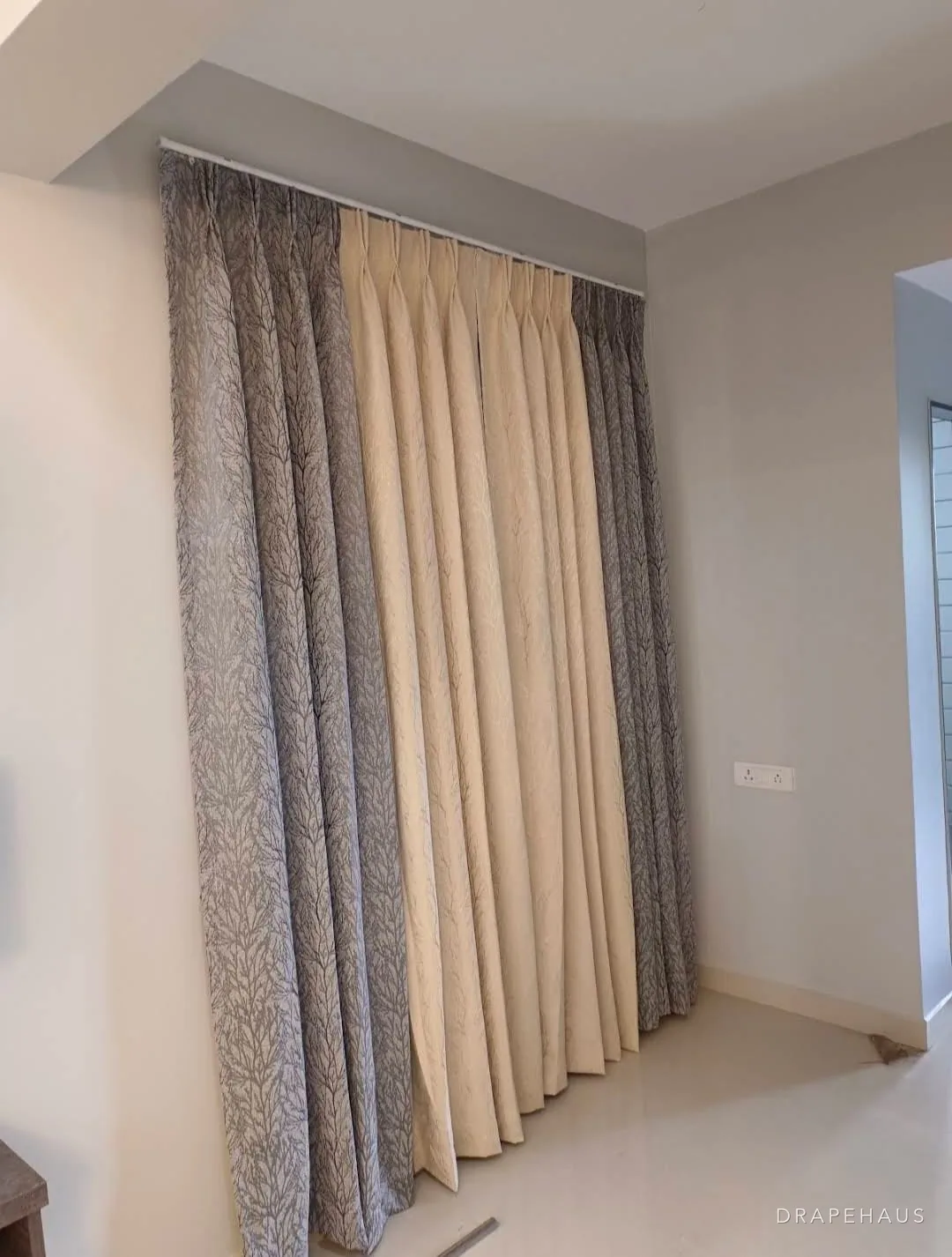
Drapehaus
Preparing the room
Drapehaus
Preparing the room
Layered curtains simulator
Two curtains, two jobs. The sheer stays across the window by day; the blackout closes over it at night. Move the slider below to see how the pair works through a whole day.
Sheer + blackout · Midday
Treatment
Time of day
Two layers on a double track: the sheer stays drawn for the day, the blackout closes over it at night. The most flexible answer for a bedroom.
In short
A double track lets a sheer and a blackout curtain run independently. With the blackout drawn back you keep light, a softened view and daytime privacy; closed, you get darkness and full privacy with the lamps on. It is the most flexible arrangement for a bedroom.
Using the simulator
Sheer + blackout is selected in the Treatment row. Set Drawn open to 100% so only the sheer covers the window.
Tap Midday: Daylight in reads Good and View out reads Some, through the sheer.
Tap Night and see Privacy, lights on sit at Low with only the sheer across.
Now bring Drawn open down to 0%. The blackout closes over the sheer and privacy rises to High.
What the simulator shows
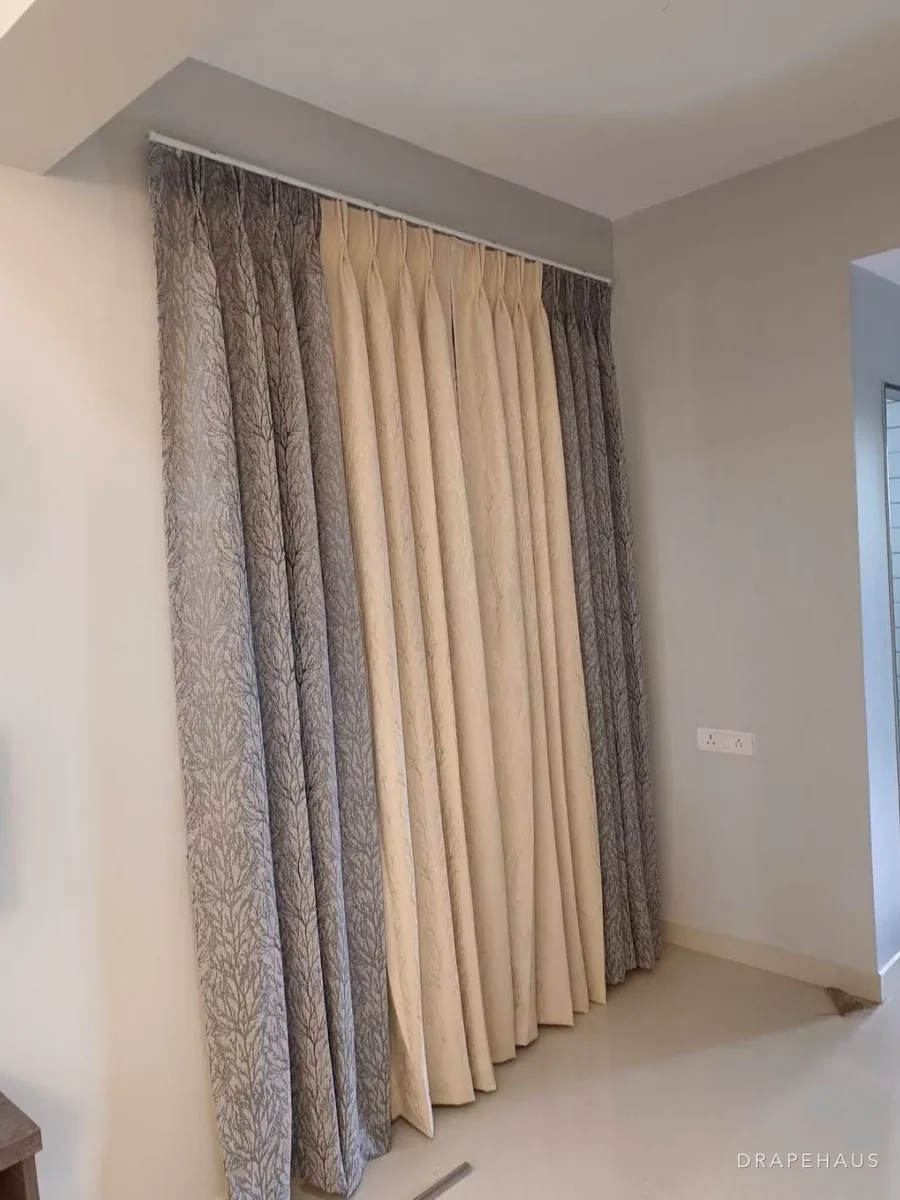
Two tracks, or a double pole, are fixed one in front of the other. The sheer usually hangs on the inner track, against the glass; the blackout on the outer track, facing the room. Each is drawn on its own.
In the simulator the Drawn open slider moves only the blackout. The sheer stays across the window, which is how most people live with a layered pair from day to day.
Both open: the full view. Sheer only: light, a soft view, daytime privacy. Blackout closed over the sheer: darkness. Anything in between: a strip of sheer for a line of light in the morning.
Walk the time of day from Morning to Night with the slider at 100%, then again at 0%, and you will see why this arrangement rarely asks for a compromise.
Blackout on the room side is the usual choice. It closes over the sheer, so its lining faces the window and its face fabric faces the room. The pale strip at the leading edge in the drawing is that lining.
Some rooms reverse it, with the sheer in front, for a softer look when the heavy curtain is closed. It works, but the blackout then sits behind the sheer and is harder to reach.
Keep the sheer light in colour, so it reads as light rather than fabric. Let the blackout carry the colour or pattern of the room. Hang both from a pole or track that runs past the window, so both layers stack clear of the glass.
In a living room the second layer can be lined rather than blackout. The idea is the same: one curtain for the day, one for the night. Try Lined in the Treatment row to see how that heavier layer behaves on its own.
| Blackout drawn back | Blackout half closed | Blackout closed | |
|---|---|---|---|
| Daylight in (midday) | Good | Some | None |
| View out | Some, through the sheer | Low | None |
| Daytime privacy | High | High | High |
| Privacy, lights on | Low | Good | High |
See it at your own window
The simulator narrows the choice. At the house we bring the real fabrics, hold them up to your light and measure every window.
In Goa
Many Goan bedrooms face the sea or the sunset, so the same window has to soften afternoon glare and then go dark for sleep. A sheer and a blackout on a double track do both without swapping anything.
In the monsoon, the sheer can stay across the window while the blackout is pulled back to let air reach the glass. In a house closed for months, drawing both back keeps damp from gathering between the layers.
FAQ
Yes, on a double track or a double pole. Each curtain runs on its own track, so you can draw one without moving the other.
Usually the blackout goes on the room side, with the sheer against the glass. It closes over the sheer at night, with its lining facing the window.
They are one of the best arrangements for a bedroom: soft light and daytime privacy from the sheer, darkness and full night-time privacy from the blackout.
You need a double pole, a double track, or two single tracks with enough space between them for both curtains to move freely. The fittings are chosen on site to suit the wall and ceiling.
No. They are relative guides based on how sheers and blackout curtains behave in general, so you can compare settings. Real results depend on the fabrics and how they are fitted.