 Drapehaus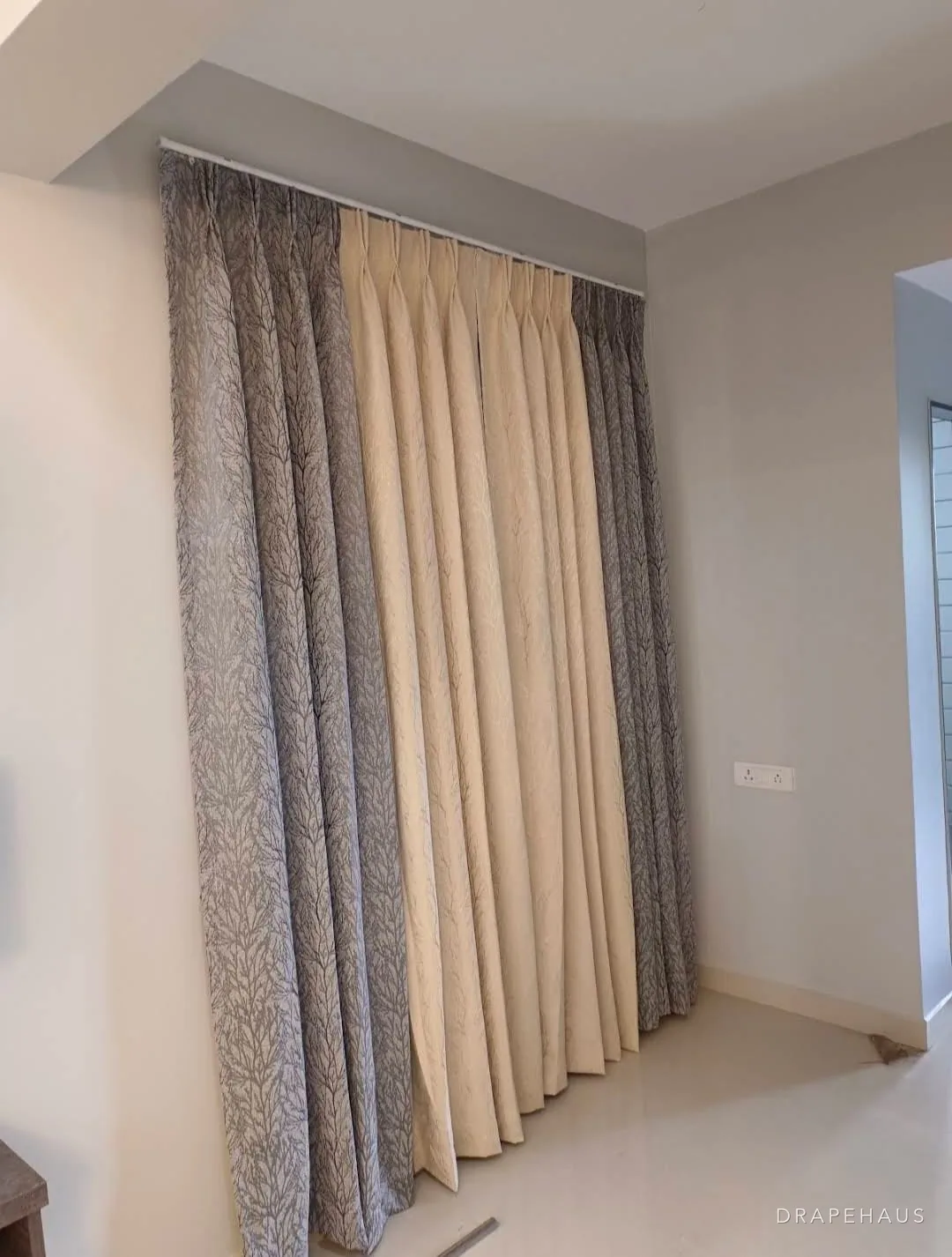
Drapehaus
Preparing the room
Drapehaus
Preparing the room
North Goa · Riverside villas and old houses
Siolim is a large village in northern Bardez on the south bank of the Chapora river, a few kilometres from Mapusa. It keeps many traditional Goan houses along its narrow, winding lanes, and in recent years has drawn a good number of new and restored villas. We visit Siolim by appointment from our workshop in Benaulim.
What we see in Siolim
Homes in Siolim — tap a heading to read
Siolim is one of the larger villages of northern Bardez, spread along the south bank of the Chapora river a few kilometres from Mapusa. It has kept much of its village character: narrow lanes winding between gardens, coconut palms and paddy, a busy church at its centre, and small fishing quays along the river. Its old Goan houses, with tiled roofs, verandas, balcões and tall shuttered windows, are one of the things people notice first, and some of them are several centuries old.
In the last few years Siolim has also become one of the villages where people come to build, buy or restore a home in North Goa. Many of the homes we visit here are villas, some newly built on old plots and some carved out of original family houses, often with a modern extension or a pool at the back. There are also plenty of ordinary family homes, lived in all year, and a number of homes let to guests who want to stay somewhere quieter than the beach villages nearby.
The mix means that no two Siolim projects are quite alike. An old house here may have lime-plastered walls, internal shutters and deep window reveals that deserve careful handling. A new villa next door may have wide sliding doors onto a lawn and a pool, with very little wall to hang anything from. Often the two sit on the same plot, and the owner wants the whole house to feel of a piece while each part keeps its own character. We find that a shared palette of natural fabrics, used more simply in the old rooms and more fully in the new, usually achieves that.
Planning work in Siolim?
We measure on site and bring samples to see in your own light — so the choice is made in the room, not from a photo.
Siolim sits back from the open sea, on the river, and that shapes its conditions. Salt is less of a daily problem than on the cliffs at Vagator or the beach at Calangute, although homes close to the river mouth still see some of it. The bigger issue is damp. River air, well-watered gardens and dense shade from trees mean that walls, floors and fabric can stay moist for long periods, particularly in older houses built with thick laterite walls and in rooms on the ground floor.
The monsoon here is as heavy as anywhere in North Goa. The IMD normal for the North Goa district is 3,347 mm of rain a year, about 91 per cent of it between June and September, and morning humidity at Panjim sits between 88 and 91 per cent through those months. In a house that is closed through the rains, curtains and upholstery sit in that air for weeks with no one to open a window, and mildew is the usual result. It is the main reason we suggest monsoon take-downs to many Siolim owners.
In the dry season, from November to May, conditions are kinder but still demanding. Rooms that face the river or open lawns can take strong afternoon sun, and verandas and pool terraces need fabrics that resist fading. Gardens and water also bring insects: mosquitoes are a real concern after the rains, and many owners want to be able to leave doors and windows open in the evening without inviting them in. Screens are therefore as important here as curtains. We make them to measure for timber, aluminium and uPVC frames, so they close properly on every opening.
Our workshop is in Benaulim, in South Goa, so we visit Siolim by appointment, usually on the same trip as other homes in Bardez such as Assagao, Anjuna and Mapusa. On the first visit we measure every window and door, look at the walls and ceilings for sound fixing points, and bring fabric, lining and blind samples to the house. In older houses we plan fixings that avoid fragile lime plaster and keep internal shutters free to close, and we will tell you if a window is better left as it is.
Many Siolim homes belong to owners who live abroad or in another city for part of the year, and some are being restored or extended when we first see them. We are used to working with architects, contractors, caretakers and villa managers, agreeing choices with owners by photographs and calls, and sending pictures as work progresses. Where a house is being built or restored, we coordinate with the contractor so that curtain tracks and any wiring for motorised blinds are planned before ceilings are finished.
Everything is made to measure in our own workshop and fitted by our own team. After installation we come back to adjust anything that has settled, and for homes that are closed through the rains we take curtains down in late May or early June, clean and store them dry, and rehang them after the monsoon withdraws in October. For owners who arrive for the season, we can time the rehanging so that the house is ready when they walk in, with curtains clean and rehung and any repairs already made.
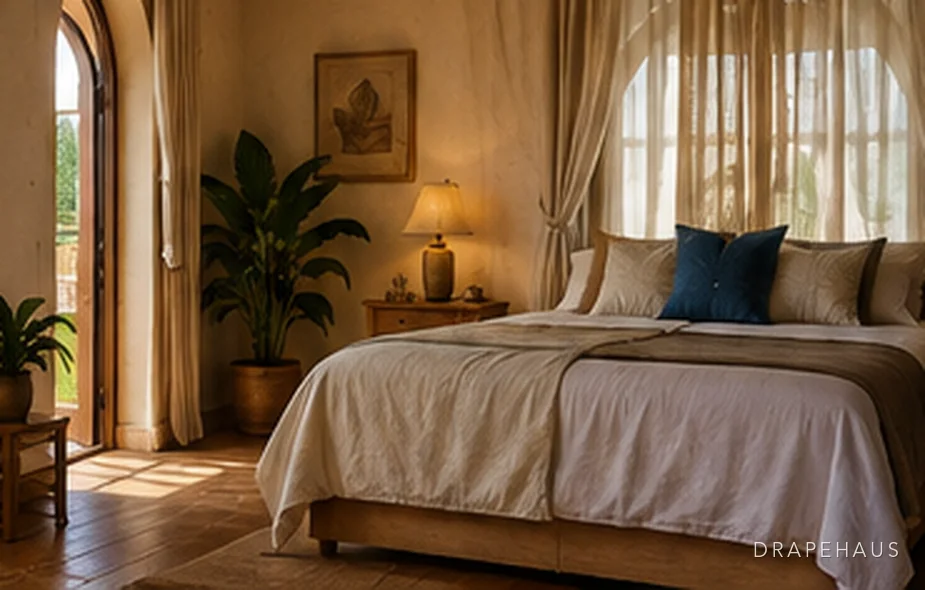
Owners of old Siolim houses usually ask for a light touch. They want to dress tall windows without hiding the shutters or the proportions, and to replace curtains that were hung too low or too narrow years ago. We often suggest poles or tracks set high and wide, simple unlined or lightly lined curtains in linen or cotton, and fabrics in colours that sit well against painted plaster and old floors. Where oyster-shell panes survive, we generally suggest leaving them uncovered, because the soft light they give is part of the house.
New and restored villas bring a broader brief: sheers and lined curtains for wide sliding doors, blackout for bedrooms, blinds for kitchens and bathrooms, insect screens for every opening that will be left open, and outdoor fabrics for verandas, daybeds and pool loungers. Some owners ask for motorised blinds for high windows or for rooms that are often empty, set to close in the hottest part of the afternoon to protect furniture and floors from sun. Where power cuts are a concern, we can suggest battery-powered options.
Upholstery and rugs complete many projects. We reupholster family furniture that has come through a few monsoons, make new sofas to fit a room exactly and make rugs to measure. For homes that are let, we choose hard-wearing, washable fabrics that stand up to guests and regular cleaning. Whatever the house, we will give you plain advice about what will last in Siolim's damp river air, and where a simpler choice will serve the house better than a more elaborate one. Much of what lasts in a house by the river comes down to airflow and upkeep rather than fabric alone.
What we make in Siolim
The homes we work in here
Humidity that never drops, insects at dusk, and a soft reflected light off the water.
Read the guide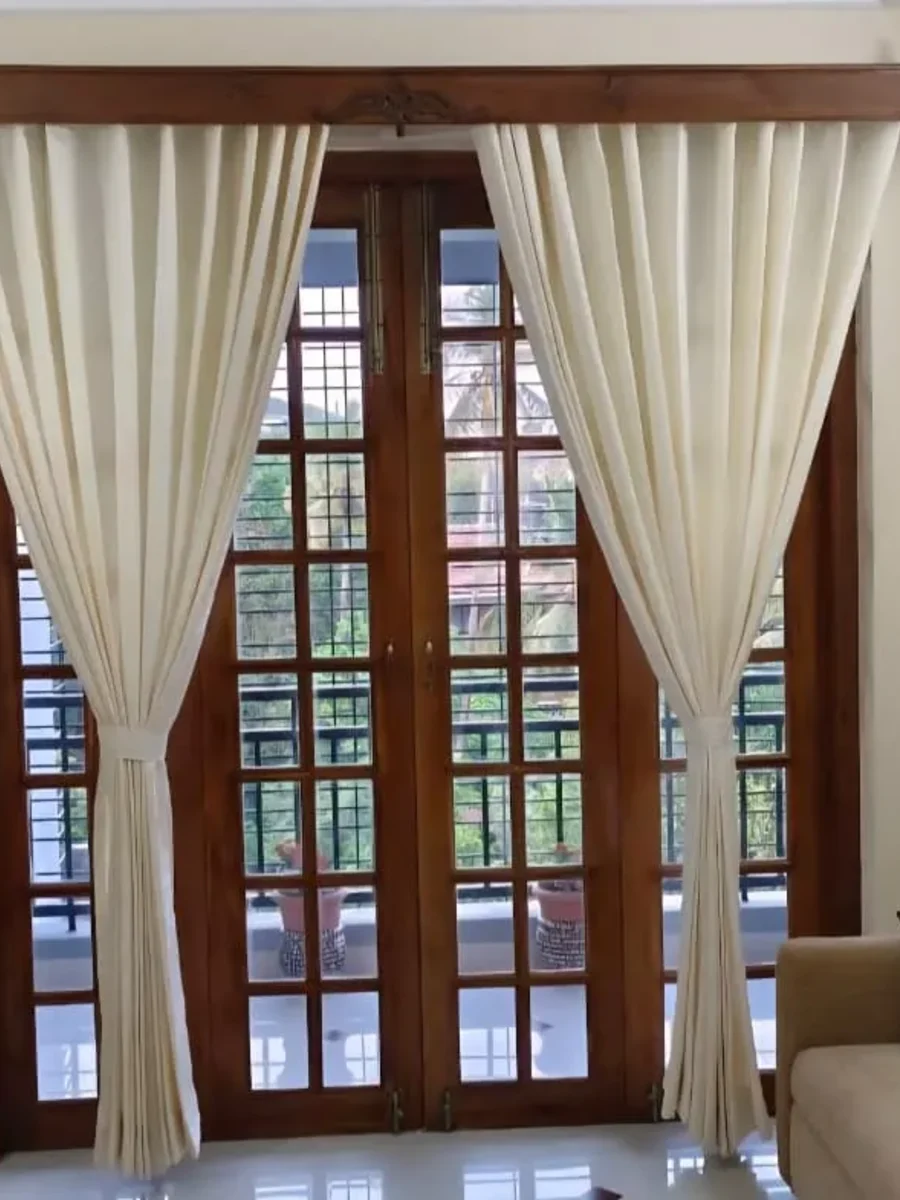
Deep reveals, tall shuttered openings and oyster-shell windows that modern curtain advice gets wrong.
Read the guide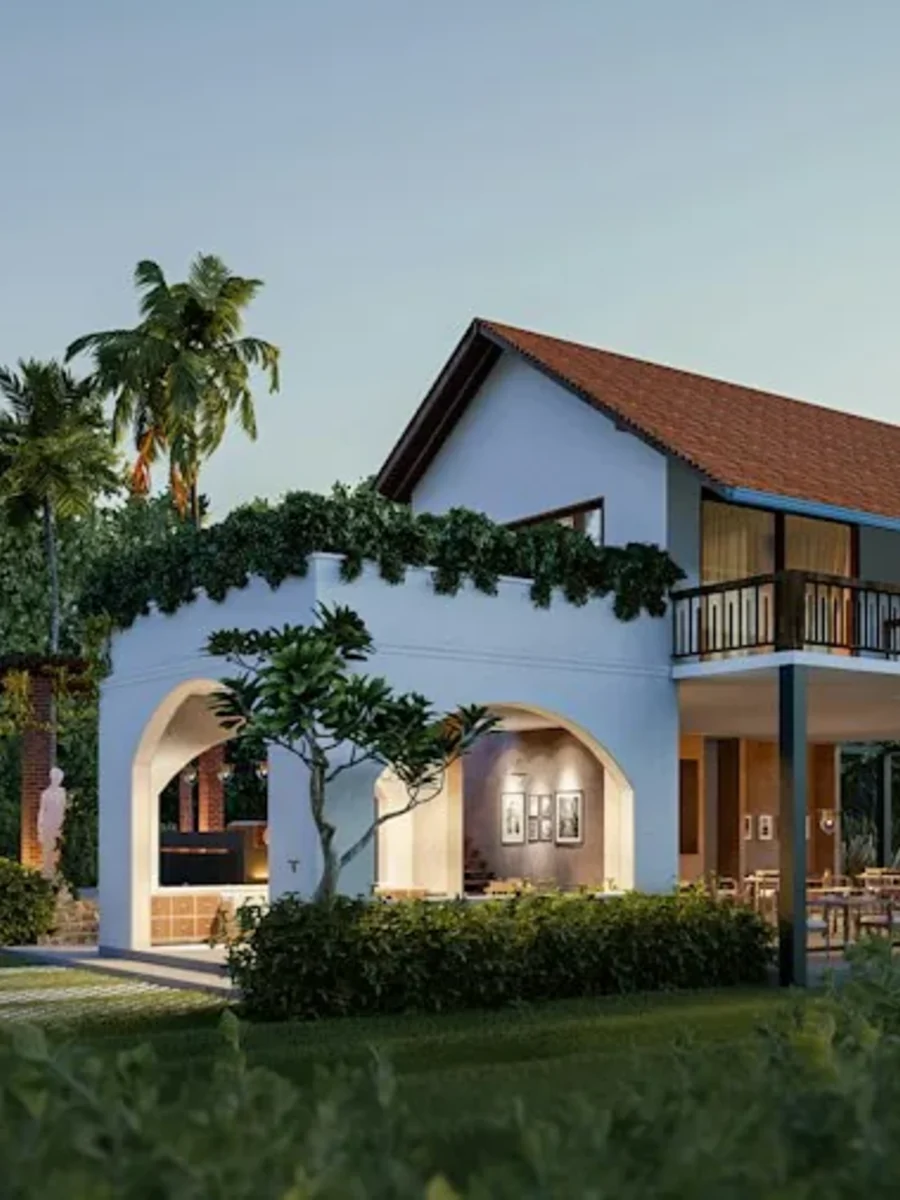
Old openings and new extensions in one building, each needing a different answer.
Read the guide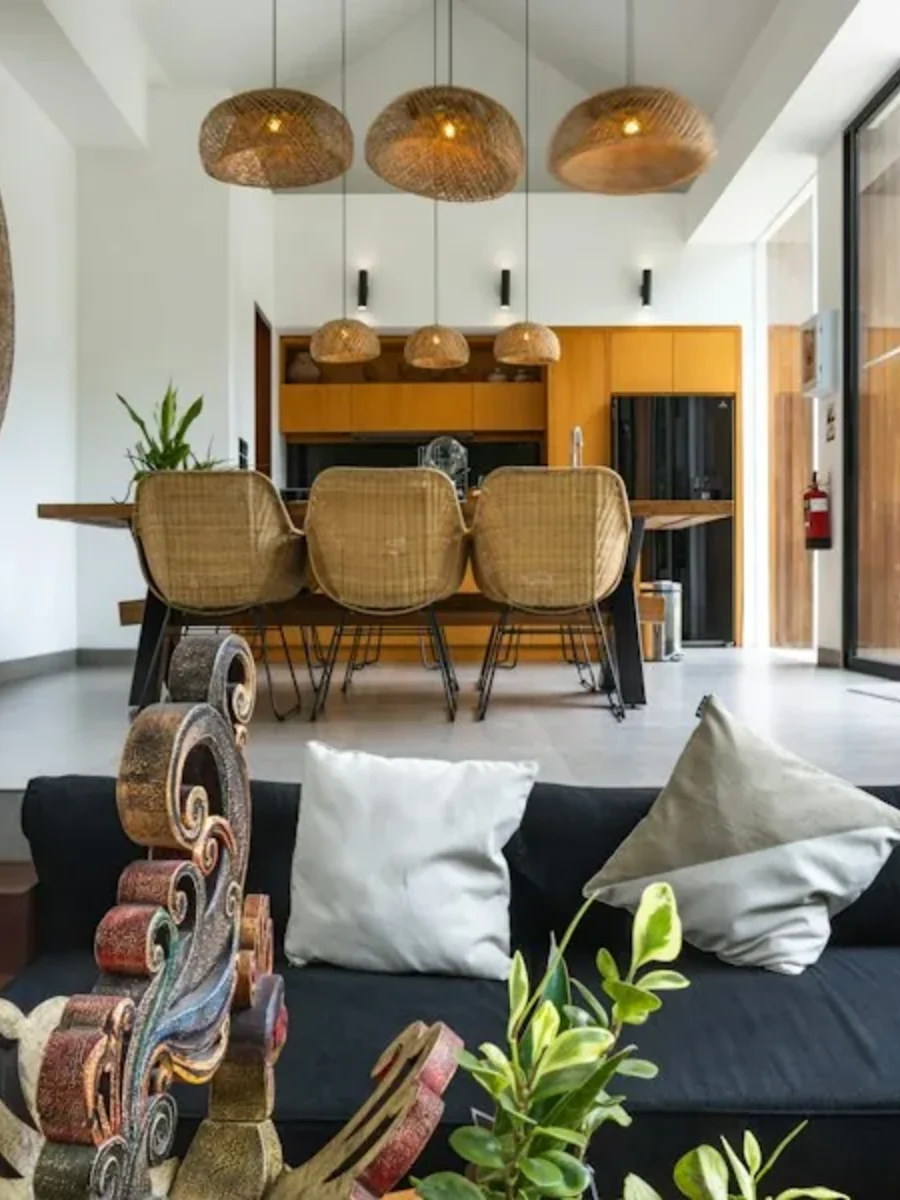
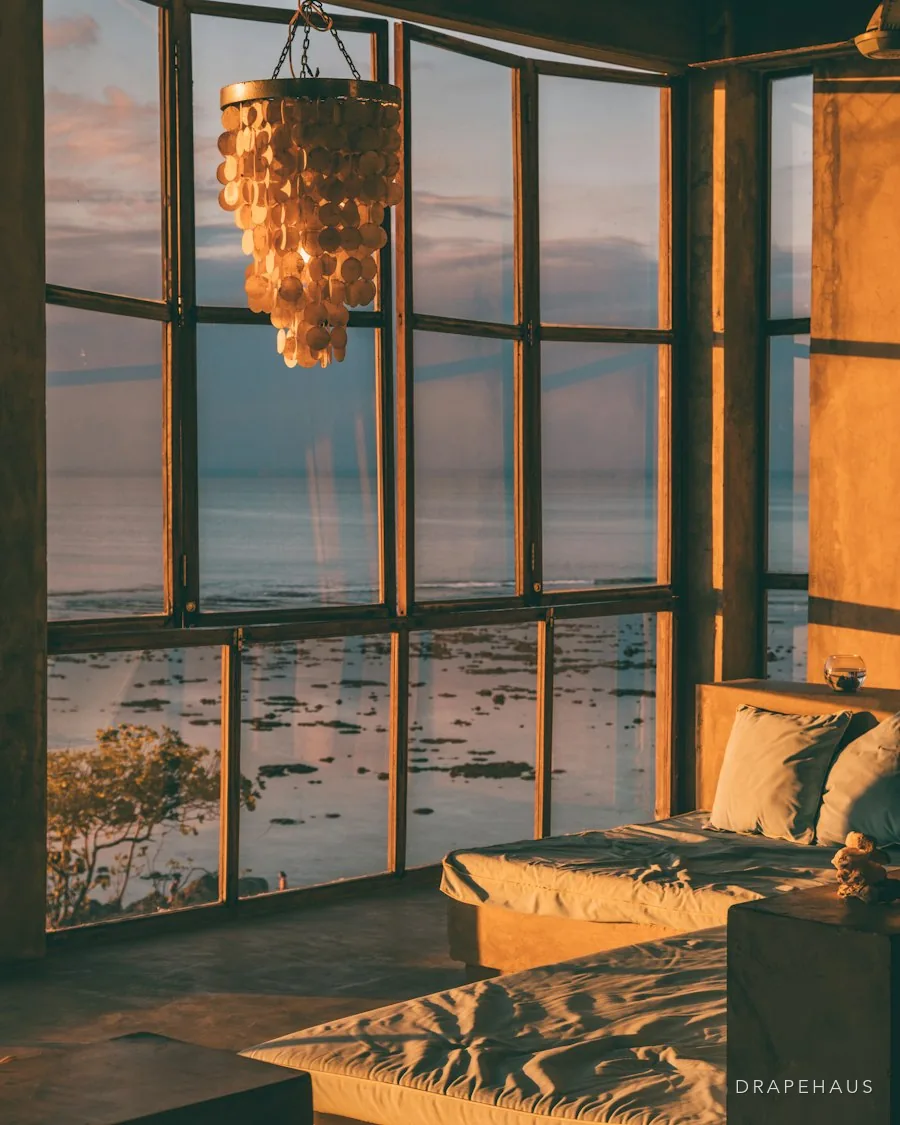
Double-height glazing, salt on every surface and months of the year with nobody home.
Read the guideFrom the Journal
All articlesFAQ
Yes. We work throughout Siolim and the neighbouring villages along the Chapora. Our workshop is in Benaulim, in South Goa, so Siolim visits are by appointment and we usually group them with other homes in Bardez. We measure, bring samples to the house, make everything in our own workshop and fit it with our own team.
Keep air moving, open curtains and windows on dry days even in the monsoon, and avoid fabric pressed against damp walls or pooling on the floor. We choose linings and fabrics that dry quickly. For houses closed through the rains, taking curtains down, cleaning and storing them dry is the most reliable answer.
Yes. Many Siolim owners live abroad or elsewhere in India. We can measure, fit and do monsoon take-downs with your caretaker or manager holding the keys, agree every choice with you by photographs and calls, and send pictures of the finished rooms.
Yes. We make screens to measure for each opening, which matters in older houses where windows are rarely perfectly square. We choose a screen type that fits without damaging the original frame, and we will point out any soft or damaged timber before fitting.
Yes, and it helps to involve us early. If we know the window sizes, ceiling details and any plans for motorised blinds before the ceilings are closed, tracks can be fixed properly and wiring put in the right place. We are happy to visit the site with your architect or contractor.