 Drapehaus
Drapehaus
Preparing the room
Drapehaus
Preparing the room
North Goa · Guesthouses and busy-coast homes
Calangute is one of the busiest stretches of the Goan coast, with hotels and guesthouses running almost unbroken towards Baga. Behind the beach it is still a village of family homes, alongside holiday apartments, villas and homes that let rooms in the season. We visit Calangute by appointment from our workshop in Benaulim.
What we see in Calangute
Homes in Calangute — tap a heading to read
Calangute's beach is one of the longest and busiest in Goa, and the strip behind it is lined with hotels, guesthouses, shacks and shops that run almost without a break towards Baga. That is the Calangute most visitors see. Step a few lanes back from the beach road, though, and you are still in a Goan village, with chapels, family homes and old houses set in gardens of coconut palms. The homes we visit here span that whole range, and the difference between them can be greater than the distance suggests.
Close to the beach, much of what we see is built for guests: guesthouses with anything from a handful of rooms to a few dozen, holiday apartments in small complexes, and villas that are let by the week. Further back, many families live in houses that have been extended over the years, sometimes with a floor or a wing added for paying guests in the season. There are older Goan houses with tiled roofs and verandas, and modern bungalows and apartments built as Calangute has grown.
What unites these homes is intensity of use. Rooms in Calangute are often occupied far more nights a year than rooms in a quieter village, whether by family, tenants or guests. Curtains are opened and closed by people who have never seen them before, sofas are sat on by a new set of visitors every week, and everything is cleaned far more often. We specify for that from the start, because a beautiful fabric that fails within a season is no favour to anyone who has to replace it.
Planning work in Calangute?
We measure on site and bring samples to see in your own light — so the choice is made in the room, not from a photo.
The nearer a home is to the beach, the more salt it takes. Salt in the sea air settles on glass, fabric and metal, and it corrodes ordinary steel tracks, brackets and blind mechanisms far faster than most owners expect. For homes near the sea we use corrosion-resistant hardware, and we choose fabrics that tolerate regular washing, because washing is the most effective way to get salt out of the weave before it draws in moisture and encourages mildew during the rains. Screens and outdoor blinds need the same care, since their frames and fixings sit on the outside of the window.
The monsoon here comes in on a west and south-west wind off the sea. From June to September humidity at Panjim sits between 88 and 91 per cent on a typical morning, and coastal homes are no drier. Many Calangute guesthouses close or run with few guests in these months, and rooms left shut up with curtains drawn are the ones most likely to grow mildew. In the dry season, from November to May, strong afternoon sun comes the other way and fades delicate fabrics in west-facing rooms within a season or two.
Then there is noise. In the peak season, especially around Christmas and the New Year, parts of Calangute stay busy late into the night. Curtains do not soundproof a room, but a full, lined curtain that reaches the floor and overlaps the window on both sides does soften noise noticeably, and it also gives the proper darkness that guests on holiday expect. We often combine it with a blackout roller blind in rooms that face a lane or a busy road. Family bedrooms in the village behind the beach often want the same arrangement for the same reason.
Our workshop is in Benaulim, in South Goa, so we visit Calangute by appointment and usually group the trip with other homes along the Bardez coast. On the first visit we measure every room, look at how each window faces the sea, the lane or the neighbours, and check walls and ceilings for fixing points. We bring fabric, lining and blind samples to the property so that you can choose in its own light. For guesthouses we also talk through how the rooms are cleaned and how often linen is changed.
Everything is made to measure in our own workshop and fitted by our own team. For guesthouses and let homes, timing is often the biggest constraint, so we plan work for the quieter months where we can: after the monsoon and before the season fills, or in the shoulder weeks when some rooms are empty. We can fit room by room so that the property keeps trading while we work, and we standardise sizes and fabrics where it makes spare sets and replacements easier. Standard sizes also mean a replacement can often be made from the original measurements without a fresh visit.
Aftercare is a large part of what we do here. Tracks and blinds that are used by many different people need occasional adjustment, and curtains in guest rooms need replacing sooner than those in a family home. We come back for repairs and adjustments, and we offer monsoon take-downs for properties that close through the rains, cleaning and storing curtains dry before rehanging them after the monsoon withdraws in October. For owners who live elsewhere, we work with managers and caretakers and send photographs of the finished work.
The most common request is for guest rooms that sleep well. That means genuine blackout, fitted so that light does not creep round the sides and top, and fabrics heavy enough to soften noise from outside. We also make the curtains simple to use: easy to draw, easy to take down and wash, and in colours that hide the marks of daily use. Many owners choose one or two standard specifications across all their rooms, which keeps replacement straightforward from one season to the next.
Insect screens are the next most frequent request, because guests want to sleep with the windows open and do not want mosquitoes. We make pleated, sliding and fixed screens to measure for timber, aluminium and uPVC frames, and choose frames and mesh that will stand up to salt air and frequent use. For verandas, balconies and pool areas we make cushions and covers in outdoor fabrics that dry quickly, resist fading and can be cleaned easily between guests. Removable covers with zips are worth the small extra effort, because they can be washed without taking the whole cushion away.
Family homes in the village behind the beach ask for much the same as family homes anywhere in Goa: curtains and blinds that give privacy from close neighbours, reupholstery for sofas and chairs that have suffered through a few monsoons, and new furniture or rugs made to fit a room exactly. Whatever the property, we will give you straight advice about what will last in Calangute, and where a simpler choice will serve you better than an elaborate one. We would rather you spend on the rooms that guests notice most.
What we make in Calangute
The homes we work in here
Guest turnover, genuine blackout and fabric that survives being handled by strangers.
Read the guide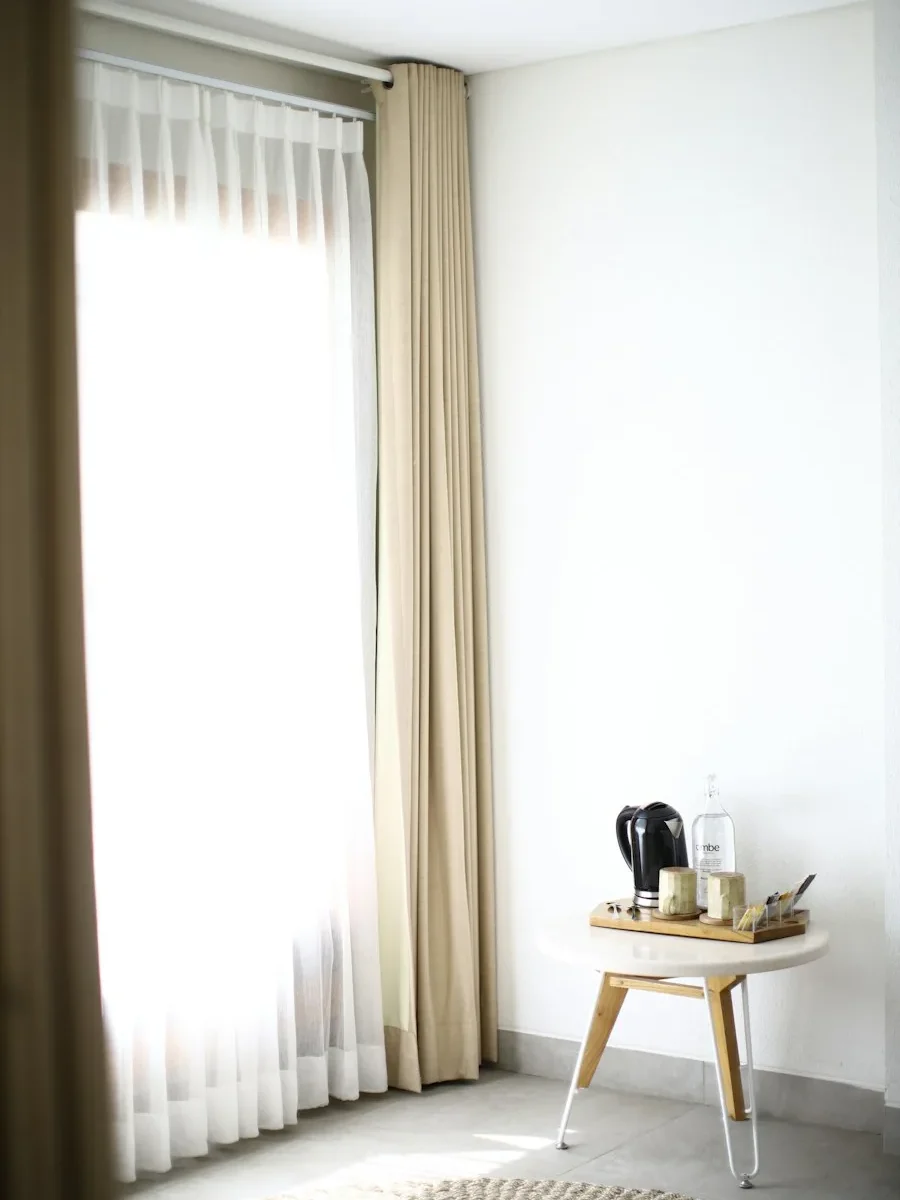
Let unfurnished or short-term, maintained remotely, and specified for tenants rather than owners.
Read the guide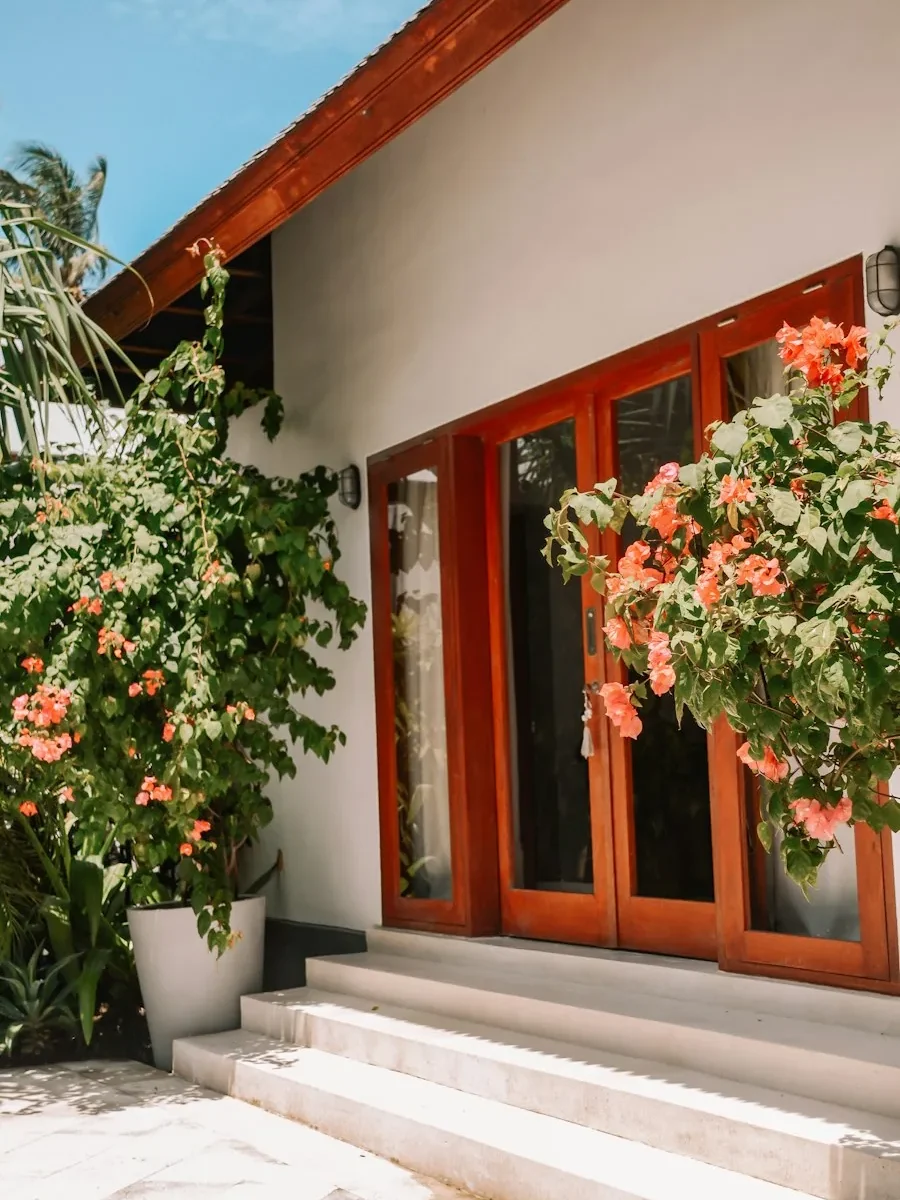
Balcão, small deep windows, thick walls and a way of living that curtains should not fight.
Read the guide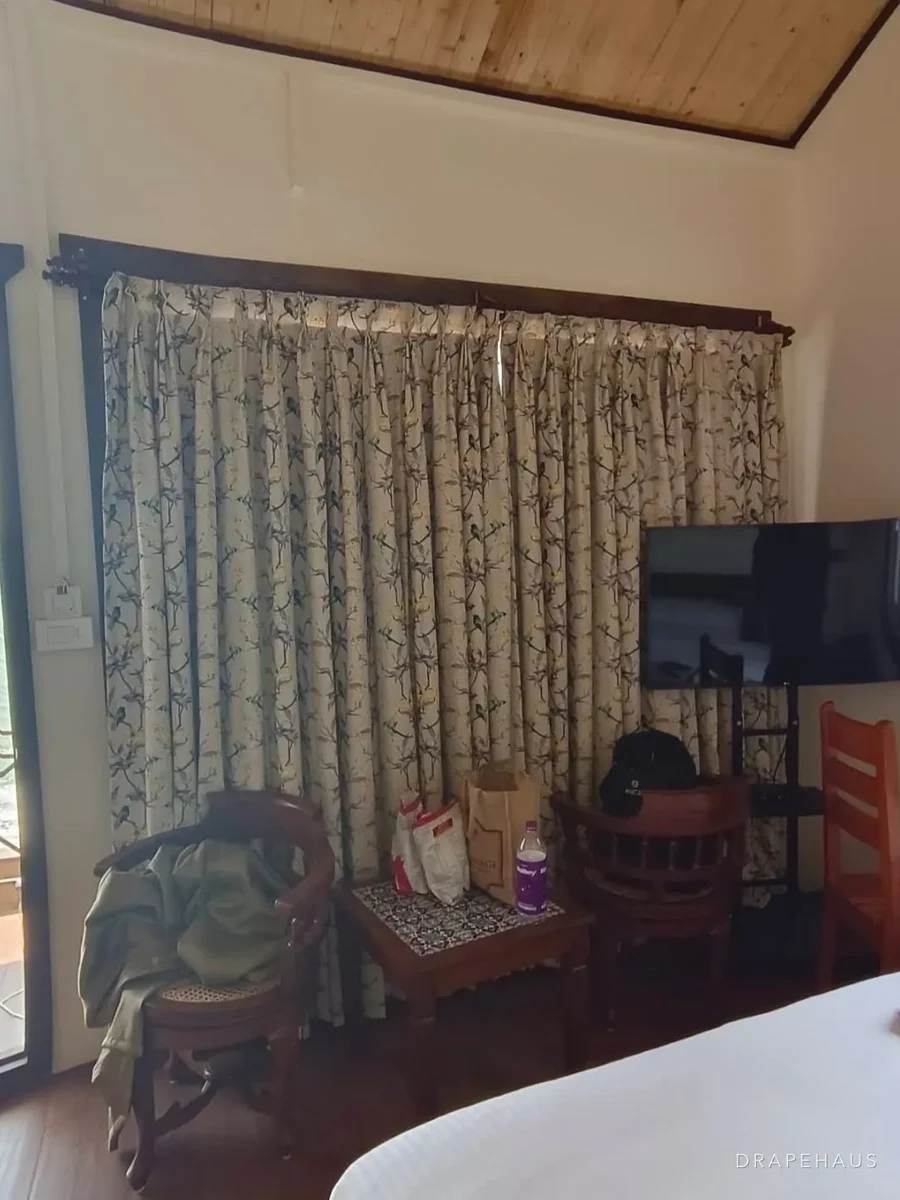
Fire ratings, repeatable specification across many rooms, and installation around paying guests.
Read the guideFrom the Journal
All articlesFAQ
Yes. We work throughout Calangute, from the beach road to the village behind it, and along the coast towards Baga and Candolim. Our workshop is in Benaulim, in South Goa, so visits are by appointment and we usually group them with other homes nearby. We measure, bring samples, make everything ourselves and fit it with our own team.
Usually, yes. We can measure all the rooms at once and then fit them one or two at a time, so that most rooms stay available. We prefer to plan the work for quieter weeks, after the monsoon or between busy periods, and we will agree the order of rooms with you in advance.
They help, but they do not soundproof a room. A full, lined blackout curtain that reaches the floor and overlaps the window on each side softens outside noise noticeably and gives proper darkness. Much noise comes through the glass and frame, so curtains are one part of the answer rather than all of it.
We choose hard-wearing fabrics that wash well without shrinking or losing their shape, in colours that do not show marks easily. For upholstery in guest areas we often suggest performance fabrics that resist stains and tolerate regular cleaning. We will show you samples and explain how each one behaves.
Yes. Many Calangute properties are run by managers for owners who live elsewhere. We can arrange visits and fitting with your manager or caretaker, agree choices with you by photographs and calls, and send pictures once the work is finished.