 Drape Haus
Drape Haus
Preparing the room
Drape Haus
Preparing the room
Sofas
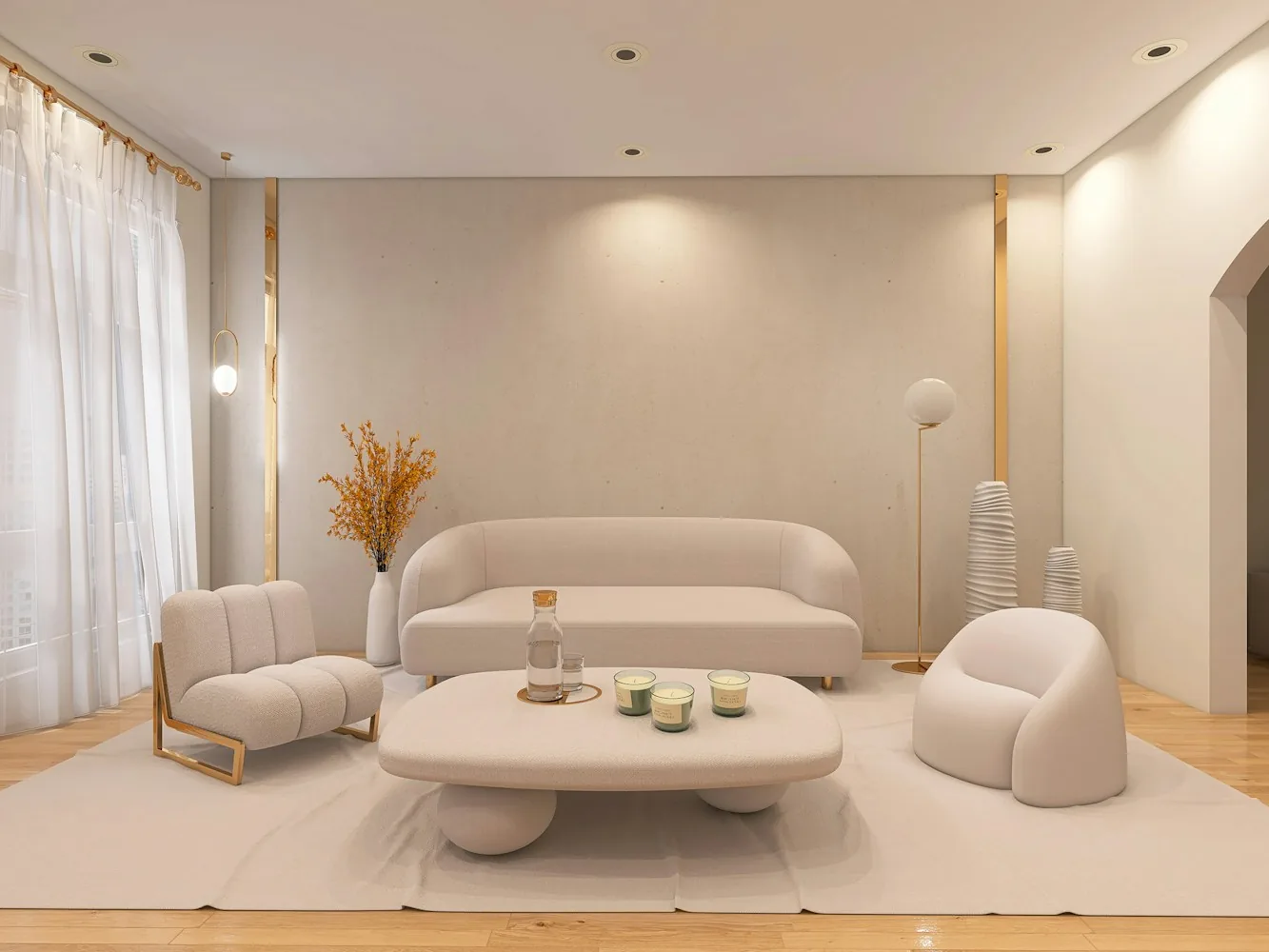
A sofa set is a living room planned as one: the three-seater, the two-seater or the pair of single chairs, sized against each other and the room, and covered in a fabric scheme that ties them together. We make 3+2, 3+1+1, five-seater and seven-seater sets to measure.
Durability scale (Martindale rubs, BS 2543)
15k
20k
25k
30k
40k
Who uses it
Where it lives
How it is used
Durability to ask for
30,000+ rubs
Severe domestic / general contract
Removable covers
Yes
zipped, washable, and a spare set
Fibres that suit
Avoid: Anything you cannot clean in place, on a piece used every day. Rub count is one number among several — weave, colour-fastness and how a fabric handles humidity matter as much. We bring samples to see in your room.
In short
By the Drape Haus studio · How we write
Is it right for you?
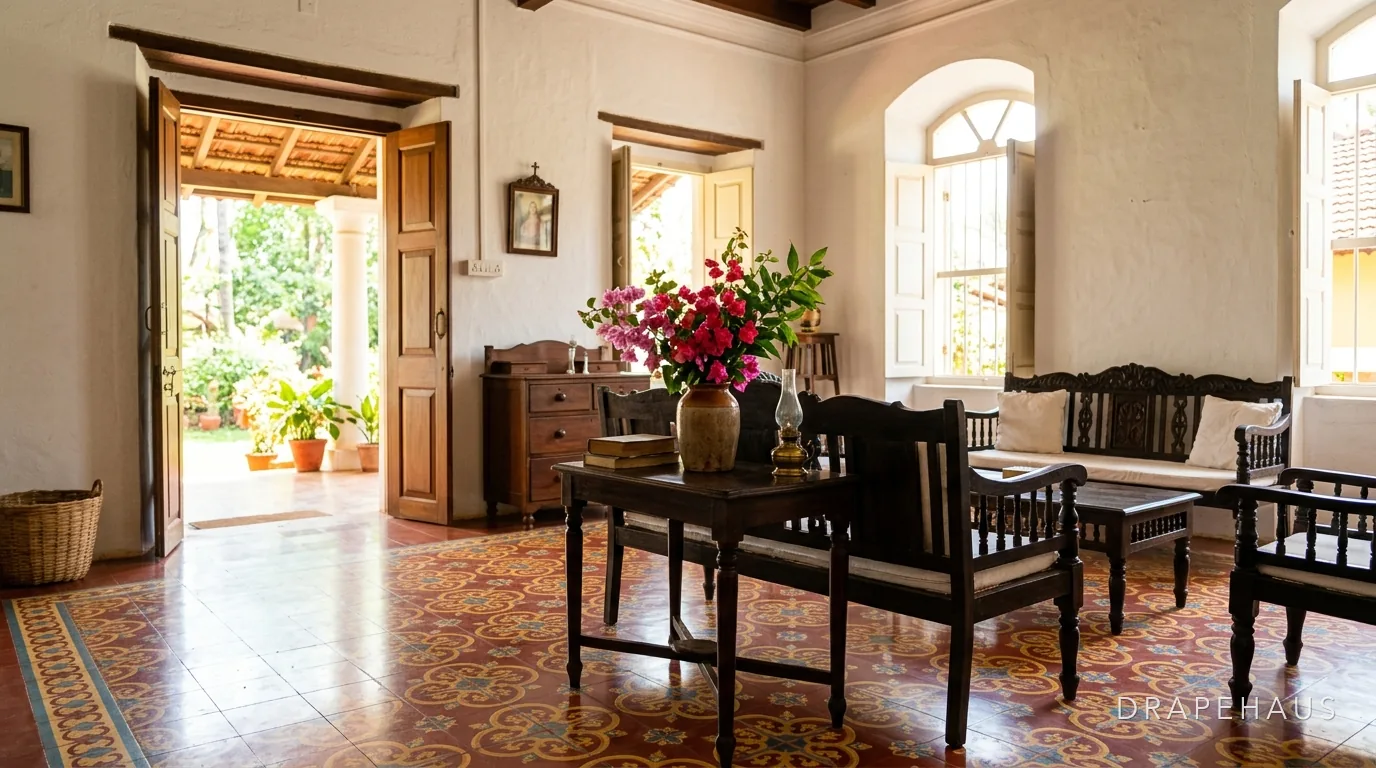
Most living rooms in Goa are furnished over time. A sofa comes first, a pair of chairs follow a year later, and an inherited cane armchair finds a corner. The result can be charming, but it is often uncomfortable: seats at three different heights, a deep sofa beside upright chairs, and a coffee table that suits none of them.
A sofa set solves this by designing the seating as one arrangement. Every piece is drawn against the room and against the others, so the seat heights line up, the arms share a profile, the depths suit the same coffee table, and the distances between seats are right for talking. The set looks deliberate and, more importantly, everyone sitting in it is equally comfortable.
A set is the right choice when you are furnishing a living room from scratch, replacing tired seating all at once, or fitting out a rental villa that needs to seat a known number of guests. It is less useful if you already own a sofa you love; in that case it is better to build one or two new pieces to match it, or to recover the old one so it joins the new scheme.
The details
Buying pieces one at a time tends to produce a room where the sofa is too deep for the armchairs, the seat heights do not line up and the colours almost match. Planning the set together means every piece shares a seat height, an arm line and a scale, and the gaps between them are right for conversation rather than whatever was left over.
The set is designed from the room outwards. We start with the floor area, the doors and windows and where people actually walk, then decide which combination fits: a 3+2 along two walls, a 3+1+1 around a coffee table, or a larger seven-seater for a villa that hosts the whole family on feast days.
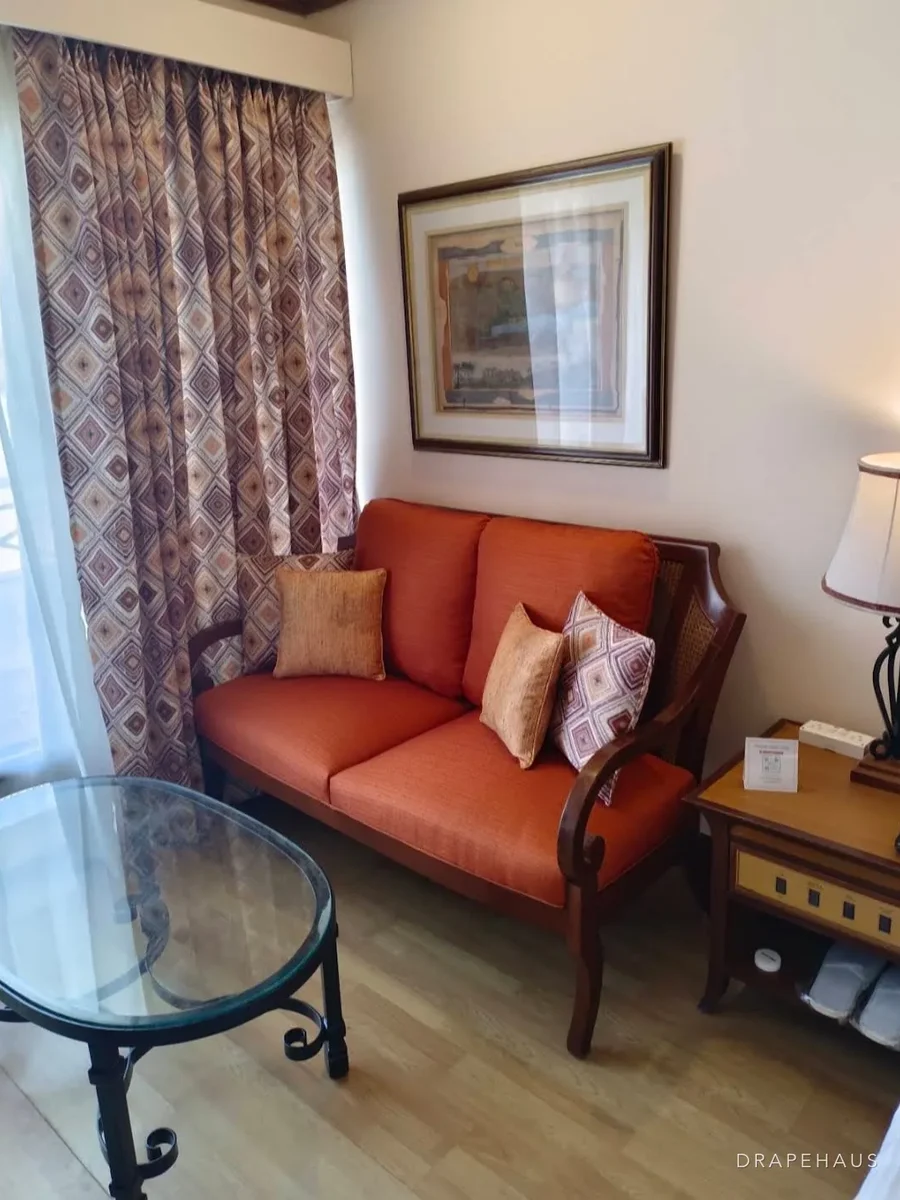
Matching does not have to mean identical. Many of the best sets keep one frame style and one seat height across the pieces while letting the single chairs carry a different fabric or a pattern that picks up the main colour. We plan that scheme with you, using fabrics chosen for Goan humidity and for how hard the room is used.
If a set is for a rental villa or a homestay, we size it for the number of guests the property sleeps and specify contract-weight fabric with removable covers, so the whole set can be refreshed between seasons without replacing a single frame.
Your options
The numbers describe seats per piece. Two sets can seat the same number of people and still feel entirely different in a room, so choose the combination by how the space is used, not just the total.
Swipe for all 5 →
The honest view
Everyone sits at the same height
Pieces built together share a seat height and depth, so conversation happens at eye level and nobody is perched or sunk.
A finished room in one step
The arrangement, coffee table size and walkways are planned together, which avoids the slow drift of mismatched pieces.
One fabric plan
Colour and pattern are decided across all the pieces at once, so the main sofa and the chairs complement rather than compete.
Easier to refresh later
When the fabric tires, the whole set can be recovered in one new scheme, because the frames were built as a family.
A bigger single decision
Choosing every piece at once means committing to one style for the whole room. It is worth seeing fabric in the room's light before deciding.
Can look too uniform
Three identical pieces in one plain fabric can feel like a hotel lobby. A little variation in the chairs usually helps.
Less useful if you own a good sofa
If one piece is already right, a full set duplicates it. Building matching companions is often the better route.
Size can be overestimated
Seven-seaters are often ordered for occasions that happen twice a year, and crowd the room on every other day.
Side by side
Five seats can be arranged in very different ways. This table sets the three five-seater combinations side by side with a seven-seater for larger rooms.
| 3+2 | 3+1+1 | 2+2+1 | Seven-seater | |
|---|---|---|---|---|
| Floor area needed | Moderate | Moderate | Moderate to large | Large |
| Conversation | Good | Very good | Best, face to face | Good in groups |
| Flexibility | Moderate | High, chairs move | Moderate | High if split |
| Watching television | Good | Good | Awkward for one side | Good |
| Suits heritage rooms | Sometimes | Yes | Very well | Large rooms only |
| Suits flats | Very well | Well | If the room is square | Rarely |
Swipe to compare →
Rather see it in your own room?
We bring samples to the house, measure every window, and specify for the light and exposure you actually have.
Room by room
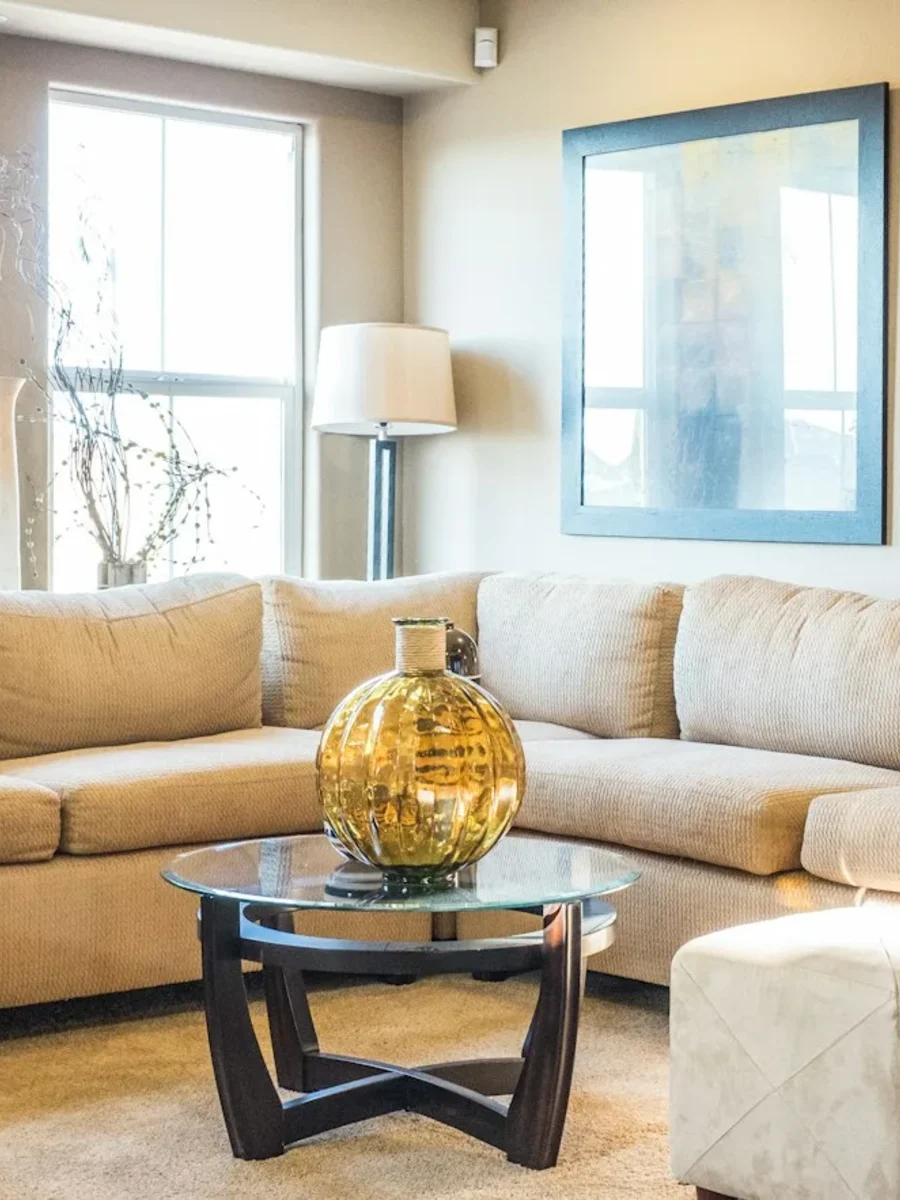
A five-seater, usually a 3+2 or 3+1+1, fills a typical flat living room without crowding it. Scale the depth down so walkways stay clear.
Facing pieces across a central table suit the long, formal rooms of older Goan homes. Raised legs keep the set light against tall walls.
A seven-seater or a set with a corner piece defines the living zone. Split it into two groups if one big arrangement would leave people too far apart.
Size the set to the number of guests the villa sleeps, in contract-weight fabric with removable covers that can be washed between bookings.
A full five-seater can overwhelm a small room. A three-seater with one armchair, or a pair of chairs alone, is often the better answer.
Indoor sets do not belong on an open verandah through the monsoon. Choose outdoor seating with quick-drying foam and solution-dyed fabric there instead.
In depth — tap a heading to read
Start with the floor, not the furniture. Mark the doors, the windows that open inwards, the route from the entrance to the rest of the house and any path to a verandah or garden. What remains is the area the set can occupy, and it is usually smaller than people expect.
Allow roughly 75 to 90 centimetres for a main walkway and about 40 to 45 centimetres between the front of a seat and the coffee table, which is close enough to reach a cup and far enough to stand up. Seats that face each other work best between about two and three metres apart; much further and conversation becomes a matter of raised voices.
Proportion matters as much as fit. In a room with a high ceiling, as in many villas and Portuguese-era houses, a set with taller backs and raised legs holds the volume. In a flat with a standard ceiling, lower backs and slimmer arms make five seats feel lighter. We draw the set to scale on your floor plan before anything is built, so you can see how much floor it takes.
If in doubt, order five seats that fit well rather than seven that crowd. An extra chair can always be added later.
There are three ways to dress a set. Fully matched uses one fabric on every piece. It is calm and orderly, suits smaller rooms and rentals, and makes recovering the set later simple. The risk is a flat look, which piping, contrast cushions or a textured weave can relieve.
Coordinated keeps one colour family but varies the texture or pattern: a plain three-seater with armchairs in a small check or a woven stripe in the same tones. This is the approach we suggest most often, because it looks considered without being fussy.
Mixed treats the single chairs as accent pieces in a contrasting colour or a bolder print. It works well in larger rooms where the set is spread out, and it lets the chairs move into other rooms without looking orphaned. Whichever route you choose, keep the frame style, the leg finish and the seat height consistent; that is what makes different fabrics read as one set.
A set is a large area of fabric, and in Goa that fabric will spend four months in humidity that rarely drops below the eighties. Synthetic and performance blends resist damp, mould and fading better than pure cotton or linen, and they keep their shape in heat. Near the sea, where salt air adds to the damp, we lean firmly towards them.
Rub count matters for the pieces that work hardest. The main three-seater in a family room needs a heavy domestic fabric; the single chairs in a formal drawing room can use something lighter. For a rental villa, choose contract-weight fabric for every piece. Mid-tones and woven textures hide wear and the occasional mark far better than pale plains.
Strong afternoon light from the west fades fabric unevenly, so the piece under the window will change before the others. Rotating cushions and drawing curtains or blinds in the afternoon slows this. You can try fabric colours on a sofa in our sofa fabric simulator, then see real samples in your own room during the visit.
Ready-made sets are designed to standard sizes for an average room and an average sitter. They suit people who need seating quickly, or who expect to move soon. The compromise shows in Goan homes, where rooms are often longer, taller or more irregular than the standard, and where a deep factory sofa may not pass an old doorway.
A made-to-measure set is built to the lengths your walls allow and the depths your walkways permit, with a hardwood frame and foam specified for humidity. It takes longer, typically several weeks after the design and fabric are agreed, and it asks you to make decisions about arms, backs and fabric. In return every piece fits, and the frames are built to be recovered for decades rather than replaced.
If you already own a set with sound frames but tired fabric, there is a third route: reupholstering it in a new scheme, often with fresh foam. It keeps good timber in use and costs less than building new.
A rental set has a different job from a family set. It must seat every guest the property sleeps, survive many different users and recover quickly between bookings. Count seats from the maximum occupancy and add one; a villa that sleeps six needs at least seven comfortable seats in the main living area, plus a few on the verandah.
Removable, washable covers on every piece are worth the extra planning. With a second set of covers held in reserve, a whole living room can be refreshed in an afternoon at the end of the season. Our sofa covers service makes these to fit sets we have built and many we have not.
Living with it
Swap seat and back cushions of the same size between positions, and occasionally swap the two armchairs, so wear and fading stay even.
Vacuum and wash covers across the whole set at the same time. Cleaning only the main sofa makes it drift away in shade from the chairs.
Whichever piece sits nearest the brightest window fades first. Draw curtains in the strong afternoon sun or move it in the off-season.
Pull pieces a little away from laterite walls, which hold damp, and keep air moving with fans or a dehumidifier when the house is closed.
Note the fabric name and colour for each piece. It makes adding a matching chair or recovering one piece much easier later.
Avoid these
A seven-seater bought for festival days can crowd the room for the rest of the year. Plan for the usual evening, and borrow dining chairs for the big occasions.
Adding a chair from elsewhere to a set leaves one person higher or lower than everyone else. Match seat height across every piece.
The table sets the distances between pieces. Choose its size and height while planning the set, not afterwards.
A light single-colour set in a family home shows every mark and every monsoon spot. Use a mid-tone or a texture on the hardest-working piece at least.
Checklist
More in sofas
Seating made to size, which matters in Goan houses where rooms are rarely the proportions furniture is manufactured for.
Our work
Our process
One team from the first visit to the last bracket, so nothing is lost between the person who specified it and the person who fits it.
FAQ
The numbers are seats per piece. A 3+2 is a three-seater and a two-seater, five seats in all. A 3+1+1 is a three-seater and two single armchairs, also five seats, but in a more open, flexible arrangement.
It depends on the floor area left after walkways, not just the wall length. As a rough guide, a five-seater suits most flat living rooms, while a seven-seater needs a large room or an open-plan villa space. We measure and draw the set before anything is built.
They should share a seat height, a frame style and a scale. The fabric can match or not: a plain three-seater with patterned single chairs often looks more considered than three identical pieces.
Often, yes. We measure the existing sofa's seat height, depth and arm profile and build the new pieces to suit, and if its fabric is tired we can recover it in the new scheme.
If you plan to keep it for many years, yes. A made-to-measure set fits the room exactly, uses a hardwood frame and foam specified for the climate, and can be recovered rather than replaced when the fabric eventually tires.
Enough for the people who sit there on an ordinary evening, plus one or two. For most flats that means five seats; for large villa living rooms, seven. Occasional big gatherings are better handled with a spare chair or an ottoman than with seating that crowds the room all year.
A five-seater suits most living rooms and leaves space to move. A seven-seater only makes sense in a large room or an open-plan villa where it can be spread across two groups. We draw both on your plan so you can compare them before deciding.
Yes. A coordinated set, with a plain main sofa and patterned or textured chairs in the same colour family, is one of the most popular choices. Keeping the frame style and seat height the same is what ties the pieces together.
If the frames are sound hardwood, yes. Reupholstering with new fabric and, where needed, fresh foam brings a set back into use and lets you change the whole colour scheme at once.
Next step
We visit, measure the room, the doors and the route in, and draw two or three set layouts to scale on your floor plan: a 3+2, a 3+1+1 or something larger. We bring fabric samples to compare in your light, matched or mixed, and foam to test for firmness. Once the plan is agreed we build every piece together, deliver and arrange the set in place. Book a home visit to begin.