 Drapehaus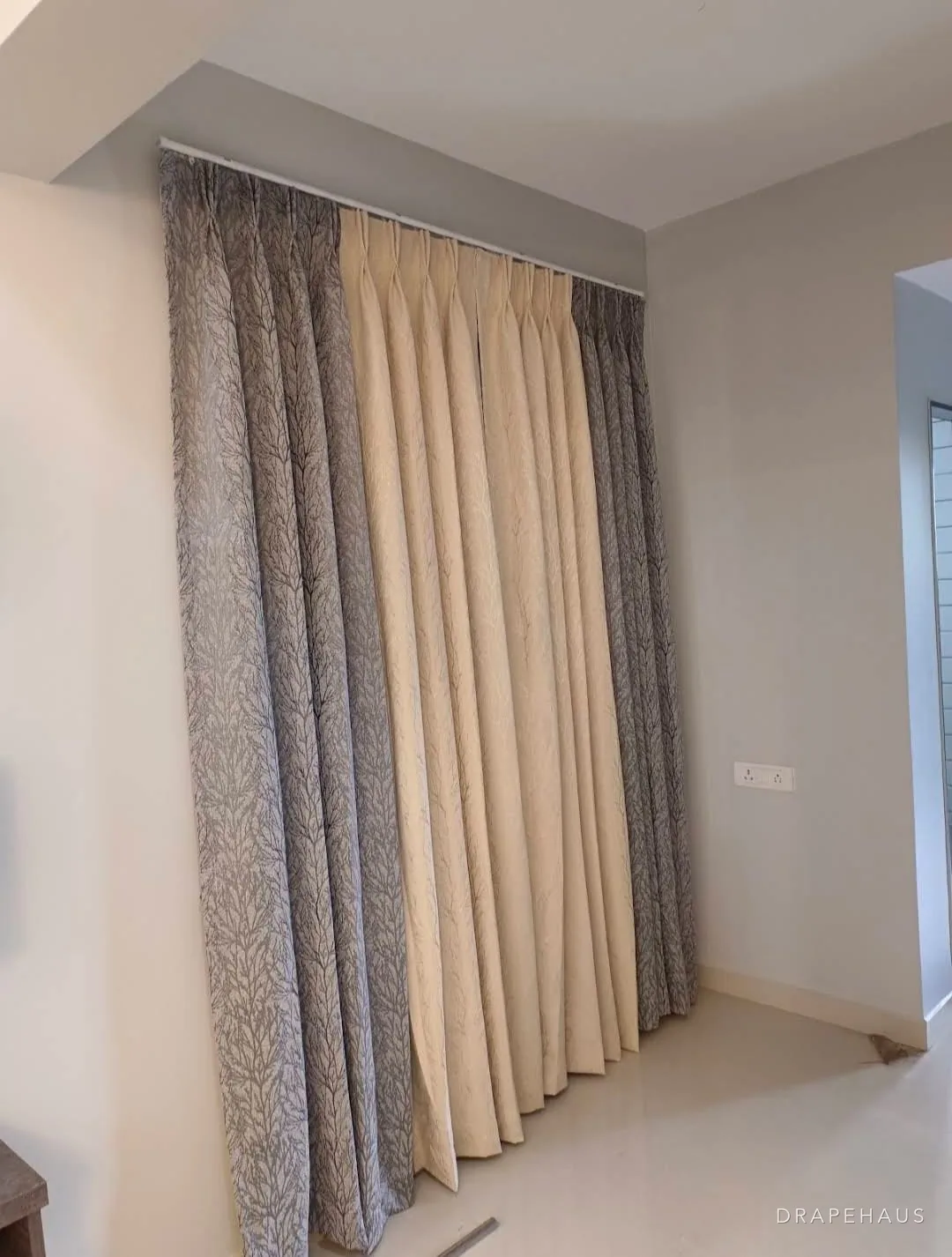
Drapehaus
Preparing the room
Drapehaus
Preparing the room
Care for the Whole House.
The work that keeps a Goan house in good order through the year: storing curtains through the monsoon, motorising windows nobody can reach, shading verandas, and fitting out hotels and villas to a specification that can be repeated.
In short
By the Drapehaus studio · How we write
Is it right for you?
Most of what we make is bought once and then lives with the house. The services on this page are different: they deal with what happens to curtains, blinds and shade after installation, through a year in which about 91 per cent of the rain arrives between June and September and many houses stand empty for all of it. They exist because the climate, the absent owner and the out-of-reach window defeat good furnishings more often than poor fabric does.
The four services answer four different problems. Monsoon take-down and storage answers the closed house. Motorisation answers the window nobody can reach or the house nobody is in. Awnings answer heat, by stopping the sun outside the glass. Contract work answers the property that has to be furnished to a standard, repeated and maintained around guests.
If your house is lived in all year, has windows you can reach and no exposed terrace, you may need none of them, and we will say so. Good curtains in a ventilated, occupied house do not need to come down for the rains. The services earn their place where one of those conditions is missing.
Your options
Start from the problem rather than the product. Each service below is described by what it prevents and the kind of house that usually needs it.
Swipe for all 4 →
The honest view
Fabric lasts its natural life
Most curtains in closed coastal houses fail from one bad monsoon, not from wear. Taking them out of the saturated air lets a well-made curtain last for many years rather than a few seasons.
Problems are designed out, not managed
Motors with manual overrides, awnings with wind sensors and contract fabrics with certification remove the failure before it happens, rather than relying on someone remembering to act on the right day.
One team knows the house
The people who measured, made and installed the furnishings are the ones who take them down, store them and rehang them. Fixings, hooks and dressing are put back the way they were designed.
A written record every year
Condition reports, specification sheets and motor settings are kept, so a repair, a refurbishment or a change of caretaker does not start from nothing.
It needs planning ahead
Collection slots before the rains and rehang slots in October fill early. A request made in the first week of June is often too late to do properly.
Some work needs access to walls
Wired motors and awning fixings are easiest before plastering or repainting. In a finished room the choice narrows to battery or solar motors and surface-fixed brackets.
Not every house needs it
An occupied, well-ventilated house with reachable windows and a sheltered veranda may be better served by good specification and a simple routine than by an annual service.
Side by side
They are often combined, but each is booked, planned and priced on its own. This is how they differ in practice.
| Monsoon storage | Motorisation | Awnings | Contract work | |
|---|---|---|---|---|
| Problem solved | Mildew in closed houses | Unreachable or heavy windows | Heat and glare | Fire rules and repeatability |
| When to plan | March to April | Before plaster, ideally | Before the dry season | Months before opening |
| Recurring or one-off | Every year | One-off, with servicing | Seasonal retraction | Project, then refurbishment |
| Needs wiring | No | Sometimes | Only for motors and sensors | Depends on the brief |
| Suits heritage walls | Yes | Battery or solar only | With careful fixings | Yes, with survey |
| Works in an empty house | Designed for it | Yes, on schedules | Only if retracted | Not applicable |
Swipe to compare →
A closed second home often needs two of these together: storage for the curtains and battery motors for the blinds that stay up.
Rather see it in your own room?
We bring samples to the house, measure every window, and specify for the light and exposure you actually have.
Room by room
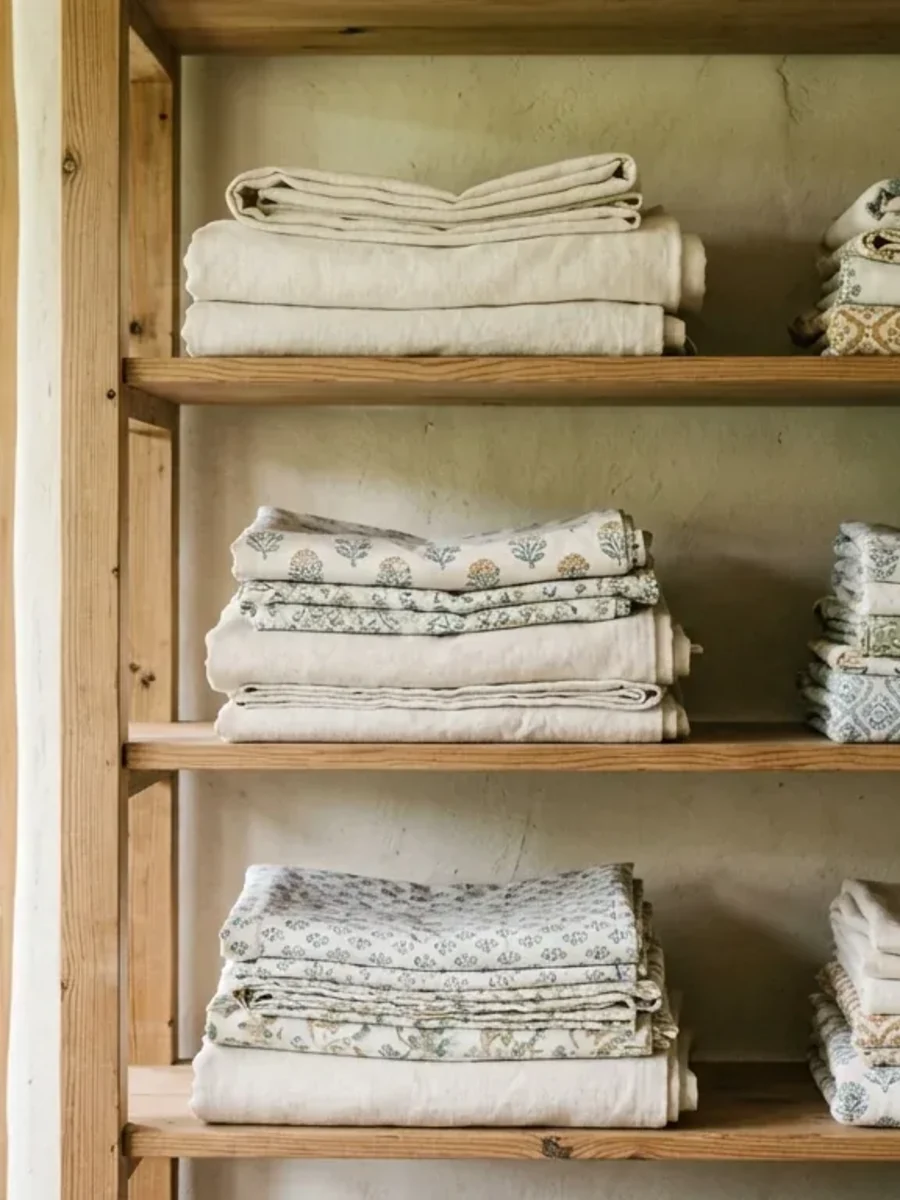
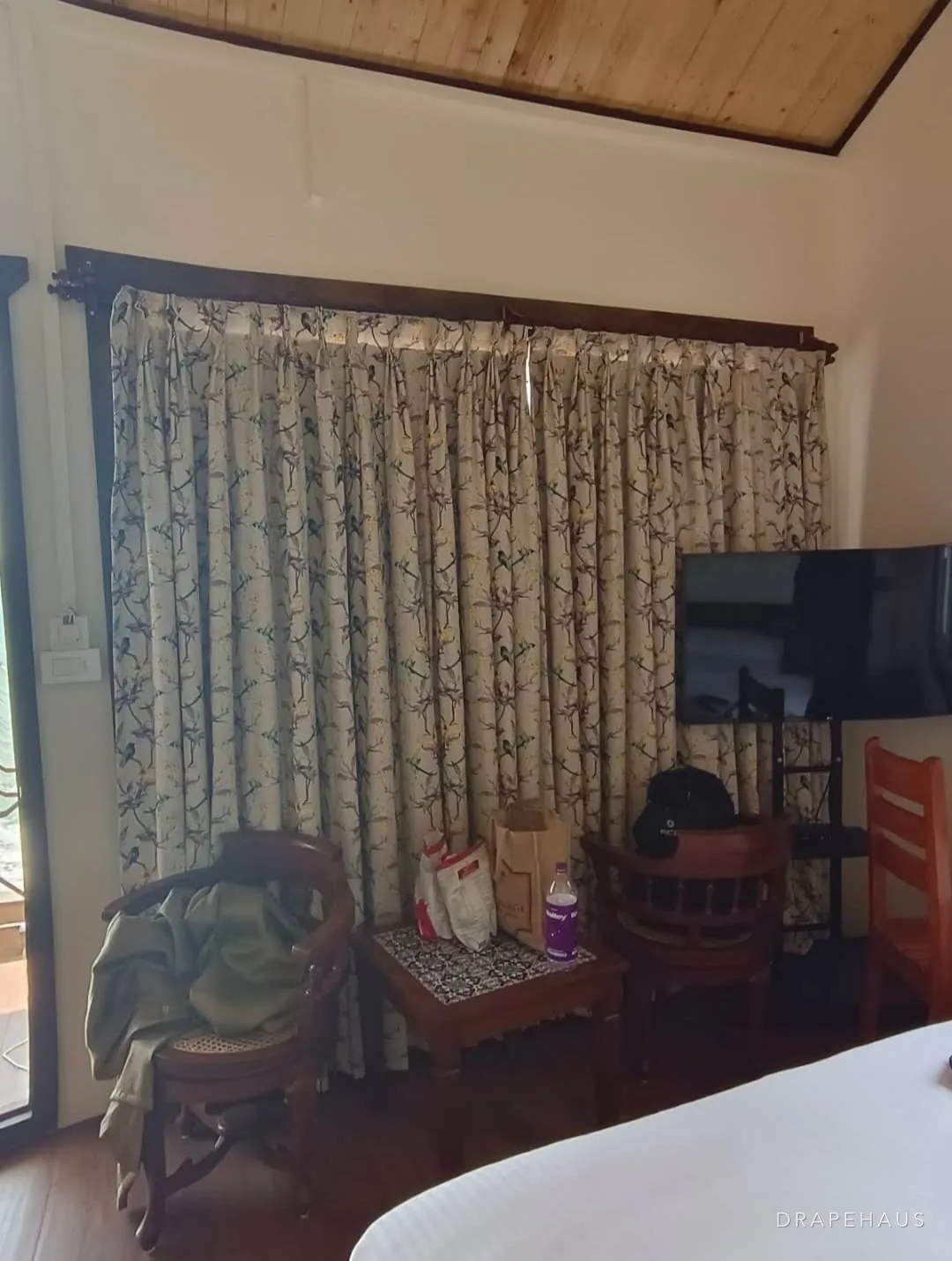
The clearest case for take-down and storage, and often for motorised blinds on a schedule so the house is shaded and aired while nobody is there.
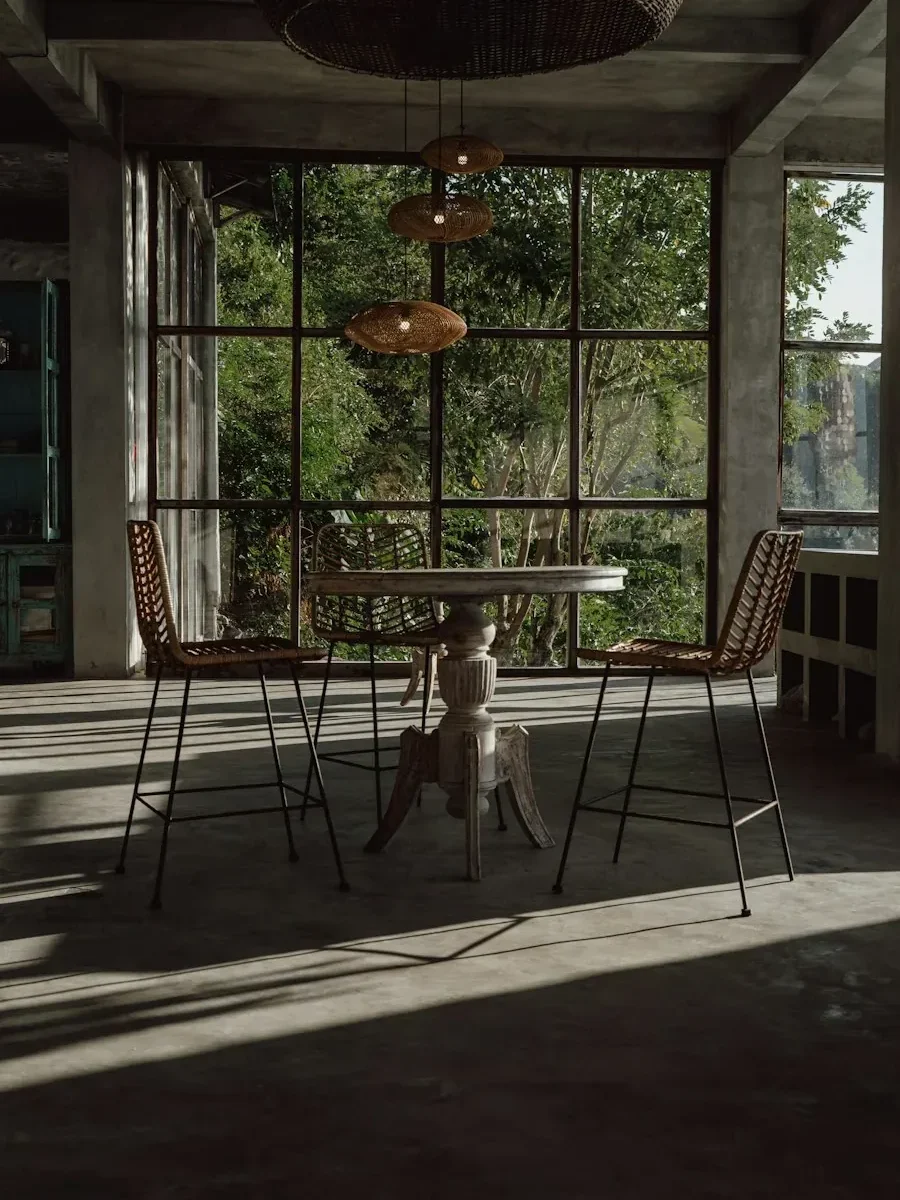
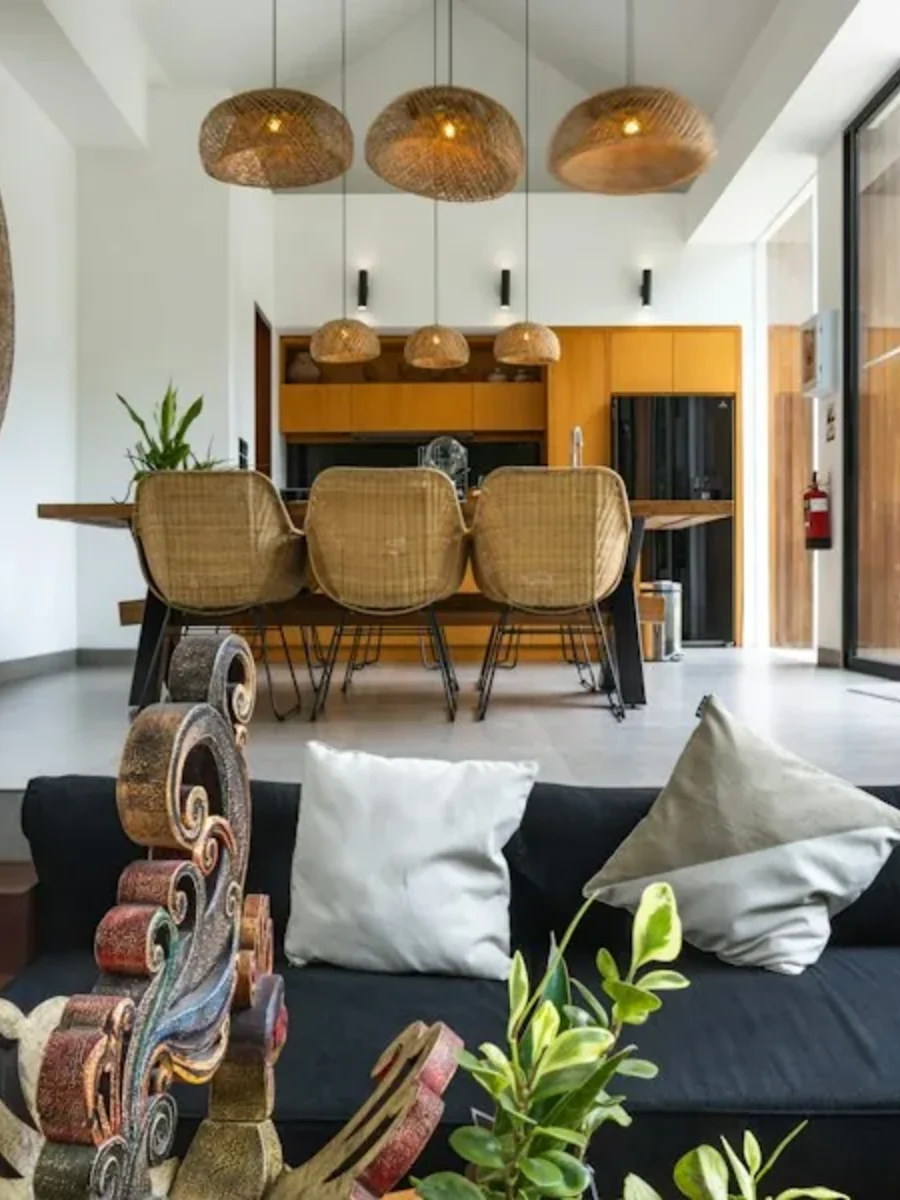
Contract-grade fabric, a documented specification and a seasonal cycle of storage and rehang keep a property letting reliably without replacing soft furnishings every other year.
Fire certification, mock-up rooms and phased installation are the core of the contract service, with motorisation for large public glazing.
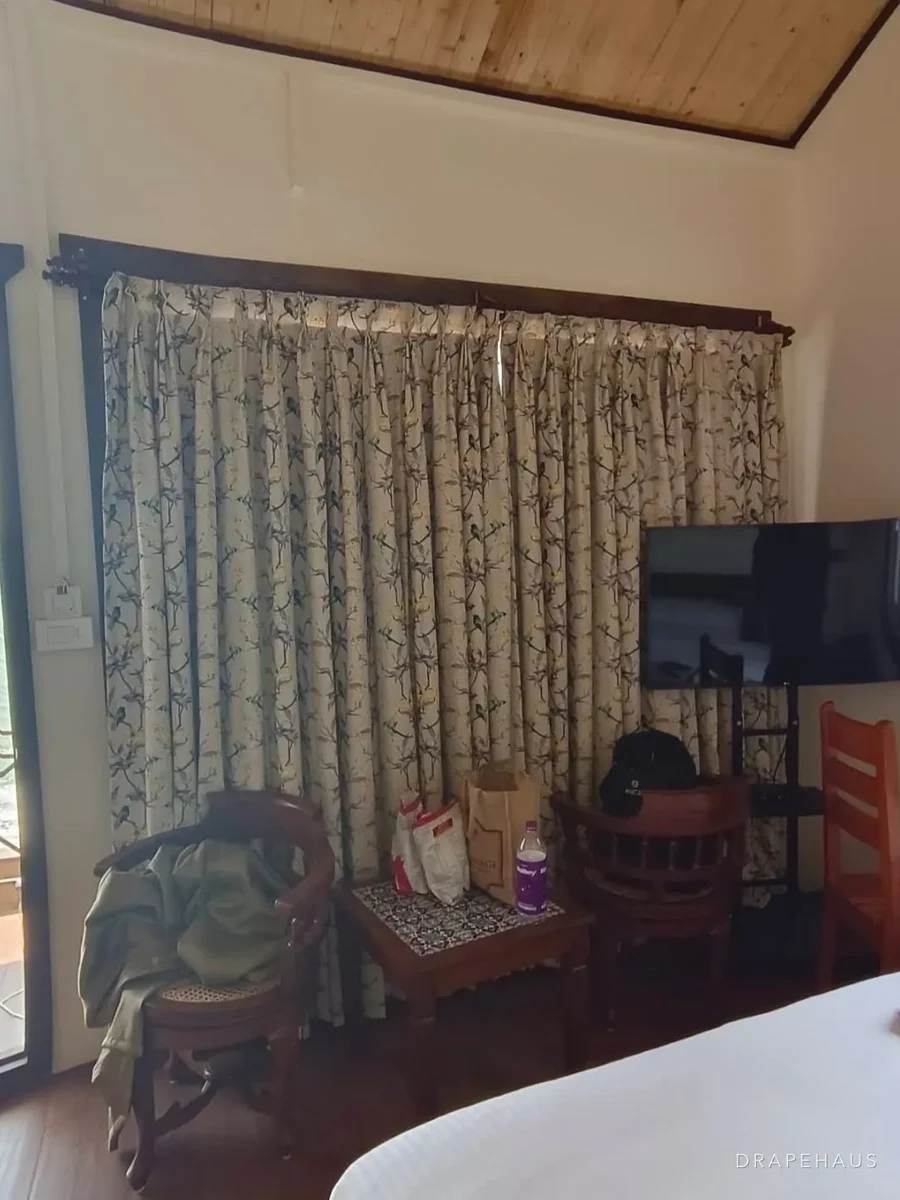
Storage and battery motors suit old lime-plastered walls well. Awnings on a balcão need a careful fixing survey, because old masonry and timber do not take loads like new concrete.
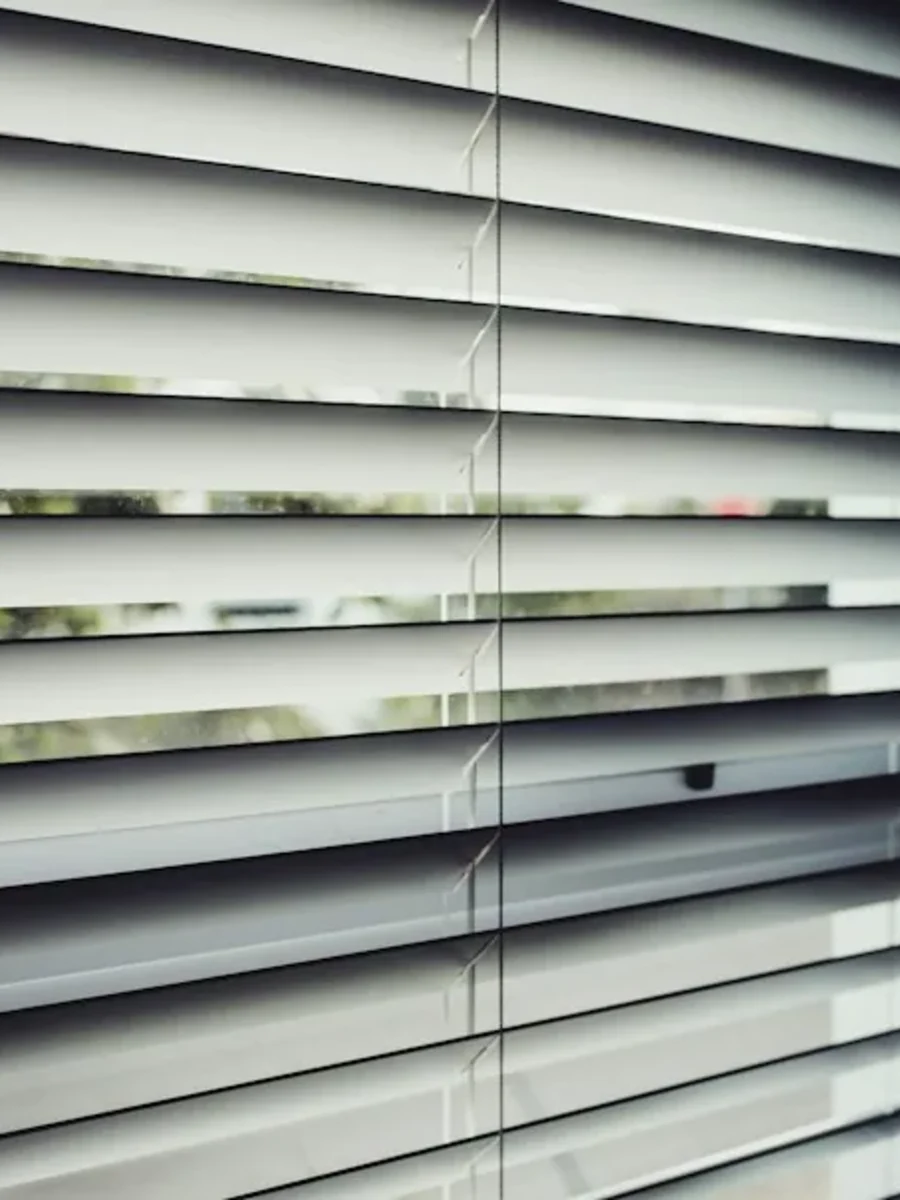
The best moment for wired motors and awning blocking. Decisions made at the electrical layout stage cost little and save chasing finished walls later.
Often needs only one service, usually motorisation for a stairwell or an awning over a hot terrace. Storage is rarely necessary if the house stays open and aired.
Awnings are usually restricted by the building. Motorisation and seasonal storage still apply where the flat is locked for months.
In depth — tap a heading to read
The monsoon's normal onset is around 5 June and its normal withdrawal about 14 October, and almost every service here is timed against those two dates. The dry months before the rains are when fabric can be taken down dry, awnings serviced, motors installed and walls drilled cleanly. October is when everything goes back up, ideally after the worst of the damp has left the walls.
The practical consequence is that decisions are made in the season, not at the deadline. A house that wants curtains collected in May should book in March or April. A villa that wants motorised blinds before the winter guests should be measured before the rains, so manufacture happens while the house is closed.
The services work best when they are specified together, because each changes what the others need. If the curtains will come down every year, they should hang on a track with quick-release carriers rather than rings on a pole, and their headings should be made to survive handling. If the blinds will stay up through the monsoon, they should be motorised on battery or solar so that they can be raised clear of the glass on a schedule.
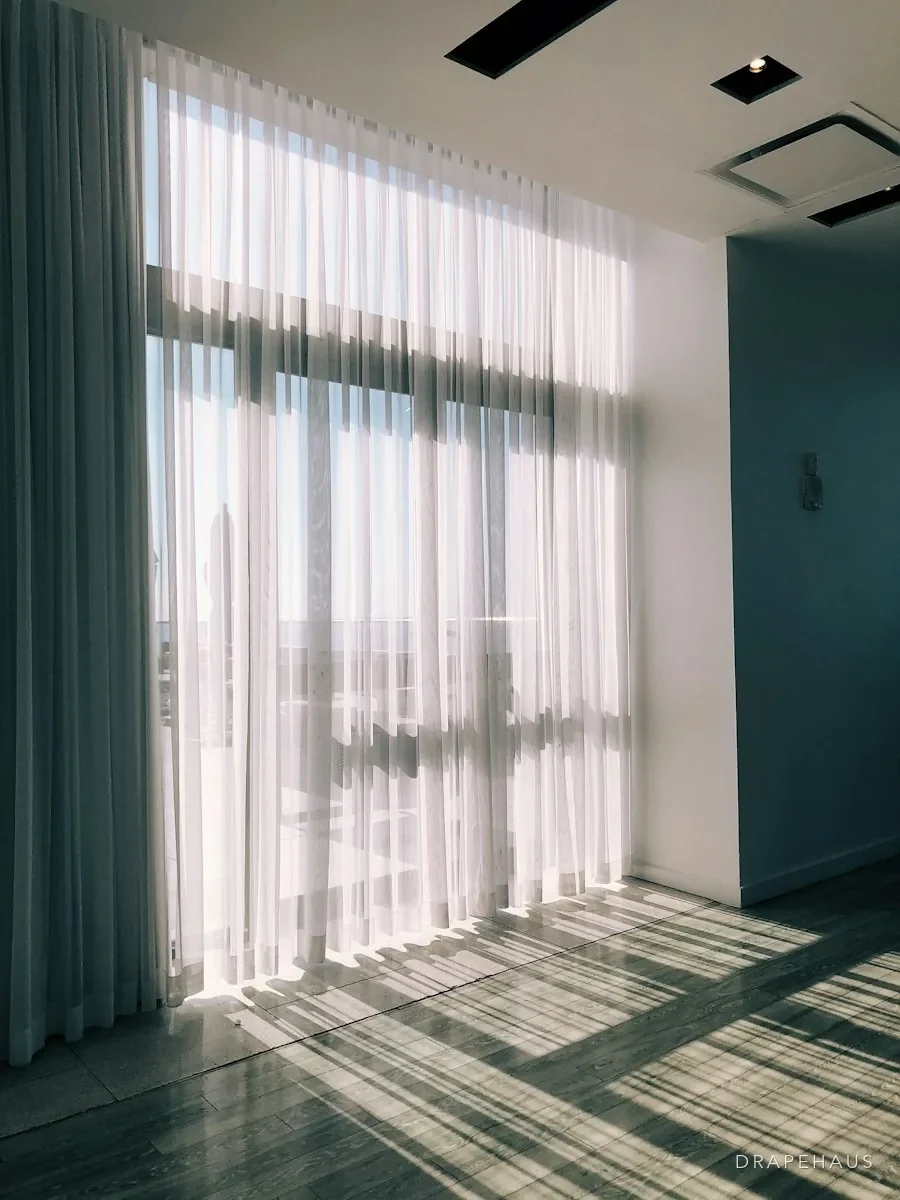
An awning over a west terrace reduces the heat reaching the living room so much that the curtains behind it can be lighter and unlined, which in turn makes them easier to store. Small decisions like these are what we look for on the first visit.
Many of the houses we look after are managed by a caretaker or a property manager for most of the year. We work with whoever holds the keys, agree dates in writing and send a short record of what was done, with photographs, so the owner does not have to be present for any of it.
What matters most is that the routine does not depend on memory. Each house has a record of what hangs where, how it is dressed, which motors run on which schedule and when the awnings were last serviced. When the caretaker changes, the house does not start again.
A closed house needs one person responsible for its soft furnishings. If that is not the owner, it should be written down.
Old Goan houses bring particular constraints. Laterite and lime plaster do not take fixings like concrete, window openings are rarely square, and nobody wants a cable chased across a kaavi wall. We survey before specifying, use battery or solar motors where wiring would damage the fabric of the building, and choose awning brackets and fixings that spread the load.
The same restraint applies to any finished interior. Everything on this page can be done without redecorating, but some options are only available before the walls are closed. If a renovation is planned, the conversation is worth having at the drawing stage.
Living with it
Fabric must come down dry. Once the first heavy rains arrive, curtains taken down damp need drying before they can be stored.
Motorised blinds left in one position for four months are more likely to stick. A weekly schedule that raises and lowers them keeps the mechanism moving.
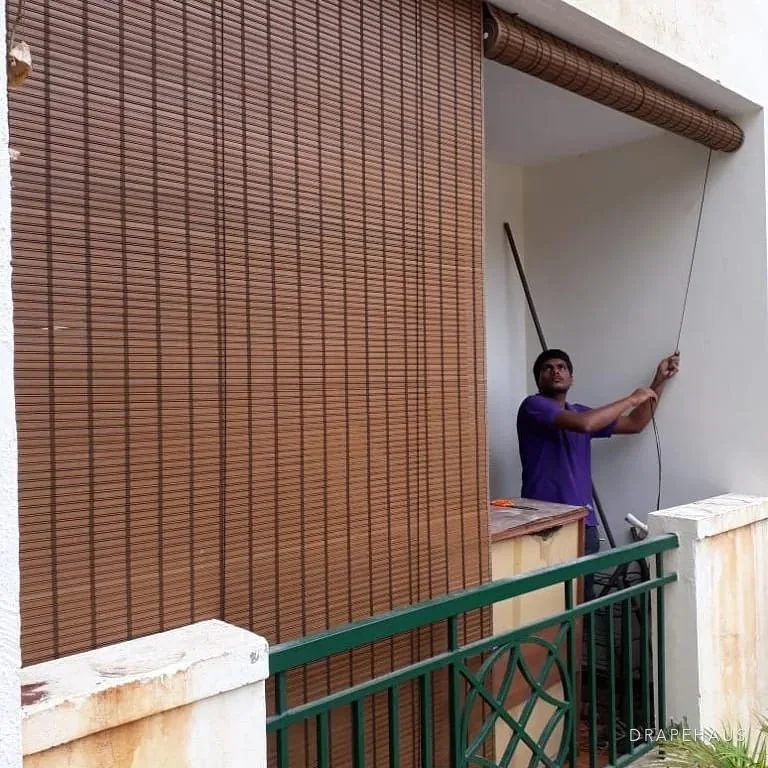
Awnings are retracted for the monsoon and, in exposed positions, the cover is removed and stored. Frames and fixings are checked for corrosion when they go back up.
Condition reports, motor manuals and specification sheets belong in the property, not only in an inbox, so a caretaker or contractor can find them.
Avoid these
Curtains are stored, blinds are motorised and an awning goes up, all by different people with no shared plan. Specify them together so tracks, motors and fixings suit the annual cycle.
The routine changes every year and eventually a step is missed. Put it in writing, or hand it to a service that does it the same way each time.
Wired motors then need chasing or surface cable. Decide at the electrical layout stage, or specify battery and solar from the start.
Pre-monsoon squalls arrive quickly. Exposed awnings need a wind sensor and automatic retraction, not a hope that someone is home.
Checklist
All year round
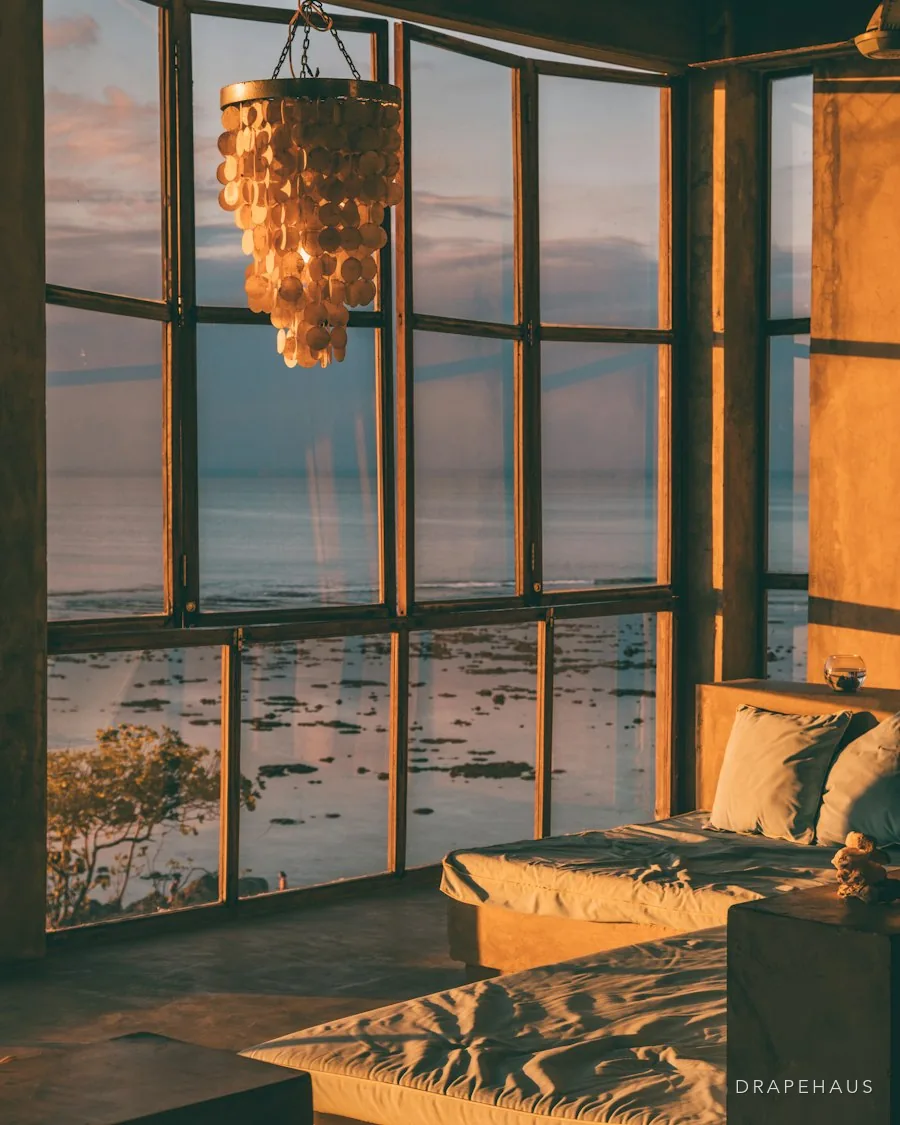
Most of our clients are not here all year. We plan around that — taking curtains down before the rains, checking the house while it is closed and rehanging everything before the season starts — so the house is ready when you are.
From the Journal
All articlesFAQ
For soft furnishings, yes — monsoon take-down, storage and rehanging, with a condition report each year.
Yes. Contract work is planned for fire regulations, repeatability and installation around guests.
Sometimes — it depends on the blind and the mechanism. We assess it on site and advise whether retrofitting or replacing is better.
Yes, and it usually should. On a single visit we can survey windows for motorisation, measure a terrace for an awning, note what needs storing through the monsoon and check the condition of existing furnishings. The recommendations come back as one plan, so the tracks, motors, fixings and seasonal routine are specified to work together rather than being added piecemeal.
Often, yes. We can take down, store and rehang most made-to-measure curtains, and assess existing blinds for motorisation. We will inspect them first and tell you honestly if the heading, lining or mechanism is unlikely to survive handling, or if a retrofit would cost more in trouble than replacement.
Take curtains down dry and store them ventilated, never sealed in plastic. Cover upholstery with breathable cotton rather than plastic sheeting, lift anything soft off the floor, leave internal doors open and, where security allows, high ventilators too. Blinds that stay up are best raised clear of the glass.
For collection before the rains, March or April is sensible. For October rehanging, confirm the date before the house closes. New motorisation or awnings take several weeks from measuring to installation, so allow about two months if the work must be finished before a particular date.
A property let to paying guests carries more wear and more responsibility than a private house. Flame-retardant certified fabric, a documented specification and a seasonal maintenance routine are sensible for any villa let commercially. We advise on each villa individually, and your insurer or the registration authority may have requirements of its own.
Next step
We begin with a visit. We walk the house with you or your caretaker, measure the windows and terraces that matter, look at what is already hanging and how it has fared, and bring fabric and shade samples to see in the rooms' own light. You receive one written plan covering what should be made, motorised, shaded or stored, and when in the year each part should happen. We then make, install and look after it. Book a home visit, and we will plan the year around the house.
Fabrics for the climate
Specified for salt, sun and monsoon.
Measured on site
Every window, every time.
Fitted by our team
The people who plan it, fit it.
Rooted in Goa
A local workshop serving North and South Goa.