 Drapehaus
Drapehaus
Preparing the room
Drapehaus
Preparing the room
Zebra blinds simulator
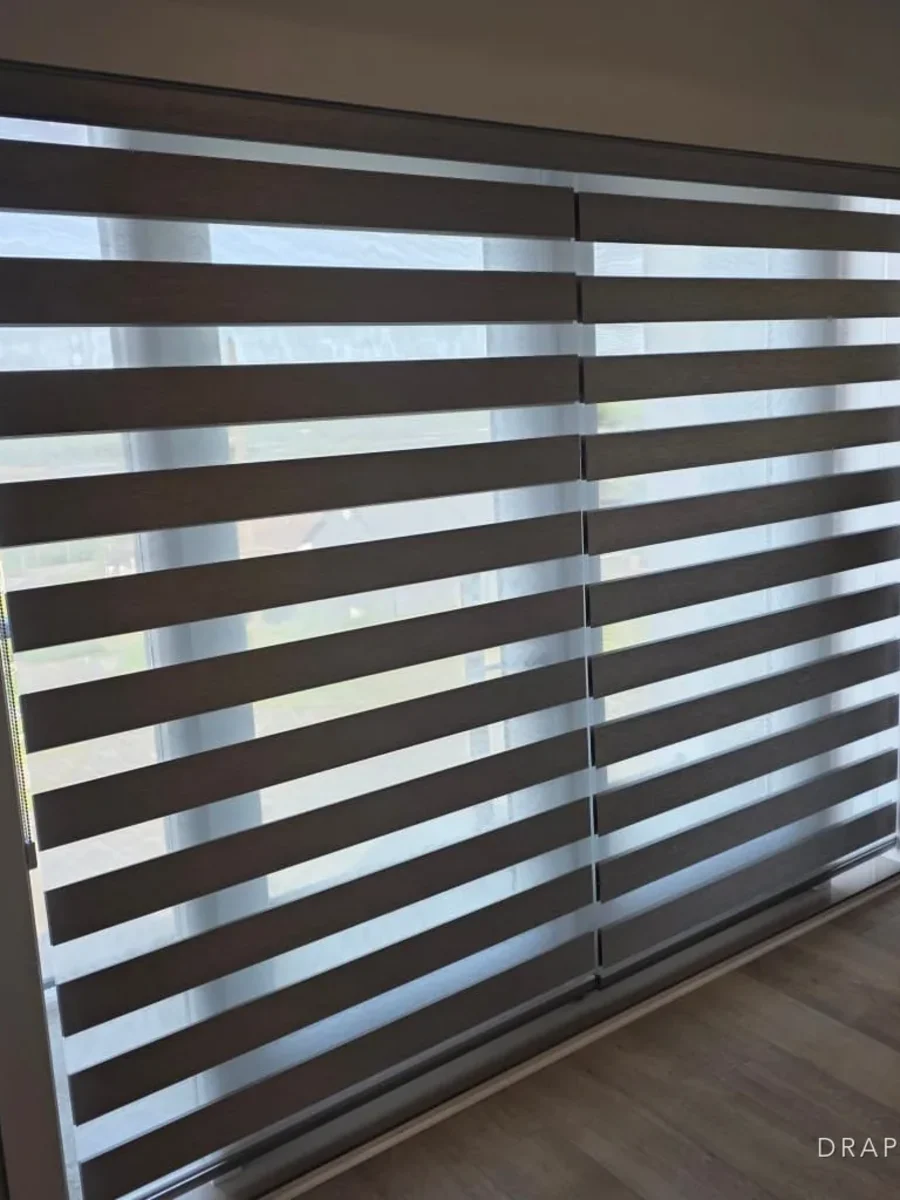
A zebra blind is one loop of fabric with sheer and solid stripes, front and back. Line the stripes up and the light comes through; offset them and the window closes. Try it below.
Zebra · Midday
Treatment
Time of day
Alternating sheer and solid bands: slide them into line for light and a filtered view, offset them for privacy.
In short
Zebra blinds (also sold as day and night or dual blinds) give you two settings in one blind: filtered light with a hazy view, or privacy with only a soft glow. They do not go fully dark — for a bedroom that needs real darkness, pair one with a lined curtain or choose a blackout roller.
Using the simulator
Move the Bands aligned slider. At 100% the sheer stripes on the front and back sit in line, so daylight and a filtered view pass through.
Move it back towards 0%. The solid stripes slide over the sheers and the window closes to a soft glow.
Switch the time of day to Night. The lamps come on inside, and the Privacy meter shows how much a passer-by would see.
Try Roller next to it in the Treatment row to see what a single-layer blind does differently.
What the simulator shows
The fabric runs down the front of the window, round a weighted bottom rail and back up behind itself to the roller. Both faces carry the same alternating pattern of sheer mesh and solid fabric.
Turning the roller moves the front and back layers in opposite directions. That is why the bands slide past each other rather than rising together, and why the bottom rail stays level while you adjust them.
With sheer over sheer and solid over solid, the window reads as stripes of light. The Daylight meter rises and View out shows some — the sea and palms stay visible, softened.
In a Goan room at midday this is the setting most people live with: glare cut, the room still bright, the breeze-facing window not closed off.
Slide the solid bands over the sheers and the view disappears. Light still reaches the room through the fabric itself, which is why the simulator shows a glow rather than darkness.
At night, with lamps on, closed zebra fabric hides detail but can still show movement and shapes. The Privacy meter sits at Good rather than High for that reason.
The blind also rolls up like a roller, clearing the window completely. Band alignment is for the everyday adjustments; rolling up is for when you want the whole view back.
| Zebra | Roller | Wooden slats | |
|---|---|---|---|
| How it adjusts | Bands slide in and out of line | Rolls up and down | Slats tilt, blind lifts |
| View with light in | Filtered, in stripes | Only when raised | Striped, angled |
| Full darkness | No | Yes, with blackout fabric | Near, when closed |
| Best for | Living rooms, studies | Bedrooms, media rooms | Bathrooms, humid rooms |
See it at your own window
The simulator narrows the choice. At the house we bring the real fabrics, hold them up to your light and measure every window.
In Goa
Deep verandahs and west-facing windows are where zebra blinds earn their keep: glare off the sea in the late afternoon can be cut without losing the view. Try Golden hour in the simulator to see it.
The sheer bands are open mesh, so salt air and monsoon damp can settle in them. Polyester zebra fabric wipes clean and dries quickly; ask for a fabric rated for humidity if the window faces the sea.
FAQ
Yes. Zebra, day and night, dual and combi blinds are names for the same construction: a double layer of fabric with alternating sheer and solid bands that slide over each other.
No. Offsetting the bands closes the view, but light still passes through the solid bands and gaps at the sides. For a dark bedroom, use a blackout roller in a side channel, or add a lined curtain over the zebra blind.
Choose zebra when you want to adjust light through the day without raising the blind, usually in a living room. Choose a roller when you want one simple setting — especially blackout in a bedroom.
Yes. The same tubular motors used for roller blinds fit zebra blinds, and they can be run from a remote, a wall switch or a phone.
No. The meters are relative guides drawn from how each kind of material behaves, so you can compare options. Fabric colour, weave and the window itself change the real result, which is why we bring samples to the house.