 Drape Haus
Drape Haus
Preparing the room
Drape Haus
Preparing the room
Sofas
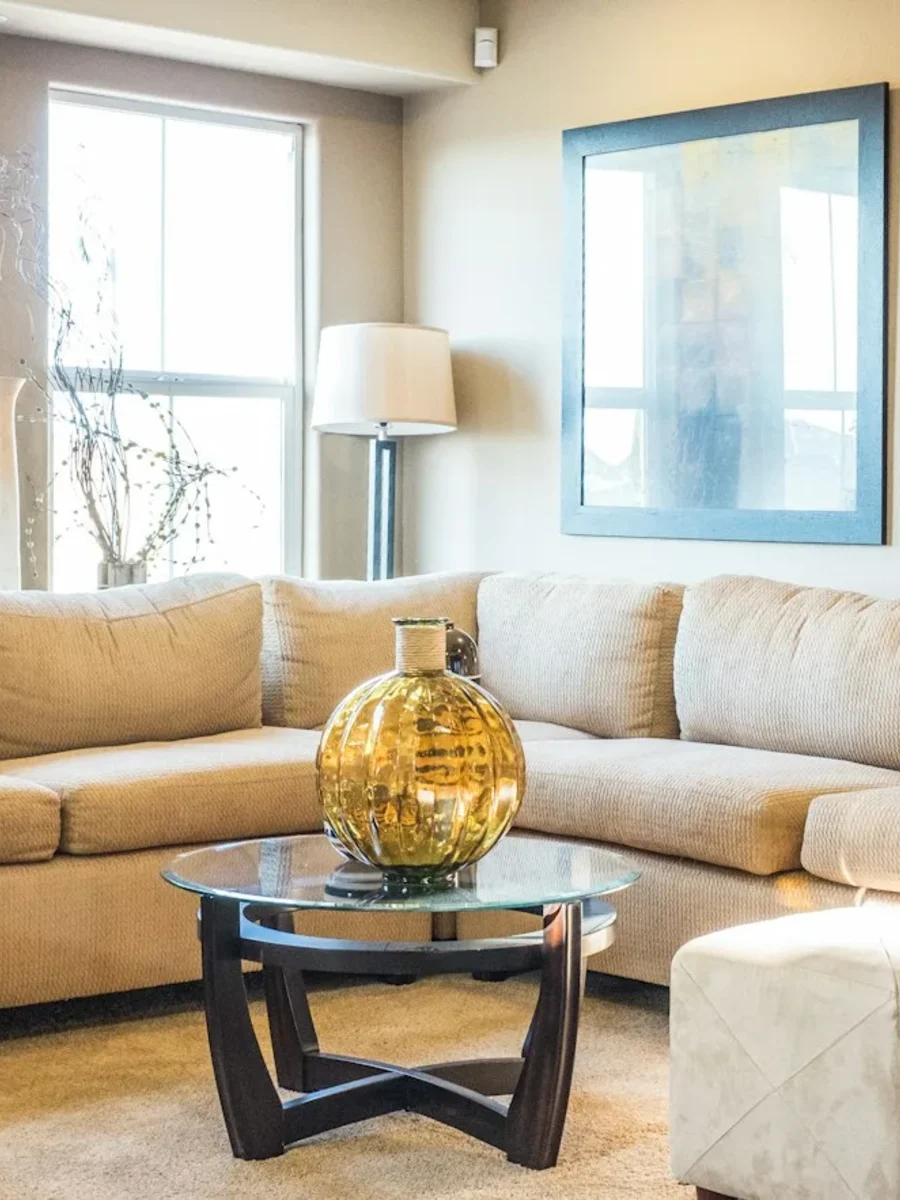
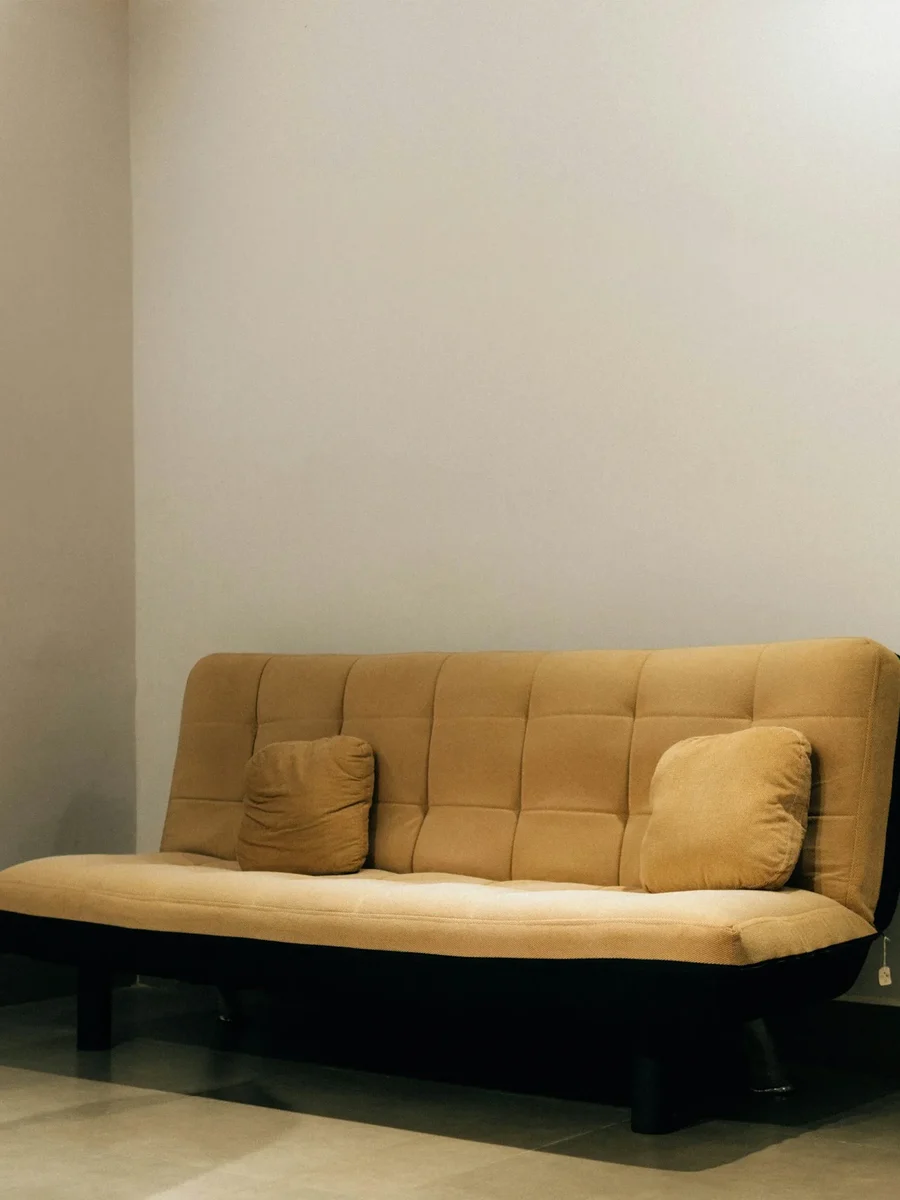
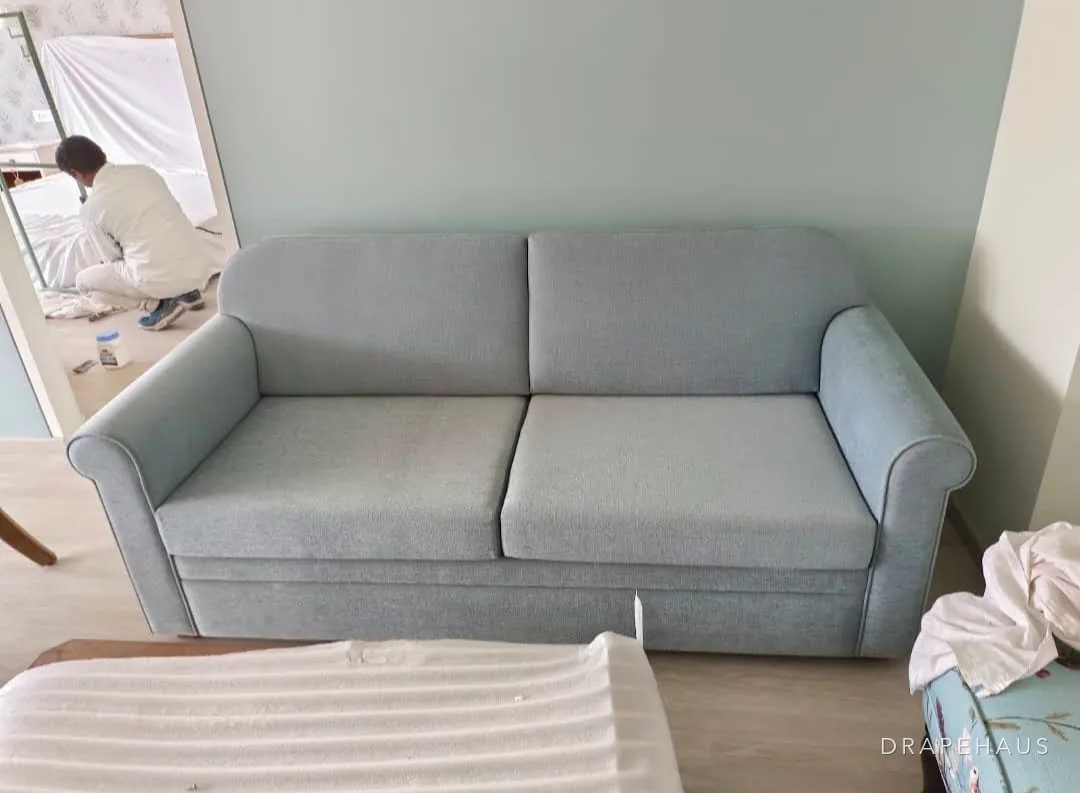
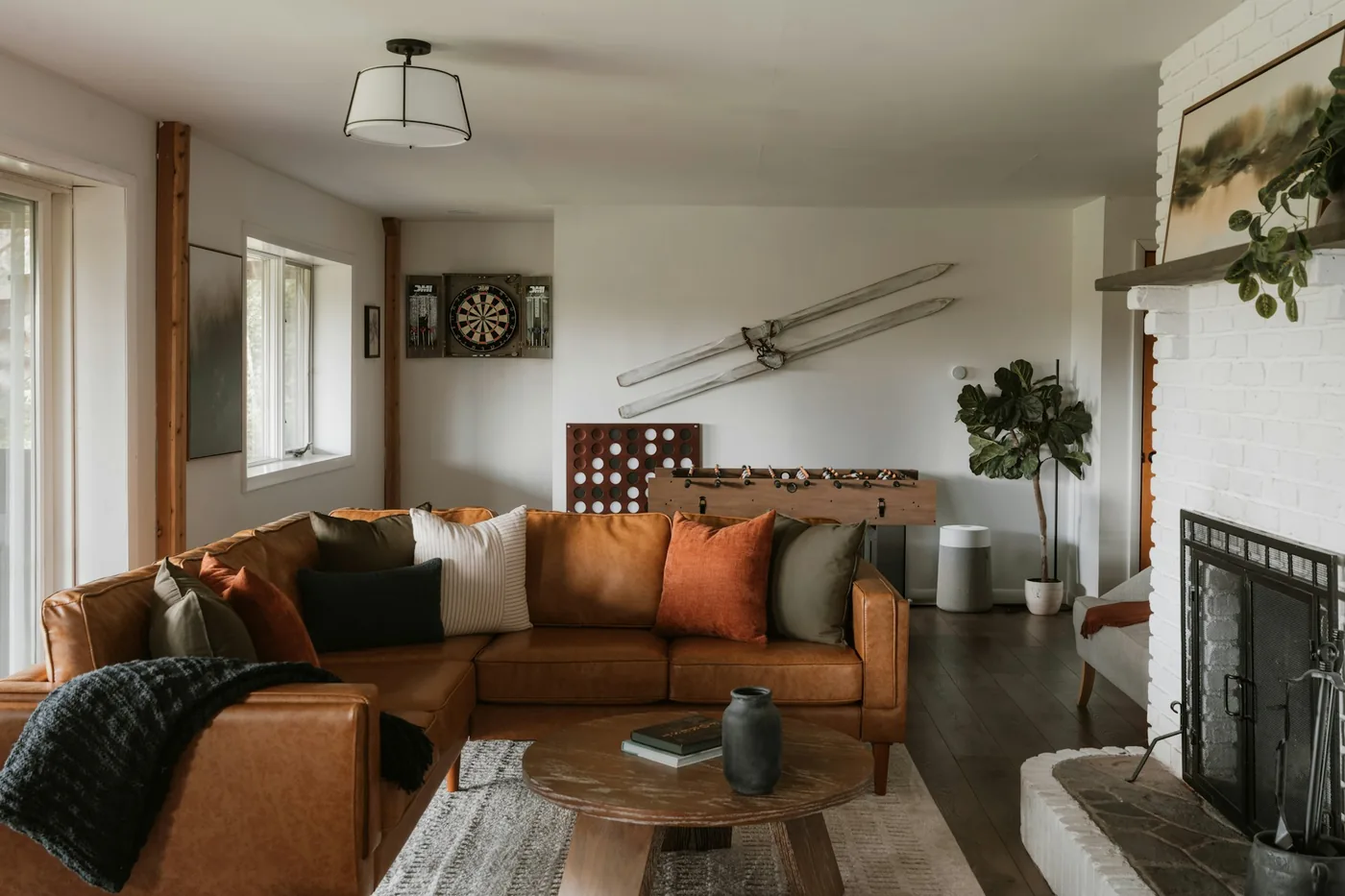
A corner sofa built from separate modules — corner units, armless seats, end pieces and ottomans — that can be added to, split up and rearranged as the house, the family or the guest list changes. It is a sofa planned for the next ten years, not just this room.
Durability scale (Martindale rubs, BS 2543)
15k
20k
25k
30k
40k
Who uses it
Where it lives
How it is used
Durability to ask for
30,000+ rubs
Severe domestic / general contract
Removable covers
Yes
zipped, washable, and a spare set
Fibres that suit
Avoid: Anything you cannot clean in place, on a piece used every day. Rub count is one number among several — weave, colour-fastness and how a fabric handles humidity matter as much. We bring samples to see in your room.
In short
By the Drape Haus studio · How we write
Is it right for you?
Most people buy a corner sofa for the room they have now. A modular sectional is worth considering when you suspect that room will change: a move from a rented flat to a family house, a villa that is let in the season and lived in by the owners in the monsoon, children who will want their own sitting room upstairs, or simply a habit of rearranging the furniture every couple of years.
The idea is simple. Instead of one large sofa with a fixed shape, you own a set of units, each with its own frame, seat and back. Pushed together and locked, they make a corner sofa. Separated, they can become a straight sofa and an armchair, two smaller sofas in different rooms, or a U around a coffee table when the extended family arrives for a feast.
That flexibility comes at a cost in planning. Every module has to be specified so that it looks right on its own, joins cleanly to its neighbours and will still match pieces you add years later. If you are confident the sofa will stay in one corner of one room for its whole life, a fixed L-shape is simpler. If not, the modular route usually repays the extra thought.
The details
A fixed L-shape is designed once for one corner. A modular sectional is designed as a kit of parts. Each module is a complete, upholstered piece with its own frame, so the same set of units can form a corner sofa in a villa living room today and two separate sofas in a flat next year, or grow by a seat when the household does.
The units we build most are the corner unit, the armless middle seat, the single-arm end seat, the chaise end and the loose ottoman. Choosing which modules to order, and in what sizes, is the real design work: it decides how many layouts the set can make and how well each layout sits in the room.
In Goa the case for modular seating is practical. Families move between a flat and an ancestral house, owners let villas and change the layout between seasons, and older homes have stairs and doors that a one-piece corner sofa cannot pass. Modules are sized to the tightest point on the route, and every piece is light enough for two people to carry.
Because extra modules are often added later, we plan the fabric for continuity from the start: a performance weave that will still be available, or a reserve length kept back, and removable covers so faded and new pieces can be brought back into line. If you already know the exact corner the sofa will live in and never expect to move it, our L-shaped sofas page covers the fixed version.
Your options
A sectional is only as flexible as the units you order. These are the building blocks; the right mix depends on how many layouts you want the set to be able to make.
Swipe for all 5 →
The honest view
Outlives the room
When you move house or reorganise, the same modules are rearranged to suit the new space instead of the sofa being sold or left behind.
Grows with the household
An extra armless seat or ottoman can be added when the family grows or a rental takes larger groups, without replacing anything.
Every piece is manageable
No single unit is larger than one seat, so the whole set can climb a turning stair, pass a narrow front door or fit in a small lift.
Easier to clean and repair
One stained or damaged module can be recovered or repaired on its own, and covers come off unit by unit for washing.
More joins
Each module meets its neighbour at a visible line in the base and back. On a long sofa that is several joins, where a fixed frame has none.
Planning matters more
Order too few end units or no corner, and the set cannot make the layouts you wanted. The flexibility has to be designed in at the start.
Matching added pieces
Fabric bought years apart can differ in shade, and the original pieces will have faded. Continuity has to be planned, not assumed.
Units can drift
On smooth stone and tile, separate modules move apart in daily use unless they are locked together and anchored.
Side by side
Both give you a corner sofa on the day it arrives. The difference shows over the following years, as rooms, households and addresses change.
| Modular sectional | Fixed L-shape | Sofa plus armchairs | |
|---|---|---|---|
| Reconfigure in the same room | Easy, swap or move units | Not possible | Easy |
| Use in a different house | Good, rebuild to suit | Only if the corner matches | Good |
| Add a seat later | Yes, one module | No | Yes, another chair |
| Looks on day one | Clean, with visible joins | Cleanest, fewest joins | Furnished, less unified |
| Access through doors and stairs | Easiest, one seat at a time | In two or three sections | Easy |
| Planning effort | Highest | Moderate | Lowest |
Swipe to compare →
If the room is fixed and you love the layout, choose a fixed L. If anything about the house is likely to change, the modules earn their keep.
Rather see it in your own room?
We bring samples to the house, measure every window, and specify for the light and exposure you actually have.
Room by room
The set fits today's living room and will rebuild in the next one. Scale the units down: a shallower seat and slimmer arms suit flat proportions.
A U or a long L from several modules anchors a big floor, and in the off-season the units can be pulled apart into two smaller groups.
Layouts can change between a couple's booking and a group booking, and a damaged module is recovered without taking the whole sofa out of use.
Ottomans and a chaise end make a deep lounging platform for film nights, then separate to free the floor for children's play.
Visible joins and a casual, low profile can look out of place among antique furniture. Facing pairs of sofas often suit these rooms better.
Possible with outdoor fabric and quick-dry foam, but indoor modules with standard foam will hold monsoon damp. Keep the indoor set indoors.
In depth — tap a heading to read
The single most useful decision is the size of one seat module, because everything else follows from it. In a generous villa living room with high ceilings, a wider and deeper seat with a taller back holds its own against the volume of the room. The same module in a flat looks swollen and leaves too little floor to walk around it.
If the set may live in both kinds of home over its life, we usually size the seat for the smaller one and let the larger room take more modules. A flat might use an L of five units; the villa later takes seven and an ottoman. Scaling up by adding units works; scaling a large module down is impossible.
Seat depth deserves particular thought in Goa, where many people sit cross-legged or lounge sideways in the heat of the afternoon. A slightly deeper seat with a firm back cushion suits that use, while older family members who sit upright are better served by a shallower seat and a firmer front edge. A modular set can mix both: deeper units on one run, shallower on the other.
Size for the smaller room and add units for the larger one. You can always buy another module; you cannot shrink one.
When we design a modular set we draw more than one layout. The first is the room you have today. The second and third are the likely futures: the set split into a sofa and a love seat, a straight run along one wall, a U for large gatherings. Each layout tells us which units are needed.
The common traps are missing end units and a missing corner. Splitting one sofa into two needs a closed end on every open side, which means extra single-arm units or loose arm bolsters. Turning a straight run back into a corner needs the corner module to have been ordered in the first place. It is far easier to include them at the start than to add them later.
Armless seats are the flexible currency of the system. A set with three or four of them can lengthen, shorten and divide in many ways, whereas a set built only from end units and a corner has very few options.
Most people who own a sectional add to it at some point. The frames and foam are the easy part: we keep a record of every unit's dimensions, seat height and foam specification so that a new module matches the originals.
Fabric is harder. A cloth may be discontinued, a new batch can differ slightly in shade, and the original pieces will have faded in Goa's strong light, particularly any unit that sits near a west-facing window. Three approaches help. Choose a fabric line that is woven continuously rather than a seasonal design. Keep back a reserve length from the first order, stored dry and sealed. And make the covers removable, so that when a new module arrives the whole set can be recovered together if the difference shows.
Mid-tones, textured weaves and small all-over patterns hide shade differences far better than a flat pale plain. If you expect to add modules, that is a good reason to avoid very light solid colours.
Order a reserve length of the fabric with the first set and store it sealed. It is the simplest insurance for a sofa you plan to extend.
Separate units have one climate advantage: air reaches more surfaces. When a house is shut for the monsoon, pulling the modules a few centimetres apart and standing seat cushions on edge lets the frames and platforms dry in a way a single large sofa cannot.
We build each module on a kiln-dried hardwood frame treated against borers, with webbing or a slatted base rather than a solid board, so that moisture does not sit under the foam. For homes near the sea we lean towards synthetic and performance fabrics, which shed damp and resist mould better than pure cotton or linen. You can see how different weaves look on a modular sofa in our sofa fabric simulator before choosing samples.
Separate modules need to behave as one sofa when they are pushed together. Each unit carries concealed brackets on its sides so that neighbours hook together beneath the upholstery, and the brackets are positioned identically on every module so that any unit can join any other.
Polished stone, vitrified tile and old oxide floors are slippery, and a heavy sectional sat on every evening will creep. Felt or rubber pads under every leg help, and a rug large enough for the front legs of every unit to rest on holds the arrangement in place. If you reconfigure often, choose brackets that release without tools.
Living with it
Swap armless seats between positions every few months, so the seat in front of the television does not wear and fade faster than the rest.
Unhook the units and lift each one. Dragging a locked sectional strains the brackets and the legs.
If the house is closed, part the modules slightly, stand cushions on edge and leave a dehumidifier running if power allows.
When covers are removable, wash all units at the same time so they age at the same rate and keep the same shade.
Hold on to the specification sheet for the set. It is what lets a new module be made to match years later.
Avoid these
Planning only the current L means the set cannot be split into two sofas later without open, armless ends. Count end units for every future layout.
A set ordered as two straight runs can never become a corner sofa again without it. Include one even if the first layout does not need it.
A deep villa-scale seat will not sit happily in a flat. Size the unit for the smaller space.
A one-off print or a seasonal colour makes adding a module later almost impossible to match. Choose a continuous fabric line.
Checklist
More in sofas
Seating made to size, which matters in Goan houses where rooms are rarely the proportions furniture is manufactured for.
Our work
Our process
One team from the first visit to the last bracket, so nothing is lost between the person who specified it and the person who fits it.
FAQ
An L-shaped sofa is usually planned for one corner and stays in that shape. A modular sectional is a set of independent units that can make an L today and a straight sofa, a U or two separate sofas later. Both are corner sofas; the sectional is the flexible one.
Yes, if it was built as a modular set. We record the frame dimensions, seat height and foam of every unit so a new module matches. Fabric is the harder part, so we plan for it at the first order rather than hoping the cloth is still available.
Often it is the most efficient seating a flat can have, provided the modules are scaled down: a shallower seat, slimmer arms and a lower back. Modular units also pass through a lift and a narrow front door far more easily than a one-piece corner sofa.
Not when the units are properly locked together and each module has its own hardwood frame. The difference you may notice is at the joins between seat cushions, which is why we match foam density and seat height across every unit.
A typical L uses one corner unit and two or three seats on each run, with a single-arm end unit closing each side. We count from the room and the number of regular sitters, then add an ottoman rather than a full seat if the room is tight.
It is one of the best furniture choices for a renter who plans to stay in Goa, because the units rebuild to suit each new living room. Size the modules for a flat and add units if you later move somewhere larger.
Usually a corner sofa sold with matching pieces, such as an ottoman or an armchair. In a modular set the pieces are all units of one system, so the ottoman, the corner and the seats share the same frame height and fabric.
Yes, if the set includes enough single-arm end units to close each open side. We plan that layout at the first order so the pieces are there when you need them.
Yes. Because each module has its own frame, a single unit can be recovered or repaired through our reupholstery service while the rest stay in use. If the shade no longer matches, removable covers make a full-set recover straightforward.
Next step
We visit, measure the room and the route in, and draw the layout you need now alongside the ones you may need later. Together we choose the module sizes, the mix of corner, armless, end and ottoman units, and a fabric that can be repeated. We bring samples to see in your light, then build, deliver and lock the units together in place. Book a home visit to start planning.