 Drapehaus
Drapehaus
Preparing the room
Drapehaus
Preparing the room
North Goa · Holiday homes near the beach
Candolim runs along the Bardez coast between Calangute to the north and Sinquerim and Fort Aguada to the south. Its homes include holiday apartments, villas in small gated developments, guesthouses and older Goan family houses, many of them within a short walk of the sea. We visit Candolim by appointment from our workshop in Benaulim.
What we see in Candolim
Homes in Candolim — tap a heading to read
Candolim is a long, narrow village on the Bardez coast, stretching from the edge of Calangute in the north to Sinquerim and the old Portuguese fort of Aguada in the south. The beach is its spine, and much of the village lies within a short walk of it. It was one of the first villages in Bardez to become wholly Christian in the sixteenth century, and some of its older houses and chapels still carry that history. Around them, the last few decades have added a great deal of new building.
Today the homes we visit in Candolim fall into a few broad groups. There are holiday apartments in low-rise complexes, often with a shared pool and a caretaker on site. There are villas, some standing alone and many in small gated developments of a handful of houses. There are guesthouses and family homes that let a few rooms in the season. And there are older Goan houses, with tiled roofs, verandas and tall windows, some still lived in by the families who built them and some restored by newer owners.
A large share of these homes are second homes, owned by families from elsewhere in India or abroad, and many are let to guests for part of the year. That shapes almost every decision we make with their owners. A house that is lived in for a few weeks, let for a few months and closed through the monsoon needs curtains and furniture that look after themselves, cope with guests who do not know how anything works, and survive long spells shut up in humid air without anyone opening a window.
Planning work in Candolim?
We measure on site and bring samples to see in your own light — so the choice is made in the room, not from a photo.
Living close to the sea in Candolim means living with salt. The wind off the water carries it inland and it settles on glass, metal and fabric. Ordinary steel tracks, brackets and screws can start to rust within a season or two, and blind mechanisms and runners suffer first. For homes near the beach we use corrosion-resistant hardware and choose screen frames and fixings with the same care. Fabric suffers too, because salt draws moisture into the weave and helps mildew take hold during the rains. Regular washing, and good air movement in the room, go a long way towards keeping it at bay.
The monsoon here arrives from the west and south-west, off the open sea. From June to September humidity at Panjim, the nearest IMD station with long records, sits between 88 and 91 per cent on a typical morning, and houses on the coast are no drier. West-facing rooms take rain against the glass for days at a time, and sliding doors that face the sea often let water in along the track. Curtains that sit against wet glass or pool on a damp floor are the ones that come to us marked and spotted.
In the dry season the challenge becomes sun. From November to May, afternoon light off the sea is strong and low, and a west-facing living room can be uncomfortable for several hours a day. Delicate silks and dark cottons fade quickly in these rooms. We usually suggest lined curtains or a sheer paired with a solar-screen blind, and fabrics with good light-fastness in colours that will age gently. Where furniture sits in direct sun, we steer people towards performance and outdoor-grade fabrics that tolerate it.
Our workshop is in Benaulim, in South Goa, so we visit Candolim by appointment and usually group the trip with other homes on the Bardez coast. On the first visit we measure every window and door, look at how each room faces the sea, and check walls and ceilings for sound fixing points. We bring fabric, lining and blind samples to the house so that you can see them in its own light. For owners who are not in Goa, we can do this with a caretaker and share photographs and a short video call.
Everything is made to measure in our own workshop and fitted by our own team. For villas that are let, we plan with the season in mind: we aim to fit before the guests arrive rather than during a busy week, and we choose fabrics and hardware that can be explained to a housekeeper in a sentence. We are used to working with property managers and rental agents as well as owners, and we keep them informed about timings so that the house is ready when it is needed. Where a house is being renovated, we coordinate with the contractor so that tracks go in after the painting is done.
Aftercare matters in a home like this. We come back to adjust anything that has moved or dropped after the first season, and we offer monsoon take-downs for houses that close through the rains. We take curtains down in late May or early June, clean them and store them dry, and rehang them after the monsoon withdraws, usually from mid-October. That single service often does more to extend the life of curtains in a seaside villa than any choice of fabric we could make.
For guest rooms, the most common request is proper blackout. Visitors on holiday expect to sleep late, and in a coastal villa the light arrives early and bright. We make blackout curtains and blinds that are fitted to stop light creeping round the edges, and we keep the specification simple so that it is easy to use and easy to clean between stays. Hard-wearing, washable fabrics are almost always the right choice for rooms that will see many different guests over a season. We also make spare sets for some owners, so that one can be washed while the other is hanging.
Privacy is the next concern. Villas and apartment blocks in Candolim are often closely spaced, and a bedroom or bathroom window may face a neighbour's balcony or a shared pool. Sheers and light linens give privacy by day without darkening the room, and in some cases a day-and-night blind is a better answer than a curtain. For verandas and pool terraces, owners often ask for outdoor cushions and daybed covers in fabrics that dry quickly and resist fading.
Many Candolim projects are whole-house jobs, especially when a villa has just been bought or is being prepared for letting. These can include curtains and blinds for every room, insect screens for doors and windows, reupholstery of existing furniture, new sofas made to fit the space, and rugs. We are happy to plan the whole house with you in one visit and deliver in stages, and we will always tell you where a simpler choice will serve a let property better than an elaborate one.
What we make in Candolim
The homes we work in here
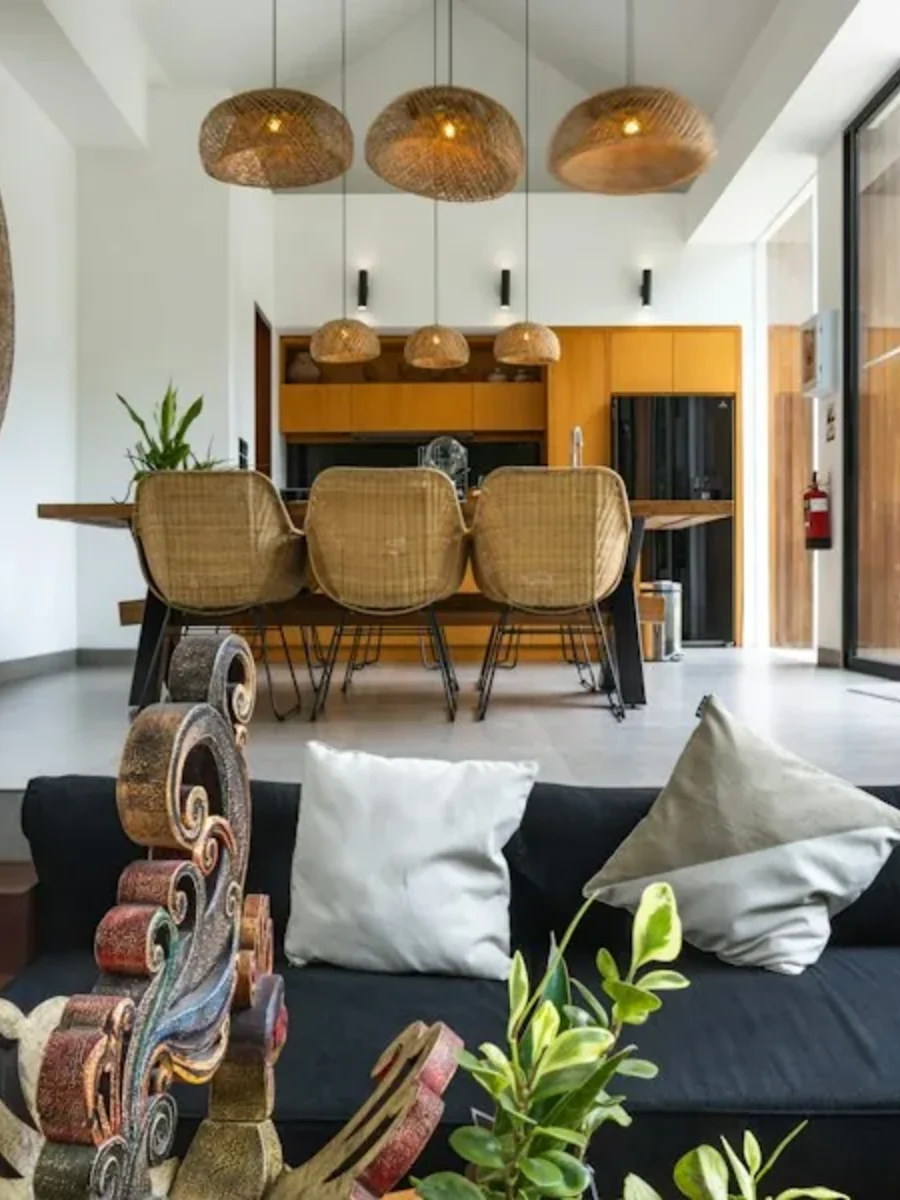
Double-height glazing, salt on every surface and months of the year with nobody home.
Read the guide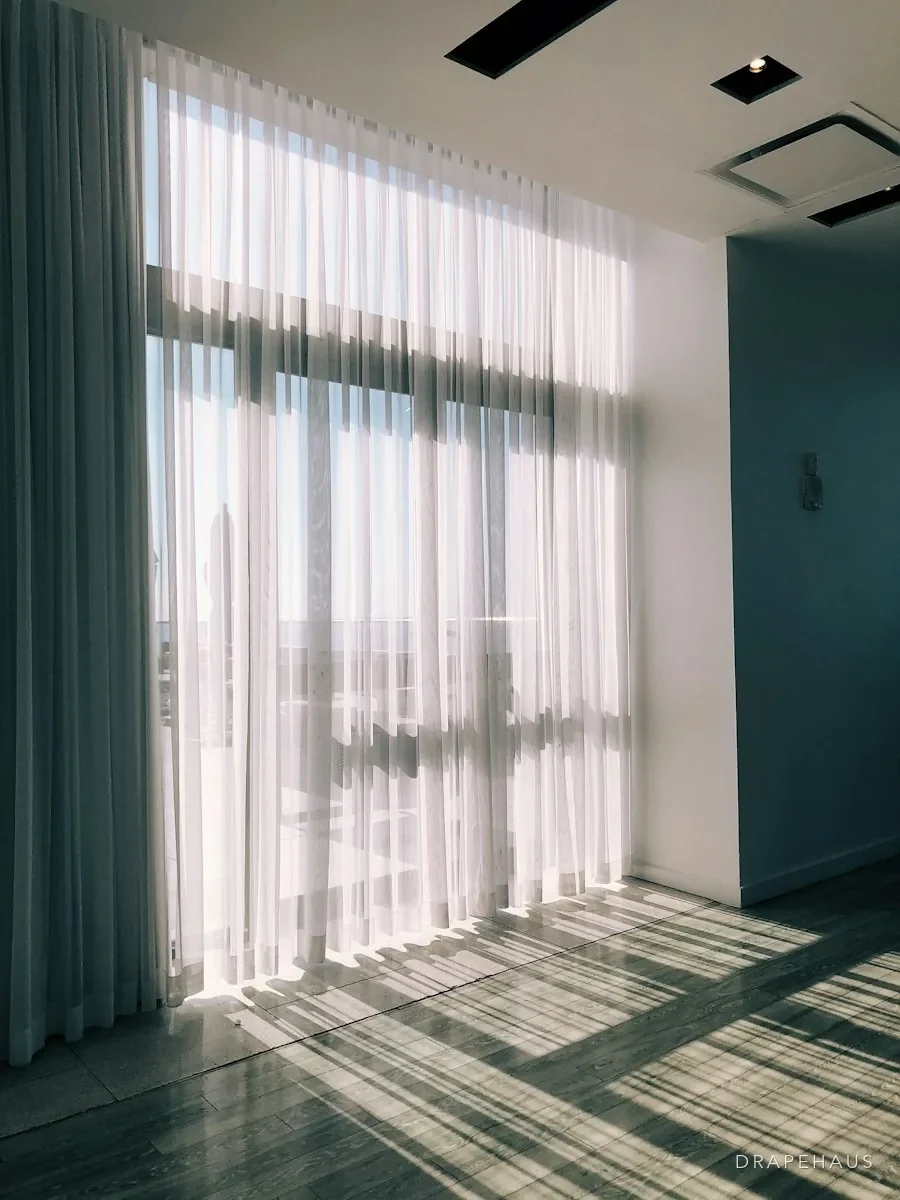
Guest turnover, genuine blackout and fabric that survives being handled by strangers.
Read the guide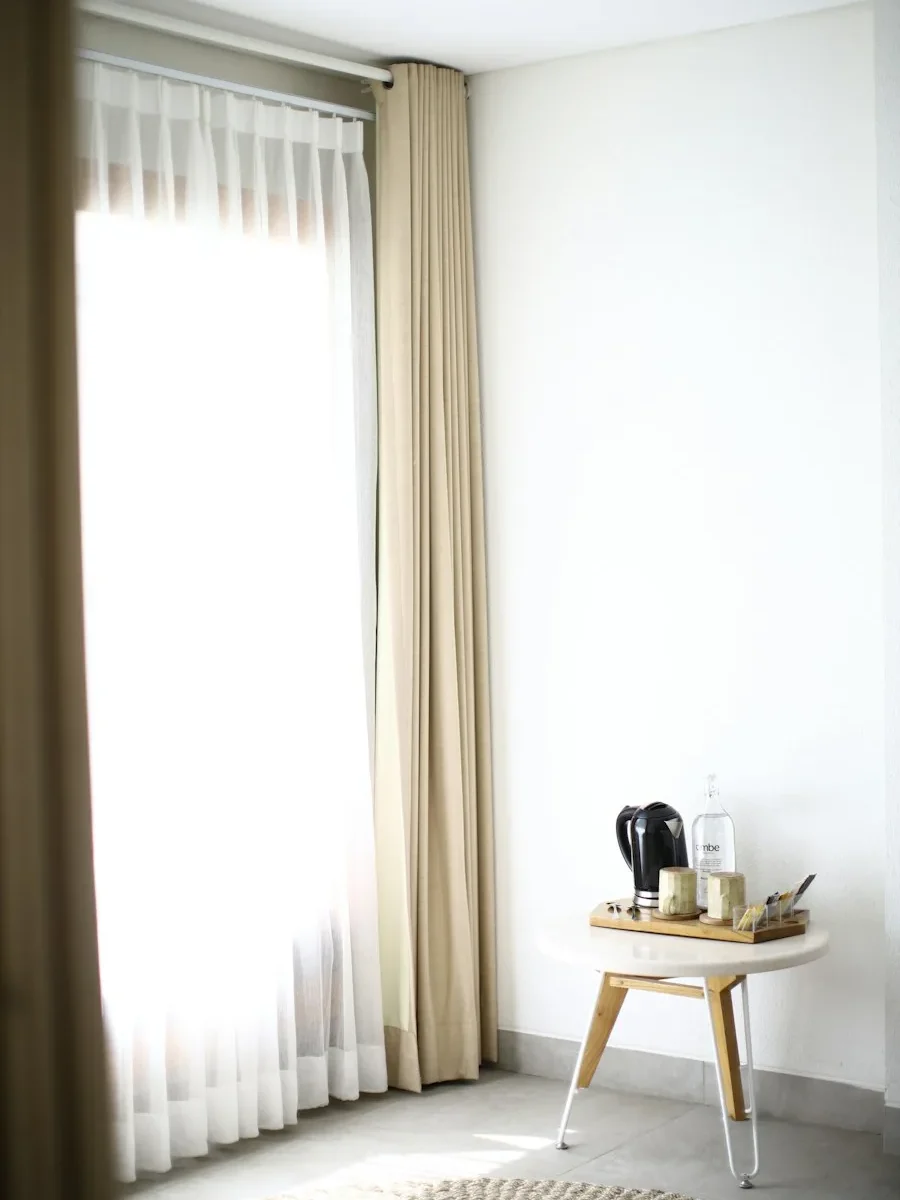
Let unfurnished or short-term, maintained remotely, and specified for tenants rather than owners.
Read the guideFrom the Journal
All articlesFAQ
Yes. We work throughout Candolim and along the Bardez coast towards Sinquerim and Calangute. Our workshop is in Benaulim, in South Goa, so visits are by appointment and we usually group them with other homes nearby. We measure, bring samples to the house, make everything in our own workshop and fit it with our own team.
Yes. If you tell us when your first guests arrive, we will plan measuring, making and fitting around that date. It helps to call us after the monsoon, in September or October, so that the work can be finished before the busiest months. We choose fabrics and hardware suited to guest use and regular cleaning.
Yes. Many Candolim homes belong to owners who live abroad or in another city. We can measure, fit and do monsoon take-downs with your caretaker or manager holding the keys, agree choices with you by photographs and calls, and send pictures once the work is done.
Close to the sea we use corrosion-resistant tracks, brackets and fixings rather than ordinary steel, and we pay attention to small parts such as runners, gliders and blind chains. Rinsing or wiping metal with fresh water now and then helps it last. We decide the specification after seeing how exposed each window is.
If the house will be closed through the rains, it is usually worth it. Curtains left hanging in a shut, humid room for three or four months are likely to mark or grow mildew. We can take them down, clean and store them dry, and rehang them after the monsoon withdraws in October.