 Drapehaus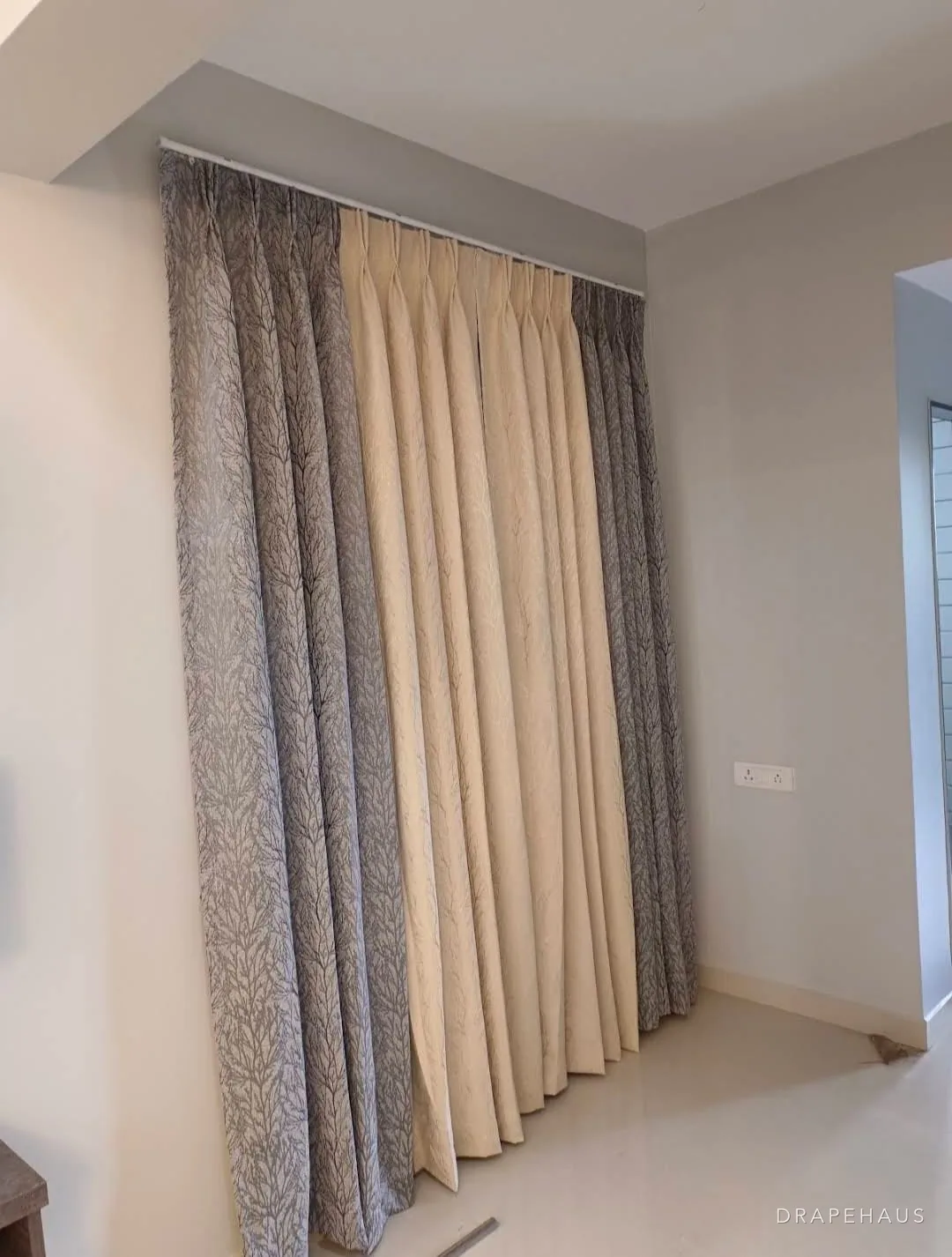
Drapehaus
Preparing the room
Drapehaus
Preparing the room
Sheer curtains simulator
A sheer is the curtain that lets you keep the window. By day it softens the light and blurs the view in; after dark, with lamps on, it behaves quite differently. Close it below and switch the time.
Sheer · Midday
Treatment
Time of day
Softens glare and keeps the view by day. After dark, with lamps on, a sheer on its own hides almost nothing — pair it with a lined curtain for the night.
In short
By day a closed sheer lets most of the light through and keeps a softened view out, while making the room hard to see into. At night, lit from inside, it hides almost nothing. For a room used after dark, pair the sheer with a lined or blackout curtain.
Using the simulator
Sheer is already selected in the Treatment row. Set Drawn open to 0% so the two panels meet across the window.
Tap Midday. Daylight in reads Good, View out reads Some, and the sea and palms show softly through the fabric.
Tap Night. The lamp comes on, and the privacy meter becomes Privacy, lights on — watch it drop to Low.
Now try Sheer + blackout in the Treatment row to see the usual answer to the night-time problem.
What the simulator shows
Privacy through fabric depends on which side is brighter. At midday the sky outside is far brighter than the room, so someone looking in sees mostly the bright surface of the sheer. You, looking out, see through it.
That is why the simulator gives a closed sheer Good daytime privacy while still showing Some on View out. The fabric is doing two jobs at once.
After dark the balance flips. The lamps make the room the bright side, and the open weave that let you see out now lets others see in. Silhouettes, movement and often detail show clearly.
In the simulator Privacy, lights on reads Low for a closed sheer. That is not a flaw in any one fabric; it is how every sheer behaves once the lamps are on.
Close the sheer at Golden and look at the floor. The patch of sunlight softens, but it is still there. A sheer diffuses glare rather than stopping it, so Sun and heat cut stays Low.
That makes it a comfortable fabric for rooms you sit in during the day, and a poor choice on its own where heat is the main problem.
They are opposites, not rivals. A sheer is chosen for the hours when you want light; blackout for the hours when you do not. Compare them in the Treatment row at Midday and at Night and the difference is plain.
In bedrooms the two usually hang together on a double track, which is what Sheer + blackout shows. Set its slider to 100% and you are looking at a sheer alone; bring it to 0% and the blackout closes over it.
| Sheer | Linen | Blackout | |
|---|---|---|---|
| Daylight in (midday) | Good | Some | None |
| View out | Some | None | None |
| Daytime privacy | Good | High | High |
| Privacy, lights on | Low | Some | High |
See it at your own window
The simulator narrows the choice. At the house we bring the real fabrics, hold them up to your light and measure every window.
In Goa
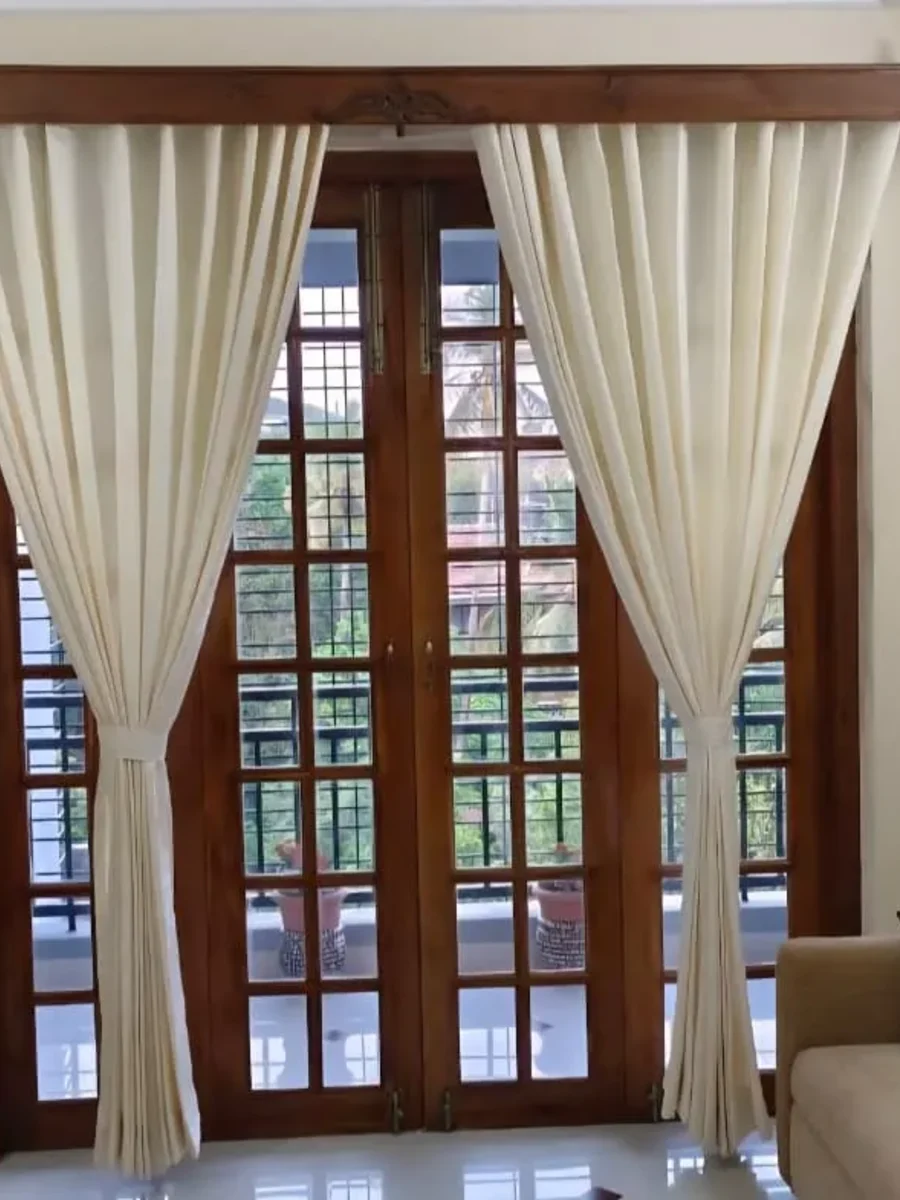
Sheers suit rooms that open onto a verandah or a balcão: the breeze moves them, the view stays, and anyone passing on the lane sees only a pale surface during the day. On sea-facing windows they take the edge off afternoon glare without shutting out the water.
Salt and damp settle in fine, open weaves, so polyester sheers, which wash easily and dry quickly in the monsoon, are often the practical choice near the coast.
FAQ
By day, yes — from outside you see mostly the bright fabric. At night, with lights on inside, very little. The simulator shows the change: Good daytime privacy, Low privacy with lights on.
As a daytime layer, yes. On their own they do not give night-time privacy or darkness, so in bedrooms we hang them with a lined or blackout curtain on a second track.
Very. Living rooms are mostly used in daylight, when a sheer softens glare and keeps the view. If you sit there in the evening with the lamps on, add a heavier curtain for after dark.
Sheer for light and a soft view, blackout for darkness and full privacy. Many rooms need both at different hours, which is why they are so often layered.
No. The readings are relative guides based on how sheer fabrics behave in general. Weave density, colour and fullness all change the result, so we hang real samples at your window.