 Drape Haus
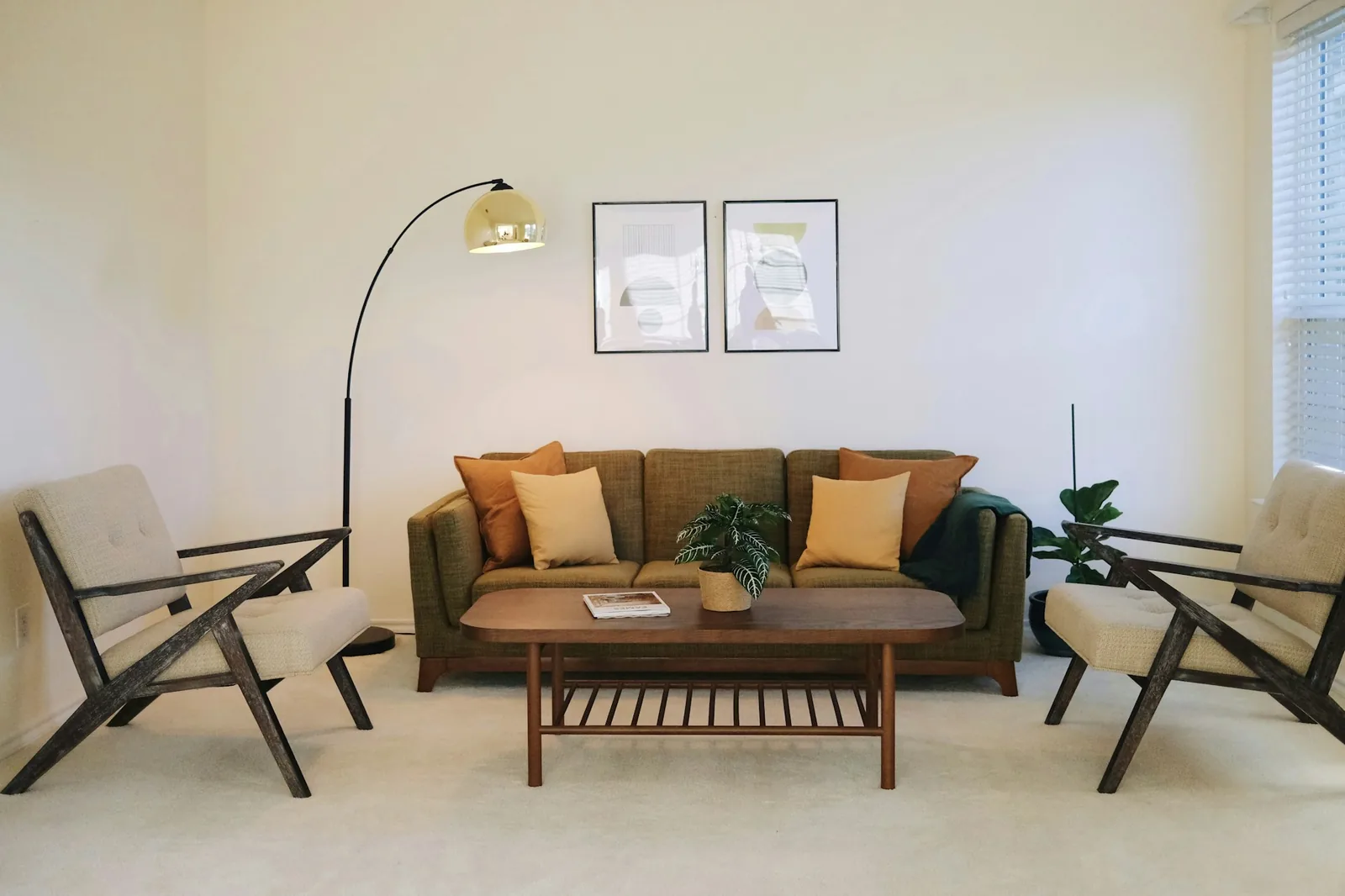
In the sectional vs sofa question, the short answer is this. A sectional, or corner sofa, seats the most people on the least floor and suits a room with a clear focal point and two free walls. A sofa with armchairs takes a little more floor per seat but fits rooms with many doors, rearranges in minutes for a gathering, and moves house without trouble. Neither is better in general; each is better in particular rooms.
Goan homes test the choice harder than most. Long halls with doors on every side, villas that are quiet for months and then full for a feast, flats on the fourth floor of a building with a small lift, and families who divide their time between a flat in town and an ancestral house all push the decision one way or the other.
This guide compares the two on floor area and seats, room shape, flexibility for guests, moving house, comfort for different kinds of evening, and cleaning and re-covering, and ends with a decision table by room size and household.
Floor area and seats, compared honestly
Published planning guides put a typical L-shaped sectional at 244 to 366 cm on its long side and 152 to 244 cm on the short side, with runs 91 to 112 cm deep, and suggest a room of about 4.9 by 4.3 metres for one. A three-seater sofa is typically 183 to 244 cm wide and 81 to 102 cm deep. An armchair in University of Arkansas planning templates takes about 81 cm square.
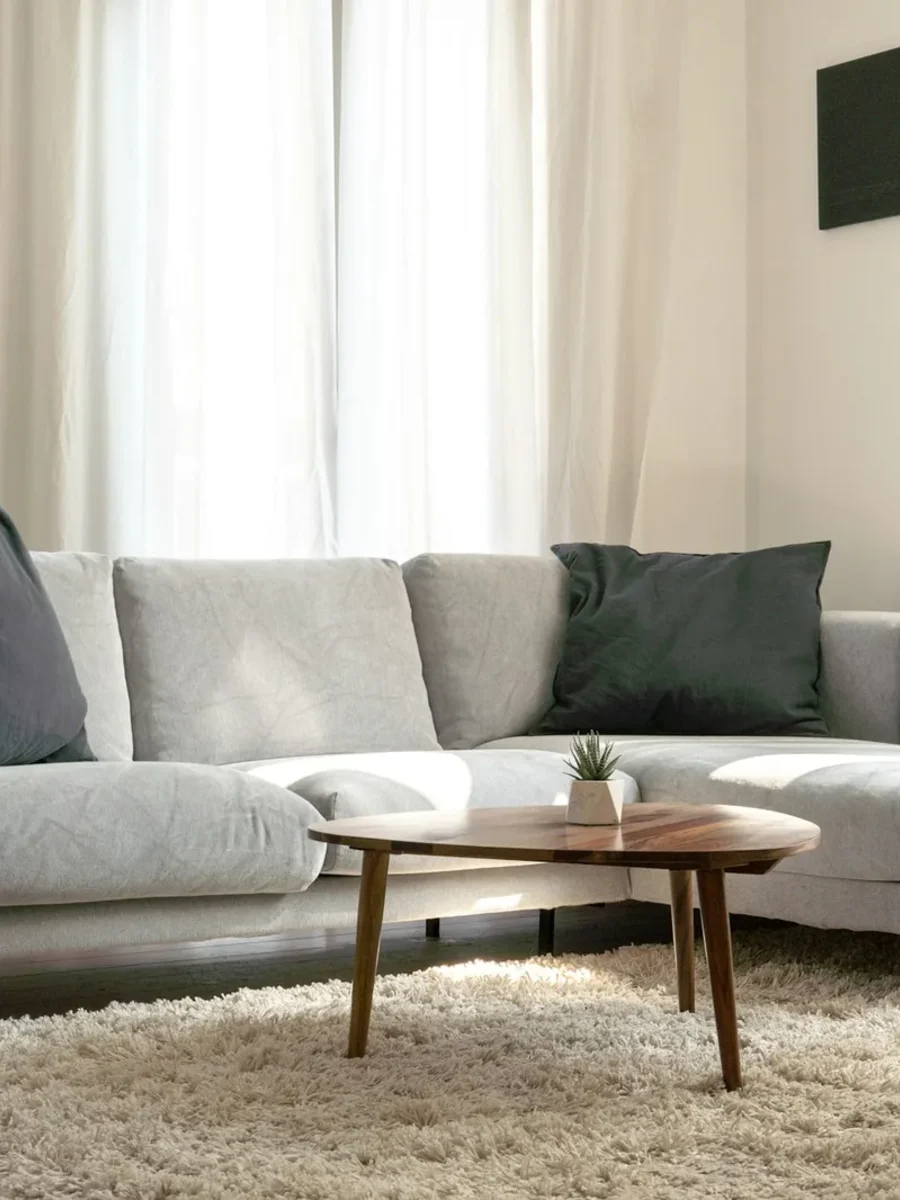
Seat for seat, the corner wins. The corner of an L uses floor that a sofa and chairs leave empty, and nobody needs a gap between pieces. But count honestly. Planning guides allow about 61 cm of seat width per sitter, and the corner position of an L is a poor seat for a full evening. A sofa with two armchairs seats five people, each with their own arm to lean on; a sectional of similar overall size seats five or six with one of them squeezed into the corner.
The difference in floor area is real but often smaller than expected, because armchairs can be angled into spaces a sectional cannot use, such as beside a door or in front of a window.
Depth is where the two arrangements differ most on plan. A sectional takes its full depth along two walls at once, so a 100 cm deep L in a 3.6 m wide room leaves well under three metres for the coffee table, the walkway and everything else. A sofa with chairs takes full depth along one wall only; the chairs, at about 81 cm, are shallower than most sofas and can sit at an angle, which leaves more open floor in the middle of the room. In narrow Goan flats, that difference often decides the question before comfort is even considered.
| Arrangement | Typical pieces | Comfortable upright seats | Suggested room |
|---|---|---|---|
| L-shaped sectional | Long side 244–366 cm, short side 152–244 cm, 91–112 cm deep | 4–6 (corner seat is a compromise) | About 4.9 × 4.3 m or larger |
| Sofa with chaise | Sofa 183–244 cm plus a chaise 152–183 cm long | 3 upright plus 1 lounging | About 4.3 × 4.3 m or larger |
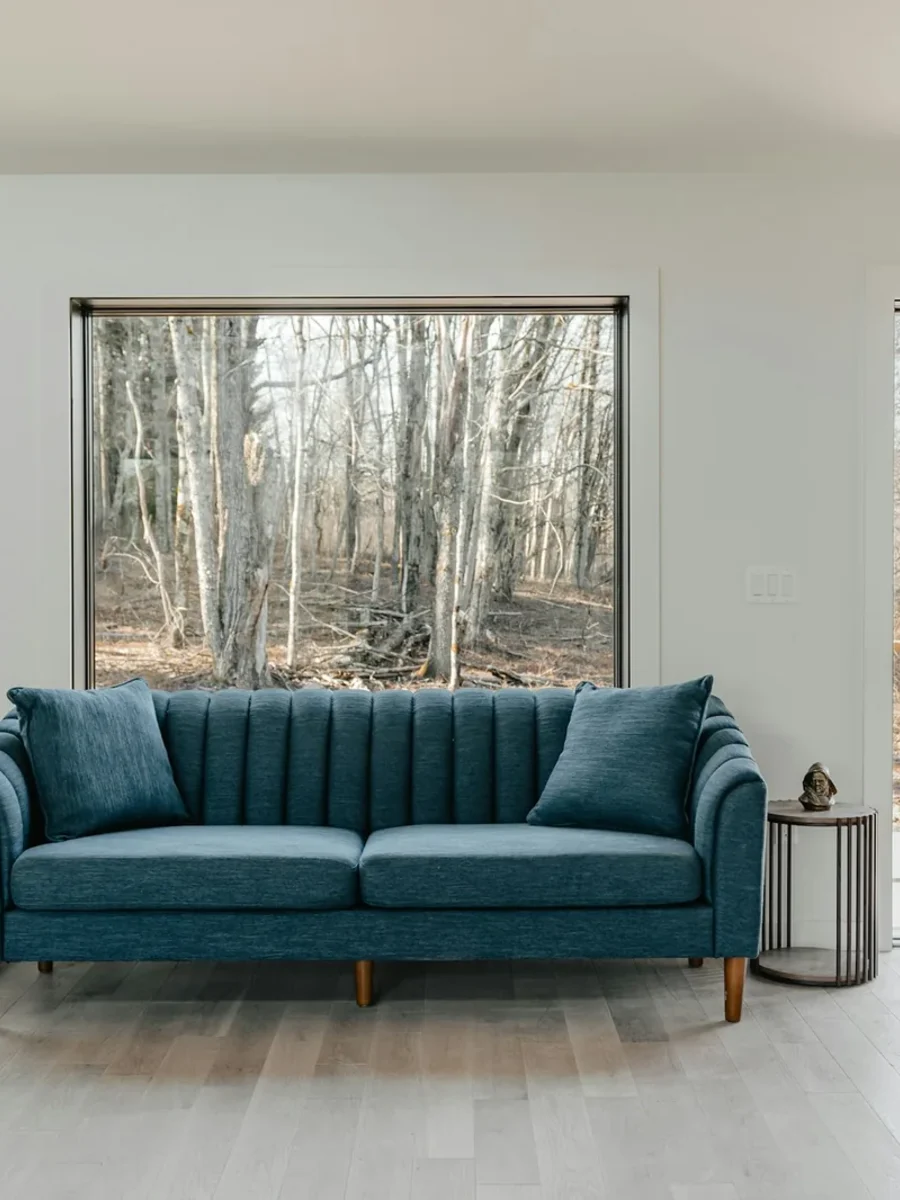
| Three-seater and two armchairs | Sofa 183–244 cm, chairs about 81 cm square | 5, each with an arm | Flexible; chairs fill gaps |
| U-shaped sectional | Centre 244–366 cm, returns 152–213 cm | 6–8 | About 4.9 × 5.5 m or larger |
Room shapes where a sectional fits, and where it blocks the flow
A sectional needs two things: a corner or a clear line in the room to define, and a focal point that everyone faces. A square or nearly square room with a television wall or a view, and with doors grouped on one side, is its natural home. In an open-plan villa, the back of a sectional also works as a soft wall that separates the living area from the dining area.
Long, narrow halls are harder. Many Goan houses have a main hall with windows down both long sides and doors at each end, and a sectional placed across it either blocks a route or sits awkwardly against a short wall. Two sofas facing each other, or a sofa with chairs opposite, run along the length of such a room and leave the circulation open down the middle.
Rooms with many openings favour separate pieces too. Every door needs about 91 cm of clear space so people can pass, by University of Arkansas extension guidance, and every window that opens inwards needs its swing kept free. A sectional's continuous run cannot step around a door; an armchair can sit neatly beside it. If your best walls are broken by two doors and a window, that is usually the answer.
Planning something like this?
We visit homes across North and South Goa, measure on site, and bring samples to see in your own light.
Rearranging for feasts, parties and visiting relatives
Goan households rearrange their living rooms more than most. A feast day, a christening, a wedding visit or relatives arriving for Christmas can turn a room for four into a room for fifteen for a few days. How quickly the seating adapts matters.
A sofa with armchairs adapts in minutes. The chairs pull in to make a tighter circle, move against the wall to open the floor for a buffet, or go to the verandah for the evening. Extension guidance suggests keeping conversation groups within about 2.4 metres so people can talk without raising their voices, and with movable chairs that is easy to achieve for any size of gathering.
A fixed L-shape does not move. It holds its corner and the room arranges itself around it, which suits families who watch television together but makes the room less adaptable for parties. A modular sectional sits between the two: its units can be separated into a sofa and a love seat, or pushed apart to open the floor, though moving them is more work than moving two chairs. Our page on sectional and corner sofas explains how modular units are planned.
Moving house: doors, stairs and lifts
If you may move in the next few years, from a rented flat to a house or between Goa and another city, the sofa has to work in a room you have not seen. Straight sofas and armchairs do this easily; a fixed L-shape works only if the new room has a matching corner on the correct side.
Then there is the journey itself. Armchairs pass almost any door. A three-seater goes through on end. A sectional travels in sections, and the largest one, usually the corner or the chaise, sets the limit. The Bureau of Indian Standards' recommended passenger lift sizes give a six-person car about 110 by 100 cm inside with a 70 cm entrance, which a deep sectional piece can only enter standing on end.
Modular sectionals are the exception among corner sofas: each unit is a single seat, light enough for two people, and the set can be rebuilt as a straight sofa or two smaller groups in the next home. For a family that moves, that flexibility is often the deciding factor. Our guide to L shape sofa size covers measuring routes in more detail.
Comfort for families, guests and long film evenings
For a household that spends its evenings lying back in front of a screen, the sectional is hard to beat. A chaise end or a deep corner gives one or two people space to stretch out, and everyone faces the same way. A sofa and chairs suits this less well; the chair sitters have to turn their heads, and nobody can lie down except on the sofa.
For conversation, the advantage reverses. People sitting in a row on a long sectional talk to the person beside them; people on a sofa and chairs arranged around a table see each other's faces. Formal visits, card games and long family conversations all go better around a table than along a bench.
Older relatives often prefer an armchair. A chair with an arm on each side gives leverage to stand, and its seat height can be chosen for the person. On a sectional, the middle seats have no arms at all, and the corner seat is the hardest place in the room to get up from. A common solution is to combine the two: a sectional for the family, plus one firm armchair for the person who needs it. Our single and two-seater sofas include chairs sized to the sitter.
That mixed arrangement deserves more attention than it gets. A compact corner sofa along two walls, with one or two armchairs opposite, gives the family a place to lie back, gives guests faces to talk to, and gives older relatives a seat they can rise from. It also hedges the moving-house risk: if the next room has no suitable corner, the chairs still work and the corner sofa, if modular, can be rebuilt as a straight run.
Cleaning, fading and re-covering
Separate pieces are easier to clean around and under. Armchairs lift aside for the floor to be mopped; a large sectional has to be separated first, and its underside gathers dust and, in a monsoon, damp air. On the other hand, a modular sectional with removable covers can be washed unit by unit, starting with the chaise, where feet and sunscreen concentrate.
Fading is uneven in Goa's strong light. The piece nearest a west-facing window fades first. With a sofa and chairs, the chairs can swap sides each season to share the light. A sectional cannot rotate, though its seat cushions can, and a modular unit can trade places with one from the shaded end.
Re-covering follows the same logic. Two armchairs can be re-covered in a contrast fabric while the sofa keeps its cover. A large sectional is re-covered all at once, which is a bigger job, or piece by piece only if the fabric can still be matched. Removable sofa covers make either easier, and you can preview new colours in the sofa fabric simulator.
Sectional or sofa and chairs: a decision table
Use the table as a starting point, then check it against your floor plan. The right answer for one household in a given room can be wrong for another with different habits. If two rows point in opposite directions, the room's doors and walkways usually settle it.
When you are ready to plan, see our L-shaped sofas for fixed corner sofas and our sofa sets for a sofa planned with matching chairs. Ideas from other homes are on our villa sofas page. Or book a home visit: we will measure the room and the route in, and draw both layouts on your plan so you can compare them before anything is made.
| Situation | Better choice | Why |
|---|---|---|
| Square room, television wall, doors on one side | Sectional | Most seats for the floor; everyone faces the screen |
| Long, narrow hall with doors at both ends | Sofa and chairs, or two facing sofas | Keeps the central route open |
| Room with several doors and low windows | Sofa and chairs | Chairs fit between openings |
| Open-plan villa living area | Sectional | Defines the living zone; seats the family together |
| Household that hosts large gatherings | Sofa and chairs, or a modular sectional | Seating can be regrouped quickly |
| Family likely to move in a few years | Sofa and chairs, or a modular sectional | Fits any new room; easy to carry |
| Film evenings, lying back | Sectional with a chaise | Room to stretch out |
| Older relatives at home | Sofa and armchairs, or sectional plus one armchair | Arms to rise from; seat height to suit |
| Small flat, small lift | Compact sofa and one chair, or modular units | Every piece passes the lift and door |