 Drapehaus
Drapehaus
Preparing the room
Drapehaus
Preparing the room
South Goa · Villas and resorts
Cavelossim is villa and resort territory, and the brief is usually a whole property rather than a single room. Twelve windows and upward, often with double-height glazing that nobody can reach from the floor.
What we see in Cavelossim
Homes in Cavelossim — tap a heading to read
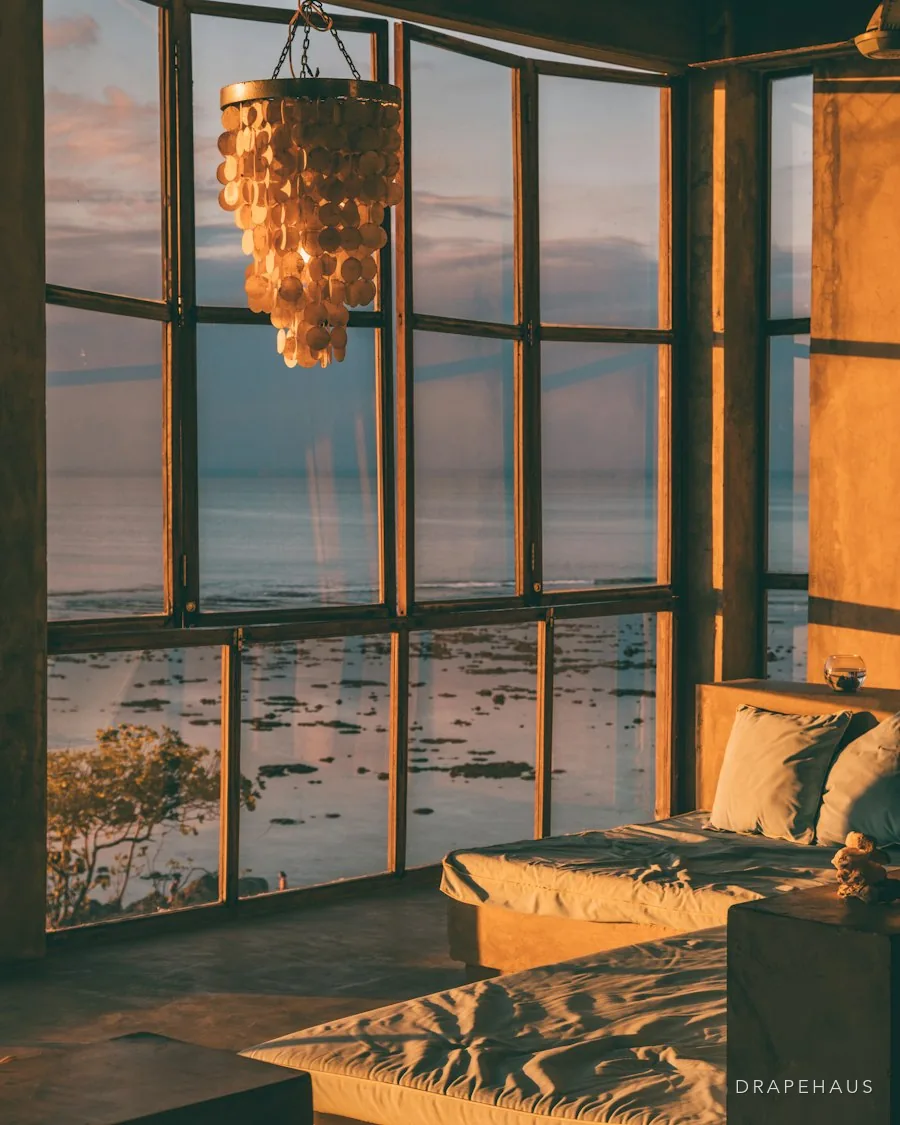
Cavelossim is a narrow village with the Arabian Sea on its west and the Sal river on its east. At its southern end, at Mobor, the river meets the sea. Several of South Goa's large resorts sit along this stretch, and around them are villas, holiday homes and villa complexes, many of them let for part or all of the year, alongside the older houses and chapels of the village itself. It is one of the few places in Goa where so much water surrounds so little land.
That geography gives Cavelossim two kinds of waterside home. On the beach side, houses face the open sea and take the full force of the wind, the salt and the afternoon sun. On the river side, homes look out over the river, with less salt but air that stays humid around the clock. Some plots manage to see both. The difference between them is large enough that two villas a few hundred metres apart can need quite different fabrics and hardware, and we treat them accordingly.
The properties are generally larger than in the villages further north. A brief here is rarely one room; it is a whole house, a block of apartments in a complex, or a set of cottages. That is where consistency across rooms, careful scheduling and a specification that can be repeated years later start to matter more than any single fabric choice. An owner with twenty windows wants to know that the twenty-first, added later, will match the rest without anyone having to search for the original order.
Planning work in Cavelossim?
We measure on site and bring samples to see in your own light — so the choice is made in the room, not from a photo.
Salt is the defining condition on the sea side. It settles on glass, tracks and fabric within days of cleaning, pulls moisture from the air, and keeps fibres faintly damp even in clear weather. Mild steel rusts quickly and stains the plaster below it. For any Cavelossim property near the beach, we use marine-grade or powder-coated aluminium and stainless fixings throughout, inside as well as out, because salt does not stop at the veranda door and indoor fittings corrode too, only more slowly. We also look at the glazing itself, because failing seals and salt-etched glass mean whatever hangs in front of it lives in a damp pocket of air.
Villas here often have double-height living rooms, stairwell windows and long runs of sliding glass onto a pool deck. The windows that most need shading are frequently the ones nobody can reach. Motorised blinds and curtain tracks are the practical answer, and we specify motors with sealed housings and battery or solar options that keep working through power cuts. A remote or a wall switch that actually gets used does more for a room than a beautiful curtain nobody can close. For owners who are often away, a simple timer can open and close blinds to keep some air and light moving.
The monsoon normally arrives in the first week of June and blows onshore from the west and south-west, bringing driven rain against the sea-facing walls. Morning humidity through those months stays between 87 and 91 per cent. On the river side, the damp is slow to lift even after October. Fabrics that dry quickly and do not feed mildew are essential on both sides of the village, and so is a plan for which curtains come down in May and which can safely stay up through the rains.
Cavelossim is a short drive south of our workshop in Benaulim, so site visits are easy to arrange. For a whole property, the first visit is a survey: every opening measured, each face of the building noted for sun and salt exposure, and the existing hardware checked for signs of what the site does to metal. Rust blooms, white crusting on aluminium and motors that hesitate all tell us something. We then write a room-by-room specification you can review before anything is ordered. Where a property has several similar villas or rooms, we group them into types so the order stays clear.
We bring samples to the property and view them in the rooms at the time of day that matters, usually late afternoon for sea-facing rooms and evening for bedrooms. Everything is made in our workshop and fitted by our own team, and for let properties we plan installation around bookings, often working through a property one block or one floor at a time so that rooms stay available. We keep a written record of fabrics, sizes and tracks for every room. Nothing is subcontracted.
Aftercare is where larger properties gain most. We can service motors and tracks before the season, take down and store curtains before the monsoon, and rehang them in October once the property has aired. For resorts and villas let commercially, where fire-safety rules apply, we specify flame-retardant fabrics to the standard your operator or insurer asks for. For owners who live abroad, we report to you or your property manager with photographs after each visit, so you know the state of the house without having to see it.
Most often, a full specification for a villa or complex: blackout for bedrooms, sheers for living spaces, motorisation for tall glass and insect screens on every opening. Owners want the rooms to read as one property, so we match fabrics and heading styles across the house and keep enough spare material to replace a damaged curtain without a visible difference. Rugs, sofas and upholstered beds often join the same brief, chosen in fabrics that cope with humid, salty rooms. We plan everything as one scheme, so the house is finished at once rather than room by room over several seasons.
The second common request is refurbishment. A few seasons of salt and sun fade curtains, rust tracks and wear out upholstery, particularly on the sea side. We replace hardware with materials that will last, re-cover sofas and loungers in outdoor-grade fabrics, and suggest what can be kept and what should go. Often the frames and tracks in an older villa are sound and only the fabric needs replacing; sometimes the reverse is true, and the survey tells us which. We tell you plainly which it is.
The third is care between seasons. Owners who let their villas, or who live abroad, ask us to manage the monsoon cycle, check motors and screens, and report on the state of the furnishings before the first guests arrive. We work with the property manager or caretaker and send photographs, so you know the house is ready before you do. That steady routine, year after year, is what keeps a waterside property looking cared for rather than weathered. We are glad to take on that role.
What we make in Cavelossim
The homes we work in here
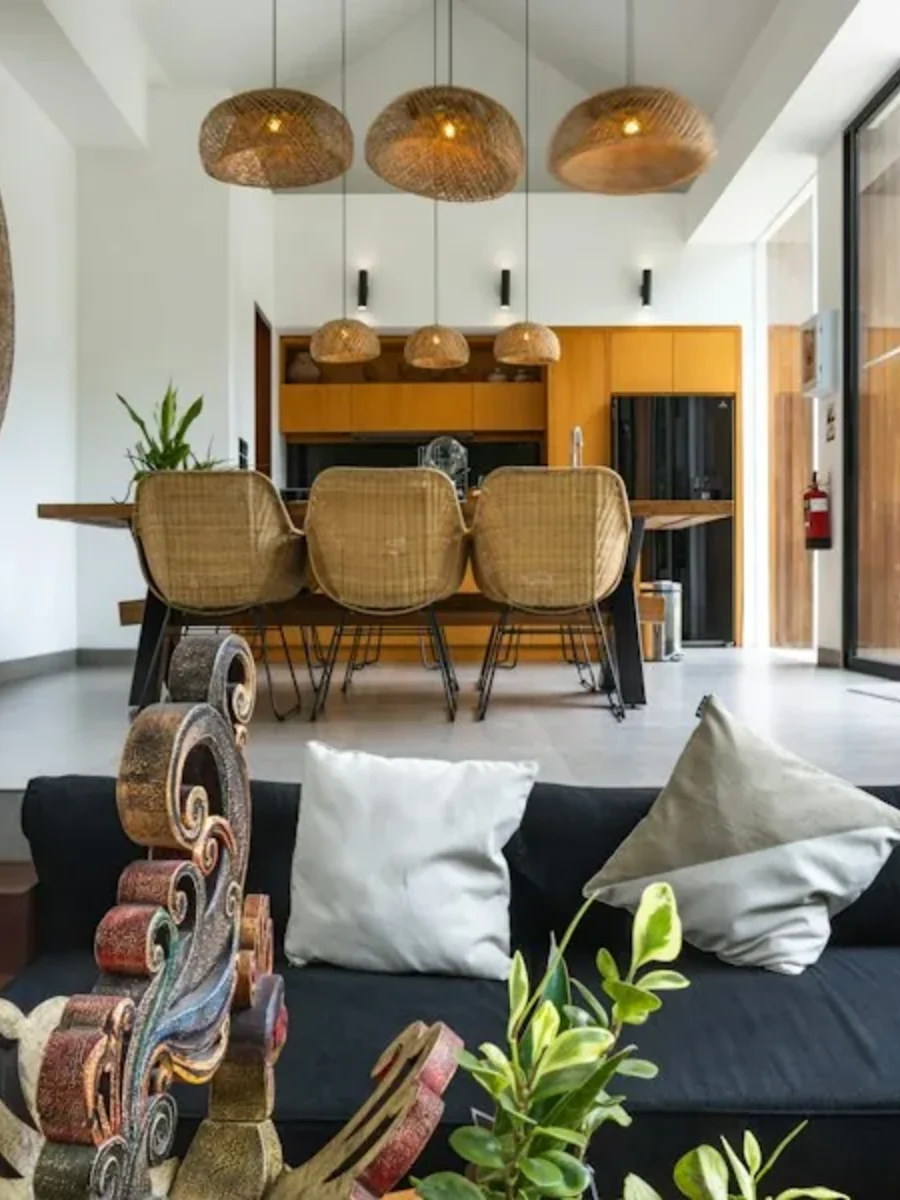
Double-height glazing, salt on every surface and months of the year with nobody home.
Read the guide
Fire ratings, repeatable specification across many rooms, and installation around paying guests.
Read the guide
The best view and the worst conditions in the same room, usually with a terrace attached.
Read the guideFrom the Journal
All articlesFAQ
Yes. Much of our work in Cavelossim is at whole-property scale: villas, villa complexes and resort rooms. We survey every opening, write a room-by-room specification, make everything at our Benaulim workshop and fit it ourselves, planning around bookings where the property is let. We keep records so later replacements match.
Salt carried on the onshore wind settles on metal and holds moisture against it. Ordinary mild steel corrodes quickly in those conditions, and the rust stains the plaster below. We use marine-grade or powder-coated aluminium and stainless steel fixings throughout sea-facing properties, including indoor rooms, because the salt reaches inside as well.
Yes, and for windows above normal reach it is usually the only arrangement that gets used. We fit motorised roller blinds and curtain tracks, with battery or solar-charged motors where running new wiring through a finished wall is impractical. We choose sealed motors suited to humid, salty air and can set timers for houses that stand empty.
It does. Beside the Sal there is much less salt, so hardware lasts longer and natural fabrics fare better. The air, though, stays humid almost all year, so linings that breathe and fabrics that dry quickly matter more. We look at which way each room faces and how well it is aired before recommending anything.
Yes. In late May we take down curtains that should not hang through the rains, clean and dry them, and store them with airflow. We secure external blinds and check screens. In October, once the monsoon has withdrawn and the villa has aired, we rehang everything and report anything that needs repair before the season.