 Drapehaus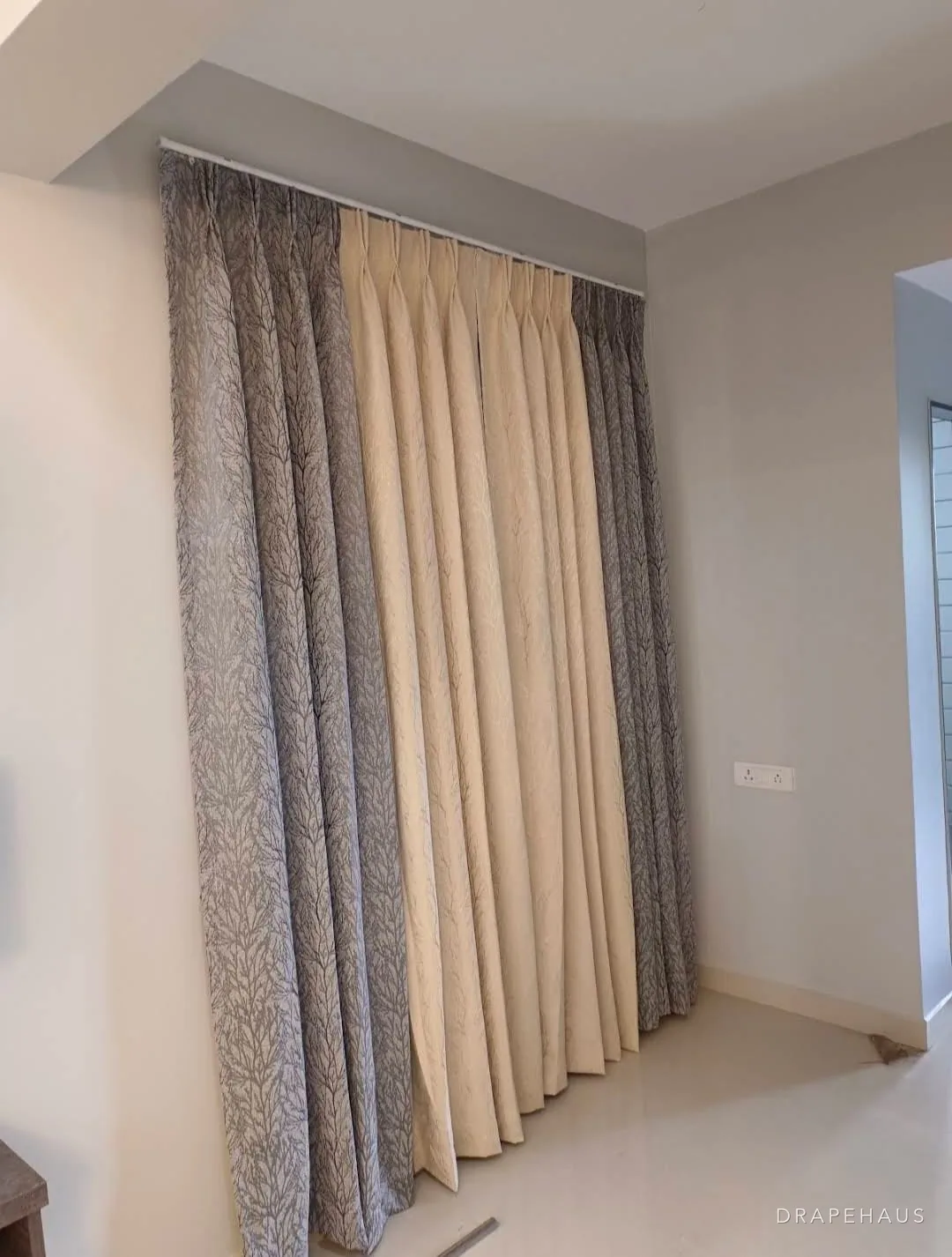
Drapehaus
Preparing the room
Drapehaus
Preparing the room
Roller blinds simulator
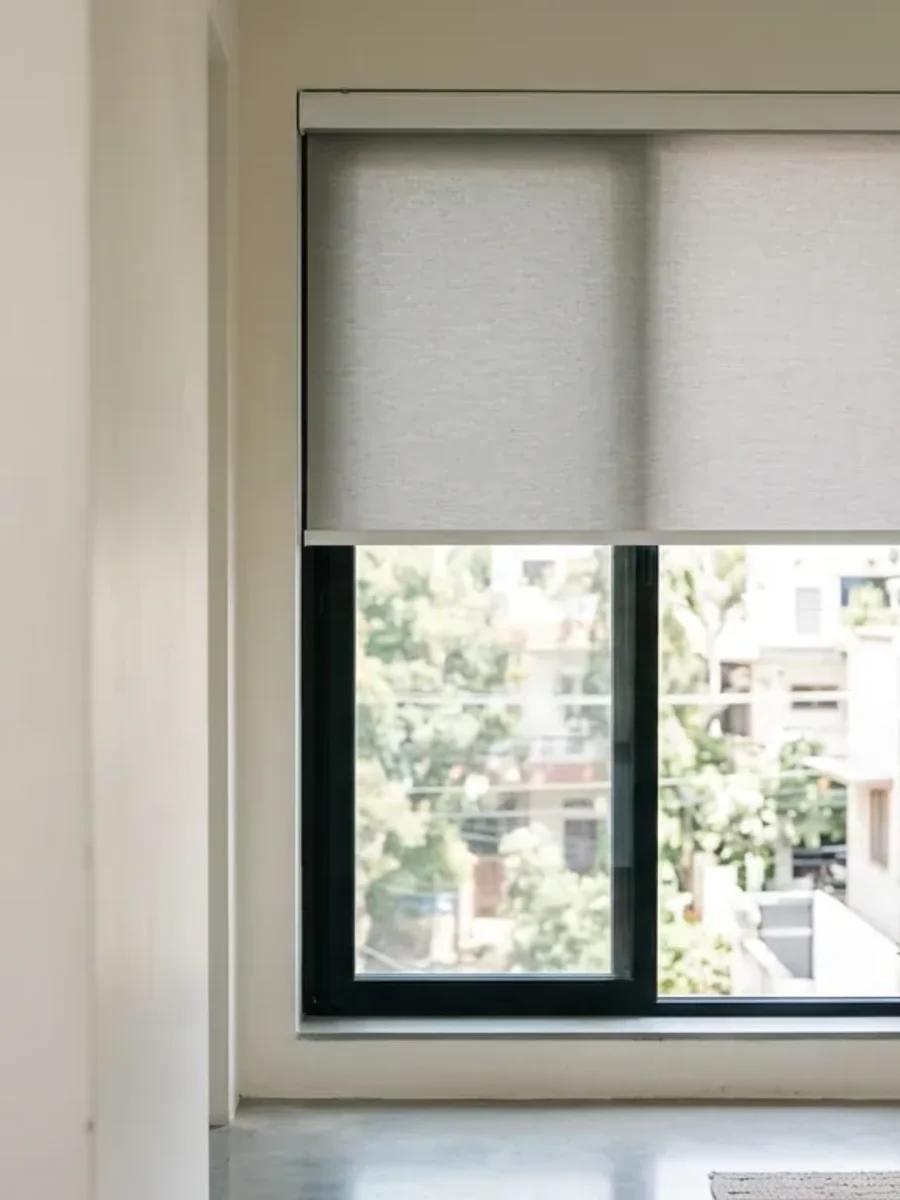
A roller is the simplest blind there is: one sheet of fabric on a tube. Its fabric does all the work, so what you see through it changes with the hour. Lower it below and find out how.
Roller · Midday
Treatment
Time of day
Light-filtering roller fabric: soft, even light and daytime privacy. For a bedroom, choose blackout fabric and side channels.
In short
A light-filtering roller gives soft, even light and good privacy by day, and a little less after dark once the lamps are on. For a bedroom that must be dark, the answer is blackout fabric running in side channels. For a living room, light-filtering is usually the right choice.
Using the simulator
The simulator opens on Roller at Midday. Drag the Raised slider to 0% so the fabric covers the whole window.
Read the meters: Daylight in drops to Some, View out to None, and Daytime privacy climbs to High.
Switch to Night. The lamps come on, the meter becomes Privacy, lights on, and it settles at Good rather than High.
Raise the blind a third of the way and watch privacy fall as the lower glass opens, then compare with Zebra in the Treatment row.
What the simulator shows
The roller in the drawing is a light-filtering fabric, the kind most living rooms have. Fully lowered at midday it lets roughly a third of the light through, so the room glows rather than goes dark, and the sun on the floor fades to a soft patch.
There is no blackout roller in the Treatment row. Think of the Roller setting as the day fabric, and treat blackout as a separate choice for rooms where sleep matters.
In daylight the outside is far brighter than the room. A passer-by looking at a lowered roller sees the lit face of the fabric and very little behind it, which is why Daytime privacy reads High even though light is coming through.
Raise the blind and privacy falls with it, because the open strip at the bottom is plain glass. Leave a roller a little way up on a ground-floor window and that strip is at eye level from the lane.
After dark, the lamps make the room the bright side. Light-filtering fabric now glows from inside, and shapes close to the blind can read as shadows. That is the drop from High to Good you see on the meter.
For a bedroom or a street-facing room used in the evening, choose a dim-out or blackout fabric, or add a lined curtain in front. Either brings night privacy back up.
In a bedroom the roller has one job: darkness at night and at dawn. Blackout fabric does it, and side channels stop the thin line of light at each edge that a fabric alone cannot.
In a living room the job is glare and privacy with the room still bright. Light-filtering or sunscreen fabric suits it, set low in the afternoon and rolled right up once the sun has moved round.
| Light-filtering roller | Zebra | |
|---|---|---|
| To let light in | Raise it | Align the bands |
| Daylight, fully closed | Some | Low |
| Privacy, lights on | Good | Some |
| Blackout version | Yes, with side channels | No |
| Suits | Bedrooms, simple windows | Living rooms, studies |
See it at your own window
The simulator narrows the choice. At the house we bring the real fabrics, hold them up to your light and measure every window.
In Goa
Most roller fabrics are polyester, glass-fibre or coated, which is why rollers cope well with monsoon humidity. The one habit to avoid is rolling a blind up while it is wet with condensation; it stays damp inside the roll for days.
On a west-facing window, a sunscreen roller cuts the late glare off the sea and still leaves the horizon visible. Motorised rollers are popular for high fanlights, and a battery motor keeps working through a power cut.
FAQ
With a light-filtering fabric and lamps on, they can see a glow and sometimes shadows, but not detail. Blackout and dim-out fabrics stop this entirely.
A blackout fabric, face-fixed with an overlap or run in side channels so light cannot creep round the edges. In a bedroom that faces east, it is the difference between waking at dawn and not.
A roller if you are happy to raise and lower it and want the view fully clear when it is up. A zebra if you want to adjust light through the day without lifting it. Both look quiet and modern.
Yes. A double roller holds a light-filtering or sunscreen fabric and a blackout fabric on one bracket. You use the first by day and lower the second at night.
Some. They stop direct sun reaching the floor, which helps. Pale or solar-backed fabrics reflect more heat back through the glass than dark ones.