 Drape Haus
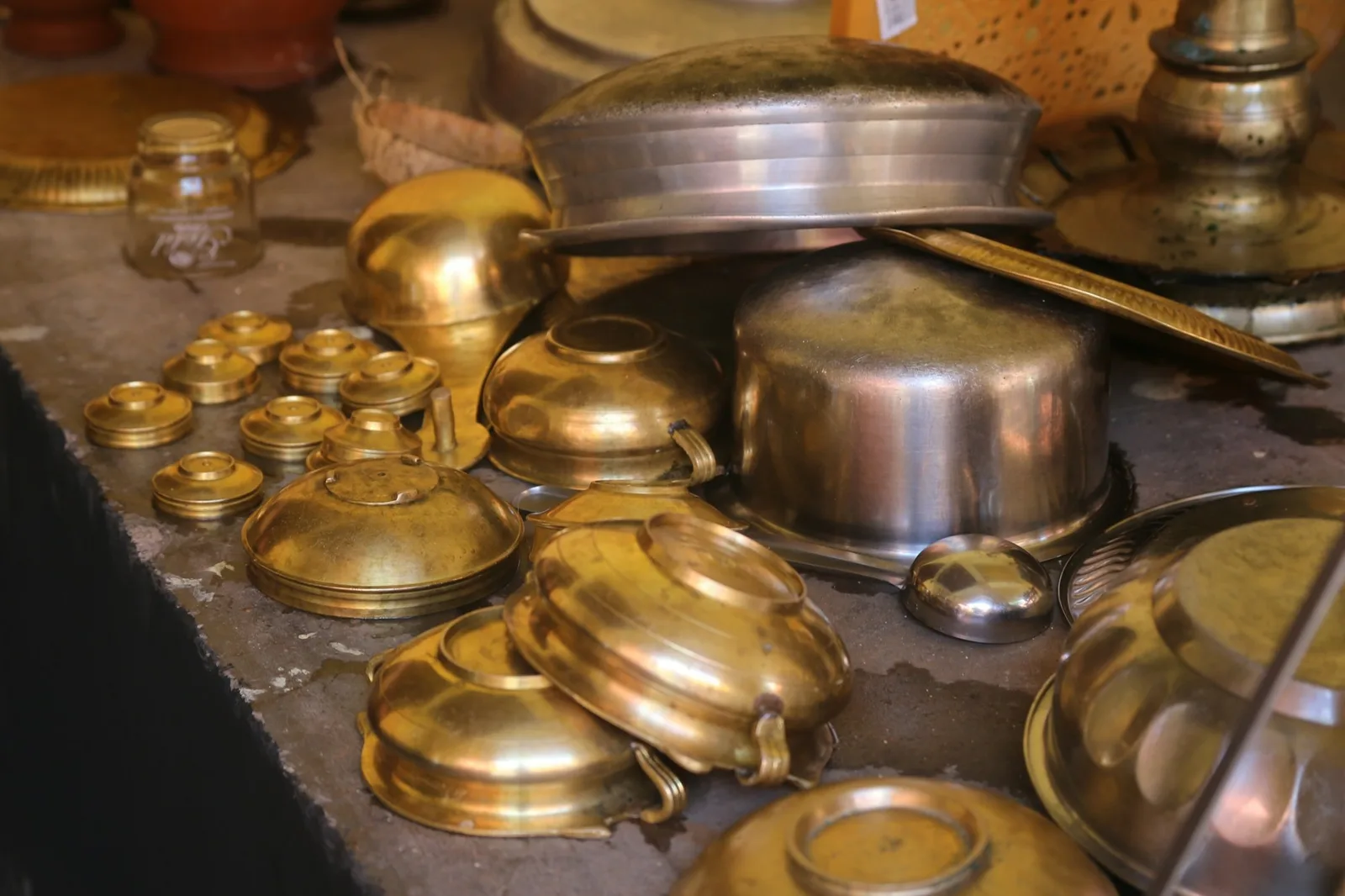
The traditional Goan kitchen was a working room at the back of the house. It was built around a wood-fired hearth called the chul, stocked with clay pots from village potters and copper vessels, and equipped with a grinding stone for the coconut and masala pastes that Goan food is built on. It opened onto the yard, the well and the kitchen garden, and it was usually the smokiest and dampest room in the house.
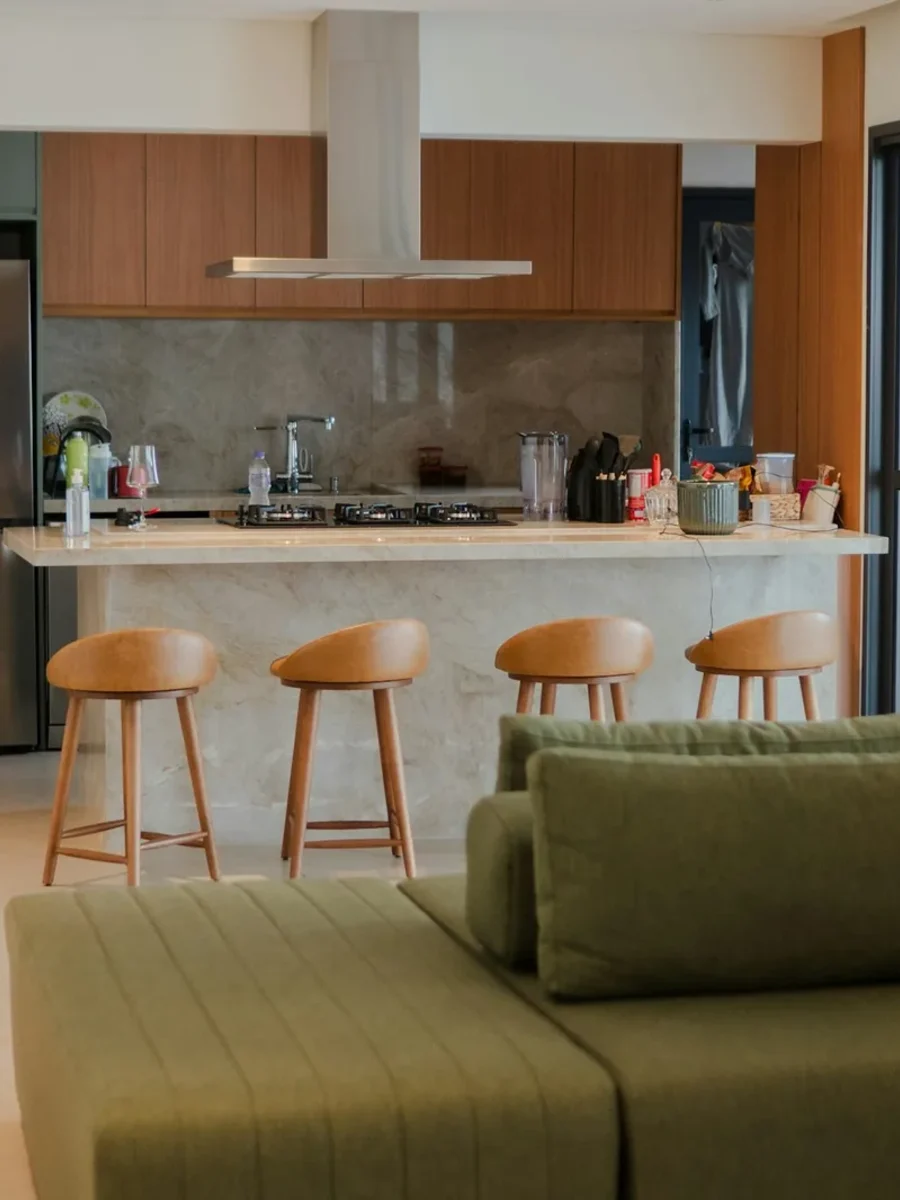
Most of those kitchens have long since gone over to gas, and many owners of old houses now want a modern kitchen in the old one's place. The good news is that the old layout suits modern cooking well. The challenge is doing it without losing the room's character, and without bringing in materials that fail in a Goan monsoon.
This guide describes the traditional kitchen only as far as the sources we could find support, then turns to the practical questions: smoke and soot, what to keep and what to replace, materials that survive humidity, and window treatments for a cooking space. For open-plan layouts, see our separate guide to open kitchen design.
Where the kitchen sat in the old Goan house
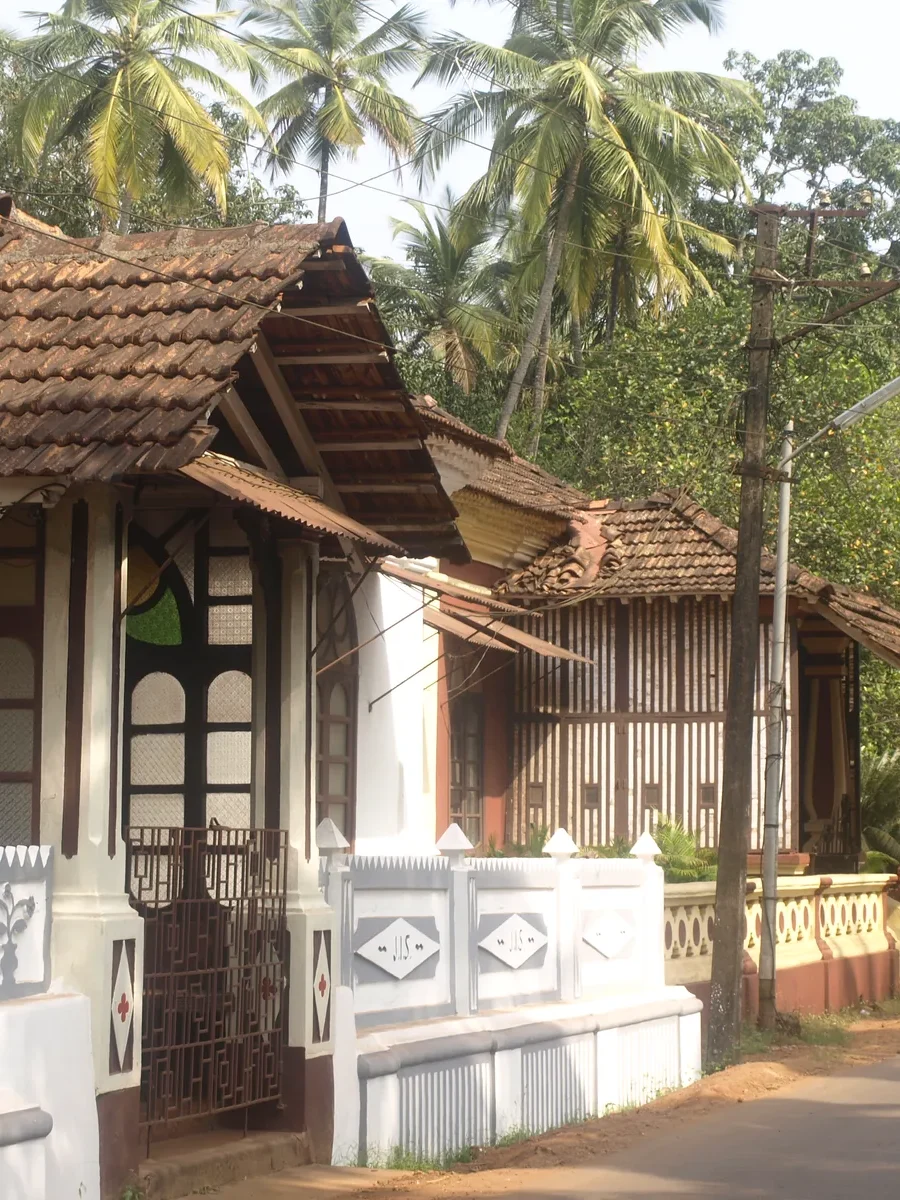
The kitchen belonged at the back. Writing on Goan houses, summarising the architectural survey Houses of Goa, places the kitchens and service areas at the back of the typical Catholic house, behind the reception rooms, the dining room and the bedrooms around the courtyard. For the traditional Hindu house it lists the raanchi kood, the kitchen, with its own door, the magil daar, alongside a kothar or store room. Our guide to the Portuguese house plan follows the whole sequence from road to yard.
The position made practical sense. It kept smoke, heat and cooking smells away from the formal rooms, kept water close to the well, and put the kitchen next to its supplies. A study of Goan domestic architecture from Government Polytechnic Panaji describes the backyard of the traditional house as holding the well and the ghorbhat, the kitchen garden, which supplied vegetables and fruit for daily use. An essay on Goa's vanishing architecture in Question of Cities lists the firewood kitchen among the elemental spaces of the Goan house, alongside the sala, the balcão and the courtyard.
The working kitchen: hearth, clay, copper and stone
The chul was the centre of it. A 2026 feature in Incredible Goa describes the wood-fired hearth as the centre of everyday cooking, not a matter of taste: firewood had to be arranged, yesterday's ash cleared, fuel kept dry through the monsoon and the fire managed throughout the meal, with different foods needing different arrangements of embers and flame. Festival cooking, such as the sweets and dishes of Chovoth for visiting relatives, all had to pass through the same limited hearth.
The vessels were mostly made locally. A feature on Goan culinary traditions in The Goan describes the kullim or kudne, the earthen pot made by village potters, as once a staple of every Goan kitchen, and a separate Incredible Goa piece notes that clay vessels also stored water, keeping it cool. The same Goan feature describes the copper konfro, a steamer for sanna, maddos and patolleo, which was routinely tinned before use to prevent corrosion.
Then there were the tools that made the pastes. The Goan describes the rogdo and vhaan, a grinding stone and cylindrical pestle used for coconut, soaked rice, dals and masalas; the doulo, a ladle made from a polished coconut shell on a bamboo handle; and the kantonnem, an iron coconut grater fixed to a low wooden stool. Many of these objects survive in old houses, and they are worth keeping even when they are no longer used every day.
| Object | What it was | In a modern kitchen |
|---|---|---|
| Chul | Wood-fired hearth, the centre of daily cooking | Keep as a feature if sound; cook on it only outdoors or with proper ventilation |
| Kullim, kudne | Earthen cooking and storage pots from village potters | Still used for curries; store on open shelves where they can dry |
| Konfro | Copper steamer, tinned inside, for sanna and other steamed dishes | Keep dry; have the tinning renewed before cooking in it |
| Rogdo and vhaan | Grinding stone and pestle for coconut and masala pastes | A handsome object for a corner of the kitchen or the yard |
| Kantonnem | Iron coconut grater fixed to a low stool | Still used in many homes; keep the iron dry and oiled |
| Doulo | Coconut-shell ladle on a bamboo handle | Hang on a rail away from the hob |
Planning something like this?
We visit homes across North and South Goa, measure on site, and bring samples to see in your own light.
Smoke and soot: what the old kitchen did to walls and fabrics
The romance of the chul has a hard edge. Incredible Goa's feature is clear that wood-burning hearths create serious indoor air pollution, and that gas transformed domestic comfort, especially for women who had spent years in the smoke. The World Health Organization's figures put the scale of it: around 2.1 billion people worldwide still cook with solid fuels or kerosene, indoor smoke in poorly ventilated homes can carry fine-particle levels 100 times higher than acceptable, and women and children, who spend most time near the hearth, bear the greatest burden. That is a good reason not to bring an open wood fire back inside as a lifestyle choice.
Generations of smoke leave their mark on a room. Soot settles as a dark, slightly greasy film on ceilings, rafters and the upper walls, and it clings to any fabric hung nearby. In an old kitchen being restored, the blackened timber and plaster are part of the room's story, and it is worth deciding deliberately what to clean and what to keep. A sound, smoke-darkened rafter can stay as it is; a soot-stained lime wall is usually better given fresh limewash than scrubbed hard, as our guide to lime plaster and limewash explains.
Modern cooking still produces grease and steam, just less of it. The US Environmental Protection Agency advises venting stoves to the outside where possible and using exhaust fans or open windows whenever cooking, because combustion and boiling both raise humidity. In a Goan kitchen in the monsoon, that matters as much for mould as for smell.
Modernising: what to keep and what to replace
The most important thing to keep is the kitchen's position. A modern kitchen in the old kitchen's place, at the back of the house, keeps heat, smells and noise away from the reception rooms, keeps plumbing runs short and keeps wet work near the yard. Opening the kitchen into the sala usually means cutting a thick, load-bearing wall, and it breaks the logic that makes the old plan work.
Keep the openings too. Old kitchens were built with windows and a door to the yard because a fire needed air, and the same openings now carry away steam and cooking heat. Keep the back door working, keep windows that open, and resist blocking them with tall units. If the old store room survives, it makes an excellent pantry: cool, close and out of sight.
Replace what is unsafe or unhygienic. Old wiring, makeshift gas connections and leaking drains are not character. Surfaces near food need to be cleanable. Where an old hearth survives, keep it as an object if it is sound, but do not cook on it indoors unless a qualified person has made sure it is properly flued and ventilated. Structural changes, services and gas work belong with a conservation architect and qualified trades; this guide is about choices, not specifications.
| Element | Usually keep | Usually replace or add |
|---|---|---|
| Position at the rear | Yes: heat and smells stay away from the front rooms | Avoid opening into the sala |
| Back door and windows | Yes: cross-ventilation and access to the yard | Add insect screens |
| Old hearth | As a feature, if sound | Do not cook on it indoors without proper ventilation |
| Store room | Yes, as a pantry | Add shelving that lets air circulate |
| Wiring, gas, drainage | No | Renew to current standards with qualified trades |
| Smoke-darkened timber | Often, if sound | Replace only what is rotten or infested |
| Ventilation | Existing openings | Add an extractor ducted to the outside |
Materials that survive humidity in an old kitchen
A Goan kitchen faces two kinds of moisture: the steam and spills of cooking, all year, and the monsoon air, with morning humidity of 87 to 91% from June to September according to the India Meteorological Department. The EPA advises keeping indoor humidity below 60%, ideally 30 to 50%, and drying any leak or spill within 24 to 48 hours to prevent mould in most cases. Neither is easy in a monsoon kitchen, so the materials have to forgive.
The traditional materials are still among the best. Stone and glazed tile shrug off water and grease. Lime-plastered walls tolerate damp air as long as they are not sealed in plastic paint, and can be freshened with limewash. Solid hardwood, sealed on every face, copes far better than particle board or MDF, whose cut edges swell when they meet water. Stainless steel and powder-coated metal suit the wet zones under and beside the sink. Open shelving for clay pots, as in the old kitchens, lets them dry between uses instead of growing mould in a closed cupboard.
Wall finishes need the same care. If you want pattern, our guide to kitchen wallpaper explains which papers survive heat and steam and where to keep them away from; behind the hob and sink, tile or stone is the honest answer. In a house closed for the monsoon, leave cupboard doors ajar, empty the bin and the fridge, and arrange for the kitchen to be aired on dry days.
Window treatments for a cooking space
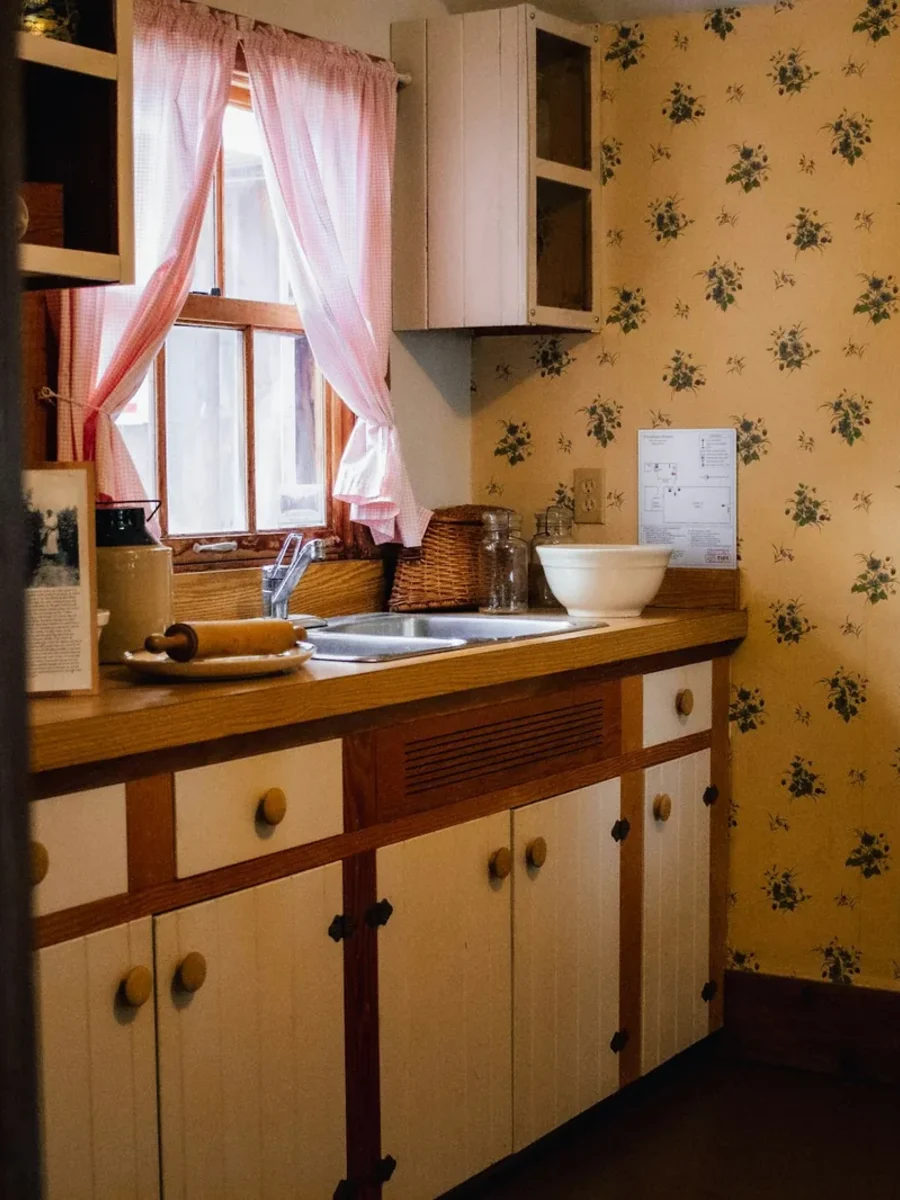
A kitchen window is a hard place for fabric. Cooking fat settles on it, steam dampens it, and a curtain that blows near a gas flame is a fire risk. Fire-safety guidance from Columbia University's facilities team lists dish towels, oven mitts, paper towels and other flammable materials among the things to keep away from the stovetop. A loose curtain on a window beside the hob belongs on that list.
Blinds solve most of it. PVC and faux-wood blinds wipe clean with a damp cloth, do not swell in humid air the way real timber slats can, and tilt to control light and privacy while the window stays open for air. Aluminium venetians do the same in a slimmer profile. For windows away from the hob, a roller blind in a coated, wipeable fabric is neat and easy to keep clean. Fit blinds inside the reveal where the window allows, so the fabric or slats sit clear of the worktop and any splash. Our kitchen blinds page shows the options room by room.
Fabric still has a place in a kitchen, just not beside the cooker. A café curtain on a window across the room from the hob, a sheer at a dining-side window, or a roman blind in a washable cotton on a window that never sees steam can soften the room. Old kitchens that open onto a yard or garden also let in mosquitoes at dusk, so a sliding window net on the yard-facing windows is often the most useful thing you can fit.
The rule of thumb: nothing loose and nothing fabric within reach of the hob. Wipeable blinds there, fabric further away.
Soft furnishings that belong in a Goan kitchen
Where an old kitchen is large enough for a bench and a table, it is worth keeping one, so the cook has company. Seat pads and cushions there should have removable covers in a washable cotton or a performance fabric, because they will meet spills, flour and turmeric. Avoid foam wrapped in plastic-backed fabric, which holds moisture in a humid room. Our cushions and seat pads are made to the exact size of a bench or chair, with covers that zip off for washing.
On the floor, a flatweave cotton runner or a small dhurrie by the sink is comfortable underfoot and can go in the wash or out in the sun, but keep it well clear of the cooker and lift it in the monsoon if the floor stays damp. Tea towels and aprons should hang on a rail away from the hob, not on the oven door. When you are ready to choose blinds or cushions for an old kitchen, we can visit to measure and bring samples.