 Drape Haus
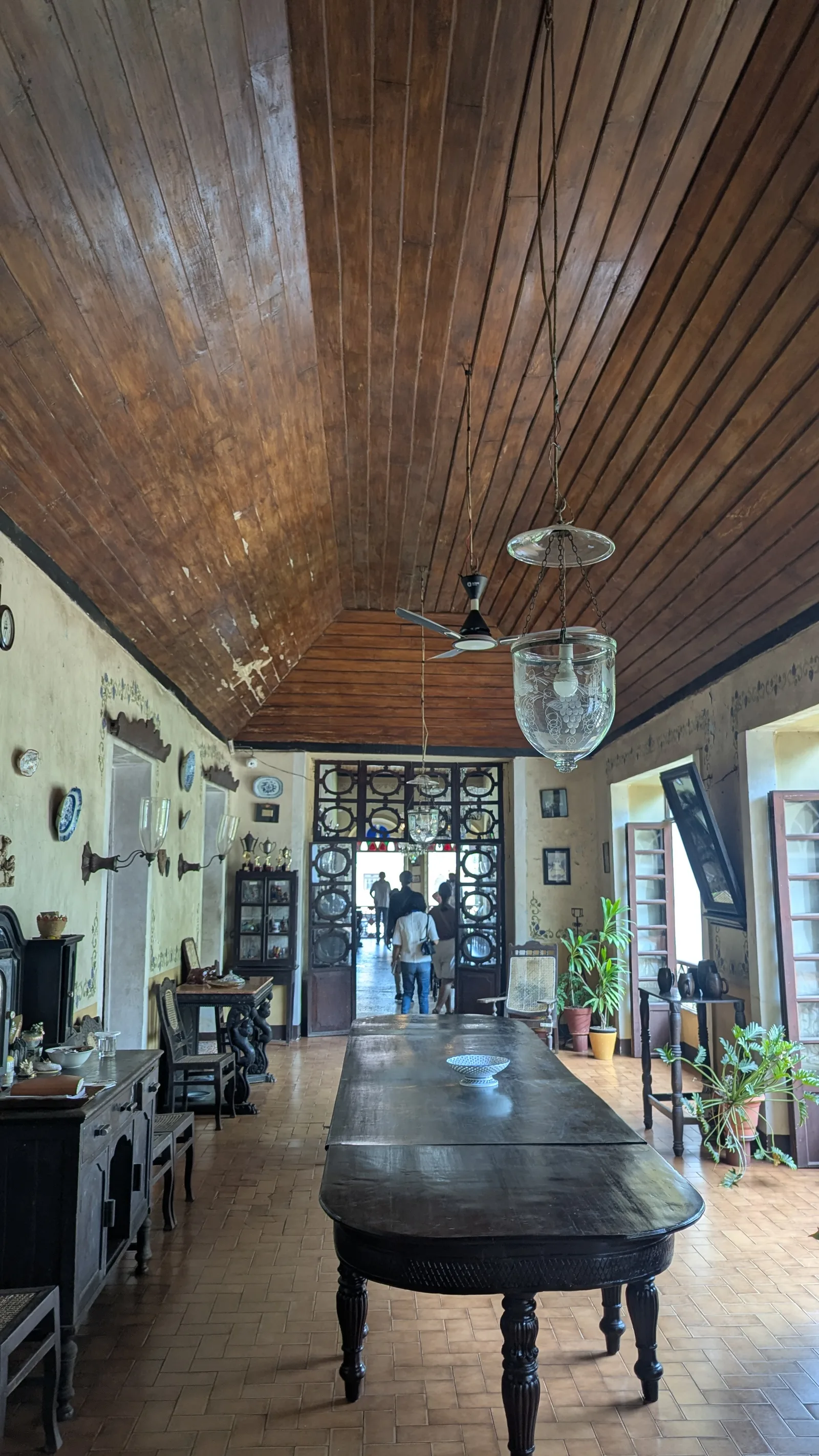
The Goan dining room, the sala de jantar of the old houses, was a long room built for long meals. In the typical Goan-Portuguese house it ran at right angles to the formal front rooms, and in the great houses it held a long table, carved chairs and a sideboard, with a collection of porcelain and glass on show. The Government of Goa's overview of the heritage mansions singles out their long, well-preserved dining and drawing rooms, usually with a magnificent collection of blue china ceramics and glass.
Most Goan dining rooms today are smaller, and many are in flats and new villas rather than mansions. But the habits that shaped the old ones have not changed much: big family meals, feast days and festivals, long Sunday lunches, a table that has to stretch for visiting relatives. And the climate has not changed at all.
This guide looks at how the traditional dining room was arranged, as far as published sources describe it, and then at the practical side of setting one up now: extra seating and table linen for gatherings, dining chair fabrics that take curry, wine and children, walls, curtains and lighting for evening meals in tall rooms, and the right rug under the table.
The sala de jantar in the old Goan house
The dining room had a fixed place in the plan. Writing on Goan houses, summarising the survey Houses of Goa, describes the typical house as a sequence: front door, foyer, then the sala for entertaining many guests or the smaller sala de visita for a few, with the dining room usually perpendicular to these front rooms and the rest of the house arranged around a courtyard. The kitchen lay behind, which kept smoke and heat out of the dining room while keeping the food close. Our guide to the Portuguese house plan walks through the whole layout.
In larger houses, dining was one of several formal rooms. The Casa Araujo Alvares house museum in Loutolim describes two majestic halls, a dining hall and a formal hall with a wooden floor that doubled as a dance hall. Braganza House in Chandor, by the Government of Goa's account, has its Great Salon and ballroom, Chinese porcelain from Macau, and a collection of family portraits dating back to the 17th and 18th centuries. Most Goan houses were far more modest, but the idea of a dining room as a room for display as well as meals ran through them.
The furnishings came from near and far. The government's overview notes that the houses were built of local laterite and timber, while porcelain came from China and Macau, cut glass and mirrors from Venice, chandeliers from Belgium and tapestries from Portugal, and the furniture was carved from rosewood by local craftsmen.
Table, sideboard and crockery: the furniture of the room
Three pieces define a traditional Goan dining room: the long table, the chairs, and the sideboard or cabinet that holds and shows the china. The sideboard was often the most worked piece in the room. The Government of Goa records that at the Colaço mansion in Ribandar, Nazario Colaço II had the sideboard of his dining room carved with scenes from the Ramayana, while the family kept a private Catholic chapel in the same house. Our field guide to Goan furniture covers the types, the woods and how to tell old pieces from reworked ones.
If you are furnishing a dining room around inherited pieces, let the sideboard set the scale. A long, heavy sideboard wants a long table and a wall to itself; a smaller cabinet suits a room where the table seats six. China and glass on display need a cabinet with glass doors that close well, because in Goa's monsoon, with morning humidity of 87 to 91% from June to September according to the India Meteorological Department, open shelves of porcelain gather a film of damp dust that has to be washed off piece by piece.
Keep heavy pieces a few centimetres off external walls so air can move behind them, and out of the strip of floor in front of a west window, where the afternoon sun will bleach one side. Old tables and sideboards carry shellac, wax or oil finishes that do not like hot dishes or standing water, so a good tablecloth or runner is protection as much as decoration.
Planning something like this?
We visit homes across North and South Goa, measure on site, and bring samples to see in your own light.
Hosting feasts and family gatherings
Goan dining rooms are planned for the largest meal of the year, not the smallest. Feast days, weddings, christenings and festivals bring extended families together, and Incredible Goa's history of the old kitchen describes how festivals such as Chovoth brought extra sweets, dishes and visiting relatives, all cooked on a single hearth. The dining room has to absorb the crowd.
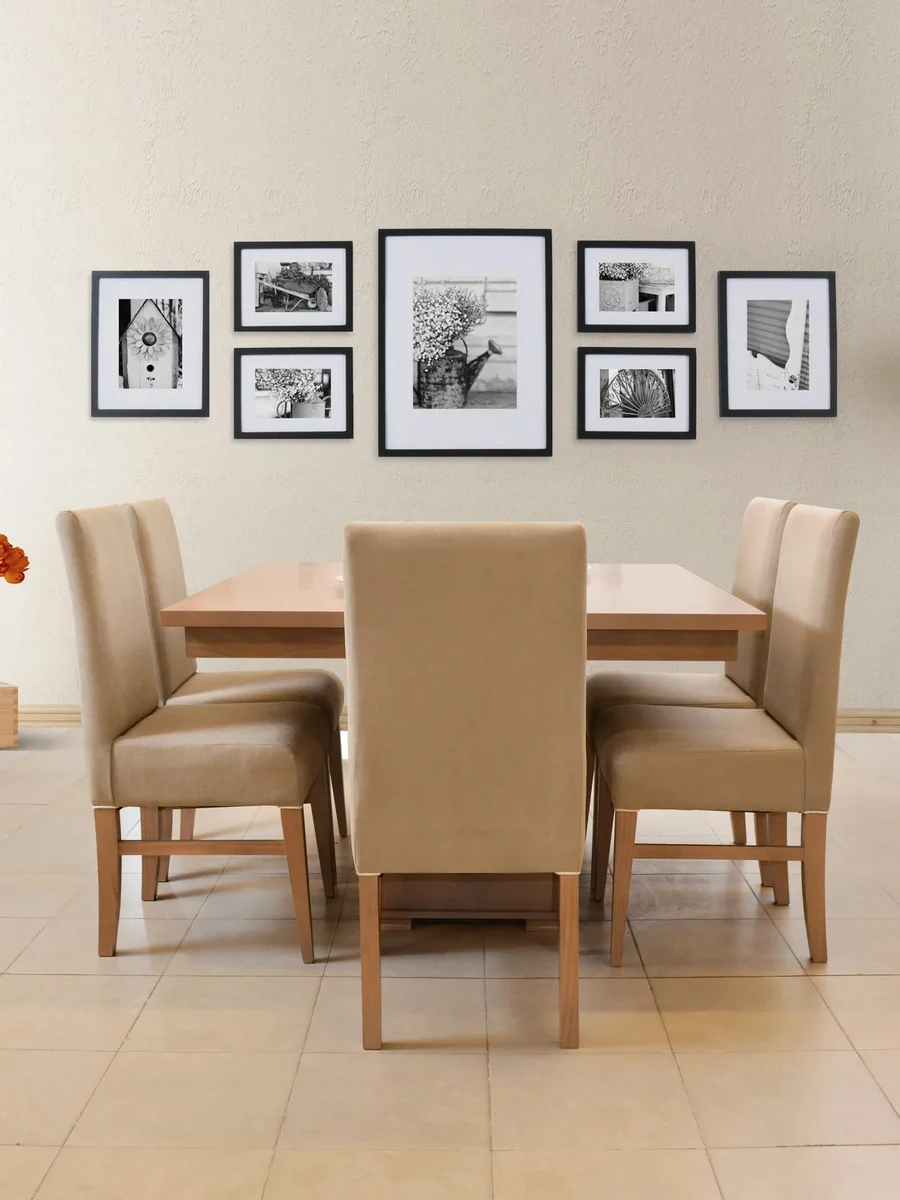
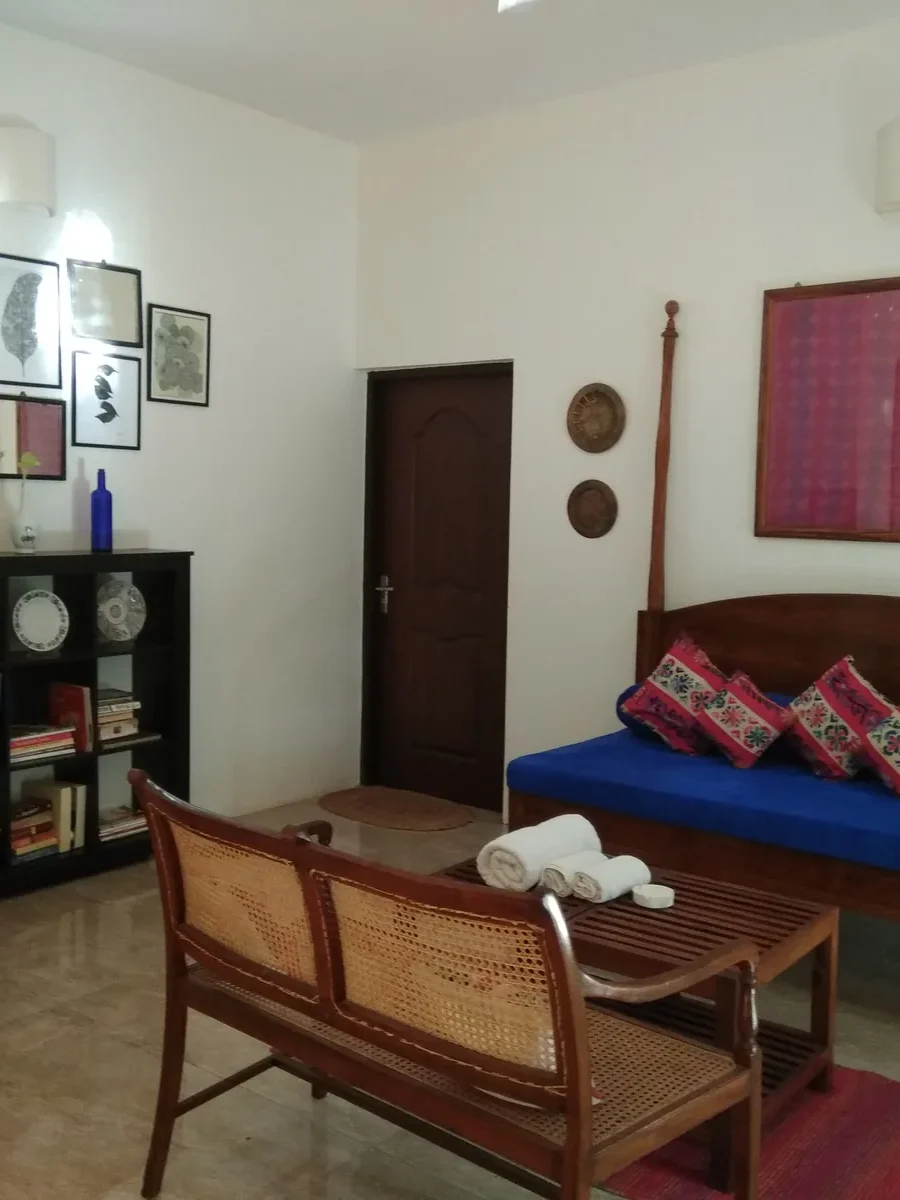
Plan seating in two layers. The everyday chairs around the table, and a second set that can be brought out: a bench along one long side, which seats more people than chairs in the same length, or folding chairs stored in a dry cupboard. Give the extra seats tie-on cushions so they are comfortable for a long lunch, and make the covers removable for washing. A bench against a wall can live in the room as extra seating with a long cushion and a few loose ones.
Serving space matters as much as seating. The sideboard is the natural buffet; protect its top with a washable runner, and keep the china you will need on gathering days on the lower shelves where it is easy to reach. For the table, plain or woven cotton and linen tablecloths wash well and hide less than you think, so choose mid-tones or patterns rather than white if the table sees curries. Store table linen clean and completely dry, in cotton bags rather than plastic, especially through the monsoon, when linen put away damp comes out spotted with mildew.
Dining chair fabrics that take curry, wine and children
Dining chairs are used differently from sofas. People sit on them for shorter spells, but they slide in and out, lean back, and drop food, oil and wine on them. Abrasion matters, though less than on a sofa. The Association for Contract Textiles, the trade body that publishes voluntary performance guidelines, sets 20,000 cycles on the Martindale test for upholstery in low-traffic, private spaces and 40,000 cycles for high-traffic, public seating. It adds a caution: abrasion results are not a reliable predictor of how long a fabric will last, and tests on the same fabric can vary widely. A home dining room sits in the first category; a homestay or café dining room in the second.
Stains matter more. A tightly woven fabric in a mid-tone or a small pattern hides marks far better than a pale plain, and a fabric with a stain-resistant finish buys time to blot a spill before it sets. Turmeric is the hardest test in an Indian kitchen, so ask for a sample, mark it with a little curry, leave it an hour and clean it as the label allows before you commit. Leather and good rexine wipe clean but feel warm in April and May, and they need care in the monsoon; the same mould precautions that apply to a leather sofa apply to dining chairs.
Construction matters most of all. A drop-in or screwed-on seat pad can be lifted out and re-covered in an hour, which makes a heavily used dining set easy to refresh every few years. Avoid foam sealed in plastic-backed fabric, which holds moisture in a humid room and starts to smell. Old cane-seated chairs should keep their cane uncovered, with a loose tie-on cushion. Our reupholstery service re-covers dining seats in sets, and we can advise on how much cloth a set needs.
| Choice | Strengths | Watch for |
|---|---|---|
| Tightly woven cotton or linen blend, mid-tone or patterned | Breathes in humid weather; hides marks; easy to re-cover | Blot spills at once; pale plains show turmeric |
| Performance fabric with stain-resistant finish | Spills bead up long enough to blot | Test with a curry smear before buying |
| Leather or rexine | Wipes clean | Warm in summer; needs care against mould in the monsoon |
| Removable slipcovers | Machine-washable; can change with the season | Need good tailoring to stay neat |
| Cane seat with loose cushion | Cool and airy; cushion lifts out to wash | Never cover cane permanently |
Plates, azulejos and portraits on the walls
The walls of a Goan dining room have traditionally carried the family's collection: plates and china, framed photographs and portraits, and in many houses blue-and-white tiles. The Asia InCH craft encyclopedia records that glazed, painted azulejo tiles can be seen across old churches and homes in Goa, introduced in Portuguese times, and that their production continues today. A tiled panel behind a sideboard or a band at chair-rail height brings that tradition in and wipes clean.
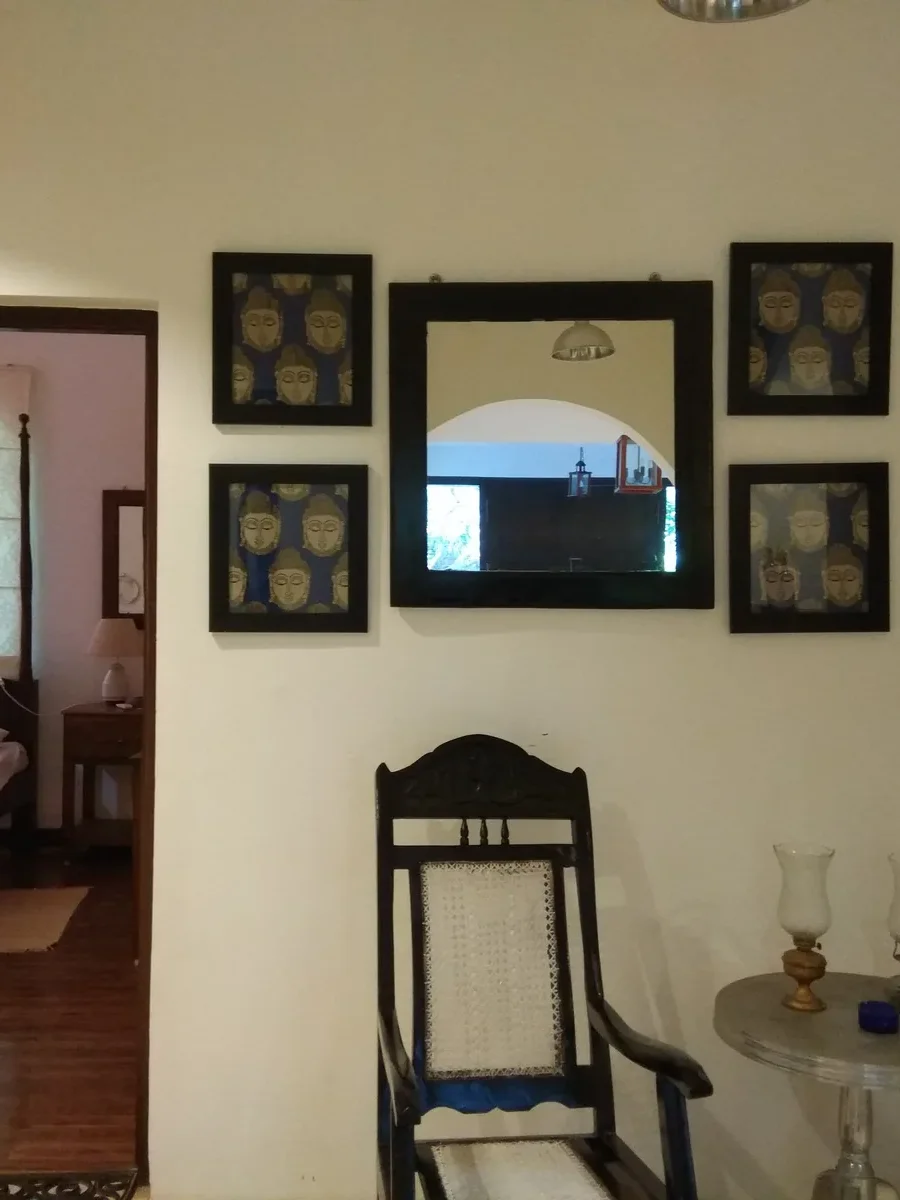
We cover the practical side in detail in dining room wall decor: which wall to decorate, how to hang plates, which paint finishes wipe clean, and where wallpaper belongs. Two points matter especially in an old house. Portraits and paper art need protection from sun and damp, so keep them off external walls in the monsoon and leave an air gap behind each frame. And lime-plastered walls do not hold ordinary nails well, so fix heavy pieces into sound masonry.
Curtains and light for evening meals in tall rooms
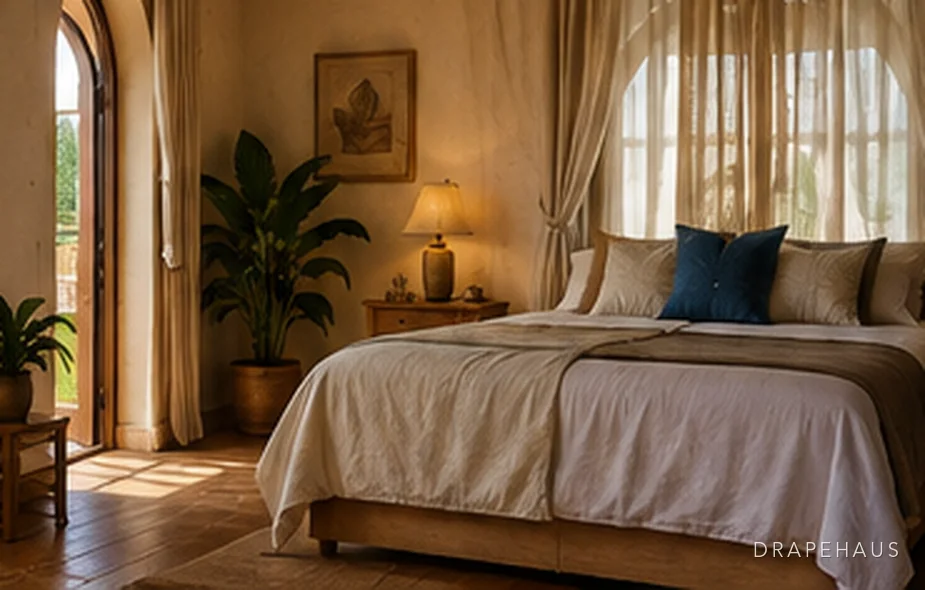
Old Goan dining rooms are tall, with tall windows, and that changes how they should be dressed. Curtains look right when they start well above the window head, or from a ceiling track, and fall to the floor; short curtains in a tall room look like an afterthought. By day the job is to soften glare, especially at a west window during a late lunch, so a sheer or a light linen curtain that filters sun while keeping the room bright suits most dining rooms. Our dining room curtains page shows the options.
Evenings change the brief. A lit dining room is on full view from the road at night, and many old houses sit close to the lane, so a second, heavier layer that draws across for dinner gives privacy and makes a large room feel warmer. Lined cotton or linen in a colour that sits with the timber is usually right; heavy velvets look imported and are hard to keep fresh through a monsoon. Dusk is also when mosquitoes arrive, and a dining room with the windows open for the evening breeze benefits from fitted window nets, which let the shutters stay open without the bites.
Light the table, not just the room. The government's overview records Belgian chandeliers in the great houses, and a restored chandelier or a pendant centred over the table remains the classic answer, with lamps or wall lights at the edges for softer light. Warm light flatters food, faces, timber and blue china alike. Where a room has a wooden ceiling, the fixing for a heavy light must go into a joist or a purpose-fitted timber, never into the thin boards alone.
The right rug under a dining table
A rug under a dining table only works if the chairs stay on it. When someone pushes back to stand, the back legs of the chair should still be on the rug, not catching its edge. The usual way to size it, and the basis of our rug size simulator, is to measure the table and add roughly 60 cm on every side, or more if your chairs are large. Size for the table at its extended length if you extend it often. Round tables want round or square rugs with the same allowance all round.
Pile and weave matter in a dining room. A flatweave or dhurrie lets chairs slide, shows crumbs less, and can be taken outside and shaken or washed; deep pile traps food and grips chair legs. In Goa there is a seasonal reason too: a flatweave is easy to roll and store dry through the wettest months if the house will be closed. Mid-tones and patterns hide the evidence of family meals far better than a pale plain rug.
When you are ready to re-cover dining chairs or dress the windows of a dining room, send us photographs of the room and the chairs, and we will quote for reupholstery, curtains or a rug.
Pull a chair out as if to stand up, and measure from the table edge to its back legs. That distance, on every side, is your rug.