 Drapehaus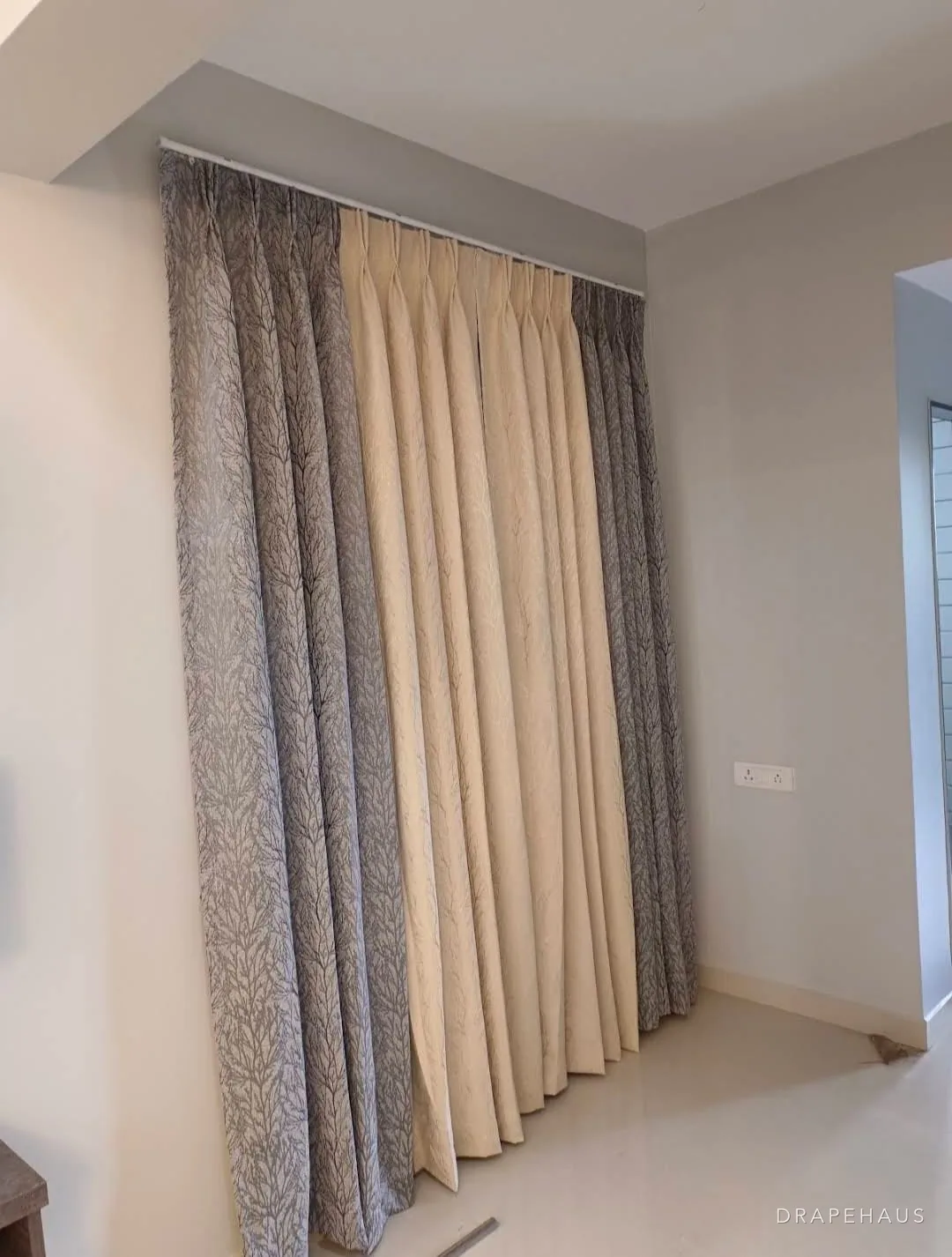
Drapehaus
Preparing the room
Drapehaus
Preparing the room
Problem
For most of the year in most of Goa, an open window after dusk means insects. Near still or slow-moving water it is not a marginal problem, and the practical consequence is that any window expected to provide evening air needs screening.
By the Drapehaus studio · 19 September 2026 · How we write
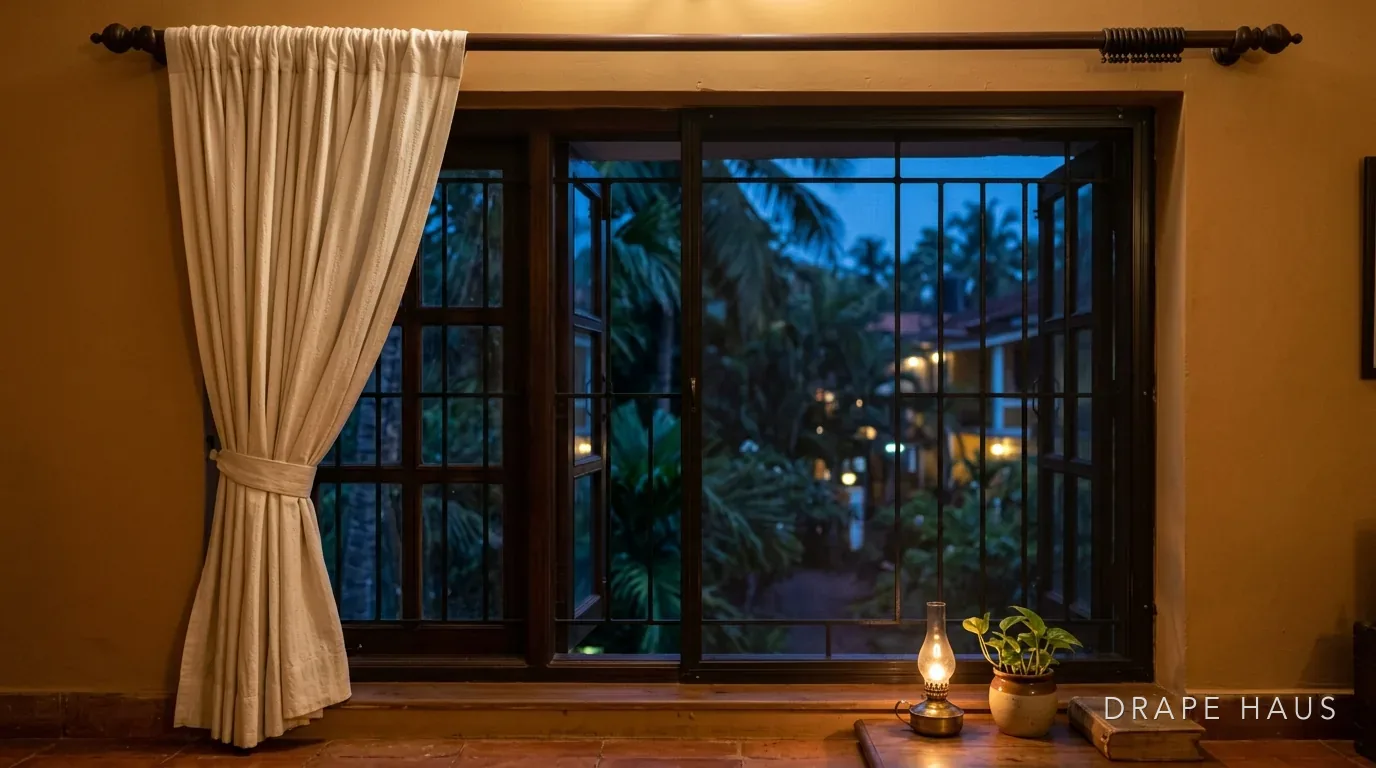
Screens are almost always specified separately from curtains, by a different supplier, at a different time, and the result is two systems that fight each other. The curtain has to be pulled aside to reach the screen; the screen track obstructs the curtain; neither works as intended.
Planning them together takes very little extra effort and removes the problem entirely.
Fixed mesh panels are the simplest and least costly option, and suit windows that are never opened for cleaning or access. They are unobtrusive and effectively permanent, which is also their drawback.
Sliding screens run on their own track alongside a sliding window or door and are the natural choice where the window itself slides. They coexist well with curtains provided the curtain track is set forward of the screen track.
Retractable pleated screens fold away into a slim cassette at one side, leaving the opening completely clear when not in use. They are the most expensive option and by far the best where a window is also a view, because nothing remains in sight when the screen is retracted.
Magnetic and velcro-fitted mesh is the temporary answer. It works, it costs little, and it looks like what it is. Reasonable for a rental or a single problem window; not a whole-house solution.
Standard fibreglass insect mesh removes a meaningful share of incoming light — commonly around a fifth, depending on weave density and colour. Fine mesh intended for very small insects takes more.
This matters for specification because the room is already darker than the window size implies before any curtain is considered. Choosing a heavy fabric for a screened window frequently produces a room that feels gloomy, and the owner blames the curtain rather than the mesh.
Where light is precious, a darker mesh is counterintuitively better for view-through than a pale one — the same principle as solar blinds. Pale mesh scatters light and reads as a haze; dark mesh disappears visually and you see through it more clearly.
Rather see it in your own room?
We bring samples to the house, measure every window, and specify for the light and exposure you actually have.
More on this — tap a heading to read
The governing rule is that the two systems must operate in different planes, with the curtain outboard of the screen — that is, further into the room. Then the screen can be opened and closed without touching the curtain.
Where both are being fitted at once, a shared head detail or a common pelmet conceals both tracks and makes the assembly look deliberate rather than accumulated. This is the single thing that most distinguishes a planned installation from a retrofitted one.
Where a screen already exists, measure its projection into the room before specifying the curtain track, and allow clearance for the screen to operate. This sounds obvious and is missed constantly.
The first question is how the window opens. Side-hung casements that open outwards, common in Goan houses, suit an internal screen. Inward-opening casements need the screen outside or in the reveal, and sliding windows need a screen on its own sliding track. Getting this wrong is the commonest reason a screen ends up unused.
Next, measure the reveal depth and look at what already occupies it: window catches, stays, grilles, handles and sills. A retractable screen cassette needs a clear, square run from top to bottom, and old reveals are rarely square. We check diagonals, because a difference of a few millimetres can decide between a cassette that runs smoothly and one that binds. Finally, note where insects actually come in. Gaps around frames, open ventilators and door thresholds often matter as much as the window itself.
Fibreglass mesh is the most common and suits most homes: it does not rust, it is flexible, and it is easy to replace. Stainless mesh is stronger and resists pets and heavy handling, but costs more and, near the sea, must be a marine grade to avoid staining. Aluminium screen frames should be anodised or powder-coated, particularly near the coast, where bare aluminium develops a white bloom and components can seize. Cassette mechanisms benefit from sealed components and regular cleaning, because dust and salt make them stiff.
Mesh density is a trade-off. A standard mesh stops mosquitoes and most flying insects; a finer mesh excludes very small insects that swarm around lights near water in the rains, but passes less air and less light. Choose the finer grade only for the windows where it is actually needed.
Insect pressure rises sharply with the rains. From the monsoon onset in early June, standing water, damp vegetation and warm evenings bring mosquitoes and swarms of flying insects, particularly in the first weeks of the season when termites and ants take flight around lights. That makes the pre-monsoon months the time to install or repair screens. Mesh that is torn, frames that no longer close properly, and cassettes that stick are much easier to deal with in April and May than after the rains have begun. After the monsoon, clean the mesh and check for damage before the dry season, when windows are open most.
A screen that is awkward to use will be left open or taken out. Retractable screens should run smoothly with one hand and stay in any position; hinged screens need catches that hold them closed against a breeze. Magnetic closures on screen doors are useful where people walk through carrying things.
Where screens and curtains share a window, give each its own clear operation. A curtain on a track that sits in front of the screen, with a tieback or a wand, means neither has to be moved to use the other. Motorised curtains in front of screens should have a gentle stop so they do not press against or snag the mesh. Pet mesh, reinforced lower panels and protective bars are worth considering where dogs or small children will push against the screen.
Guests in a Goan villa or homestay open windows for the evening air and rarely think about insects until it is too late. Screens that are always in place, simple to operate and clearly explained are far more effective than ones that need to be fitted or clipped shut each evening.
For a managed property, durability and ease of repair are the priorities. Standard mesh that can be re-rolled into a frame on site, cassettes whose parts can be replaced, and a supply of spare mesh keep a screen working through the season. Checking every screen at the post-monsoon changeover prevents a torn panel being discovered by the first guest of the season. A brief note in the room explaining how the screens open and close also saves a surprising number of broken catches and bent cassettes.
Diagnosis
WhyThe two systems were fitted in conflicting planes, usually because they were specified separately.
FixSet the curtain track further into the room than the screen, so each operates independently. A shared pelmet tidies both.
WhyMesh removes roughly a fifth of the light before the curtain is considered, and the fabric was chosen as though it did not.
FixChoose lighter, more open fabric for screened windows, and consider a darker mesh, which reads as clearer than a pale one.
WhyThe curtain track was specified without allowing for the screen cassette or track projection.
FixMeasure screen projection before specifying, and extend the curtain track beyond the cassette so the curtain stacks clear.
WhyWindow geometry rules out standard sliding or fixed screens.
FixRetractable pleated screens handle awkward openings well and vanish entirely when not in use. They cost more and solve more.
WhyThe reveal is out of square, or dust and salt have built up in the guide rails and cassette.
FixCheck diagonals and pack the cassette square at installation, and clean guide rails regularly, especially near the sea.
WhyGaps around the frame, open ventilators, or a screen that does not seal against the sill are letting them through.
FixAdd brush seals to gaps, screen ventilators too, and check the screen closes fully against the frame on all four sides.
WhyPets, children or a curtain being pushed through the opening repeatedly strain standard mesh at the lower edge.
FixUse pet-resistant or stainless mesh on vulnerable panels, and position the curtain so it does not rub against the screen.
Checklist
Decide screening before curtains, not after
Keep the curtain outboard of the screen
Account for mesh light loss when choosing fabric weight
Consider darker mesh for better view-through
Measure screen projection before specifying track
Use a shared pelmet to unify both systems
Check how each window opens before choosing a screen type
Measure reveal diagonals before ordering retractable cassettes
Install or repair screens before the monsoon, not after
Use pet-resistant mesh on doors and low panels where needed
FAQ
Yes, if they are planned together. The curtain track needs to sit further into the room than the screen so each can be operated without disturbing the other, and a shared pelmet hides both tracks. Fitted separately by different trades, they almost always conflict.
Standard fibreglass mesh removes around a fifth of incoming light, and finer mesh takes more. It is worth allowing for when choosing fabric, because a screened window with a heavy curtain produces a room that feels far darker than its size suggests.
Retractable pleated types, because they fold into a slim cassette and leave the opening completely clear, so the curtain never has to work around a permanent obstruction. Sliding types work where the window itself slides, provided the curtain track sits further into the room. Fixed panels are fine only where the window never opens.
Dark, for view-through. Pale mesh scatters light and reads as a haze across the opening, while dark mesh visually disappears and you see past it far more clearly. It is the same principle that makes dark solar blind fabric preferable.
It depends on the window. Retractable pleated screens suit windows that are also views, sliding screens suit sliding windows, and hinged or fixed screens suit windows that rarely open. Near the sea, choose anodised or powder-coated frames and fibreglass or marine-grade stainless mesh. The best screen is the one that fits how that window is actually used.
Yes, a little. Standard mesh slows the breeze and finer mesh slows it more, though the effect is modest compared with the benefit of being able to leave windows open in the evening. For rooms that rely on cross-ventilation, choose standard mesh rather than fine grades, and keep the mesh clean, since dust clogs it.
Before the monsoon, ideally in April or May. Insect numbers rise sharply once the rains begin in early June, and installing or repairing screens is far easier in dry weather. A check after the rains withdraw in October catches any damage before the dry season, when windows are open most.
Yes, several types can. Magnetic and adhesive-fixed mesh attach to the frame without drilling, and some sliding screens use a tension fit within the reveal. They suit rentals and single problem windows. They are less robust than properly fixed screens and can lose adhesion in heat and humidity, so check them regularly.
Brush dust off gently with a soft brush or a vacuum on low power, then wipe with a damp cloth and mild soap, supporting the mesh from behind so it does not stretch. Retractable screens should be cleaned while extended. Near the sea, rinsing salt off the mesh and frame after the monsoon keeps the mechanism running freely and the mesh clear.
Keep reading