 Drapehaus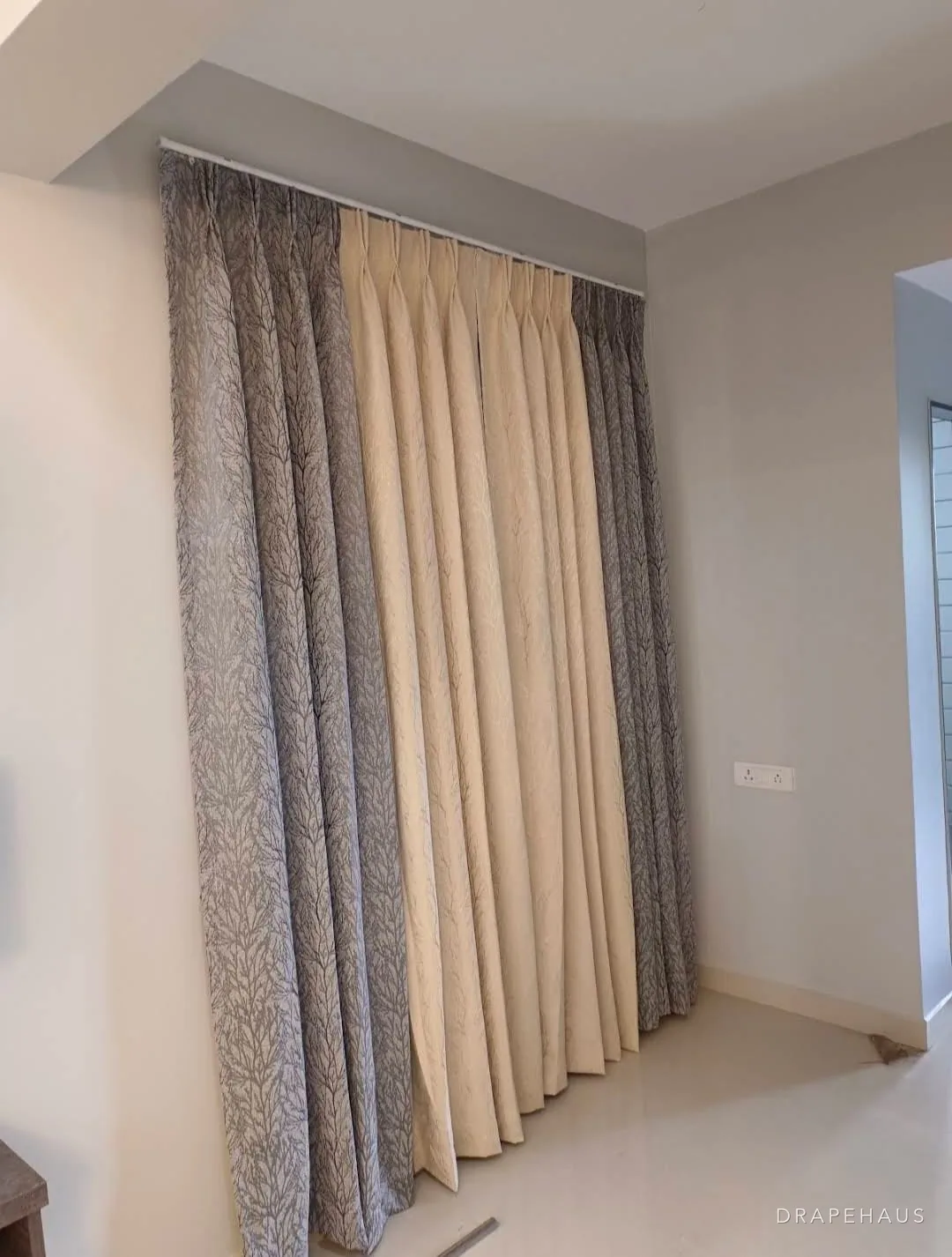
Drapehaus
Preparing the room
Drapehaus
Preparing the room
Sliding Nets
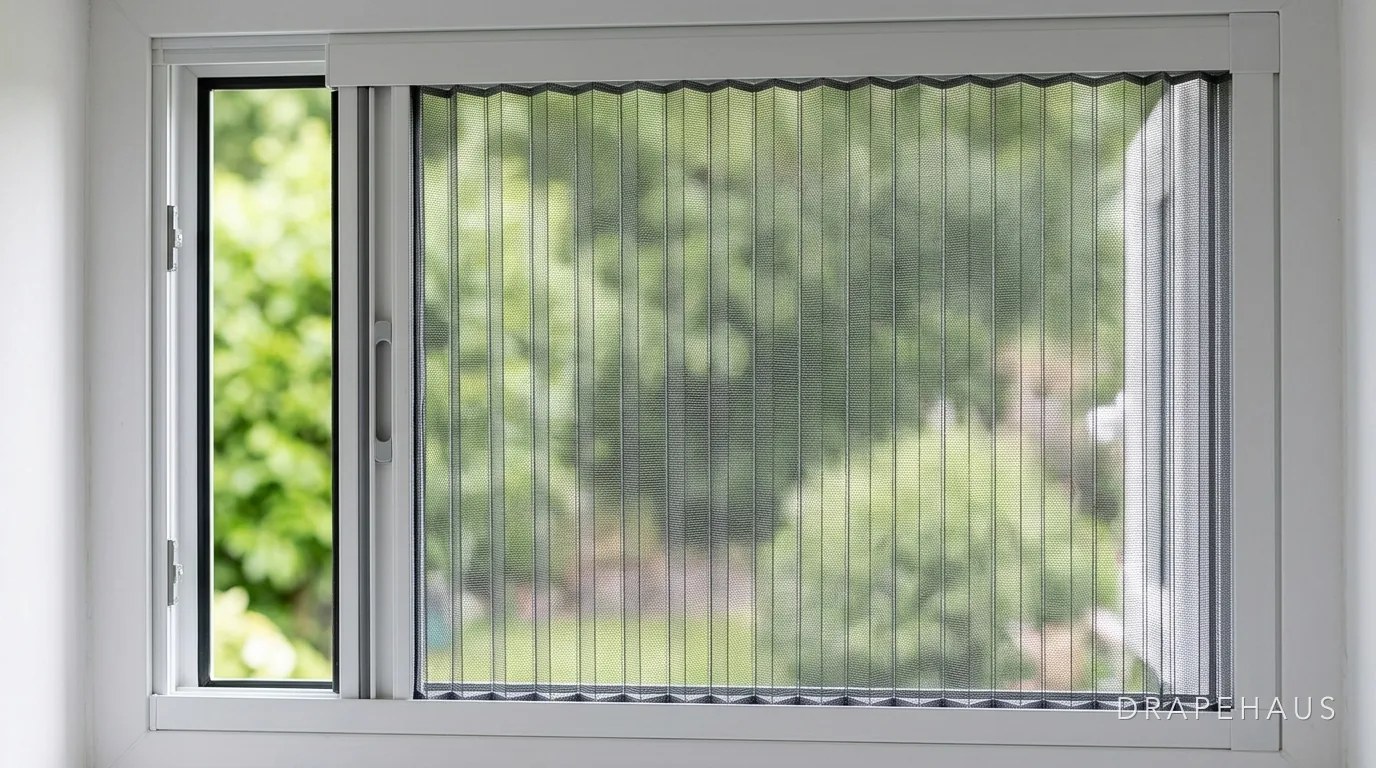
A fine mesh panel that slides in its own track beside the window, so you can leave the glass open for the breeze through the evening without letting the mosquitoes in.
The opening
What matters most
Setting
System
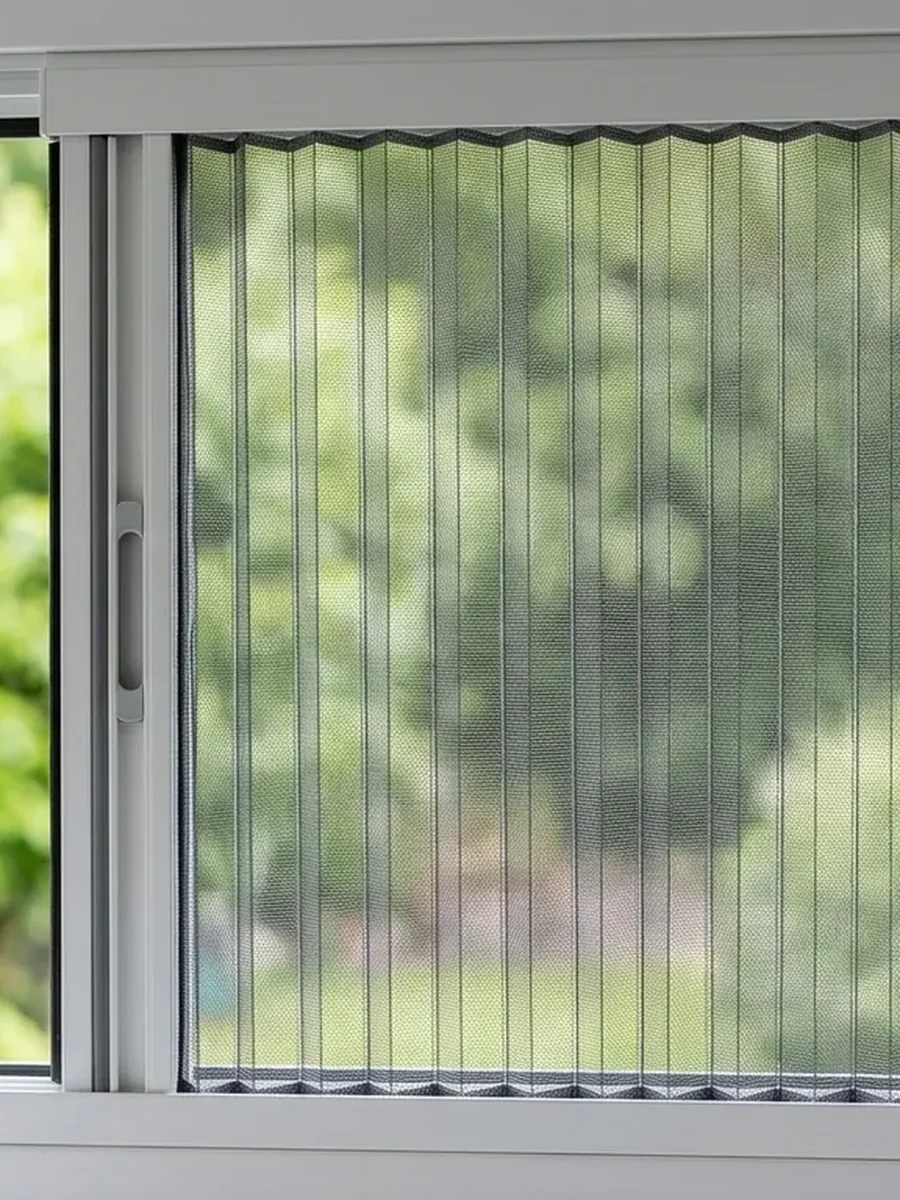
Pleated screen, side-opening
Mesh
Coated fibreglass or polyester mesh
Frame
Powder-coated aluminium, stainless fixings
Pleated mesh folds into a slim stack, so a wide opening needs no heavy panel and no bottom lip to trip on. Near the sea, plain steel screws and untreated mesh corrode within a season or two. Rinse mesh and track with fresh water after the monsoon.
In short
By the Drapehaus studio · How we write
Is it right for you?
A sliding window net earns its place on any window you open in the evening. In a bedroom that means sleeping with the glass open and the night breeze moving through; in a study or kitchen it means air without flies. The net slides in the same direction as the window, so opening either feels natural and nothing swings into the room or out over the garden.
The best candidates are horizontal sliding windows in aluminium or uPVC, which have a frame deep enough for one more track, and timber windows with a generous reveal. Tall, narrow casements that swing inwards can take a sliding net outside them if the reveal allows; outward-opening casements need the net on the inside face.
It is the wrong product for a fixed picture window, for a window that is opened only a few times a year, and for a ventilator above head height, where a fixed panel is simpler. If the window is chiefly a frame for a view and you would rather see nothing at all when the screen is open, look at a pleated retractable screen instead.
The details
Sliding nets run in a slim aluminium frame fixed to the window opening, with a mesh that keeps insects out while letting air through. They slide aside when you want to reach the window and back when you do not.
Near the sea we specify corrosion-resistant frames and stainless or coated mesh, because untreated steel mesh rusts and stains within a monsoon or two.
Your options
The window you have decides most of the specification. These are the arrangements we use, and what each suits.
Swipe for all 5 →
The honest view
Sleep with the window open
The bedroom stays ventilated at night without repellent coils or plug-ins, and mornings start with fresh air rather than a sealed, stale room.
Nothing projects into the room
The net slides flat within its track, so it never swings into a desk, a bedside table or the curtain, and it cannot be caught by a gust.
Easy to lift out and wash
Most window sashes lift up into the top track and out, which makes washing the mesh and cleaning the glass behind it straightforward.
Discreet with the right colour
A frame finished to match the window and a charcoal mesh read as part of the window from inside, rather than an addition.
Covers part of the opening
On a two-pane slider the net covers the open half; the other half is glass. When the net is parked it sits over the fixed pane, adding a faint grain to that part of the view.
Grilles complicate fitting
A security grille set close to the window can leave too little depth for a track. The net may then have to go on the inside face, which is more visible.
Small parts, small failures
Window nets use light rollers and slim brush seals. Neglected tracks wear them faster, and a net that drags is usually a net whose track has not been cleaned.
Side by side
For an ordinary opening window, these are the realistic choices. The differences show up in daily use rather than on the first day.
| Sliding net | Pleated screen | Fixed panel | Roller insect screen | |
|---|---|---|---|---|
| Operation | Slides sideways | Pulls from cassette | None | Pulls down or across |
| When open | Parks over fixed pane | Almost invisible | Not openable | Rolls into cassette |
| Strength | Good | Fair | Good | Fair |
| Suits sliding windows | Very well | Well | Poorly | Well |
| Suits casements | With sub-frame | Well | Well | Well |
| Access to glass | Slide or lift out | Retract | Remove with tool | Retract |
| Monsoon wind | Holds well | Can bow | Holds well | Can pull out of guides |
Swipe to compare →
Roller screens spring back into a cassette and suit some casements well, but on exposed windows their side guides can let the mesh pull free in strong gusts.
Rather see it in your own room?
We bring samples to the house, measure every window, and specify for the light and exposure you actually have.
Room by room
The strongest case of all. Plan the net with any blackout lining so the curtain still closes fully over the net's frame and handle.
Use pet-resistant mesh and anti-lift blocks. Keep the window grille or a restrictor, because mesh will not stop a fall, and keep furniture away from the sill.
Keeps flies away from worktops. Choose a sash that lifts out easily, because cooking grease settles in the mesh and needs washing more often than elsewhere.
Air without insects on the screen at night. A charcoal mesh keeps the view out sharp from the desk and cuts some glare compared with pale mesh.
Small, high windows rarely justify a sliding net. A fixed or lift-out panel with stainless fixings is usually simpler in steam and splash.
Guests expect to open windows. A sturdy sliding net with a clear handle is intuitive and far less likely to be damaged than a pleated or magnetic screen.
In depth — tap a heading to read
We measure the opening in three places across and three places down, because old reveals and even new frames are rarely perfectly square. The net is made to the smallest reliable dimension, and the brush seals on its edges take up the difference, so there is no gap where a mosquito can walk through at one corner.
Then we measure depth: from the glass to the inside face of the frame, and from the frame to any grille, sill tile or curtain track. That tells us which plane the net can run in. We also note which way the window opens, which pane is fixed, and where the handle and lock sit, because the net's own pull must be on the side you reach for naturally.
Most windows in coastal houses carry more than glass: a grille for security, sometimes a timber shutter, and a curtain or blind on the room side. The net has to find its own plane among them. Where the grille sits outside the glass, the net usually runs inside the window in a third track or a face frame. Where the grille is inside, the net often goes between glass and grille if the depth allows.
Window handles and locks that project into the room are the most common reason a net cannot slide past. Low-profile handles, a net that parks on the other side, or a track set slightly forward can each solve it. What does not work is discovering the clash after the net is made.
Order from outside in, as a rule: grille, glass, net, then curtain or blind. Change the order only when the depth forces it.
Aluminium windows accept a net most easily, but their own tracks near the sea often already show white corrosion. We check that before fitting, because a net cannot slide well in a pitted channel. uPVC frames do not corrode, but their steel reinforcement can, which is one more reason to use stainless screws and seal every fixing.
Timber windows move with the seasons, swelling in the wet months and shrinking back in the dry. A net fixed tight to the timber sash can bind in August and rattle in January, so we fix our sub-frames to the masonry reveal, independent of the moving timber, and leave the brush seals to take up the gap.
The relationship between screens and curtains is covered fully in our guide to that problem. For windows specifically, the useful detail is height: if the curtain track is mounted well above the window head, the net's top rail disappears behind the heading and the whole assembly looks intentional.
Inside-mounted roller or Roman blinds are trickier, because they share the reveal with the net. We plan the blind's bracket depth and the net's track together so the blind drops in front of the net without brushing it, and the net handle does not catch the fabric.
Living with it
Brush the mesh gently from the room side with a soft brush or vacuum attachment. Dead insects and dust clog the weave and cut airflow more than you would expect.
Every few months, lift the sash out, lay it flat and wash with fresh water and mild soap. Rinse, stand it upright to drain and let it dry before refitting.
Vacuum the bottom track and clear its drain holes so rain can escape. Standing water in the track is what corrodes rollers.
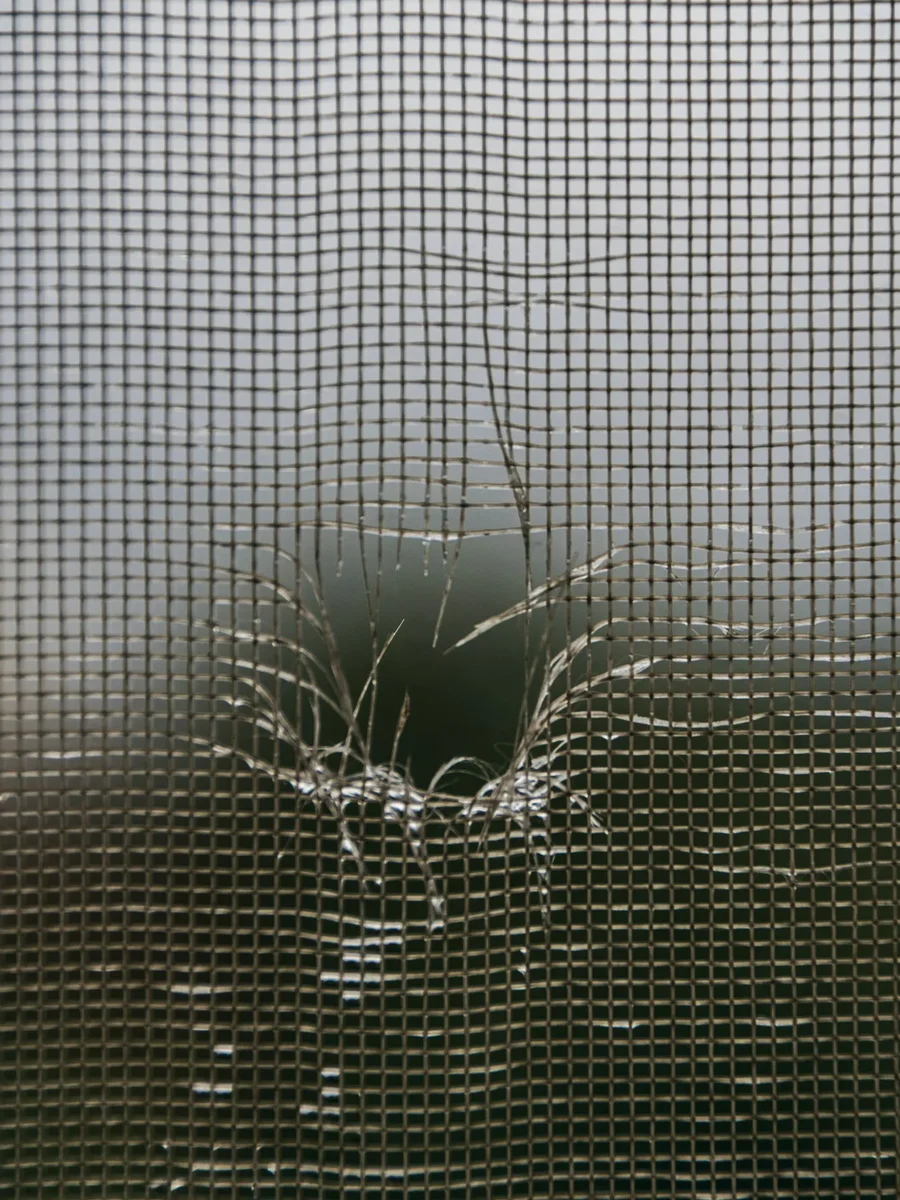
Rinse salt from sea-facing nets, check the brush seals are still in place, and look for any small tears before the dry-season evenings bring the insects back.
Avoid these
One measurement across the middle hides an out-of-square opening. Measure at three points each way and make to the smallest.
If the net parks over the window lock, you have to open the net to lock the window. Decide which side the net parks on at the outset.
A net screwed to a timber sash binds in the wet months. Fix the track to the masonry and let the seals absorb movement.
An inside-mount blind and a net fighting for the same reveal depth is a common clash. Plan them together.
Checklist
More in sliding nets
Sliding mosquito nets for windows, doors and balconies, planned alongside your curtains so the two work together — the window opens for air, the net stays closed, and the curtain still draws.
From our guides
From the Journal
All articlesOur process
One team from the first visit to the last bracket, so nothing is lost between the person who specified it and the person who fits it.
FAQ
A standard insect mesh takes out roughly a fifth of the light. Finer meshes take out a little more; we help choose based on how bright the room needs to be.
Untreated steel will. We use aluminium frames and stainless or coated mesh, which hold up to salt air.
Yes. For inward-opening casements, the net can run on the outside in the reveal if there is depth. For outward-opening casements, the net goes on the inside face on a slim sub-frame, and you slide it aside to reach the handle and open the window.
Ideally inside the grille, where the net is protected from weather and easy to clean. If the grille is on the room side, the net often fits between the glass and the grille. It depends on the depth available, which we measure on the visit.
Standard insect mesh is woven to a count that stops mosquitoes and most flies while keeping good airflow. Finer counts stop tiny biting midges but cost air and light. We recommend fine mesh only for rooms where those small insects are a real nuisance.
On most of our window nets, yes. The sash lifts up into the deeper top track and swings out at the bottom. We show you how on installation, and fit anti-lift blocks that are easy to release but stop the net jumping out by accident.
Barely, if the mesh is clean. A standard mesh passes most of the breeze. The room with a net and open glass will usually be much cooler at night than one kept shut because of mosquitoes.
Next step
On the visit we open each window, measure it at several points, check frame depth, handles and grilles, and look at how the curtains or blinds will sit. We bring mesh samples so you can hold each against the window and judge the view through it in daylight. You get a clear specification window by window, then the nets are made to measure and fitted. Book a home visit when you are ready.