 Drapehaus
Drapehaus
Preparing the room
Drapehaus
Preparing the room
Blinds
A single fabric panel on a roller: the simplest blind there is and one of the most versatile. Sheer, solar-control, room-darkening or full blackout — the fabric decides what it does.
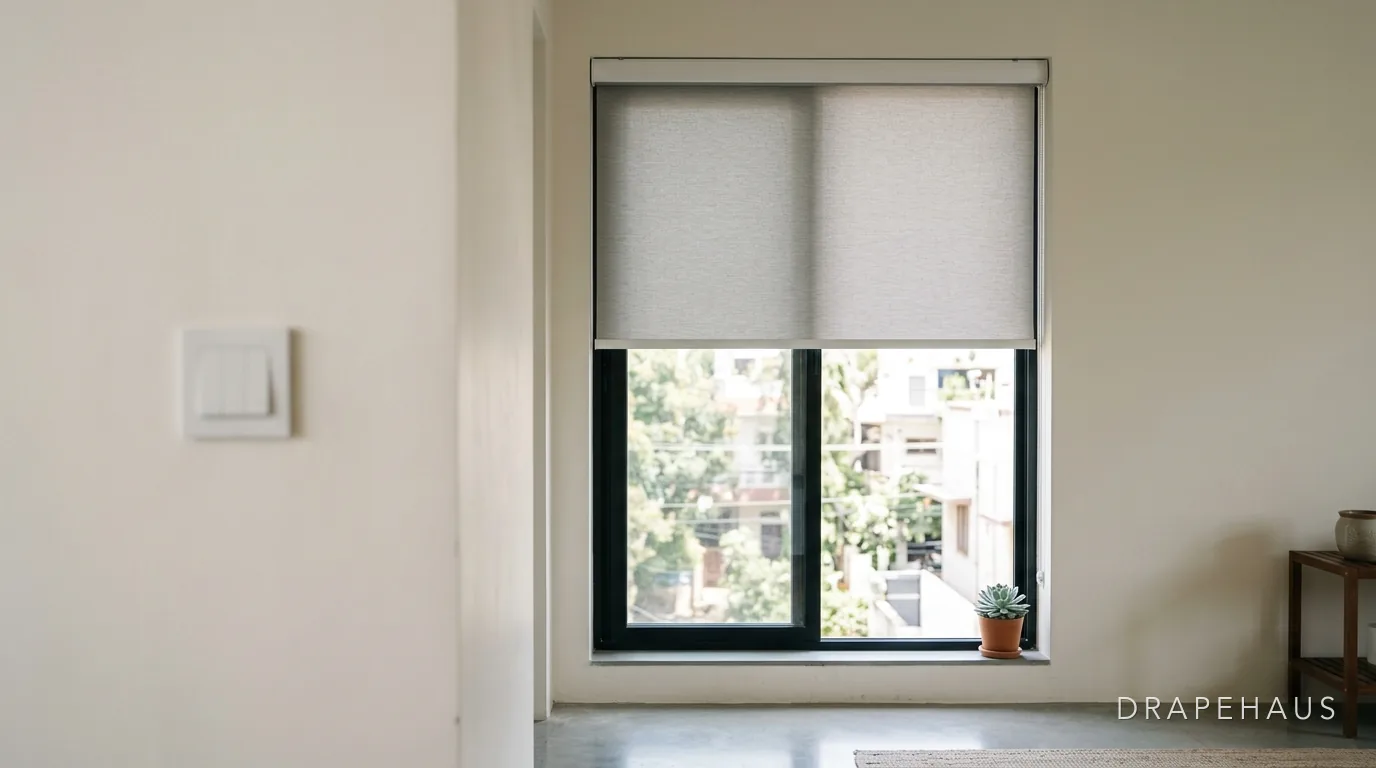
Roller · Midday
Treatment
Time of day
Light-filtering roller fabric: soft, even light and daytime privacy. For a bedroom, choose blackout fabric and side channels.
In short
By the Drapehaus studio · How we write
Is it right for you?
A roller blind is the simplest blind there is: a tube, a clutch or motor at one end, and a single panel of fabric weighted by a bar at the bottom. Because the mechanism is so simple, almost everything about how a roller performs comes down to the fabric chosen and how the blind is fitted to the window.
That makes rollers the most adaptable blind we fit. The same headrail can carry a sunscreen that cuts heat while keeping the view, a light-filtering weave for a softly lit study, or a blackout fabric running in side channels that makes a bedroom genuinely dark at midday. They are also the easiest type to motorise, which is why they cover most stairwells and double-height glass.
Choose something else if you want a decorative, textile presence at the window - a Roman blind or curtains do that far better - or if the view must be adjustable by angle, which only slatted blinds offer. Rollers also do little for acoustics in a hard-finished room.
The details
For heat, we specify a solar fabric by openness factor: a lower number blocks more sun and more view, a higher one keeps the view and lets more heat in. For bedrooms, a blackout roller in side channels gives the darkest result of any blind we fit.
Rollers are also the easiest blind to motorise, so they are our usual choice for stairwells, double-height glass and any window above normal reach.
Your options
Choosing a roller is choosing a fabric. These are the families we specify most, and the job each does.
Swipe for all 6 →
The honest view
True blackout is possible
With a blackout fabric and side channels, a roller gives the darkest result of any blind. No other type closes the edge gaps so completely.
Invisible when raised
Fully up, a roller is just a slim roll or cassette at the head of the window. Nothing competes with the view or the architecture.
Fabrics built for humidity
Most roller fabrics are polyester, glass-fibre or PVC-coated. They do not take up moisture, so they hold their shape and resist mildew through the monsoon.
Easiest blind to motorise
The motor sits inside the tube, out of sight. Battery, wired and solar-charged options suit retrofits and new builds alike.
Good value for glass area
A single roller can cover a large pane with very little hardware, which keeps a room of big windows visually quiet.
Little softness or acoustic value
A single flat panel does little to absorb sound or warm a room visually. In a large living room it usually needs curtains alongside.
Fabric width limits
Very wide windows may exceed the fabric width, forcing a seam or a split into two blinds. Both are visible choices to make deliberately.
Edges can fray or telescope
A blind that is misaligned or forced tracks to one side and wears its edges. Level fitting and an even pull prevent it.
Side by side
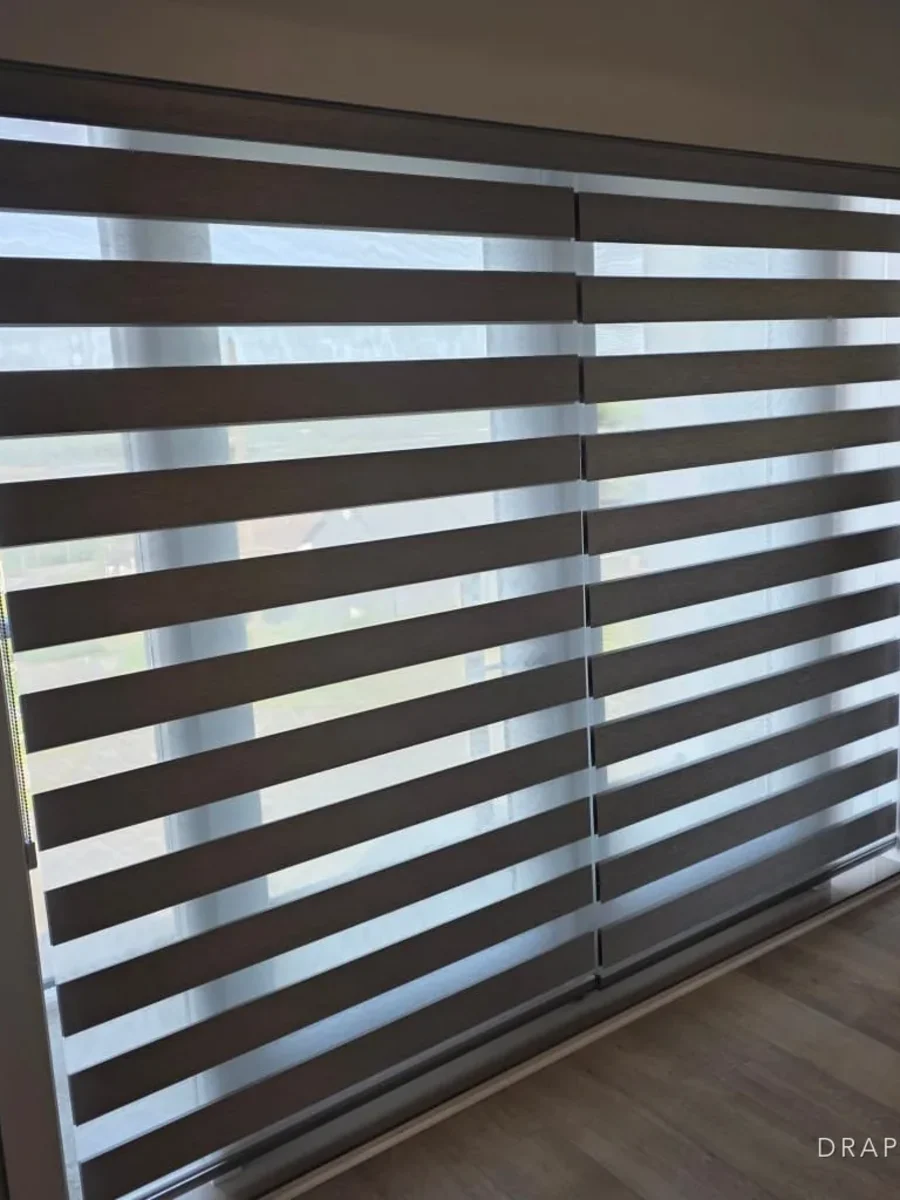
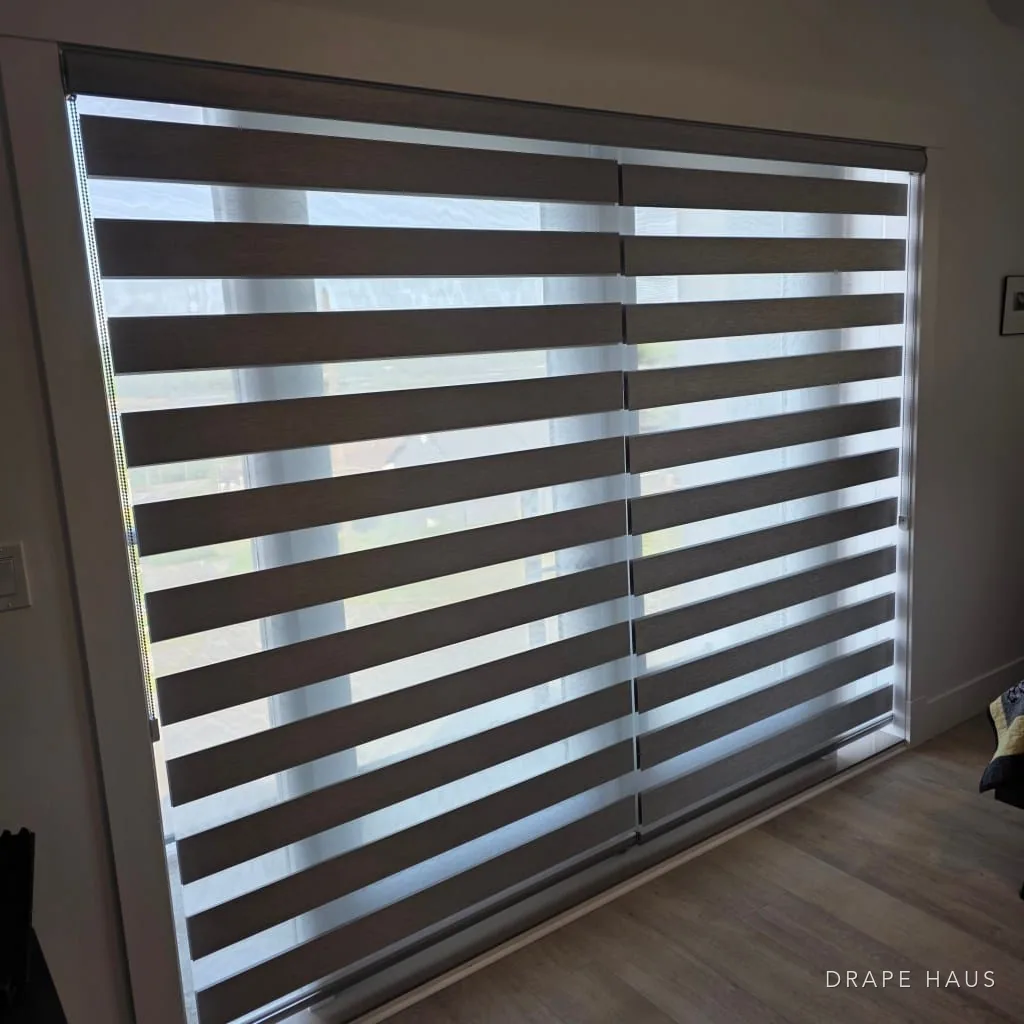
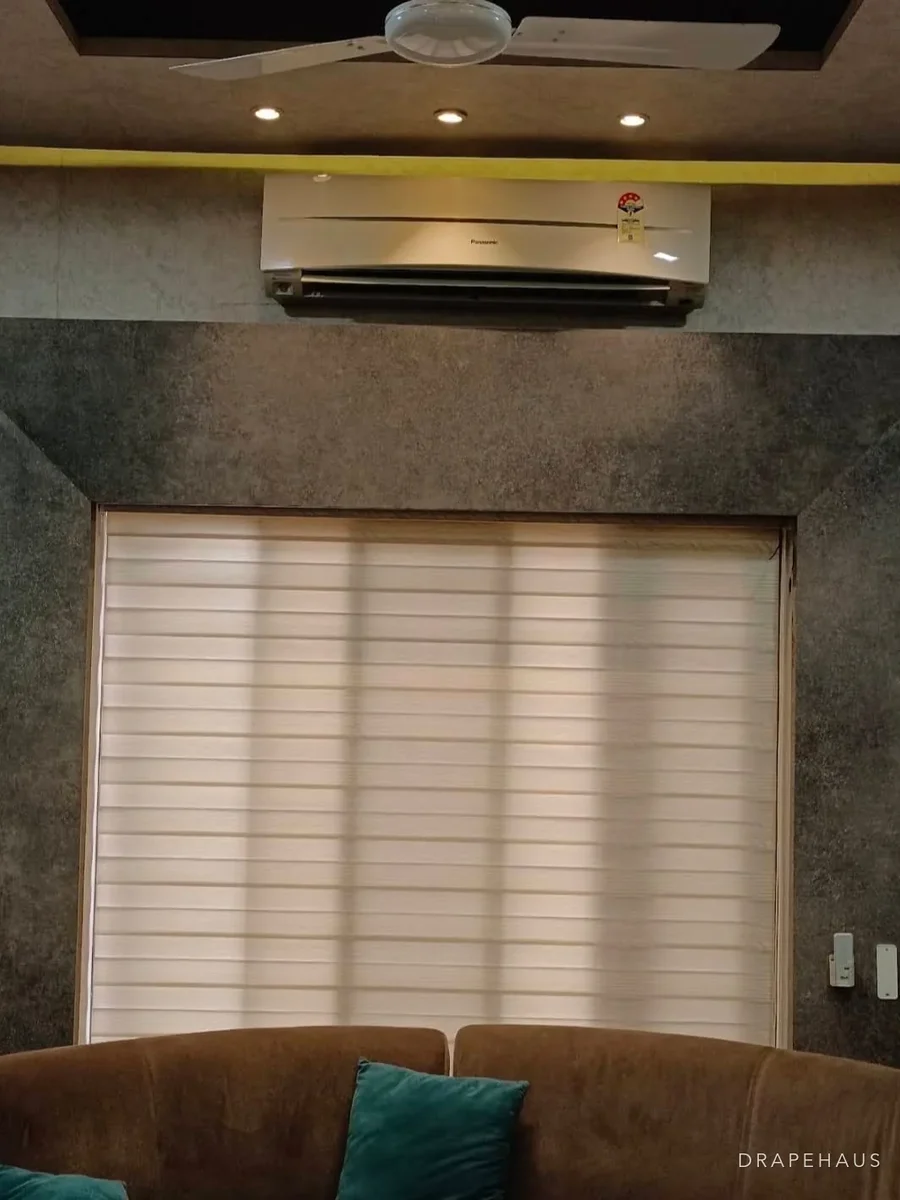
For bedrooms and sunny rooms, the realistic alternatives are a zebra blind, a blackout-lined Roman blind and lined curtains.
| Roller in side channels | Zebra blind | Blackout Roman | Blackout curtains | |
|---|---|---|---|---|
| Darkness | Full blackout | Room-darkening | Near-blackout, edge gaps | Good if overlapped |
| Heat control | Strong with solar fabric | Moderate | Moderate | Good with lining |
| View when lowered | Yes, with sunscreen | Striped | None | None |
| Humidity tolerance | Very high | High | Moderate | Lining-dependent |
| Wall space needed | None | None | None | Stack-back each side |
| Motorisation | Easiest | Easy | Easy | Needs a motorised track |
Swipe to compare →
For the darkest bedroom with the softest look, fit a blackout roller in the recess and a pair of curtains in front.
Rather see it in your own room?
We bring samples to the house, measure every window, and specify for the light and exposure you actually have.
Room by room
Blackout in side channels, or a double roller with sunscreen in front. Motorise it if you want to close the room from the bed.
Blackout for naps, cordless or motorised for safety, and a wipe-clean fabric that survives small hands.
A sunscreen roller cuts glare and heat on west-facing glass while keeping the garden in view. Add curtains for evening softness.
A mid-openness sunscreen keeps a screen readable without losing daylight. Pale fabric reflects more heat; dark gives the clearer view.
A PVC-coated roller wipes clean and ignores steam. Face-fix above the tiles so water does not run behind the fabric.
Motorised rollers are the practical answer on high glass. Specify a motor with a way to operate it during a power cut.
Blackout rollers are simple for guests, durable and easy to clean between stays. Guests ask about dark rooms more than almost anything.
In depth — tap a heading to read
The fabric is only half of blackout. A fully opaque roller hung in a recess still leaves a thin gap at each side and a line of light at the top, and in a dark room those gaps are what you notice. Side channels close the edges: slim aluminium profiles fixed to the reveal, with the fabric running inside them and a brush or seal along the bottom bar.
Where channels are not wanted, face-fixing does most of the work. The blind is fixed above the opening and made wider than it, so the fabric overlaps the frame on each side. It is not quite as dark as channels, but it avoids the visible profiles and suits windows with uneven reveals.
Blackout coatings are backed in white or a pale colour so the blind looks tidy from outside and reflects sun rather than absorbing it.
Sunscreen fabrics are specified by openness factor, the proportion of the weave that is open. A tight weave blocks more sun and glare and more of the view; a looser weave keeps more view and lets more heat through. The right figure depends on the orientation of the window and how much glare the room can tolerate.
Colour works in the other direction to most people's instinct. A dark sunscreen gives a clearer view out, because the eye reads through dark threads more easily, but it absorbs heat and radiates some into the room. A pale one reflects more heat and looks brighter from inside, at the cost of a slightly hazier view. Research for the US Department of Energy found interior roller shades cut dangerous-heat hours by roughly 18 per cent, and exterior shades by about 55 per cent, so an interior roller is a useful step rather than a complete answer for a hot west wall.
In a standard roll the fabric drops from the back of the tube, close to the glass. In a reverse roll it drops from the front, which moves it forward and clears handles, stays and sills that project into the recess. Reverse roll also hides the tube behind the fabric, which some people prefer from inside.
A cassette or fascia at the top finishes the blind neatly and keeps dust off the roll. On a very wide window, the tube must be thick enough not to bow, and the fabric width sets a practical limit; past that we split the window into two blinds or join the fabric with a horizontal seam.
Rollers are the natural candidate for motorisation because the motor lives inside the tube. Battery motors charge from a plug-in pack or a small solar panel and suit retrofits where no cabling exists. Wired motors are better for new builds and renovations, where the supply can be run before plastering.
Power interruptions are common in the monsoon, so every motorised roller we specify has a way to be operated without mains power: a battery motor, a backup supply on a wired circuit, or a manual override. In a second home, a timer that lowers sunscreen blinds through the middle of the day protects floors and upholstery while the house is empty.
Most roller fabrics are synthetic, so humidity is less of a threat than the hardware. Near the sea, plated steel brackets, bottom bars and chains rust and mark the fabric. We specify aluminium, stainless or coated metal components and a plastic or stainless chain.
Fading is the other long-term issue. Window glass blocks most UVB but lets UVA through, and UVA is what bleaches fabric. A roller's back face takes the full load; pale, solution-dyed or coated backs hold their colour far longer than a plain dyed fabric left lowered against sunny glass.
Living with it
Lower the blind fully and vacuum with a soft brush attachment, working from top to bottom. A rolled blind traps dust inside the roll.
PVC-coated and blackout fabrics can be wiped with a damp cloth and mild soap. Let them dry fully lowered before rolling them up.
A roller rolled while wet or covered in condensation holds that moisture in the roll for days. Wipe the glass and let the blind dry first.
On dry days, raise and lower the blind a few times and leave it up for an hour so air reaches the glass and the roll.
If the fabric starts tracking to one side, stop using it and have it re-levelled before the edges fray.
Avoid these
Opaque fabric in a recess still leaks light at every edge. Add side channels or face-fix with a generous overlap.
Dark keeps the view; pale reflects heat. Decide which matters more for that window before choosing a colour.
The fabric catches and wears on a projecting handle. Use a reverse roll or face-fix the blind forward.
A mains-only motor is stuck during a power cut. Specify battery power, a backup supply or a manual override.
They rust within a season and stain the fabric. Use aluminium, stainless or coated components.
Checklist
More in blinds
Blinds do what curtains cannot: tight light control in a shallow recess, a clean line on a busy window, and genuine blackout when they run in side channels.
Our work
From the Journal
All articlesOur process
One team from the first visit to the last bracket, so nothing is lost between the person who specified it and the person who fits it.
FAQ
It is the percentage of the fabric that is open weave. A 3% fabric blocks more sun and glare; a 10% fabric keeps more view but lets more heat through.
Yes, with a blackout fabric and side channels that stop light round the edges. It is the darkest option we fit.
For pure darkness, a blackout roller in side channels wins, because it closes the edges completely. Blackout curtains need a generous overlap and a return to the wall to come close. The best bedrooms often use both: the roller for darkness, the curtains for softness and sound.
Roller blinds made in an open-weave technical fabric that cuts glare and some heat while keeping a view out. They are chosen by openness factor and colour: tighter weaves block more sun, and darker colours give the clearer view.
A good polyester or coated roller in a sheltered room lasts many years in a humid climate. The usual failures are hardware rusting near the sea, fabric faded by sun on the back face, and edges worn by a blind that tracks crooked.
Yes, in a PVC-coated or moisture-resistant fabric. Fix it so water does not run behind it, keep it clear of the shower, and wipe it down occasionally. Avoid woven fabrics that mark with water.
Choose a roller if you need true blackout, strong solar control or motorised operation on high glass. Choose a zebra if you mainly want to adjust daylight through the day without raising the blind.
Next step
The fabric makes the roller, and fabric is best chosen at the window. We visit, measure each opening and its recess, check handles, orientation and whether side channels will sit neatly, and bring sunscreen, dim-out and blackout samples to hold against your own glass. We then specify fabric, roll direction, edge control and mechanism, make the blinds and fit them. Book a home visit, and we will bring the samples with us.