 Drape Haus
Drape Haus
Preparing the room
Drape Haus
Preparing the room
Blinds
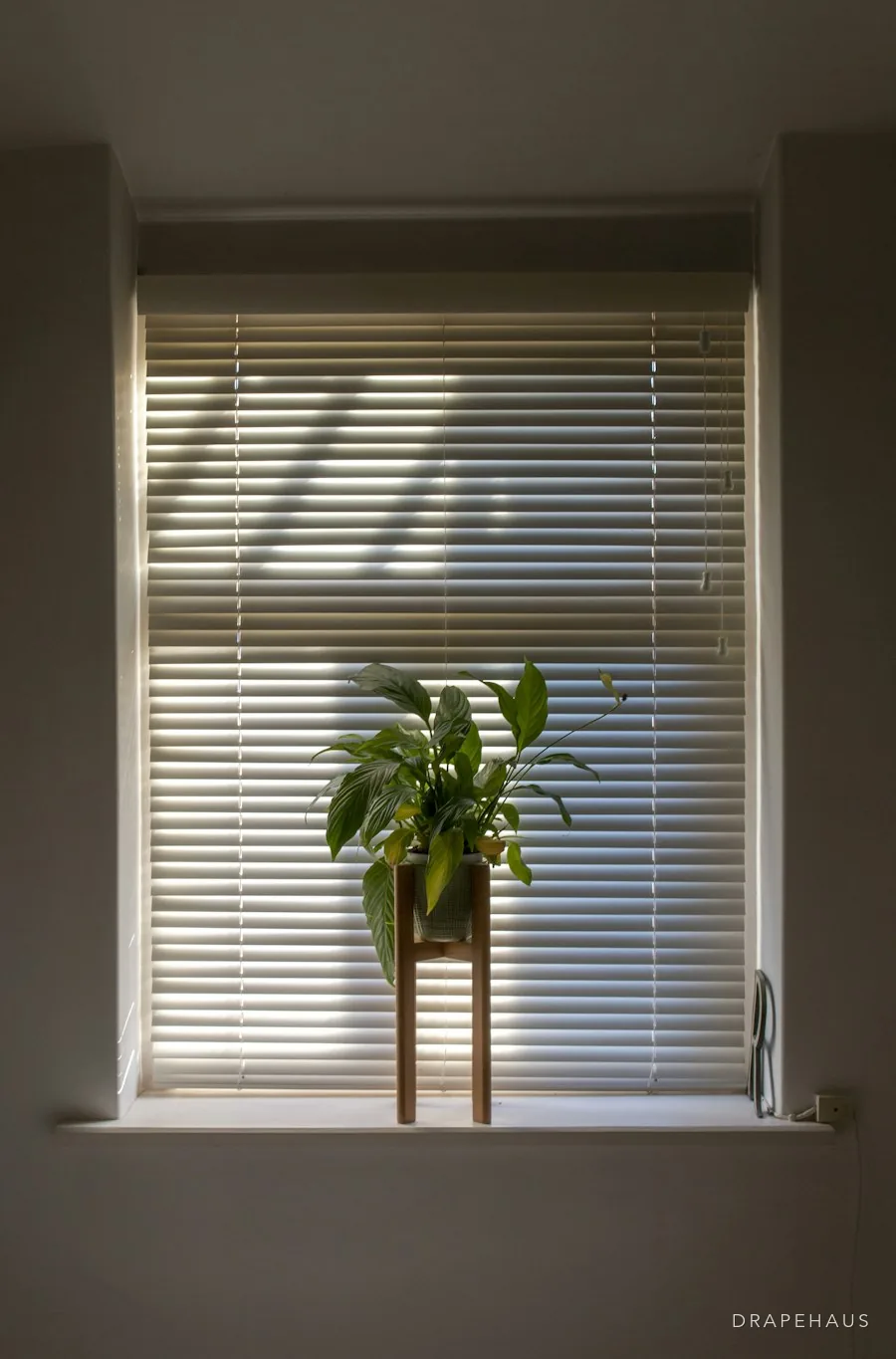
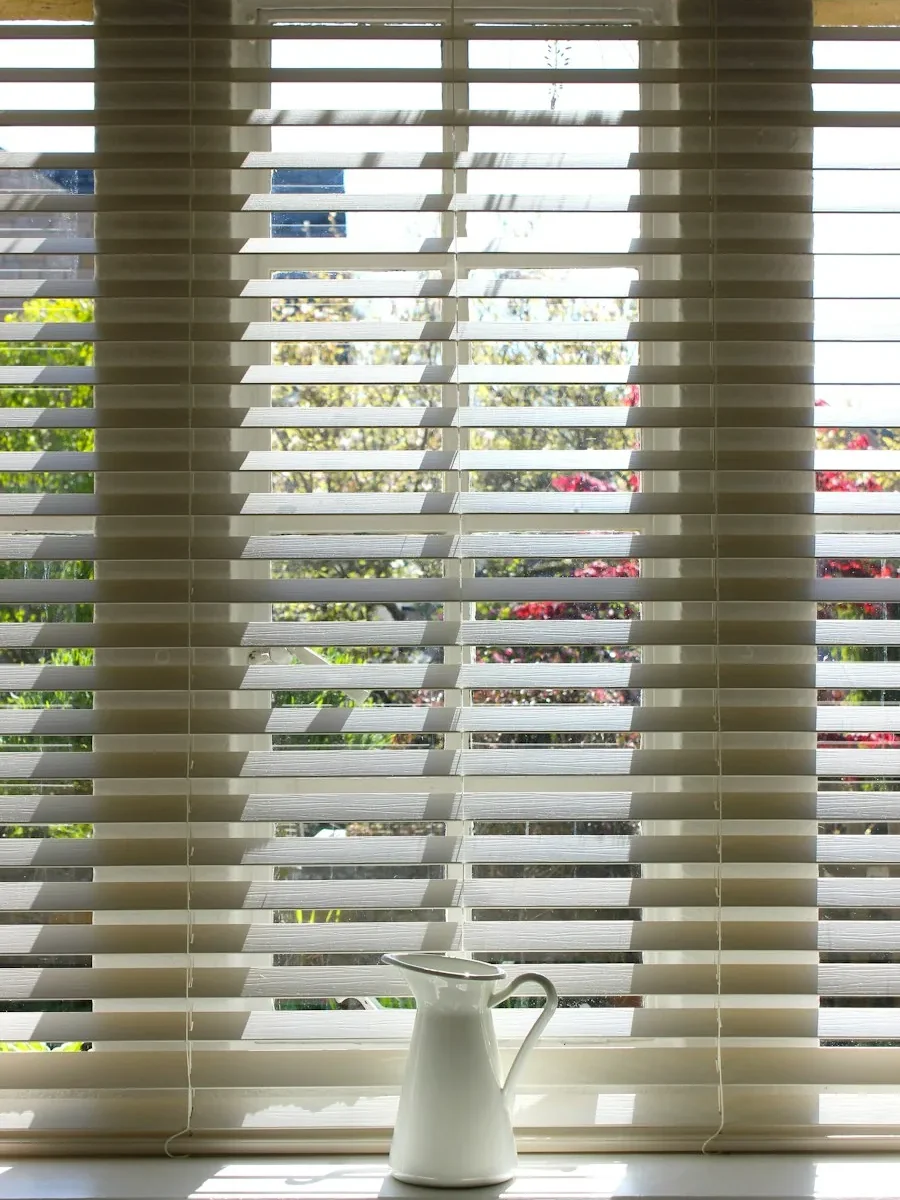
Horizontal slats on ladder strings that tilt through a full half-turn, so one blind can throw light up to the ceiling, block a low sun or close almost flat. Aluminium is the workhorse version, and in a humid coastal house it is often the right one.
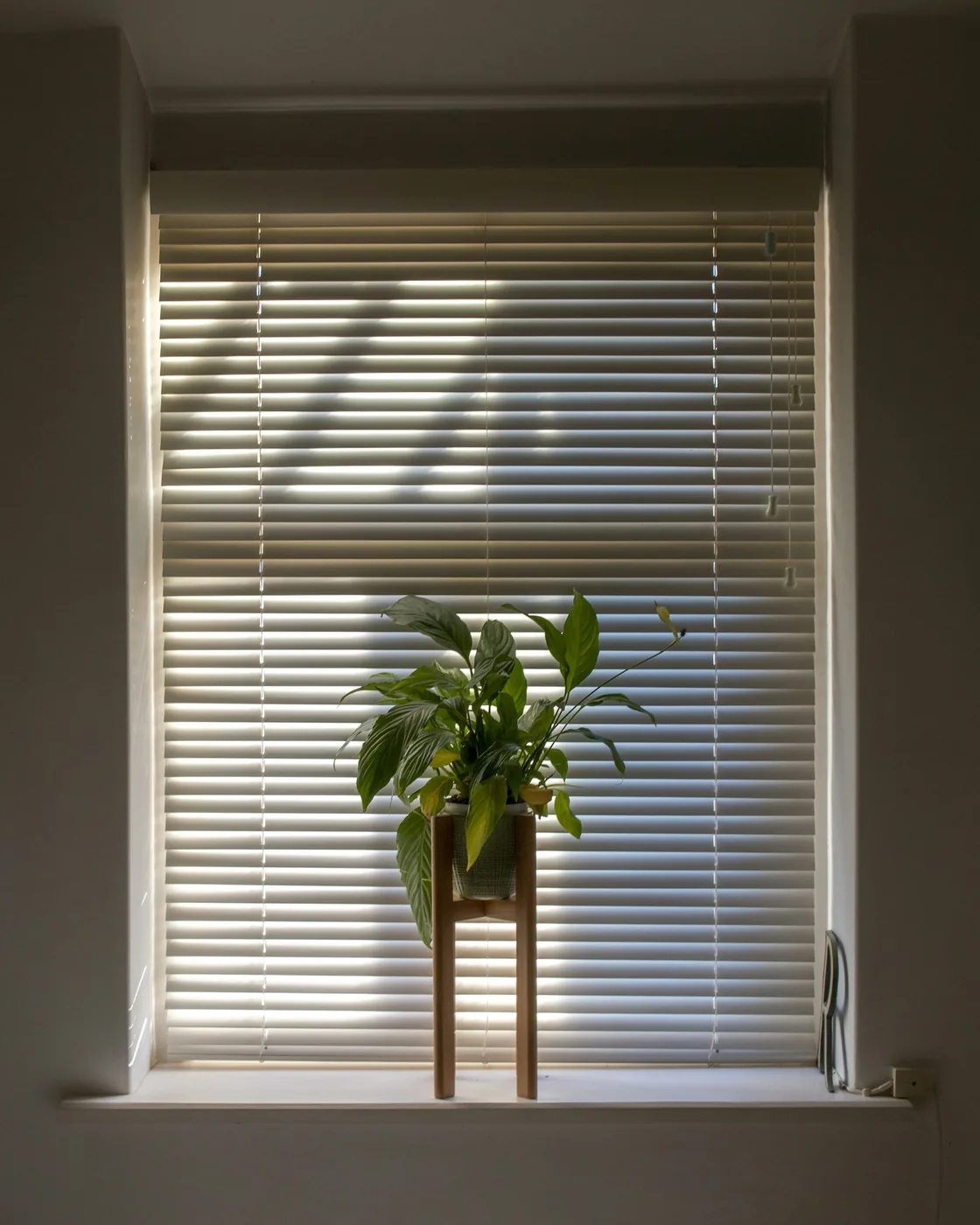
Wooden slats · Midday
Treatment
Time of day
Tilt the slats to bounce light off the ceiling and keep eyes out. Closed, near-total privacy; open, a striped view.
In short
By the Drape Haus studio · How we write
Is it right for you?
Every other blind on our list controls light by covering more or less of the glass. A Venetian does it by changing the angle of the light. Tilt the slats with their convex face upward and daylight bounces off them onto the ceiling, so the room stays bright while the view from outside is blocked. Tilt them the other way and the slats shade a low sun while you still see down into the garden. No roller, Roman or zebra blind gives that directional control.
Aluminium is the material that made the Venetian common, and it remains the most practical one. The slats are thin, light and stable, which means a wide window can carry a single blind that is still easy to lift, and the material does not care whether the air is dry or saturated. In a Goan kitchen, a bathroom with a window over the shower or a flat that is locked up from June to September, that stability is the point.
Venetians are not for everyone. They show dust on every slat, they look more office-like than a fabric blind unless the colour and slat width are chosen carefully, and a blind of horizontal slats is the wrong thing to hang inside a window that is left open to the sea breeze all afternoon. If you want softness, a Roman blind is kinder; if you want warmth of grain, our wooden blinds page is the place to start.
The details
A Venetian is defined by its mechanism rather than its material: slats hung on ladders, a tilt rod in the headrail and lift cords that gather the stack at the top. Our wooden blinds page covers timber slats; this page is about the rest of the family — aluminium in narrow, standard and wide slats, perforated slats, and the hardware that makes any Venetian last.
Aluminium slats do not absorb moisture, so they hold their shape through a Goan monsoon in a kitchen, a bathroom or a room that stays shut for months. The real enemy near the sea is not the slat but the small steel parts inside the headrail, so we specify coated slats, sealed or stainless components and non-corroding cord locks for anything within reach of salt air.
Slat width changes the whole character of the blind. A narrow slat reads as a fine, almost textile screen and suits small windows and offices; a wide slat looks architectural, gives a clearer view when open and suits large glass in a living room.
The thing to plan for is breeze. A Venetian hung inside a window that is left open will rattle in a sea wind. We fit hold-down brackets or guide cords on windows that stay open, and suggest a fabric blind instead where the window is open all day.
Your options
Within the Venetian family the choices are slat material, slat width, the surface finish and how the blind is tilted and raised. These decide how it looks, how long it lasts near the sea and how pleasant it is to use every day.
Swipe for all 6 →
The honest view
Directional light
Slats can throw daylight onto the ceiling for a bright, private room, or shade a low sun while keeping the view. It is the most precise light control of any blind.
Indifferent to damp
Aluminium does not swell, warp, delaminate or grow mildew. It is a sound choice for kitchens, bathrooms and houses closed through the monsoon.
Light and compact
Thin slats keep a wide blind easy to lift, and a narrow-slat Venetian stacks into a very small depth at the top of a recess.
Easy to keep hygienic
Hard slats wipe clean and do not hold cooking smells or damp the way fabric can, which is why Venetians are common in clinics, offices and kitchens.
Dust on every slat
Horizontal surfaces collect dust, and in a breezy house near a road they need wiping more often than a fabric blind needs brushing.
Rattle in a breeze
Slats tap against each other and the frame when the window behind is open. Hold-downs help, but in a room that lives with the windows open a fabric blind is more peaceful.
Light leaks
Closed slats never seal completely; light passes at the route holes and edges. They darken a room but are not a blackout solution.
Side by side
Someone weighing up aluminium Venetians is usually also looking at timber Venetians, faux-wood and a plain roller. These are the trade-offs.
| Aluminium Venetian | Wooden Venetian | Faux-wood Venetian | Roller blind | |
|---|---|---|---|---|
| Tilt to direct light | Yes | Yes | Yes | No |
| Behaviour in humidity | Unaffected | Can warp and mark | Unaffected | Fabric-dependent |
| Weight on a wide window | Light | Heavy | Heavy | Light |
| Stack height when raised | Small | Large | Large | Very small |
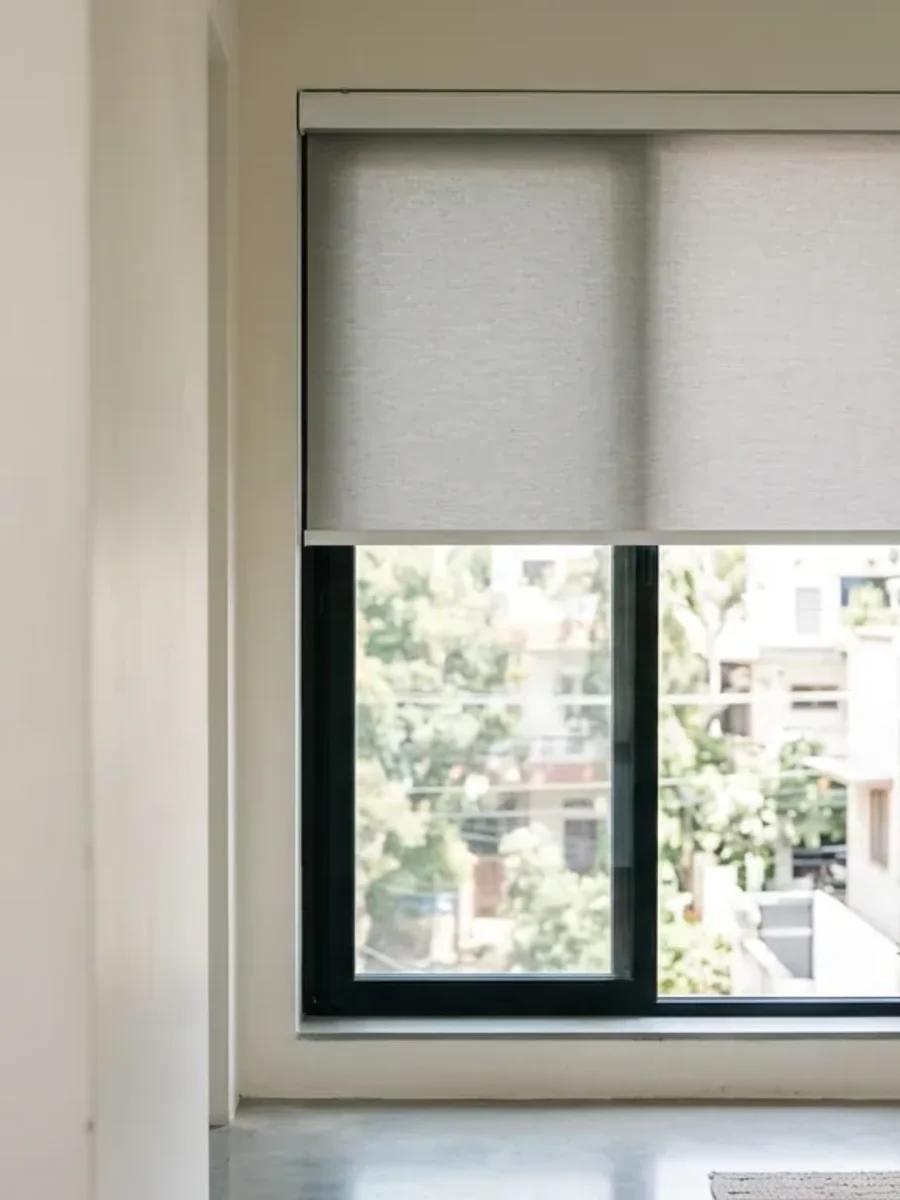
| Look | Crisp, contemporary | Warm, natural | Painted timber | Minimal |
| Noise with window open | Most likely to rattle | Less, heavier slats | Less, heavier slats | Flaps rather than taps |
Swipe to compare →
If you love the slatted look but the room is wet, aluminium or faux-wood gives you the Venetian mechanism without the risk timber carries.
Rather see it in your own room?
We bring samples to the house, measure every window, and specify for the light and exposure you actually have.
Room by room
Wipeable, unaffected by steam and slim enough to sit behind a sink tap. Keep the blind clear of the hob, and choose a satin finish rather than gloss so grease marks show less.
Tilt the slats upward for privacy with daylight. Choose a narrow slat, stainless or sealed fittings, and a wand rather than cords that sit in the damp.
Angle the slats to keep glare off a monitor while daylight bounces off the ceiling. Perforated slats soften the glare further without darkening the desk.
Fine for privacy and daytime light, but not for darkness. Pair with blackout curtains or choose a blackout blind if the room must be dark for sleep.
Wide slats in a soft colour suit a large window. If the windows are left open for the evening breeze, expect some tapping unless the blind has hold-downs.
Salt and constant wind work against slats and small parts. Use marine-grade fittings and guide cords, or choose a fabric or outdoor blind for openings that stay open.
Hard-wearing, easy to clean and consistent across many windows. Narrow or perforated slats give a calm, uniform look from the street.
In depth — tap a heading to read
A Venetian needs depth in two ways. The headrail has to fit, and the slats have to rotate without striking the glass, the window handle or a tiled sill. A slat turning through its tilt sweeps a little more than its own width, so a wide slat in a shallow reveal will catch on the handle every time it moves. We measure the depth at the handle as well as at the frame, and choose the slat width to suit the space rather than forcing it.
The second figure is the stack. When raised, all the slats gather under the headrail and take up height at the top of the window. On a short window that stack can cover a fair part of the glass. Narrow slats stack smallest; wide slats stack tallest. Where the view matters, we can mount the blind above the recess on the wall face so the stack sits over the wall instead of the glass.
Measure the recess width at the top, middle and bottom. Goan walls, especially in older houses, are rarely square, and a Venetian made to the widest figure will scrape.
Coated aluminium slats are tough. Near the sea, the weaker points are the hidden ones: the steel channel of the headrail if its coating is scratched, the gear of the tilt mechanism, the cord lock and the screws holding the brackets. Salt settles on these parts, attracts moisture and starts to rust, and the first sign is often an orange streak on the top slat or a tilt that grows stiff.
For any window within sight of the sea we specify a headrail with sealed components, stainless or coated brackets and screws, and non-metallic cord locks and wand fittings. Where the blind is near a window that leaks in the monsoon, we also keep the bottom rail clear of the sill so it does not sit in water.
The afternoon sun on a west-facing Goan wall is low, bright and hot. Venetians are good at the glare part of the problem: slats tilted against the sun block the direct beam while light still enters, reflected and diffused. A pale slat reflects more of the sun back toward the glass than a dark one, so the slat itself stays cooler and the room gains less heat from it.
What a Venetian cannot do is stop the heat that has already come through the glass. Dark metallic slats in full sun get warm to the touch and radiate that warmth into the room. For a hot west room, choose a light, matt slat, and for the hottest windows consider shading outside the glass, which our outdoor blinds page covers.
Many Goan houses are built to catch a through-draught, and windows stay open for most of the dry season. A Venetian hanging free in that draught will sway, tap the frame and clatter its slats. The fixes are simple when they are planned at the start.
Hold-down brackets at the bottom rail stop the blind from swinging when it is lowered. Side guide cords, tensioned from the head to the sill, keep the slats in line even when the window is open. On a window that is open almost all day, we will usually suggest a fabric blind or a roller instead, because no fixing makes a Venetian completely silent in a strong sea wind.
Aluminium Venetians can look clinical when they are bright white with a gloss finish on a large window. Matt and satin finishes, soft whites, warm greys and stone tones read much more calmly against limewash or painted plaster, and match the frames of most modern windows.
Slat width should follow the size of the glass. Narrow slats on a large window create a busy, striped wall; wide slats on a small bathroom window look heavy. If you want to see how tilting slats change a room before deciding, our wooden blinds simulator shows the same mechanism, and the general blinds simulator lets you compare it with roller and Roman styles.
Living with it
Close the slats face down and wipe with a dry microfibre cloth or a soft brush attachment, then close them face up and repeat for the other side.
Use a cloth wrung out in warm water with a little mild detergent, then a dry cloth. Avoid abrasive pads that scratch the coating, since scratches are where corrosion starts.
In sea-facing rooms, wipe the top slat, headrail and bottom rail with a damp cloth every few weeks so salt does not sit on metal parts.
Raise the blind fully, tilt the slats open and wipe the headrail. A clean, dry blind left raised in a ventilated room comes back without marks.
If the tilt becomes stiff or the lift cord drags, have the mechanism checked rather than forcing it. Forcing strips the tilt gear.
Avoid these
If you want slats in a bathroom or kitchen, choose aluminium or faux-wood. Real timber is for dry rooms.
Wide slats in a shallow recess strike the handle. Measure the depth at the handle and pick the slat to suit.
Ordinary plated screws and cord locks rust within a season or two near the coast and stain the slats. Ask for stainless or coated parts.
Closed slats leave light at the route holes and edges. Use a blackout blind or curtain where a dark room matters.
A free-hanging Venetian in a through-draught rattles. Plan hold-down brackets or guide cords from the start.
Checklist
More in blinds
Blinds do what curtains cannot: tight light control in a shallow recess, a clean line on a busy window, and genuine blackout when they run in side channels.
Our work
Our process
One team from the first visit to the last bracket, so nothing is lost between the person who specified it and the person who fits it.
FAQ
Venetian describes the mechanism: horizontal slats that tilt and lift. Wooden blinds are Venetians with timber slats. Aluminium, faux-wood and PVC Venetians work the same way and cope better with damp.
The coated aluminium slats do not rust, but plated steel parts in the headrail, basic cord locks and screws can. Near the sea we specify stainless or sealed components so the blind does not streak or seize.
They can tap and rattle if the window behind them is open in a breeze. Hold-down brackets or side guide cords stop the slats swinging, which matters in coastal houses that rely on through-draught.
Narrow slats suit small windows and offices, standard widths suit most rooms, and wide slats suit large windows where you want a clear view when the blind is open.
Yes. Aluminium slats are unaffected by steam and splashing. Choose narrow slats, stainless or sealed fittings and a wand control, and tilt the slats upward so the room stays private while daylight reaches the ceiling.
They cut glare well and a pale slat reflects some heat back toward the glass, but they cannot stop heat that has already passed through. For a hot west-facing room, a light matt slat helps; shading outside the glass helps more.
Yes. A motor in the headrail can tilt and lift the slats on a remote or timer. It suits high windows and banks of blinds that should all sit at the same angle.
Raise and lower the blind with the slats fully open, not closed, and do not push slats apart to look through. A bent aluminium slat can usually be replaced on its own rather than replacing the blind.
Tilted closed with the convex side facing in, they give good privacy with the lights on. A little light escapes at the edges and route holes, but figures inside are not visible from the street.
Next step
Slat width, colour and finish look different on your own window than in a sample book, and the right hardware depends on how close you are to the sea and whether the window stays open. We visit, measure every recess including tilt clearance and handle depth, and bring slats to hold against the glass so you can see how they angle your light. Then we specify the slat, headrail and controls, make the blinds and fit them. Book a home visit and we will bring the samples.