 Drape Haus
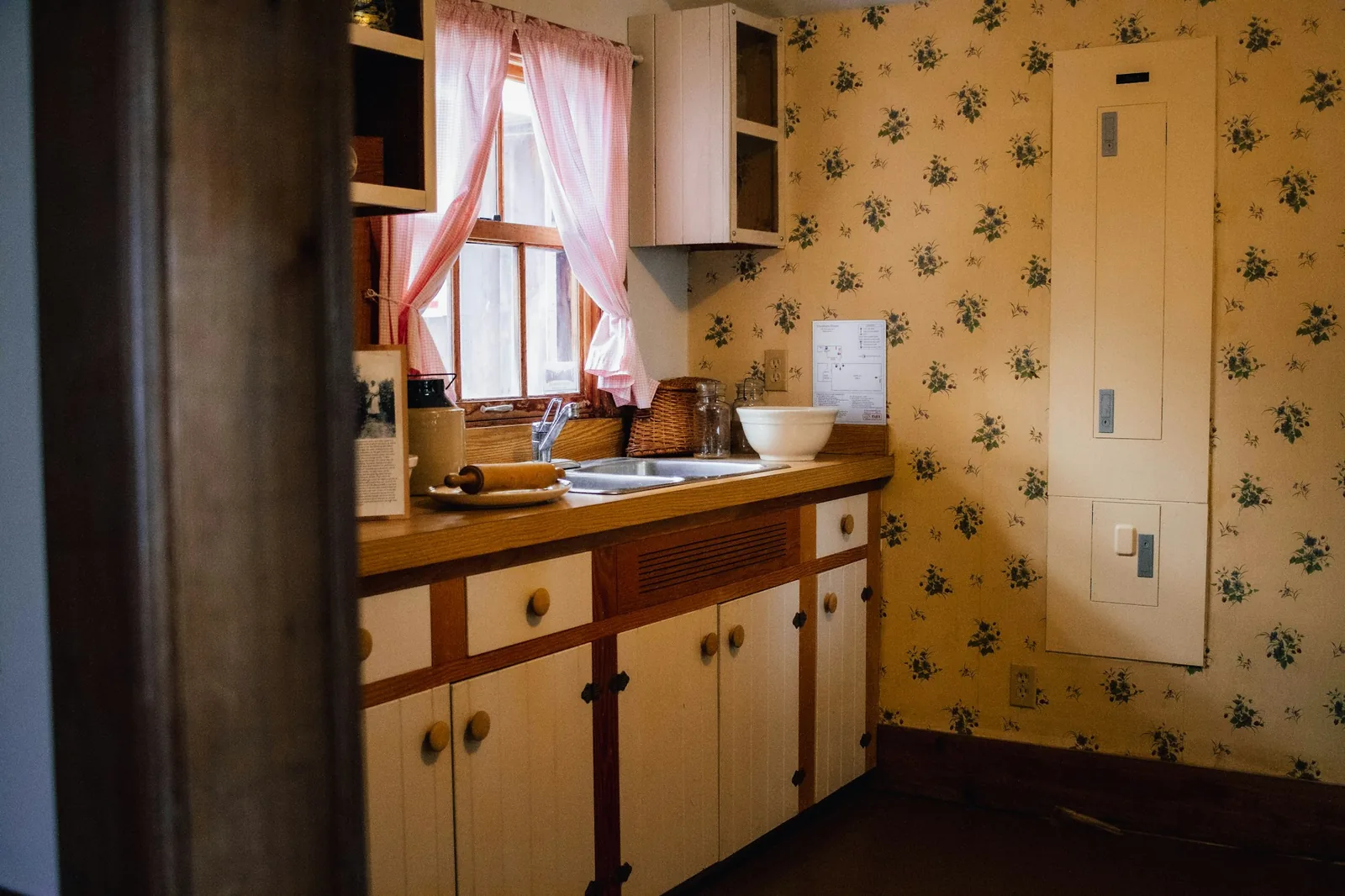
Kitchen wallpaper works, but only on the right walls, in the right grade, hung on a dry surface. On a breakfast-corner wall, the wall opposite the cooking zone or the side of an open kitchen that faces the dining table, a washable or scrubbable vinyl can last for years. Behind the hob, around the sink and on a damp external wall it fails, usually within a monsoon or two, and no amount of careful hanging will save it.
The reasons are physical rather than a matter of taste. A kitchen fills its air with steam, carries a fine film of oil to every surface near the stove, and gets hot close to the burners. In Goa that sits on top of morning humidity that the India Meteorological Department puts at 87 to 91% from June to September. Paste softens, edges lift, and anything that cannot be wiped turns sticky and then dark.
This guide goes wall by wall: where paper belongs, which types survive grease and steam, how to hang and seal it, how to clean it, and what to use in the splash zones instead.
Kitchen wallpaper, zone by zone
Think of the kitchen as a set of zones, each with its own mix of heat, water and grease. The closer a wall is to the hob and the sink, the more it needs a hard, sealed surface; the further away, the more freedom you have. Most kitchens in Goan homes have at least one wall that suits paper: the dining side of an open kitchen, a breakfast nook, the wall above a low dresser or the strip between tall cupboards and the ceiling well away from the stove.
Two zones are firm no's. Directly behind and beside the hob, heat and splatter will discolour and loosen any wallpaper, and grease cleaned off daily will wear through the surface. Around the sink, standing water at the edges will work its way under the paper. The back kitchen or wash area common in Goan houses is also a poor candidate, because it is often semi-open, wet most days and damp for the whole monsoon.
| Zone | Wallpaper? | Why | Better choice if not |
|---|---|---|---|
| Behind and beside the hob | No | Heat, oil splatter, daily scrubbing | Tile, stone or glass |
| Around the sink | No | Standing water at edges and seams | Tile, glass or PVC marble sheet |
| Backsplash away from the hob | Only scrubbable vinyl, with care | Occasional splashes; edges must be sealed | PVC marble sheet |
| Dining wall or breakfast nook | Yes | Little steam or grease; seen most | — |
| Wall opposite the cooking zone | Yes, washable or scrubbable | Some steam and grease in the air only | — |
| Ceiling | Rarely | Steam rises and settles there; hard to clean | Paint or PVC ceiling |
| Back kitchen or wash area | No | Wet most days, damp all monsoon | PVC panels or tile |
Why heat and steam make kitchen wallpaper fail
Most failures start at a seam or an edge. Wallpaper paste is water-based, and paste that is repeatedly warmed and dampened loses its grip. Steam from a pressure cooker or a pot of rice condenses on the coolest surfaces first, and the joint between two drops of paper is where it gets in. Once an edge lifts, grease and moisture creep under it, and the edge curls further every week. The University of Kentucky's extension guide notes that even well-hung wallcoverings can come loose where steam is a factor.
The quantity of water involved is easy to underestimate. A US Department of Agriculture bulletin, reprinted by Oregon State University Extension, puts the water that cooking, laundering and bathing add to a house at 2 gallons, about 7.6 litres, or more a day unless air circulation is adequate. The US Environmental Protection Agency's advice is to vent stoves to the outside where possible and to use exhaust fans or open windows whenever cooking.
There is a second, less obvious failure on external walls. Vinyl wallpaper is close to vapour-proof: building guidance from the US Department of Energy's Pacific Northwest National Laboratory classes it with materials of 0.1 perm or less and warns against such layers on the inside of walls in warm, humid climates, because moisture moving in from outside condenses behind them. In a kitchen that is air-conditioned, or one sharing an external wall with a cool air-conditioned dining room, a vinyl on the monsoon-facing wall can grow mould from behind. Keep vinyl to internal walls, or walls you know stay dry.
Paper fails at its edges first: steam gets in at a seam, the paste softens, and grease follows.
Planning something like this?
We visit homes across North and South Goa, measure on site, and bring samples to see in your own light.
Washable, scrubbable and vinyl: what the labels mean
Washability is graded and printed on the label as a set of symbols, and the European test standard EN 12956 sets the methods for assessing spongeability and washability of wallcoverings in roll form. In plain terms there are four levels worth knowing. Spongeable paper tolerates a damp sponge to remove fresh paste and not much more. Washable paper can be wiped with water and a little mild soap. Extra-washable takes more frequent wiping. Scrubbable can be cleaned with a soft brush and a little pressure. For a kitchen, washable is the minimum and scrubbable is the target near any working area.
The material behind the label matters as much. The University of Kentucky's guide describes plastic-coated papers as washable with soap and water but not scrubbable, and not to be cleaned with bleach or abrasives. Vinyl wallcoverings, a film of PVC laminated to a paper or fabric backing, have good soil, stain and scuff resistance, are washable with warm soapy water and are often scrubbable with a soft brush, which is why the guide recommends them for kitchens and bathrooms. Its comparison table puts fabric-backed vinyl as the most durable, for heavy-use rooms such as kitchens.
Non-woven wallpapers are easier to hang and remove and are more breathable, which suits many Goan rooms, but many decorative non-wovens are only spongeable or washable on the surface. Read the symbols on the actual roll, not the collection brochure. Grasscloth, silk, flock and uncoated papers do not belong in a kitchen at all; our article on luxury wallpaper in humid homes explains why natural fibres react so badly to moisture.
- Uncoated paper: stains from moisture, cannot be washed. Not for kitchens.
- Plastic-coated paper: washable, not scrubbable. Dining-side walls only.
- Paper-backed vinyl: washable, often scrubbable. Walls opposite the cooking zone.
- Fabric-backed vinyl: the most durable and scrubbable. The best kitchen grade, on internal walls.
- Non-woven: breathable and easy to strip; check the washability symbol before using it near cooking.
Hanging and sealing kitchen wallpaper so the edges hold
Start with the wall. It must be dry, sound and smooth, and a kitchen wall that shares a side with a bathroom, a wash area or the outside should be tested with a moisture meter, not judged by eye. The US federal guide specification for wallcoverings sets a maximum meter reading of five per cent for plaster and masonry before hanging, and calls for primers and adhesives that contain a mildewcide. Old oil-based or glossy paint needs to be keyed or primed with a wallcovering primer so the paste grips.
Hang in the dry months, after the walls have had a full season to dry out from the monsoon. Butt the seams tightly rather than overlapping them, roll them firmly, and wipe away any paste on the face at once. Where the paper meets a worktop, a tiled upstand or a window reveal, stop it a few millimetres short and finish the junction with a clear, mould-resistant sealant, so splashes run off the sealant rather than into the paper's edge.
Plan the electrical work first. Sockets for a mixer or microwave on a papered wall should be fitted before the paper goes up, and switch plates refitted over it. In a busy kitchen, it is also worth stopping the paper at a clean line, a dado rail, the top of a tiled splashback or a painted band, rather than running it into every awkward corner where it will be knocked and splashed.
What to use in the splash zones instead
The walls behind the hob and around the sink need a finish that does not mind water, heat or a scourer. Glazed ceramic tile is still the default: heat-proof, easy to repair one tile at a time if you keep spares, and easy to clean, though the grout lines collect grease and darken. Toughened glass splashbacks give a joint-free, wipe-clean surface and can be back-painted to any colour. Stone and engineered stone are durable, heavier and need sealing.
PVC marble sheets are the quickest refresh for the backsplash away from the burners. They are waterproof, have very few joints and can often be fixed over sound existing tiles. They are a plastic, so keep them off the wall immediately behind the hob, where a strip of tile or stone should stay. Our kitchen wall panels guide covers layouts and sealing in detail, and the full range is on the PVC marble sheets page.
The most satisfying kitchens often combine the two: a hard-wearing splashback where the work happens and a wallpaper on the dining wall or the end of the room, chosen to pick up a colour from the tiles or the cabinets. That way the pattern is seen from the table and the sofa, and never has to face a pan of hot oil.
| Finish | Behind the hob | Around the sink | Cleaning | Watch for |
|---|---|---|---|---|
| Ceramic tile | Yes | Yes | Wipe; scrub grout | Grout darkens with grease |
| Toughened glass | Yes | Yes | Wipe | Must be cut to fit before fixing |
| Stone | Yes | Yes, sealed | Wipe; reseal over time | Stains if left unsealed |
| PVC marble sheet | No, keep a heat-proof strip | Yes, joints sealed | Wipe; no abrasives | Softening near direct heat |
| Scrubbable vinyl wallpaper | No | No | Soft brush, mild soap | Lifting at seams and edges |
Cleaning kitchen wallpaper without damaging the surface
Little and often is the rule. Dust papered walls now and then with a soft brush or the brush attachment of a vacuum, and wipe marks while they are fresh, before the oil in them sets. Turmeric and tomato are the two that stain fastest; blot them, do not rub them in.
For a fuller clean, the University of Kentucky guide recommends lukewarm water and mild soap on washable coverings, working from the bottom of the wall upwards in long strokes, rinsing with clean water and wiping dry. Starting at the bottom stops dirty water running down over an unwashed surface and leaving streaks. For a stubborn stain, wash once, let it dry and wash again. The same guide is clear that abrasives should not be used on any type of wallcovering, so keep scouring pads and powders for the tiles.
If an edge lifts, deal with it the same week, before grease gets under it. The guide's remedy is to ease the paper back, apply a thin coat of white household glue beneath it, press it down for a minute or two and wipe off any excess. Keep a spare roll from the same batch, stored flat and dry: torn patches from spare paper blend in better than cut ones, and a damaged drop can be replaced with a perfect match.
Choosing a kitchen wallpaper design
A kitchen pattern has a practical job: it should hide the faint marks that every kitchen wall collects between cleans. Small, busy prints, mid-tone grounds and textured effects hide more than pale plains or dark solids. Botanicals and tile-effect geometrics both suit Goan kitchens, and a print that picks up a colour from the splashback ties the hard and soft finishes together.
Scale it to the wall. The University of Kentucky guide notes that large designs tend to make a room look smaller and that large patterns are hard to match in a room broken up by doors, windows and alcoves, which describes most kitchens. On a short wall between cabinets, a small repeat or a texture is easier to hang neatly. Matte and satin finishes also throw less glare under kitchen lights than gloss.
Work out the quantity before you fall in love with a pattern with a large repeat, which can waste a lot of paper on a broken-up wall. Our wallpaper calculator estimates rolls from wall size and repeat, and the home wallpaper collection lists the vinyl and non-woven grades we supply and hang. We can bring kitchen-grade samples on a visit and check the wall's moisture at the same time.