 Drapehaus
Drapehaus
Preparing the room
Drapehaus
Preparing the room
Blinds
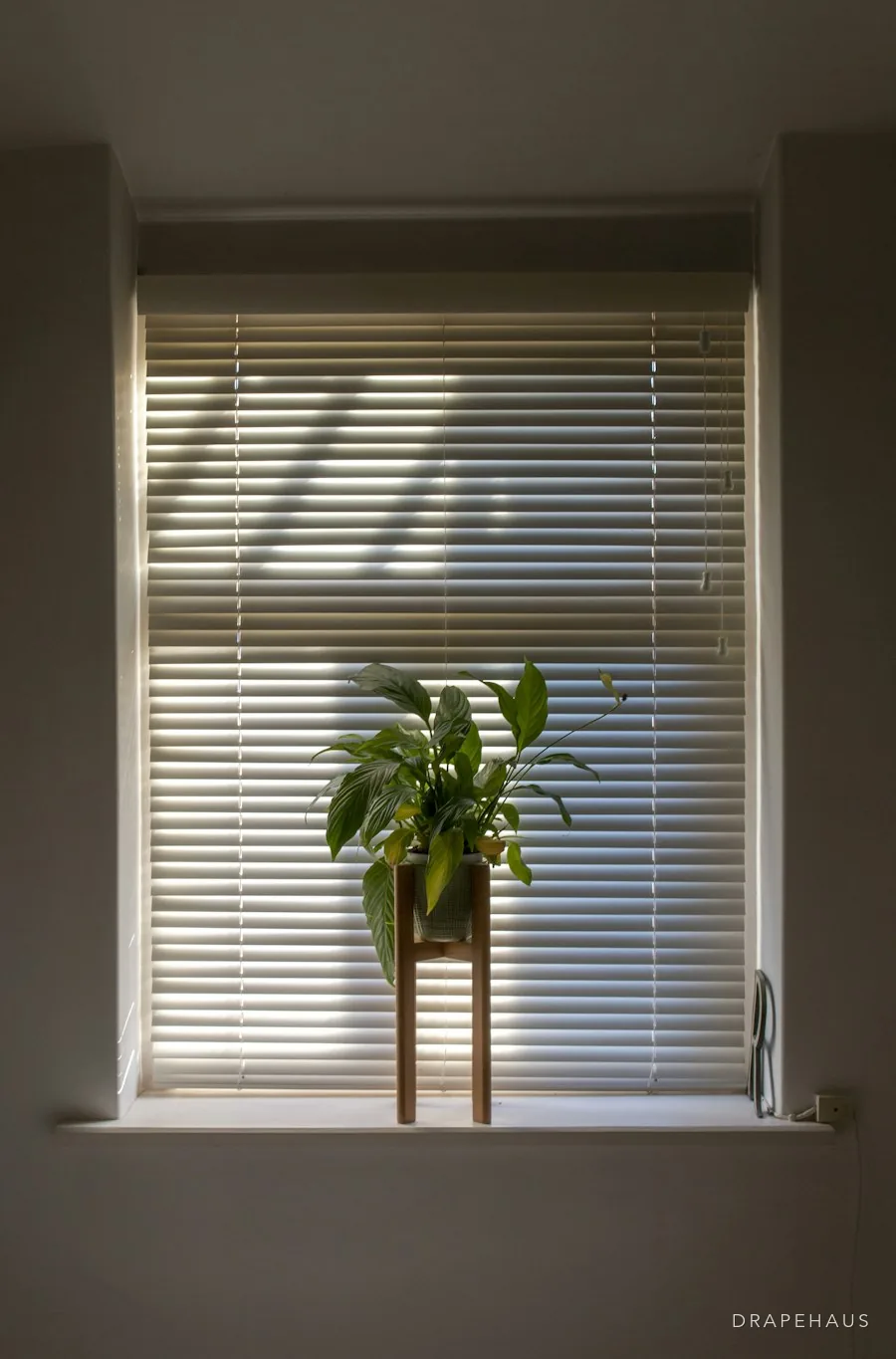
The look of timber without the worry. Faux-wood and PVC slats do not swell, warp or grow mould, which makes them the sensible choice for bathrooms, kitchens and rooms that take the monsoon full on.
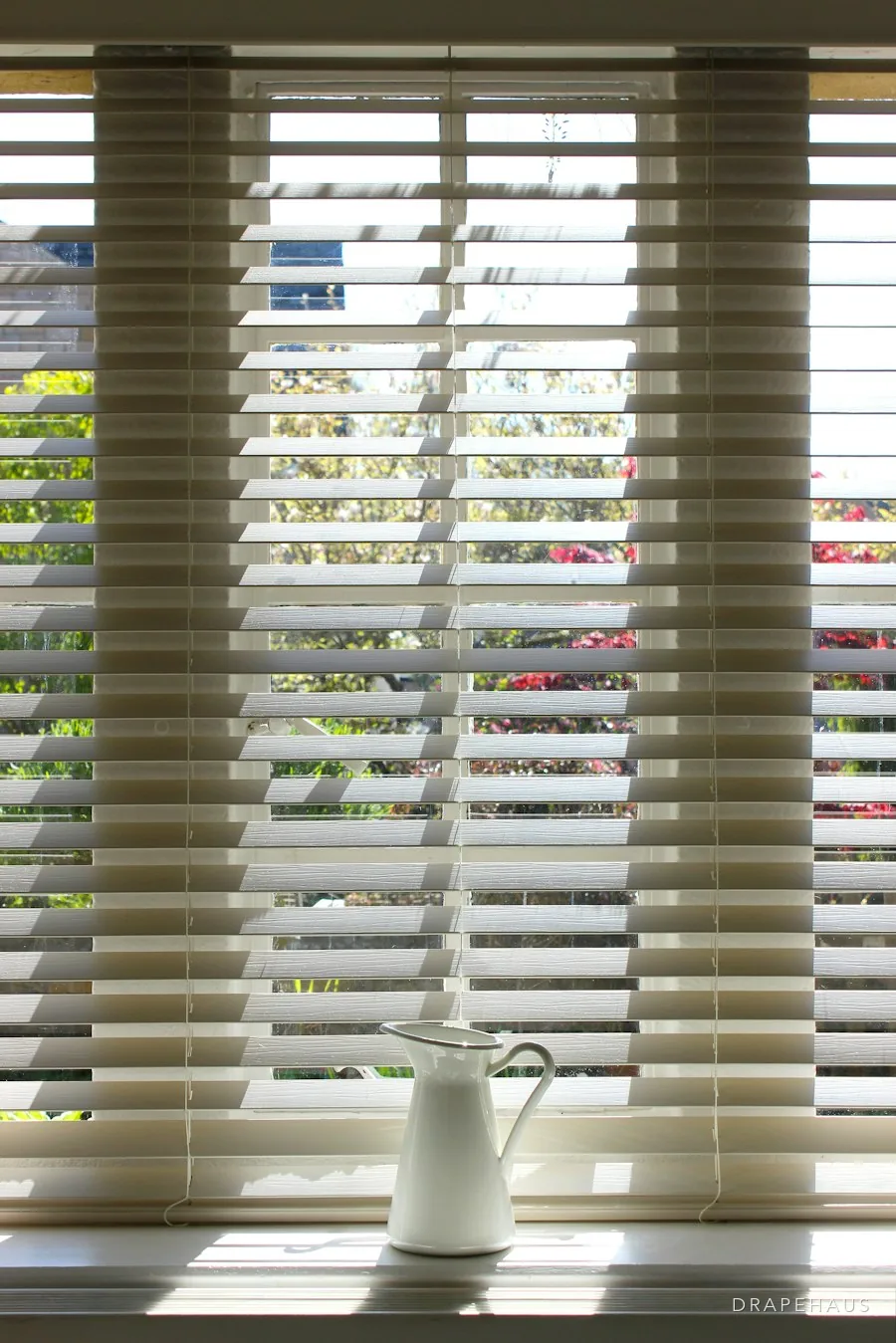
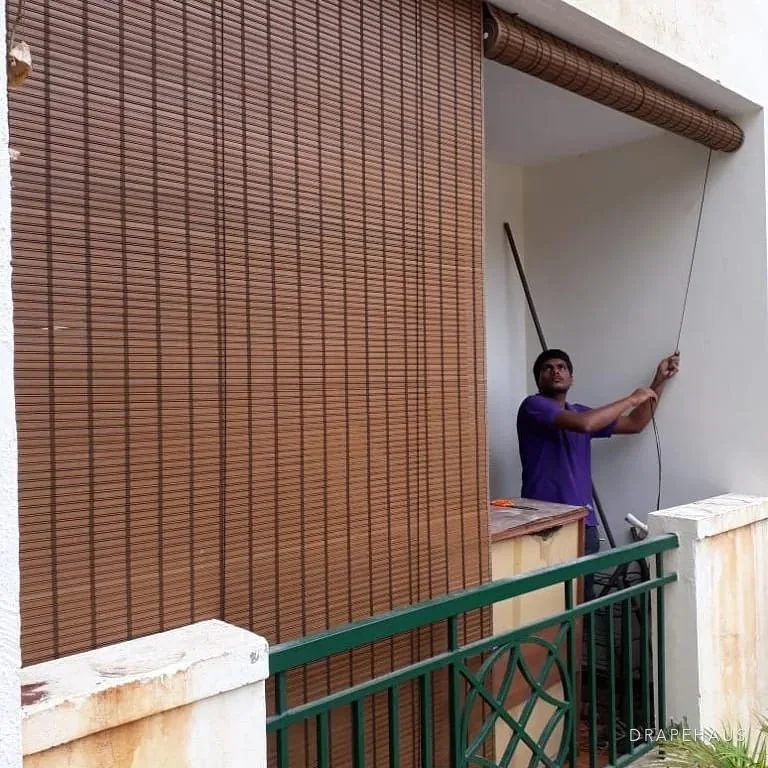
Wooden slats · Midday
Treatment
Time of day
Tilt the slats to bounce light off the ceiling and keep eyes out. Closed, near-total privacy; open, a striped view.
In short
By the Drapehaus studio · How we write
Is it right for you?
PVC and faux-wood blinds are Venetians whose slats are made from a material that does not absorb water. They tilt, raise and lower exactly as a timber blind does, but a splash from the shower, a morning of steam or a fortnight of monsoon humidity leaves them unchanged. That makes them the default specification for bathrooms, kitchens, utility rooms and any window that takes rain.
Our fabrics guide covers why composite beats timber in wet rooms and its honest limits on weight and close-up appearance. This page goes further into specifying them well: which slat material to choose, how to fit a blind around tiles and taps, what fails first (usually not the slat), and how to set them up in a rental where staff clean them weekly.
They are the wrong choice where warmth and real grain are the point - a dry study or a heritage sitting room seen at arm's length - and on a very wide window, where composite weight makes the blind hard to lift. Where softness matters more than water resistance, a Roman blind in a synthetic fabric is worth considering.
The details
Faux-wood is made to look and feel like painted timber, and at a glance most people cannot tell the difference. It wipes clean, holds its shape through the wettest months and does not fade the way real wood does in strong sun.
PVC blinds are the most practical of all: completely moisture-proof and ideal for rental properties, homestays and service areas where they will be cleaned often.
Your options
The word 'faux-wood' covers more than one material. These are the real differences, and the components that matter as much as the slat.
Swipe for all 6 →
The honest view
Indifferent to water
Steam, splashing and monsoon humidity do not swell or stain the slats. A wet slat dries and returns to exactly the same shape.
Wipe-clean hygiene
Grease, soap film and fingerprints come off with a damp cloth and mild detergent, so kitchen and bathroom blinds can be kept genuinely clean.
Slat-by-slat repair
A damaged slat can usually be replaced individually rather than remaking the whole blind, which suits houses where guests or staff handle blinds daily.
Not food for termites
PVC slats give termites nothing to eat, a real advantage in older houses where timber blinds sit against affected walls.
Consistent colour
Painted-finish composites do not darken or yellow the way stained timber does, so a replacement slat matches its neighbours.
Heavy on wide windows
Composite is denser than timber. Past a moderate width, the blind needs splitting to stay easy to raise and to avoid a slight sag in the slats.
Not quite timber up close
At arm's length, a printed or embossed grain does not read like real wood. In a dry room viewed closely, real timber or aluminium may look better.
Softens near heat
PVC near a hob or a dark slat against hot glass can soften over time. Keep slats well clear of cooking heat and choose pale colours on sunny windows.
Side by side
In a wet room, the realistic choices are faux-wood Venetians, aluminium Venetians, a PVC-coated roller and frosted film on the glass.
| Faux-wood / PVC | Aluminium Venetian | PVC-coated roller | Frosted film | |
|---|---|---|---|---|
| Waterproof | Yes | Yes | Yes | Yes |
| Privacy with daylight | Yes, by tilting | Yes, by tilting | Only when lowered | Permanent |
| Look | Painted timber | Technical, slim | Plain, flat | Invisible |
| Weight | Heavy | Light | Light | None |
| Cleaning | Wipe each slat | Wipe each slat | Wipe the panel | Wipe the glass |
| View when open | Clear | Clear | Clear | None, ever |
Swipe to compare →
Frosted film on the lower pane with a faux-wood blind above is a good pairing in bathrooms with a view from the bath.
Rather see it in your own room?
We bring samples to the house, measure every window, and specify for the light and exposure you actually have.
Room by room
The correct specification. Tilt the slats upward for daylight with privacy, and use routeless slats if a neighbour overlooks the window.
Wipe-clean and unaffected by steam. Keep the blind clear of the hob and specify a pale finish on a sunny window.
Hollow PVC slats cope with damp washing, detergent splashes and heavy handling.
Hard-wearing and easy for staff to clean between stays. Add blackout curtains, since slats never fully darken a room.
Works well in a humid or sea-facing room. In a dry room viewed at close range, real timber may look better.
Practical in a room closed for months. On a wide desk window, split into two to keep each blind light.
In depth — tap a heading to read
A bathroom window rarely has a clean recess. It may be tiled on three sides, sit above a basin or bath, or have a tap or shower head within splash range. We check whether the headrail can be fixed into the top of the tiled reveal without cracking tiles, or whether it should go on the wall above, where plaster takes a fixing more kindly.
The bottom of the blind should not rest on a wet sill or sit where water pools, and the operating wand or cord should hang away from the shower. Where the window is inside the shower area itself, a Venetian is not the right answer; frosted glass or film does that job, with a blind only on windows outside the direct spray.
The slats are rarely the problem. In a steamy bathroom or a coastal kitchen, the first failures are the parts nobody chose: plated steel brackets that rust and stain the wall, a tilt gear that corrodes and stiffens, and cotton cords or tapes that spot with mildew while the slats beside them stay perfectly clean.
So a good wet-room blind is specified as a whole. We use coated or aluminium headrails, stainless screws into plugs rather than bare steel, polyester cords and synthetic ladder tapes. It makes little visible difference on the day of fitting and a great deal after the third monsoon.
A waterproof slat on a mild-steel headrail is only as waterproof as the headrail.
In a rental, blinds are cleaned weekly by staff and operated by guests who have never seen the mechanism. Faux-wood suits that life. The slats wipe down quickly, stand up to cleaning products and do not mark if a guest hangs a wet towel nearby. A cordless or wand-operated lift removes the most common point of damage, a cord pulled at an angle.
Standardising helps. Where several bathrooms share one slat colour and width, a small stock of spare slats can be kept on site so a damaged one is replaced between guests rather than leaving a gap. We record each blind's measurements so a replacement blind can be made without a new site visit.
White and pale painted finishes are where faux-wood is most convincing, because painted timber has no visible grain anyway. They also reflect sun rather than absorbing it, which keeps the slats cooler on a bright window. Deep wood tones in composite are the least convincing close up and the most likely to take heat.
Match the blind to the window frame and the tiles rather than to furniture elsewhere in the house. A crisp white slat against white aluminium or uPVC frames looks intentional; a warm off-white suits cream tiles and limewash. In a kitchen with timber cabinets, a pale neutral blind avoids an imitation grain competing with real wood a metre away.
Living with it
Close the slats and wipe with a cloth dampened in mild soapy water, then tilt the other way and do the back. Dry cloth to finish in hard-water areas.
A dilute washing-up liquid lifts grease film. Avoid solvents and abrasive pads, which dull the painted finish.
Check cords and ladder tapes for spotting during the monsoon. Replace natural-fibre cords with polyester if they mark.
Wipe the headrail occasionally and look for rust at the brackets, particularly in sea-facing bathrooms. Treat it early before it stains the wall.
Keep the blind's measurements and a spare slat or two. A damaged slat can be swapped without taking the blind down.
Avoid these
The mechanism corrodes long before the slats age. Specify coated headrails, stainless fixings and synthetic cords.
Direct spray defeats any Venetian. Use frosted glass or film where water hits the window.
It takes heat and looks least convincing. Choose a pale painted finish.
Standard slats leak light and sightlines through the cord holes. Ask for routeless slats.
Composite weight makes it hard to raise over a worktop. Split it into two blinds.
Checklist
More in blinds
Blinds do what curtains cannot: tight light control in a shallow recess, a clean line on a busy window, and genuine blackout when they run in side channels.
Our work
Our process
One team from the first visit to the last bracket, so nothing is lost between the person who specified it and the person who fits it.
FAQ
Good faux-wood is very convincing, especially in white and painted finishes. It is hard to tell from real timber once fitted.
Yes — they are fully moisture-proof and easy to clean, which is why we recommend them for bathrooms, kitchens and utility rooms.
The slats are. Foamed PVC faux-wood is fully waterproof; wood-polymer composite is highly resistant but can take up moisture where the surface is chipped. The headrail, cords and tapes also need to be specified for wet rooms, or they fail first.
Faux-wood is a PVC or composite slat finished to look like painted or stained timber, usually solid or foamed. PVC blinds are often lighter, hollow extruded slats that are more utilitarian in look. Both are waterproof; faux-wood looks more like joinery.
Yes, and they are one of the best choices. They wipe clean of grease and do not swell in steam. Keep them clear of the hob, where heat can soften PVC, and choose a pale finish on a sunny window.
Faux-wood Venetians with routeless slats, tilted upward, give daylight without a view in. Where the window is in direct shower spray, frosted film on the glass is more practical, perhaps with a blind on the upper pane.
Close the slats and wipe with a cloth dampened in mild soapy water, then tilt and do the other side. Avoid solvents and scouring pads. For heavy grease, a dilute washing-up liquid works well.
Next step
A wet-room blind succeeds or fails on details you cannot see in a brochure: the fixings into tile, the headrail internals, the cords, the distance from the spray. We visit, measure each window, look at tiles, taps and ventilation, and bring faux-wood and PVC slats so you can compare finishes against your own frames and tiles. We then specify slat, headrail and mechanism for each room, make the blinds and fit them. Book a home visit, and we will plan them with you.