 Drapehaus
Drapehaus
Preparing the room
Drapehaus
Preparing the room
Home type
The traditional Goan village house is a climate machine that works, and it worked for two centuries before air conditioning. Thick laterite walls hold the night's coolness through the day. Small, deeply set windows admit light without admitting much sun. The balcão at the front and the courtyard behind set up a cross-draught that moves air through the house all afternoon.
By the Drapehaus studio · 19 September 2026 · How we write
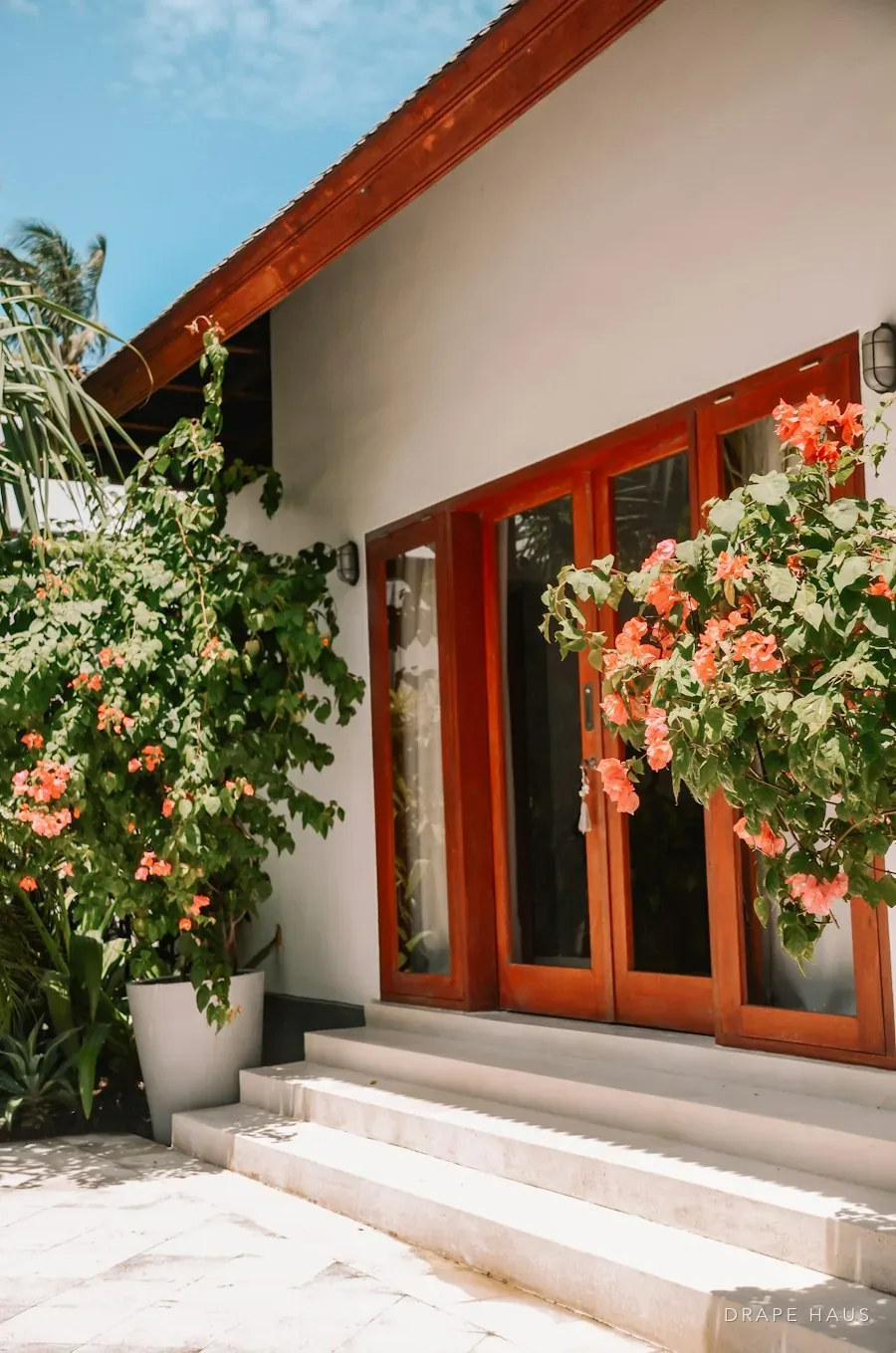
Curtains can support that or wreck it, and the difference is mostly about air. A heavy fabric across a small window in a thick wall does not just block light, it blocks the draught that the whole house depends on. Families who have added conventional curtains often find rooms feel stuffier afterwards and cannot say why.
The other consideration is that these are usually family homes with a long history rather than design projects. The window treatment should sit quietly inside something that already has a strong character, not compete with it.
The cross-ventilation in a traditional house depends on air being able to enter on one side and leave on the other. Small windows mean the available opening is already limited, so anything that further restricts it has a disproportionate effect.
In practice this pushes us towards treatments that clear the opening completely rather than ones that sit across it. A curtain on a pole wide enough that both panels stack entirely on the wall keeps the full aperture available. A roller blind that rolls fully above the reveal does the same. A Roman blind with a deep stack, or a curtain that cannot fully clear the frame, does not.
Where privacy is needed during the day — and in a village with a lane running past the front, it often is — a café-style half curtain covering the lower portion only is a far better answer than a full curtain. It screens sightlines at head height from the lane while leaving the top of the window completely open to air and light.
A wall six hundred millimetres thick gives a very deep reveal, which is useful. A blind fitted inside it is protected from sun and rain, sits neatly and needs no additional dressing. There is usually ample depth for a roller, a Roman or a Venetian without any of it projecting past the plaster line.
An inside fit also avoids the fixing problem. The reveal is often faced with better plaster or has a timber frame, both of which take a fixing more reliably than the laterite behind them.
The exception is where the shutters or grilles open inward, which in older houses they usually do. Then the blind has to go outside the reveal after all, and it needs to clear the full swing.
Rather see it in your own room?
We bring samples to the house, measure every window, and specify for the light and exposure you actually have.
More on this — tap a heading to read
These houses stay cool by moving air, not by sealing themselves. That means the fabric spends the whole year in ambient humidity, wet-season and dry, with no dehumidified interior to retreat to.
Natural fibres do better here than in a sealed coastal villa, because constant airflow keeps them drying. Cotton in particular suits the setting, washes easily and is inexpensive to replace. Linen works well inland. Heavy lined and interlined curtains are the wrong answer almost everywhere in this building type — they hold damp, they block air, and they look out of place.
Light, washable, replaceable is the right instinct. These are houses where a curtain being taken down and washed twice a year is completely normal, and the specification should assume that rather than fight it.
We begin a village house visit by finding the draught. On a warm afternoon we stand in the balcão, the main hall and the rear rooms and feel where the air is moving, which doors the family keeps open and which windows are never closed. That path is the house's cooling system, and every window on it should be treated as an air opening first and a light opening second.
Then we look at each window's hardware. Many village houses have iron grilles set in the reveal, inward-opening timber shutters, or both, and sometimes glazed sashes added later. The order of those layers, and which ones the family actually uses, tells us where a curtain or blind can go without getting in the way. It often turns out that one layer is doing all the work and another is never touched.
Finally we ask about the lane. Which windows face a path, a neighbour's door or the road, and at what time of day does anyone walk past? Privacy needs in a village are specific to particular windows and particular hours, and they are rarely solved well by treating every window the same. A café curtain on one window and nothing at all on the next is often exactly right.
The simplest hardware often suits these houses best. A slim wooden or dark metal pole fixed into the timber frame or the upper reveal, with rings that slide easily, is quiet in the room and easy for the family to take down for washing. Heavy decorative finials and elaborate tracks look out of place against lime plaster and red oxide floors.
Inside the reveal, spring-tension or screw-fixed café rods work well for half curtains. They sit neatly against the frame, need no drilling into laterite, and can be moved up or down as privacy needs change. For roller or Roman blinds inside a deep reveal, fixing into the timber head of the frame is more reliable than the masonry above it.
Where the wall must be drilled, fixings need to reach sound laterite beyond the plaster and be spread across more brackets than the weight strictly requires. It is worth remembering that these walls move with the seasons, taking up moisture in the monsoon and drying out afterwards, so a fixing that is only just holding will not stay that way.
A house that keeps its windows open all day has to deal with mosquitoes at dusk, and in many villages that means closing the shutters at sunset whatever the temperature. That sacrifices exactly the evening breeze the house most needs. Insect screens let the windows stay open, but they have to be planned alongside any curtain. Added afterwards, they usually end up fighting the fabric for the same space.
The neatest arrangement is a screen fixed on the outer face of the frame or behind the grille, with the curtain or café rod inside it. The screen stays put, the curtain works independently, and nobody has to fight one to operate the other. Retractable pleated screens are useful where the family wants an unscreened window on cool dry-season days.
Screens also reduce the light entering the room, so a window with a mesh already feels dimmer. That is another reason to keep curtains light and unlined in a village house, and to ensure they clear the opening fully during the day. A heavy curtain behind a screen in a small window can leave a room almost dark at midday, even with the shutters wide open, and families then stop using the room as they once did.
The dry season from November to May is when these houses live with their windows fully open, and when sun damage builds up on west-facing curtains. Cotton in strong tones fades faster than people expect; paler and more muted colours age more gently, and they are easier to replace to match when one panel goes. Drawing curtains fully clear of the glass through the brightest hours also slows fading considerably.
Late May is the time to wash everything, repair hems and take down anything heavy before the rains, which normally arrive in the first week of June. Through the monsoon relative humidity sits in the eighties and above, and a house without air conditioning depends on air movement to keep fabric from spotting. Lighter curtains and more open windows are the right response, even when it rains.
Festivals also shape the calendar. Ganesh Chaturthi falls at the end of the monsoon and brings visitors, meals and long evenings, so many families like fresh curtains in the main rooms by then. That means ordering in July or early August, not the week before, because the whole state has the same idea. Christmas and wedding-season gatherings in the dry months follow the same logic.
Diagnosis
WhySmall windows in thick walls provide limited aperture, and a curtain that sits across the opening cuts the cross-draught the house relies on.
FixMove to treatments that clear the opening entirely — wide-stacking curtains, or rollers that retract fully above the reveal. Consider a café curtain for privacy without closing the top.
WhyLaterite is porous and friable and will not hold a standard plug under the cyclic load of a curtain.
FixFix inside the reveal where the plaster is better, or into the timber frame. Spread the load across more brackets than the span requires.
WhyHeavy or lined fabric in a naturally ventilated house holds humidity that lighter cloth would shed.
FixSwitch to unlined cotton or light linen that dries between wettings, and wash seasonally rather than annually.
WhyA full curtain drawn during the day solves the sightline but darkens the room and stops the draught.
FixA café curtain across the lower half only. It blocks the view in from standing height on the lane while leaving the upper window fully open.
WhyThere is no screen on the window, so the only defence against insects is closing the opening altogether.
FixFit a fixed or retractable screen on the outer face of the frame or behind the grille, with the curtain working independently inside it.
WhyWest-facing windows take strong afternoon sun through the dry months, and surface dyes on cotton break down quickly under it.
FixChoose paler or muted tones for sunny elevations, line the most exposed curtains lightly, and draw them fully clear when not needed.
Checklist
Identify the cross-draught path before specifying anything
Check which way shutters and grilles swing
Prefer treatments that clear the opening completely
Consider a café curtain where the only issue is a sightline
Choose washable, replaceable fabric over lined and precious
Fix into the reveal plaster or timber frame, not bare laterite
Plan insect screens and curtains together so neither blocks the other
Choose muted, fade-tolerant colours for west-facing windows
Wash and repair everything in late May, before the monsoon arrives
Order festival curtains weeks ahead, not in the final days
From the Journal
All articlesFAQ
Light, unlined, washable cotton or linen on a pole wide enough that the curtains stack entirely clear of the opening. The house cools itself by moving air, so anything that restricts the window aperture works against the building. Avoid lined and interlined curtains here.
A café curtain covering only the lower half of the window. It blocks the sightline from standing height outside while leaving the upper portion completely open for light and air. It is the traditional answer for a reason.
Usually yes, and it is often the neatest solution — a six-hundred-millimetre wall gives ample depth for a roller or Roman blind to sit entirely within the reveal, protected from sun and rain. Check first that shutters or grilles do not swing inward through that space.
Heavy or lined fabric in a naturally ventilated building holds humidity that lighter cloth would shed between wettings. Switch to unlined cotton, make sure air can move behind the curtain, and wash seasonally rather than once a year.
Yes, and it is usually the only way to keep windows open in the evening. Fix the screen on the outer face of the frame or behind the grille, and hang the curtain or café rod inside it so each works independently. Retractable pleated screens suit windows the family likes to open fully on cool days.
A slim wooden or dark metal pole with easy-running rings, fixed into the timber frame or upper reveal. It sits quietly against lime plaster and is simple to take down for washing. For half curtains, a tension or screw-fixed café rod inside the reveal avoids drilling into laterite altogether.
Twice a year works well: once in late May before the monsoon, and again after the rains have withdrawn in October. Unlined cotton and light linen tolerate frequent washing, and cleaning them before storage or rehanging removes the dust and spores that otherwise give old houses their musty smell.
Keep reading