 Drape Haus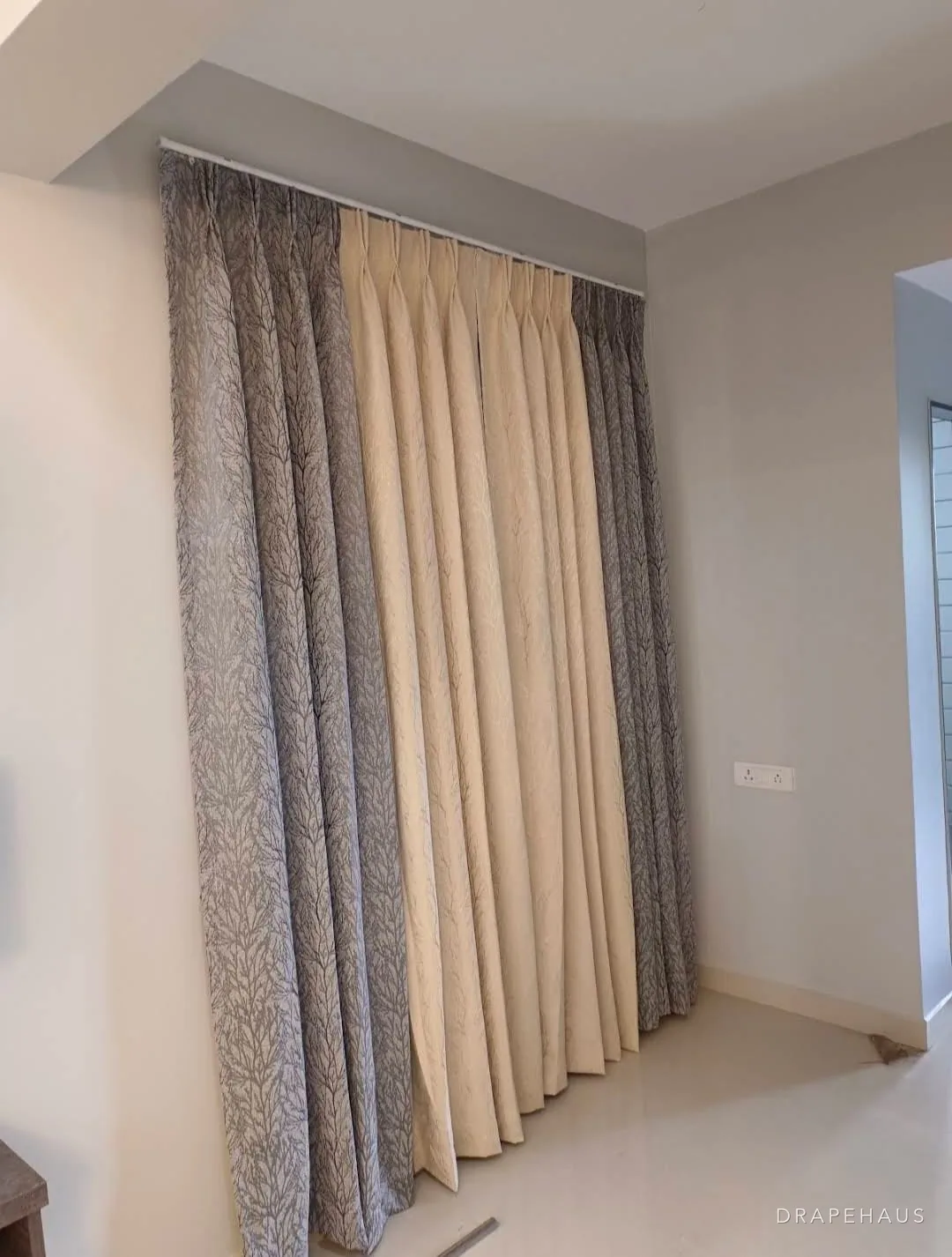
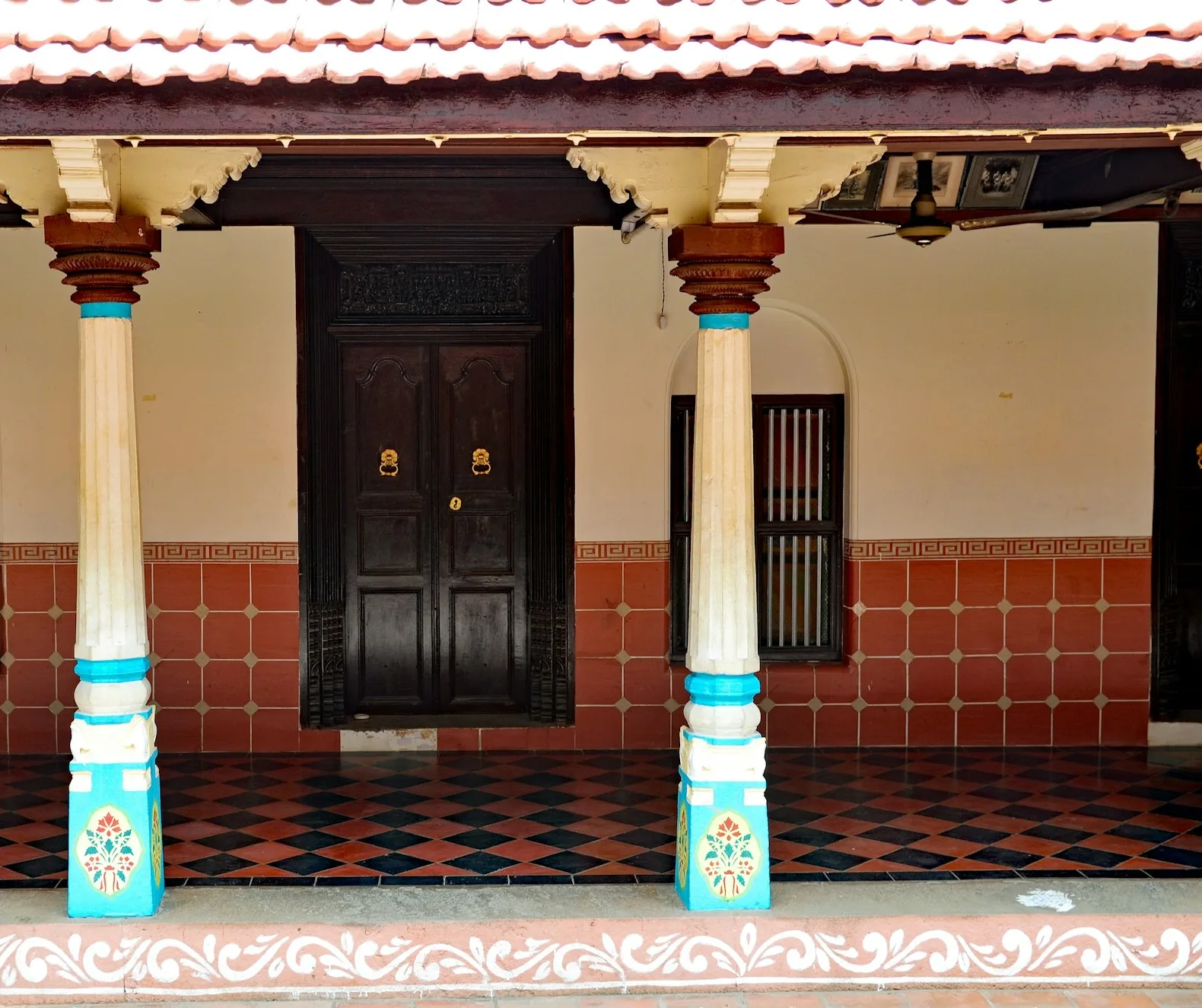
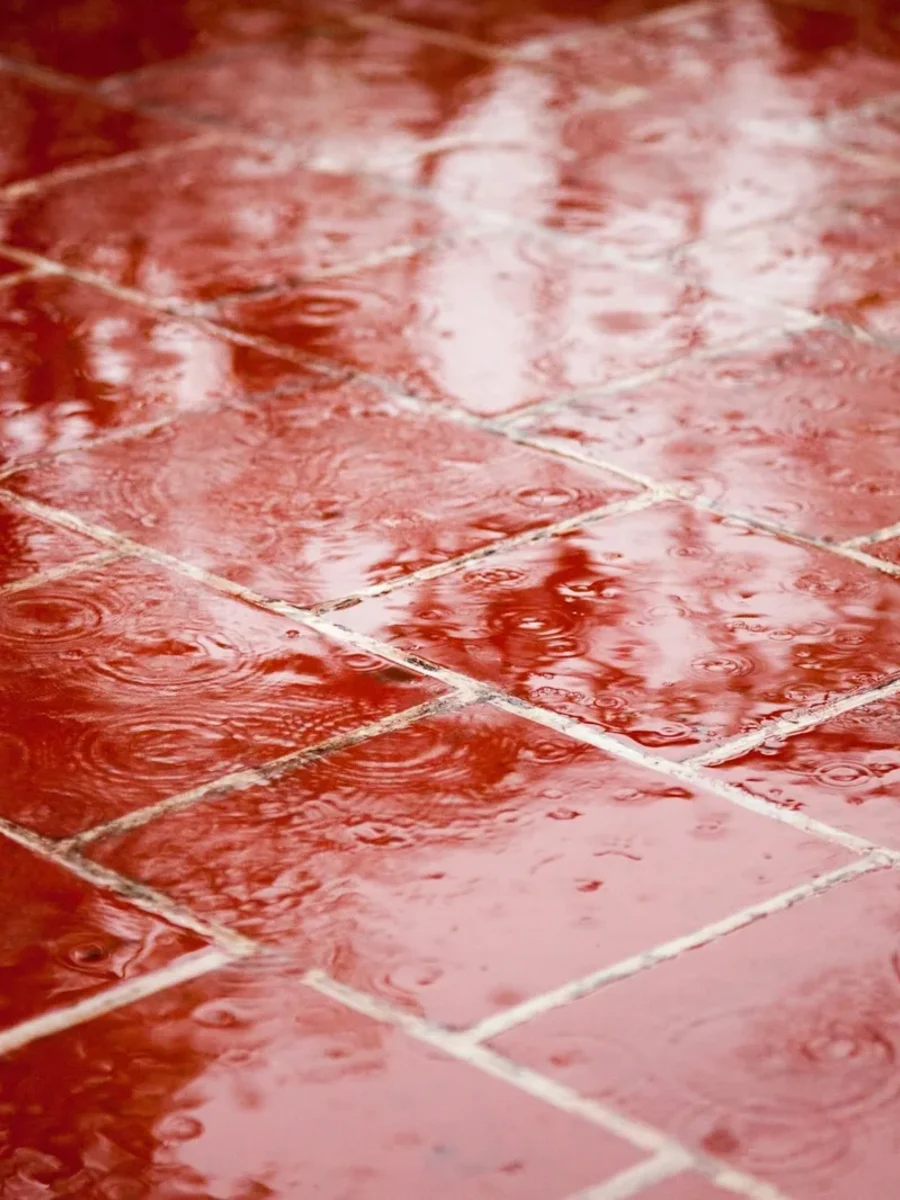
Cement tiles are unglazed floor tiles made from cement, fine aggregate and mineral pigment, pressed in a mould so that the coloured pattern forms the top layer of the tile itself. In Goa they turn up in the halls, dining rooms and verandahs of many old houses: geometric borders, floral centres and chequerboards, worn to a soft sheen by generations of feet.
Gomantak Times describes how Goan floors moved from earth smeared with cow dung to clay and cement tiles, how tiles from Europe came in through Goa's port, and how Goans who travelled to Europe in the 20th century brought moulds back with them. Writing on Goan houses, drawing on the book Houses of Goa, describes floors ranging from humble burnt earth plastered with cow dung to elaborate patterns made with tiles imported from Europe. A big house may have a different pattern in every room, with borders framing a central field.
They are tough floors, but their colour lives in a thin top layer that can be stripped by the wrong cleaner or worn through by grit. This guide covers how to recognise them, how they were made, how to clean and protect them, what to do about cracked or missing tiles, how to source reproductions, and how to choose rugs, curtains and upholstery for a room where the floor is already the pattern.
Cement, encaustic or mosaic: identifying your floor
Three kinds of decorative floor are often confused, and they need slightly different care. Cement tiles are unglazed and slightly matte or softly polished from wear. Their pattern sits in a coloured top layer that is part of the tile rather than a coat on it, so ordinary wear dulls the colour gradually instead of chipping it off. They feel cool and dense, and they are the most common patterned tile in old Goan houses.
Encaustic tiles look similar but are fired clay. The US National Park Service's Preservation Brief on historic ceramic tile floors explains that their pattern is made by filling depressions in the clay body with clays of other colours before firing, so the design is inlaid in fired ceramic. Glazed ceramic tiles, including painted wall tiles such as azulejos, have a glassy surface skin; a chip shows a different-coloured body underneath.
Mosaic floors are made of many small pieces rather than one patterned tile, either set in a pattern or broken and scattered in a cement bed. Terrazzo is a cement floor with chips of marble or stone, ground smooth. All of these share one thing with cement tiles: they are cement-based or set in cement, so the same cautions about acids apply. If in doubt about what you have, look at a chipped edge, an unglazed back exposed during earlier repairs, or a tile at the edge of the room under a skirting.
| Floor | Made of | Surface | Main care rule |
|---|---|---|---|
| Cement (hydraulic) tile | Cement, marble dust, aggregate and pigment, pressed, not fired | Matte to soft sheen; colour layer on top | No acids; gentle neutral cleaning |
| Encaustic tile | Fired clay with inlaid coloured clays | Matte, very hard | No abrasives; acids only with caution |
| Glazed ceramic tile | Fired clay with a glaze | Glassy, reflective | Protect the glaze from abrasives and acids |
| Mosaic or terrazzo | Small pieces or chips in a cement bed | Polished or matte | Treat the cement bed as acid-sensitive |
How cement tiles were made
The Consorcio de la Ciudad de Toledo, the public body that looks after Toledo's historic centre in Spain, describes the traditional process in its heritage notes. The materials are cement and white cement, inorganic pigments, marble powder and aggregate, mixed first dry and then with water. A steel mould the shape of the tile is fitted with a brass divider, cut to the pattern, and each coloured mix is poured into its own compartment with a ladle. The divider is lifted out carefully, leaving the design in place.
Then a drier layer of cement and aggregate is added on top to soak up excess water and give the tile its body, and the whole is compacted in a hydraulic press, which gives the hydraulic tile its other name. The tile is then left for 28 days to set and gain strength. The consortium stresses that the colour is not a paint or a glaze on the surface; the pigment penetrates into the cement and becomes part of the tile's thickness.
India has its own related tradition. The Athangudi tiles of Chettinad in Tamil Nadu, described in the architecture journal Matter, are hand-made cement and oxide tiles in floral and geometric patterns, made in a similar spirit. Knowing how a tile was made explains how to treat it: the colour is in a cement layer a few millimetres deep, so anything that dissolves or scours cement takes the pattern with it.
Planning something like this?
We visit homes across North and South Goa, measure on site, and bring samples to see in your own light.
Gentle cleaning that keeps the colour
Most cement tile floors need very little. Daily sweeping or vacuuming with a brush head removes the grit that wears through the coloured layer; a damp mop with clean water does the rest. India's flooring code, IS 2571, notes that cement-based floors are slowly attacked by acids, vegetable oils, fats and sugar solutions, so the products to avoid are acidic cleaners, vinegar, lemon-based cleaners and descalers, and the spills to wipe quickly are oil, juice and anything sugary.
The National Park Service brief on historic tile floors, written for ceramic tiles but useful here, sets out a careful routine. Start with the gentlest method, which may be warm water alone. Test any product on a small, inconspicuous area first. Avoid abrasive powders and creams and harsh mechanical scrubbing, which wear away the surface and the design. Pre-wet the floor before applying any cleaner, so the water fills the pores and stops chemicals soaking into the tile body, then rinse thoroughly, preferably twice. For a deeper clean, it suggests letting a mild solution sit for 10 to 15 minutes without drying out, loosening dirt with a natural bristle or nylon brush, and rinsing well.
The Society for the Protection of Ancient Buildings adds that patterned tiles are more easily damaged by cleaning than plain ones, that tenacious marks may need a little neutral, sulfate-free detergent followed by careful rinsing, and that household soaps can leave a slippery scum. Both bodies advise against linseed oil, which yellows and attracts dirt. For mould on tiles near a damp wall or verandah, the NPS brief mentions a dilute household bleach with a neutral detergent, but warns not to leave even a dilute bleach on the floor for more than a few minutes, since the alkali can leave a white efflorescent deposit.
Sealing and polishing: whether, and with what
Old tile floors were rarely sealed in the modern sense. Like the oxide floors beside them, they were swept, washed and sometimes waxed, and they acquired a sheen from use. The NPS brief observes the same of historic tile floors in general: most simply acquired a natural polish through use.
If you want some protection, the brief's guidance is cautious. A traditional floor wax may be the most suitable coating because it is easy to remove when worn and does not give an inappropriately high gloss. A penetrating sealer or impregnator, which soaks in rather than forming a film, may be worth considering for patterned tiles in heavy traffic or light-coloured floors prone to staining, and should ideally be chosen with a conservator or tile specialist. Film-forming coatings can show traffic patterns as they wear, peel in spots or make tiles look hazy, and need periodic stripping, which can itself damage the floor. Where a sealer is used, a matte or dull finish suits an old floor better than a high gloss.
Two Goa-specific cautions apply. First, ground-floor tiles on old houses often sit on a base without a damp-proof layer, and moisture from below needs to escape through the surface; a sealer that blocks that can push damp and salts into the joints or the tile edges. Second, a waxed or glossy tile floor on a verandah or near a door becomes slippery when the monsoon blows rain onto it. SPAB's guidance warns that polish is generally not advisable on tiles for exactly that reason.
If in doubt, do less. A clean, unsealed tile floor that breathes is easier to live with than a coated one that peels.
Broken tiles: match, salvage, or leave alone
Cracked and missing tiles are the most common complaint, usually around old plumbing, where furniture once stood or along a damp wall. The NPS brief is firm that repair is preferable to replacement, and its account of restoring the tile floors of the US Capitol shows why: matching new tiles to old ones is difficult because they differ slightly in colour, pattern and thickness, and removing one tile without damaging its neighbours is hard. In that project, damaged sections were documented tile by tile, good tiles that had to come up were salvaged and stored for reuse, and patches were filled temporarily while matching reproductions were made.
For a Goan house the practical options run in order of disturbance. A tile that is cracked but firmly bedded can usually be left; its crack is part of the floor's history, and SPAB's guidance encourages keeping earlier repairs and the patina of age. A loose tile can be lifted and rebedded. A missing tile can be replaced with a salvaged original taken from somewhere less visible, such as under a built-in cupboard, with the gap there filled by a plain tile. Only where many tiles are lost does it make sense to commission reproductions.
Bedding matters. SPAB notes that old tiles were traditionally laid on a lime mortar bed that allowed some movement, and that old tiles bedded in hard Portland cement are at risk of cracking. When tiles are lifted and relaid, ask the mason about a bedding mix compatible with what is already there, and regrout with a grout that matches the old in colour and texture, as the NPS brief advises.
Sourcing reproduction tiles and blending them in
Hand-pressed cement tiles are still made, in India and abroad, and many workshops will make a pattern to order from a sample or a careful drawing. Take a whole original tile if you can spare one, or very clear photographs with a ruler in shot, and expect the first samples to need adjusting. The NPS brief notes that a reproduction tile can resemble a historic one closely even though the process differs, but colour, thickness and edge detail all need checking against the original.
Look at four things on any sample: the colour match in daylight in the room, not under shop lights; the sharpness and alignment of the pattern; the thickness of the tile, so it sits level with its neighbours; and the depth of the coloured layer, which decides how long the pattern will last under wear. Ask how long the tiles have been cured, since the Toledo heritage notes describe 28 days of setting for a traditionally made tile.
Then decide where the new tiles go. Scattered singly through an old floor, new tiles tend to stand out as brighter spots for years. Grouped together, in a border, a doorway or a whole room, they read as a deliberate repair. The new tiles will soften and darken with use and polish, so a slightly lighter match today is often closer in five years than an exact one.
Rugs, pads and fabrics for a patterned floor
A patterned tile floor already acts like a carpet, so the first decision is whether to cover it at all. In halls and dining rooms it usually looks best left open. Where a rug is wanted, under a seating group or beside a bed, choose one that lets the floor show around it, with a plain or very quiet design that picks up one colour from the tiles. Flat-woven cotton dhurries and flatweaves suit these rooms well: light, washable, easy to lift in the monsoon. Our article on red oxide floors covers rug pads in more detail, and the same advice applies: breathable felt rather than adhesive-coated or sealed rubber backings, which SPAB records holding moisture against old floors. The NPS brief also mentions floor mats at doors as a simple temporary protection for heavy-traffic areas.
For curtains and upholstery, let the floor lead and pick one or two colours from it. A floor of terracotta, ochre and black takes natural linen curtains and a rust or ochre cushion well; a blue and white floor sits happily with white or pale grey curtains and a deep blue velvet chair. Plain fabrics with texture, such as linen curtains and woven upholstery, rest the eye in a room with a busy floor. If you want pattern in the fabric too, make it a different scale from the tiles, much larger or much smaller, so the two do not compete. Our guide to choosing curtain colour and our reupholstery service can take it from there.
- Leave halls and dining floors uncovered where you can; the floor is the pattern.
- Use plain or quiet rugs that pick up one tile colour, on breathable pads.
- Choose textured plain fabrics for curtains and sofas, or a pattern at a very different scale.
- Lift rugs regularly in the monsoon so the floor and the rug's underside can dry.