 Drape Haus
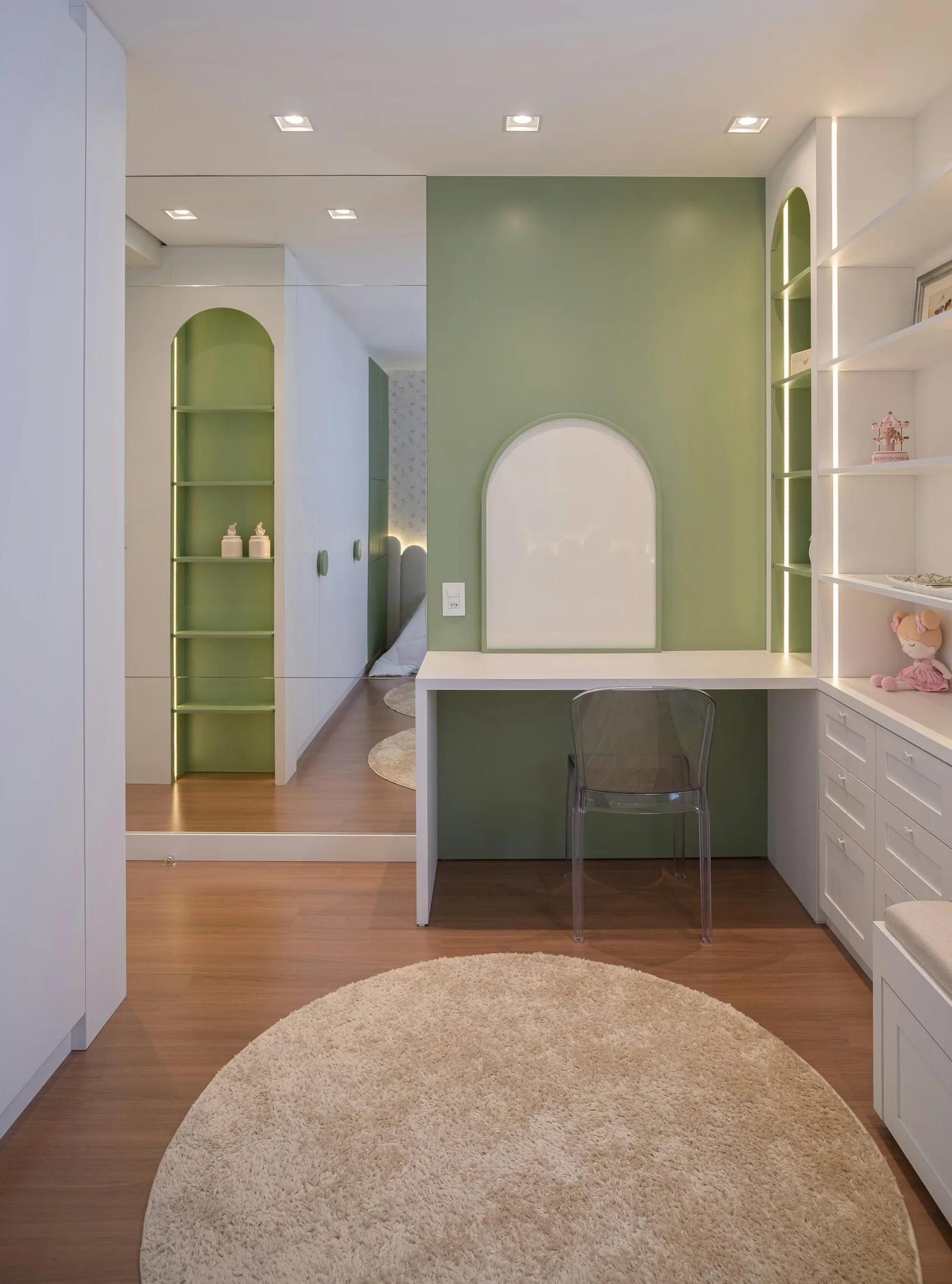
The best study room design ideas start with where the desk goes, because that decides almost everything else. Canada's occupational health and safety centre, CCOHS, gives the rule plainly: position the workstation so that windows are parallel to your line of sight, angle the monitor away from windows and lights, and cover windows with adjustable blinds. A desk set at right angles to the window, with the light coming from the side, avoids most glare before you buy anything.
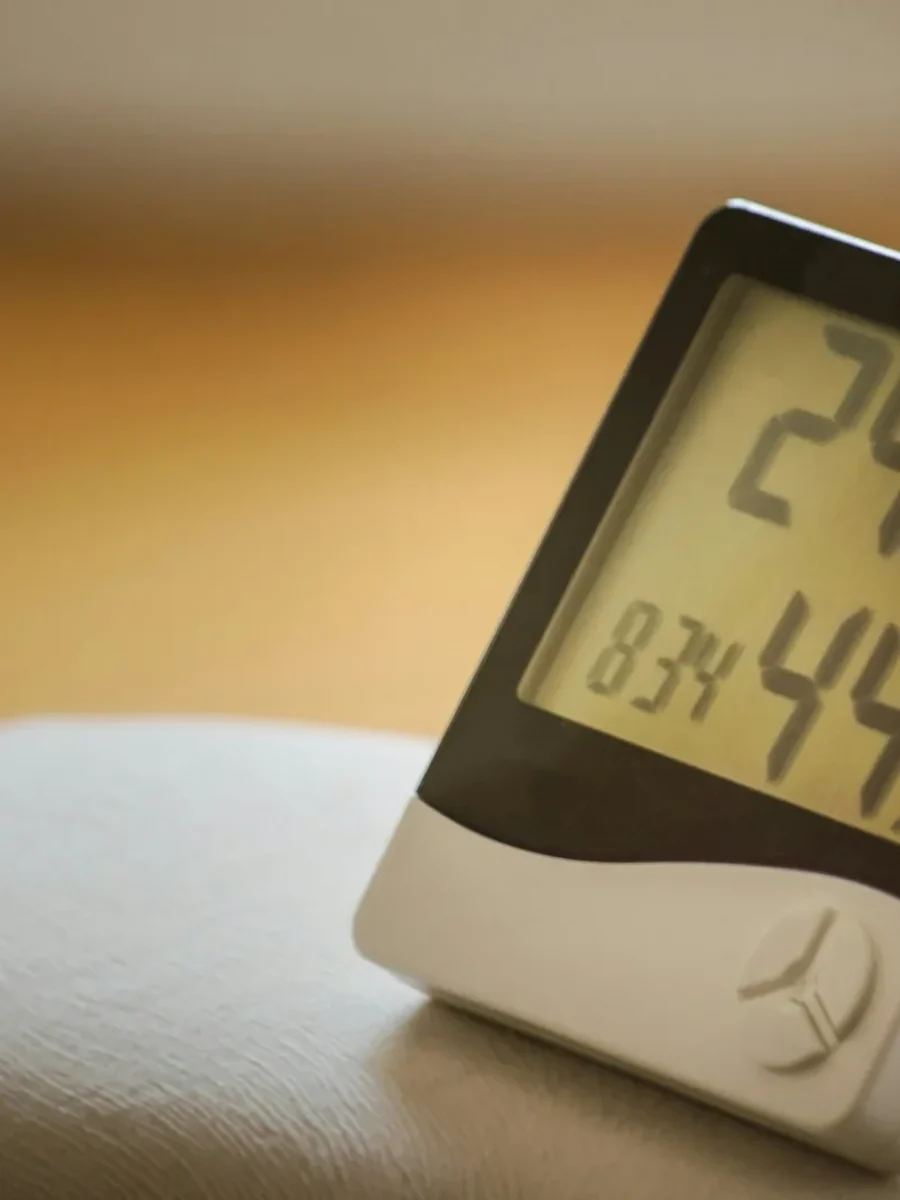
After that come the things a Goan study needs in particular. The afternoon sun through a west window is strong enough to wash out a screen and heat the desk. Tiled floors and plaster walls make voices and online classes echo. And from June to September, the India Meteorological Department records morning humidity of 87 to 91%, which is well above what books and papers tolerate.
This guide covers each in turn: desk placement, blinds, lighting, quiet, walls, books and children's corners. Our home office page covers the room from a working-from-home angle, including video calls; here the focus is on reading, writing and study.
Place the desk so the window is beside you
There are three ways to put a desk near a window, and only one of them works well. With the window behind the screen, you look into bright sky every time you look up, your eyes adapt to the brightness, and the screen looks dim; CCOHS explains that once the eye adapts to the brightest light, it becomes harder to see detail in the darker areas. With the window behind you, sunlight reflects straight off the screen and your own shadow falls on any paper on the desk. With the window to one side, light falls across the desk without reaching your eyes or the screen directly.
So turn the desk to sit at right angles to the main window, with the window on the side opposite your writing hand if you can, so your hand does not shadow the page. CCOHS also advises angling the monitor away from lights and windows, keeping it about an arm's length away, and placing the top of the screen at or slightly below eye level. A matte desk surface reflects less light than gloss.
In a Goan room, check the sun at the hours you actually study. A west-facing window that is harmless at ten in the morning may throw a bright patch straight across the desk at four in the afternoon. Sit at the desk at that hour before deciding where it goes, and look for reflections in the screen with it switched off. The CCOHS tip of laying a small mirror face up on the desk shows which overhead lights will reflect off the work surface.
Desk at right angles to the window, screen angled away from it: most glare problems are solved before you buy a blind.
Blinds that control daylight for long hours
A study needs window coverings that can be adjusted many times a day, not just opened and closed. CCOHS notes that daylight is desirable at work provided it does not cause glare or make the room too bright, and that people should have control of curtains and blinds to manage brightness and glare. The best study blinds are the ones that make small adjustments easy.
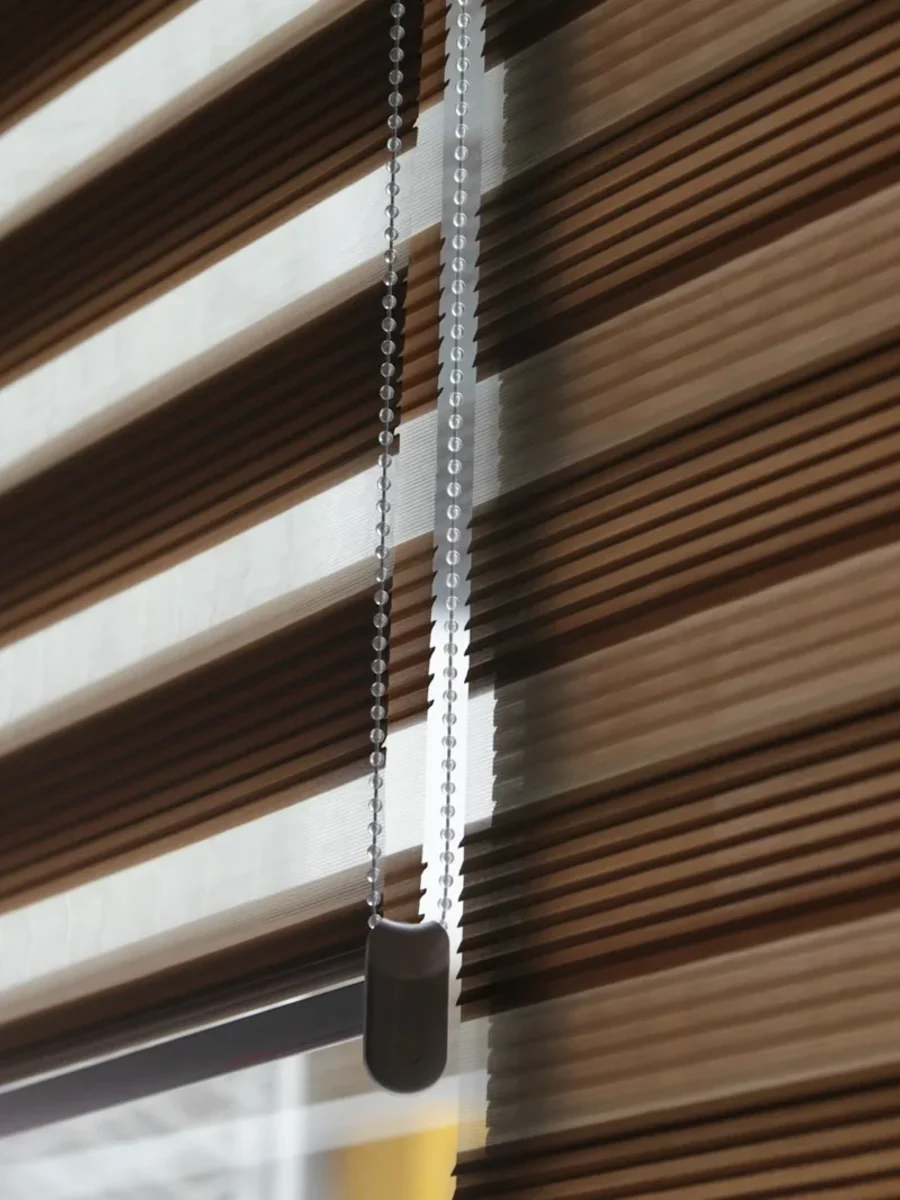
Venetian blinds, with horizontal slats in aluminium or faux wood, are the most adjustable. Tilting the slats upward bounces daylight onto the ceiling while keeping direct sun off the desk and screen, so the room stays bright without glare. Light-filtering or sunscreen roller blinds diffuse the light evenly and keep a view out, and suit windows to the side of the desk. Zebra blinds alternate sheer and solid bands and can be set to filter or block. Our home office blinds page compares them for desks.
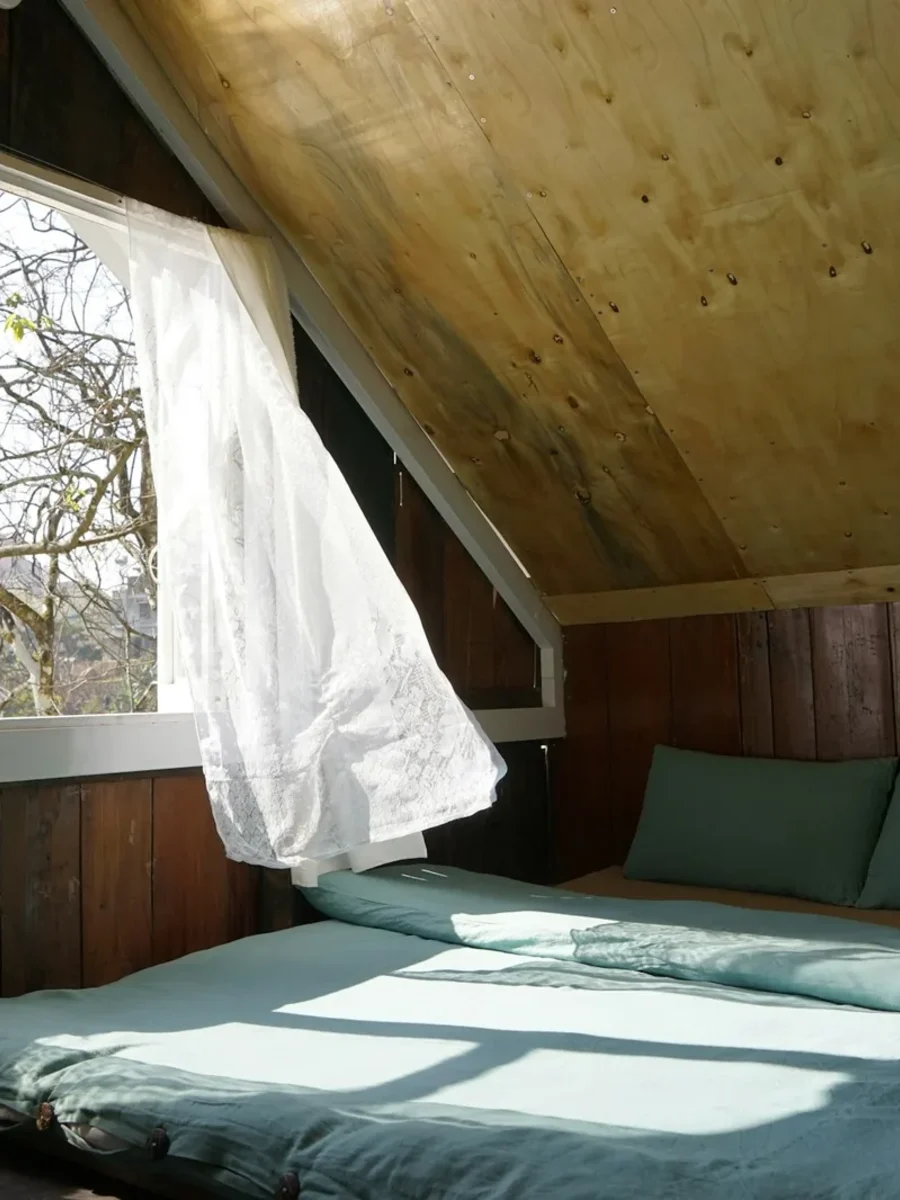
Avoid relying on a blackout blind alone in a study. A dark room lit only by a screen creates the large differences in light level that CCOHS identifies as a problem, forcing the eyes to readjust each time they move. Where a study doubles as a guest room, a double blind, with a light-filtering fabric for daytime work and a blackout fabric for sleeping, gives both. You can try fabrics and slat styles against your own window in our blinds simulator.
| Blind | Glare control | Keeps daylight | Best for |
|---|---|---|---|
| Venetian (aluminium or faux wood) | Very good, adjustable by slat angle | Yes, bounced to the ceiling | Windows in front of or beside the desk |
| Light-filtering or sunscreen roller | Good, even diffusion | Yes, softened | Windows beside the desk; views out |
| Zebra blind | Good, adjustable bands | Yes | Rooms needing both privacy and light |
| Blackout roller | Total, but too dark for work | No | Studies that double as guest rooms, paired with another blind |
Planning something like this?
We visit homes across North and South Goa, measure on site, and bring samples to see in your own light.
Task and ambient lighting for evening study
Evening study needs two kinds of light: general light for the room and a task light for the desk. CCOHS suggests using several small, low-intensity fittings rather than one large bright one, indirect lighting or a mix of direct and indirect, and adjustable local lighting. Paper needs more light than a screen does, so a desk lamp aimed at documents, and away from the monitor, lets you read print without making the screen harder to see.
The numbers are a guide rather than a rule. CCOHS describes 300 to 500 lux as the level usually recommended for offices, while noting that it is not a must, and its tables give higher levels for reading poor-quality print or pencil handwriting than for screen work. In practice, an adjustable desk lamp with a shaded bulb, positioned to the side opposite the writing hand, gives the extra light where it is needed. Avoid a bare overhead fitting directly behind the chair, which casts your shadow on the page.
Surfaces matter as much as bulbs. CCOHS recommends light-coloured walls and ceilings to reflect light, matte finishes to reduce reflected glare, and removing shiny objects from the field of view. Goa's monsoon power cuts are worth planning for: a rechargeable desk lamp or a lamp on the inverter circuit keeps homework going when the grid goes.
Softening echo with rugs, curtains and acoustic panels
Most Goan studies are hard rooms: tile or stone floors, plaster walls, a bare ceiling and often a large window. Voices ring in them, chair legs scrape, and a child on an online class can be heard throughout the house. The cure is soft surfaces, and three do most of the work.
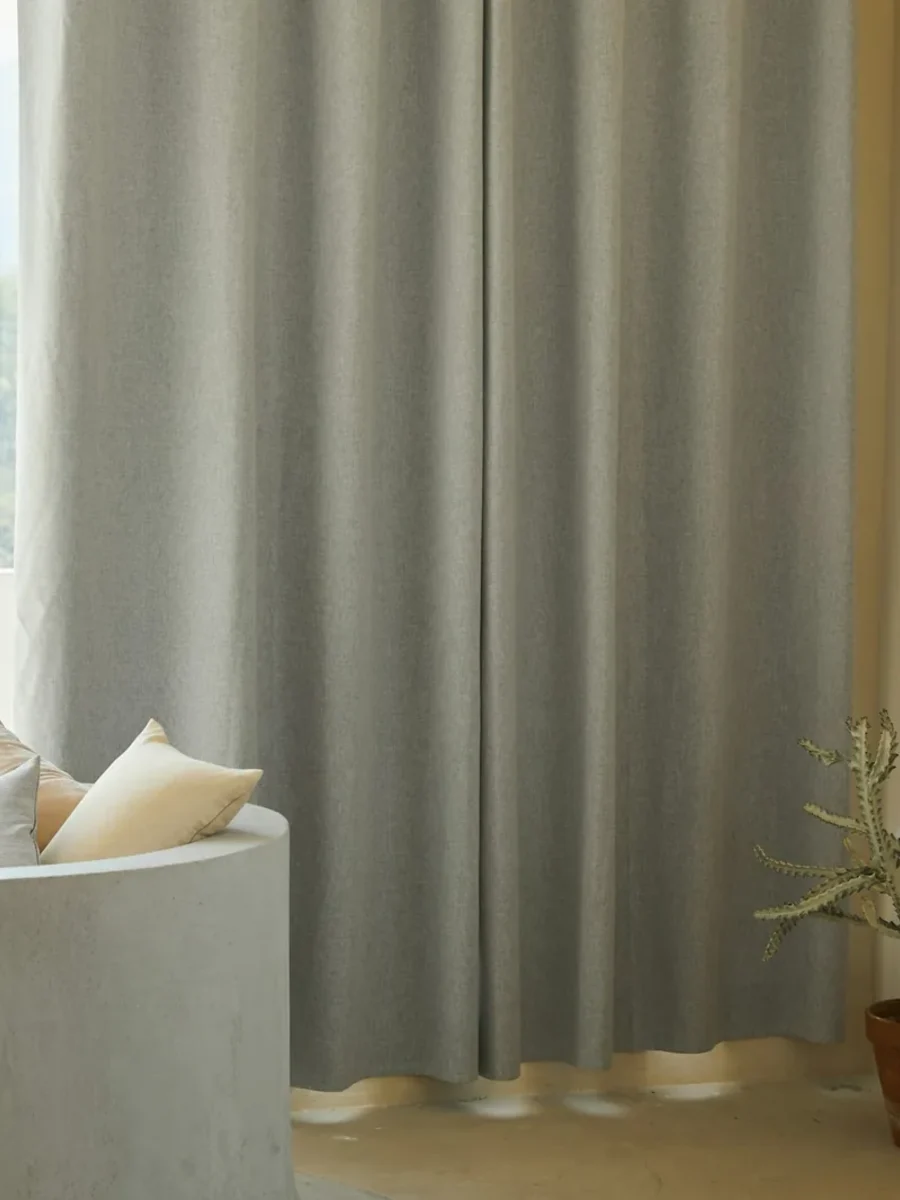
A rug under and in front of the desk is the first. It absorbs sound from the floor, stops chair noise, and makes the study corner feel like a place of its own. A flatweave or low-pile rug lets a chair roll and dries easily in the monsoon. A full, lined curtain across the window wall is the second; even when a blind does the light control, a curtain stacked at the side adds a large soft surface. The third is a few acoustic panels on the walls, especially the wall facing the desk and any large bare wall opposite it.
Be clear about what these do. They reduce echo inside the room, which makes it feel quieter and makes speech clearer, but they do little to stop sound passing through walls and doors. Our acoustic panels page explains the difference, and in Goa we choose polyester felts and synthetic fabrics that cope with humidity.
Wallpaper and pinboard walls that make the room personal
A study is a room you stare at for hours, so the walls are worth thinking about. The University of Kentucky's extension guide to wall coverings describes cool colours, blues, greens and lavenders, as restful and as making a small room seem larger, while warm reds, oranges and yellows are stimulating and make a room seem smaller. It also notes that glossy wall coverings produce more glare than matte ones. A soft, matte, cool-toned paper or a gentle texture on the wall in front of the desk suits long hours of concentration.
A pinboard wall is the most useful thing a study can have. A large panel of cork, or a fabric-wrapped board, above or beside the desk holds timetables, drawings, notes and reminders without pins in the plaster. Fabric-wrapped pinboards also absorb a little sound. In a child's room, a pinboard that runs the width of the desk gives them a wall that is theirs to change.
In Goa, the usual damp rules apply. Hang wallpaper on a dry internal wall where you can, test external walls for moisture before papering, and choose a scrubbable surface in a child's study. Our home office wallpaper page covers papers that work behind a desk.
Storing books and papers so they do not mould or attract silverfish
Books are where a Goan study is most at risk. The US National Park Service guidance for collections advises keeping relative humidity between 45 and 55% where possible and always below 65%, and notes that mould stains paper, causes the brown spotting called foxing, and feeds on starch sizing in paper. Goa's monsoon mornings, at 87 to 91% according to the India Meteorological Department, are far above that, so books on open shelves in an unconditioned room take up moisture every rainy season.
Placement helps more than people expect. The Park Service advises storing material at least four inches, about 10 cm, above the floor and not directly against outside walls, where humidity, condensation and leaks are worst. Leave a gap behind bookshelves on an outside wall, keep the bottom shelf off the floor, and do not pack books so tightly that air cannot move between them. Glass-fronted cabinets give some protection, and silica gel can help inside a closed cabinet if it is dried out regularly; in an open room it saturates quickly.
Silverfish are the other enemy. University of California pest management guidance describes them scraping the surface of paper and feeding on paper with glue or paste, book bindings and wallpaper sizing, and notes that they need a lot of moisture. Its advice is the same as for mould: dehumidifiers in closed spaces, fans to lower humidity, and moving books and papers around occasionally. Insecticides do little unless the moisture is removed first. Our guide to a dehumidifier for home explains sizing for a room like a study.
Children's study corners and blind-cord safety
Children's study corners are often in a bedroom, beside a window, with a desk that doubles as a climbing step. That combination is why window coverings in a child's room need particular care. The Royal Society for the Prevention of Accidents in the UK warns that looped blind cords and chains can kill young children within minutes, advises never fitting a blind with a looped cord or chain in a child's bedroom, and suggests positioning furniture away from windows.
Where corded blinds are already fitted, RoSPA advises securing cords on a cleat in a figure of eight, with cleats at least 1.5 m from the ground, and using tidies or tensioners on chains. It also reminds parents that corded curtain tracks carry the same risk. For a new blind in a child's room, choose a cordless or motorised blind; our roller blinds can be made without a looped chain.
Beyond safety, a child's study needs to grow. A desk and chair that adjust in height, a pinboard and a shelf at the child's reach, a wipeable wallpaper and a rug that can be washed will serve from first homework to board exams. Our kids' room page covers curtains, blinds and nets for the rest of the room. When you are ready, a home visit lets us measure the window, look at the light at study hours and bring blind samples to try at the desk.