 Drapehaus
Drapehaus
Preparing the room
Drapehaus
Preparing the room
Problem
A west-facing window in Goa is fine all morning and then, from about three in the afternoon, becomes the defining problem of the room. The sun drops low enough to come in under any overhang, straight at eye level, and stays there until it sets.
By the Drapehaus studio · 19 September 2026 · How we write
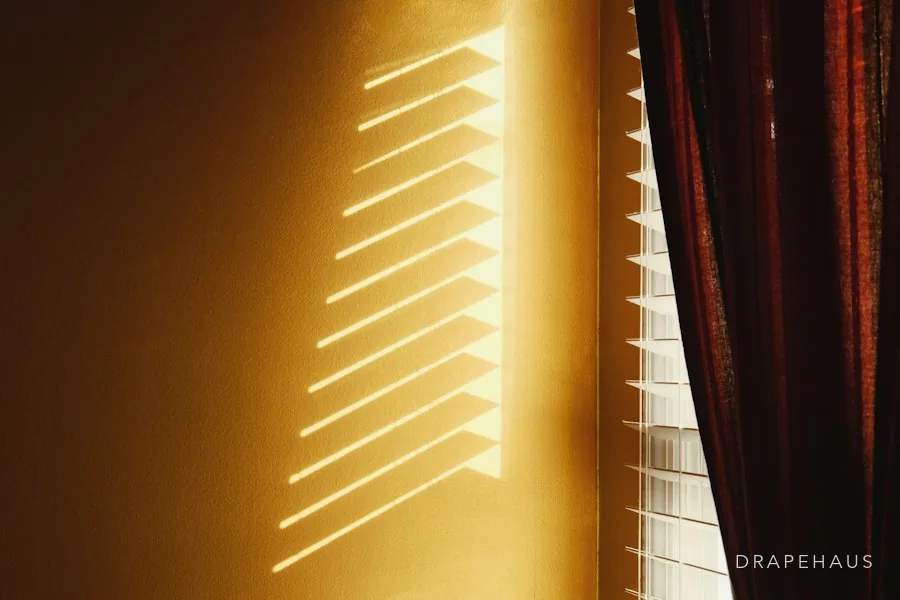
This is different from overhead summer sun, which a balcony or a deep reveal handles well. Low-angle western light arrives almost horizontally, so shading designed for a high sun does nothing at all. It is also arriving through the maximum thickness of atmosphere, which is why it is so warm as well as so bright.
Almost every complaint about an unusable living room in a Goan apartment traces back to this, and almost every attempted fix using sheers alone fails.
A sheer curtain scatters light, which reduces the harshness of the glare but does very little about the quantity of energy entering the room. Most of the heat is arriving as near-infrared, and an open-weave fabric passes almost all of it straight through.
The visible effect is that the window stops being a blinding rectangle and becomes a glowing one. It is a genuine improvement in comfort for the eyes and essentially no improvement in temperature. People then conclude that curtains do not work, when what actually happened is that the wrong tool was used.
Sheers earn their place in a west-facing room as a daytime privacy and softening layer, working alongside something that actually handles the energy. They are not the solution on their own.
A solar-control roller blind with a low openness factor is the most effective interior treatment. Openness factor is the percentage of the weave that is open — a three percent fabric blocks a great deal of energy while still allowing a usable view through it, which is the property that makes it tolerable to leave down in the afternoon.
The colour of that fabric matters in a way people find counterintuitive. A dark solar fabric gives better view-through and less glare; a light one reflects more heat but glows and scatters light into the room. For a room where people sit and look out, dark usually wins.
Where the view is not the priority, a lined curtain closed for the worst two hours is simple and inexpensive. It is worth saying plainly that this is a perfectly reasonable answer, and many households are happier with it than with a technical solution.
External shading beats anything internal, because it stops the energy before it reaches the glass. An awning, an external blind or a planted screen on a west elevation will outperform every interior option. Where the building and the society rules permit it, it is the right answer.
Rather see it in your own room?
We bring samples to the house, measure every window, and specify for the light and exposure you actually have.
More on this — tap a heading to read
A living room facing west has three separate requirements at different times, and one treatment cannot meet all of them without compromise.
During the day it needs privacy without losing light — that is the sheer. From mid-afternoon it needs heat and glare control while keeping the room usable — that is the solar roller. In the evening it needs to close, look finished and keep the room private after dark — that is the curtain.
A double track with sheers and curtains, plus a roller behind, handles all three. It sounds elaborate and is genuinely the standard specification for a west-facing living room anywhere with sun like this.
We try to see a west-facing room at the time it hurts, not at eleven in the morning when the measurements are convenient. Standing where people actually sit, you can see where the sun lands, what it reflects off, and which part of the window causes the problem. Often it is only the lower two-thirds of the glass, which changes what needs covering.
Reflections are worth noting separately. Polished floors, glass tabletops, a pool or the sea itself can bounce afternoon light into a room from below, and that reflected glare arrives at an angle that a blind lowered only part-way will not catch. Finally, separate the complaints. Glare is a visual problem; heat is an energy problem; fading is a longer-term consequence of both. The owner may describe all three as 'the sun', but each points to a different part of the specification.
Solar screen fabrics are commonly offered at openness factors of one, three, five and ten percent. One percent gives the strongest glare control and a soft, reduced view; ten percent keeps the view clear and does comparatively little against low sun. For a west window in Goa, three percent is usually the right balance, with one percent for rooms used mainly for screens.
Colour works alongside openness. Charcoal and dark bronze faces give the clearest view outwards, while white and pale grey reflect more energy but can look bright and milky. Some fabrics are dark on the room side and pale or metallised on the outer face, which recovers much of the reflective benefit without the glow. Weave construction also matters in humid, salty air. Polyester-based screen fabrics with a PVC coating resist moisture well and are easy to wipe down; fibreglass-based screens are dimensionally very stable and hang flat across wide windows without the edges curling.
A west-facing treatment is lowered and raised every single day, often by whoever happens to be nearest. That makes operation as important as fabric. A chain with a smooth, geared clutch, a side-by-side fitting that lets you lower only the panel in the sun, and a bottom bar heavy enough to hang straight are all worth specifying.
Where several windows face the same way, motorising them together removes the daily chore. A simple timer or a sun sensor lowers the blinds as the sun comes round and raises them at dusk, which also protects the room when nobody is home. On a wide glazed wall this is often what actually gets the blind used. Fit matters too. An inside-reveal blind leaves light gaps at the sides, which are very noticeable when the sun is low. Where glare is the main complaint, mounting outside the reveal with a generous overlap on each side gives a far cleaner result.
The afternoon sun is a year-round feature of a west-facing room, but it is at its worst in the long clear stretch from November to May. From June to September the sky is largely overcast, and IMD records the state capital's July mornings as among the cloudiest of the year, so glare nearly disappears for a few months.
That seasonal pattern catches people out. A flat bought or handed over during the rains looks gentle on the west side, and the problem only becomes obvious in November. If you are furnishing a new home in the monsoon, plan the west-facing treatment on the assumption that the dry season will be much harsher than what you are seeing.
In a holiday let, guests arrive expecting the sunset rather than the heat that comes with it. A clearly labelled, easily operated solar blind lets them enjoy the view with the glare reduced, then raise it at sunset. A heavy curtain that has to be closed entirely usually stays open, and the room overheats.
For a family home the balance is different. People learn the room's daily pattern and can decide for themselves when to draw what. There, a simpler two-layer arrangement of sheer and lined curtain can be perfectly adequate, with a solar roller added only in the rooms where the afternoon is genuinely used.
Diagnosis
WhySheers scatter visible glare but pass most of the near-infrared, so the energy entering the room barely changes.
FixAdd a solar-control roller with a low openness factor, or shade externally. Sheers are a privacy layer, not a heat control.
WhyLow-angle western sun striking the screen directly, which no amount of diffusion fixes.
FixA low-openness solar roller cuts reflected glare while keeping the room light. Reorienting the screen away from the window is worth considering first.
WhyOverhangs shade high summer sun effectively and low western sun not at all, because the light is arriving almost horizontally.
FixVertical shading rather than horizontal — an external blind, a side screen, or an interior treatment. Overhangs cannot solve a low-angle problem.
WhyPale solar fabric reflects heat but scatters visible light into the room, which reads as glare.
FixA darker solar fabric gives better view-through and less scatter. Counterintuitive, but noticeably better where people sit and look out.
WhyA blind fitted inside the reveal leaves side gaps, and low-angle sun passes through them directly onto the floor or the sofa.
FixMount outside the reveal with a generous overlap on each side, or add side channels where the reveal fit must be kept.
WhySun reflecting off a pool, polished tiles or open water reaches the room from below the blind's bottom edge.
FixLower the blind fully to the sill, add a low-level screen outside, or use a matte rug to break up the reflection.
WhyA wide or heavy blind with a stiff chain gets left up, so the treatment exists but does not actually get used.
FixSplit wide windows into smaller blinds, specify a geared chain, or motorise west-facing windows on a timer.
Checklist
Visit the room at 4pm before deciding anything
Establish whether the problem is glare, heat, or both
Consider external shading first if the building allows it
Choose openness factor deliberately, and consider a dark fabric
Do not expect sheers to control temperature
Plan for three functions: daytime privacy, afternoon heat, evening closure
Note reflections from floors, pools or water as well as direct sun
Default to three percent openness; one percent for screen-heavy rooms
Mount outside the reveal with side overlap where glare is severe
Consider a sun sensor or timer on a wide west-facing wall
From the Journal
All articlesFAQ
Sheers scatter visible light, which reduces glare, but they pass most of the near-infrared that actually carries the heat. The room looks less harsh and stays just as warm. You need a solar-control roller with a low openness factor, or external shading, to change the temperature.
The percentage of the weave that is open. A three percent fabric blocks a great deal of solar energy while still allowing a usable view through it, which is what makes it bearable to leave down during the afternoon. Lower numbers mean more heat control and less view.
Dark, in most living spaces. A pale solar fabric reflects more heat but scatters visible light into the room and glows. A dark fabric absorbs more but gives much better view-through and noticeably less glare, which matters more where people sit and look outside.
Overhangs work against high sun and are almost useless against low western sun, which arrives nearly horizontally and passes straight underneath. Afternoon glare needs vertical shading — an external blind or side screen — or an interior treatment.
For most living rooms, a dark-faced solar screen roller at about three percent openness, mounted outside the reveal with a generous side overlap. It cuts glare and a meaningful share of heat while keeping the view. Where the room is used for watching television, one percent openness gives stronger glare control at the cost of some view.
Yes, which is its main advantage. From the inside, with the room darker than the outdoors, a dark screen at three to five percent openness gives a clear, slightly tinted view. The effect reverses after dark: when the room is lit, people outside can see in, so an evening curtain or privacy layer is still needed.
They stop glare completely but also remove the view and the daylight, so they suit bedrooms and media rooms rather than living spaces. In a room where people want to sit and look out in the afternoon, a solar screen is the better tool, with blackout reserved for rooms where darkness is the goal.
The heavy cloud cover of June to September hides the problem. Once the rains withdraw in October, clear skies return and the low afternoon sun reaches the room every day until the next monsoon. Treat a west elevation as though it were always in the dry season.
Keep reading