 Drapehaus
Drapehaus
Preparing the room
Drapehaus
Preparing the room
Problem
The most common objection we hear to motorised blinds in Goa is power reliability, and it is a reasonable question to ask. It is also, with current equipment, largely answered — but the answer depends on which type of motor is specified, and getting that wrong does produce exactly the problem people fear.
By the Drapehaus studio · 19 September 2026 · How we write
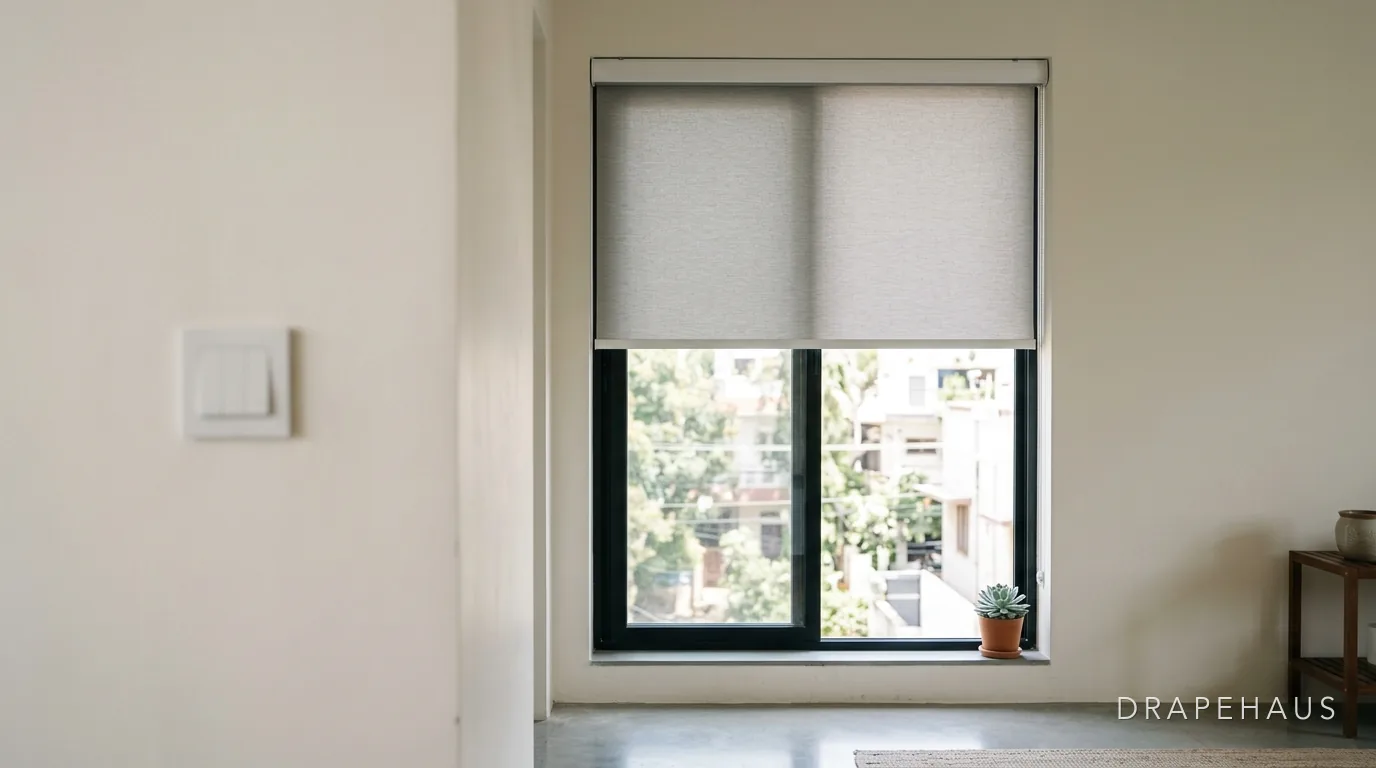
The short version: battery and solar motors are unaffected by mains interruptions, and mains-wired motors should always be specified with a manual override. A blind stuck down during a long outage on a hot afternoon is a genuine annoyance and entirely avoidable at specification.
Battery motors are self-contained and entirely independent of the mains. On a blind cycling once or twice a day, a charge typically lasts a year or more, and recharging means bringing a lead to the tube or removing a battery pack. Power cuts are irrelevant to them.
Solar-assisted motors add a small panel, usually mounted on the glass, that trickle-charges the battery. In Goan light these rarely need manual charging at all. For an unreachable window this is the specification we recommend most often.
Mains-wired motors are the right choice for heavy curtains, long runs and anything cycling many times a day, where battery capacity becomes limiting. These are the ones that need thinking about in an outage, and the answer is a manual override — a clutch or release that lets the blind be moved by hand with no power.
A battery or solar blind simply continues to work; the motor has no relationship with the mains. A wired blind with a manual override can be moved by hand. A wired blind without an override stays exactly where it was until power returns.
That last case is the scenario people are imagining when they raise the objection, and it is a specification failure rather than an inherent problem with motorisation. Manual override should be treated as mandatory on any wired installation, not as an optional extra.
Smart-home integration adds a second consideration: if control depends on a hub or on internet connectivity, then a network outage can disable the blinds even with power on. Always retain a physical wall switch that works independently of any hub.
Rather see it in your own room?
We bring samples to the house, measure every window, and specify for the light and exposure you actually have.
More on this — tap a heading to read
Power quality matters as much as continuity. Surges when supply is restored are hard on electronics, and a motor without surge protection on an unprotected circuit will eventually fail from it.
Humidity is the other factor. A sealed motor rated for humid environments will substantially outlast an unrated one in a Goan coastal property, and the price difference is small relative to the cost of replacing a motor inside a closed tube on an unreachable window.
Both arguments point the same way: on a window that is hard to reach, specify the better motor. The installation cost dominates the equipment cost, and doing it twice is what actually hurts.
We start by listing which windows would benefit most. Unreachable glazing, heavy curtains on wide openings, west-facing windows that need daily attention, and windows in homes that are often empty are the strongest candidates. Motorising every window in a house is rarely necessary; motorising the right few makes the biggest difference.
Next comes power. We check whether there is a socket, a lighting circuit or a ceiling void near each window, how the house is wired, and whether there is an inverter or generator. A house with an inverter covering its lighting circuits can often run wired motors through short outages, which changes the specification. Finally, we ask how the household wants to control things: wall switches, remotes, phones, schedules or a mix.
Many Goan homes have an inverter or generator for outages. A wired blind motor draws very little power and only while it is moving, so connecting it to an inverter-backed circuit is usually practical. It means the blinds work through most outages without a manual override being used at all.
The quality of that backup matters. Some inverters produce a less clean power supply, and a few motor controllers are sensitive to it. Where blinds will run on inverter power, it is worth confirming compatibility with the motor supplier and specifying surge protection between the inverter and the motors. Generators bring a separate risk: the moment of changeover can produce surges. A surge protector on the circuit feeding the motors protects them from this, as well as from the surges that follow mains restoration.
The simplest control, a wall switch wired directly to the motor, is also the most reliable. It needs no network, no app and no hub, and anyone in the house knows how to use it. For most homes this should be the foundation, with remotes and apps added on top.
Radio remotes are convenient but can be lost, and their batteries run down. Schedules and sun sensors are valuable on west-facing and unreachable windows, but they need to be set up for the Goan year: a schedule that lowers blinds at three in the afternoon in April may not suit the monsoon, when cloud cover makes the room dark already.
Smart-home integration is useful for owners who manage a house from a distance, but it should always be a layer on top of local control. If the internet connection drops, or the hub fails after a surge, the wall switches should carry on working exactly as before, so nobody in the house notices anything other than the app going quiet.
The monsoon is hardest on motors and electronics. Humidity, surges from storms and more frequent power interruptions all add stress. A check before the rains, confirming that surge protection is in place, that motors run smoothly and that battery units are charged, helps them through the season. After the monsoon, check each motor again. Listen for grinding or hesitation, confirm that limits have not drifted so blinds stop at the correct height, and clean dust and salt from brackets and tubes. For solar-assisted motors, clean the panel, which will have collected grime through the rains and charges less efficiently until it is wiped.
For owners who live elsewhere, motorisation has a particular value: blinds can be scheduled to close in the hottest hours and open in the evening, protecting furniture and floors when the house is empty. With remote access, an owner or manager can confirm the house is in the right state from anywhere.
For let properties, reliability and simplicity matter more than features. Guests should be able to use a wall switch without instructions, and the manager should not have to reset a system after every outage. Battery motors with solar panels and simple wall switches suit most rentals better than elaborate smart-home systems that depend on connectivity the property may not always have.
Diagnosis
WhyMains-wired motor specified without a manual override.
FixManual override on every wired installation, without exception. For retrofits, battery or solar motors avoid the issue entirely.
WhyControl routed through a smart-home hub or internet connection that has dropped.
FixAlways keep a physical wall switch wired to work independently of any hub or network.
WhySurge damage on restoration of supply, or humidity ingress in an unsealed unit.
FixSurge protection on the circuit and sealed motors rated for humid environments, particularly near the coast.
WhyA blind cycling many times a day, or a heavy fabric drawing more current than the motor was sized for.
FixAdd a solar panel, or move to a wired motor with override for high-cycle windows.
WhySome motors lose their programmed limits when power is interrupted abruptly or when a surge disturbs the controller.
FixSpecify motors that store limits in non-volatile memory, add surge protection, and reset limits during the post-monsoon check.
WhyA timer set for the bright dry season continues unchanged through the cloudy months.
FixUse a sun sensor rather than a fixed timer, or adjust schedules seasonally at the start and end of the rains.
WhyThe panel is dirty, shaded, or on an elevation that gets little direct light, especially through the monsoon.
FixClean the panel after the rains, reposition it to better light, or charge the battery manually through the wettest months.
Checklist
Battery or solar for anything unreachable or retrofitted
Manual override mandatory on every wired motor
Keep a physical wall switch independent of any smart hub
Surge protection on the circuit
Sealed motors rated for humidity near the coast
Size the motor for actual daily cycles, not just fabric weight
Motorise the windows that benefit most, not necessarily every window
Connect wired motors to inverter-backed circuits where possible
Adjust schedules or use sun sensors for the monsoon months
Check motors, limits and solar panels after each monsoon
From the Journal
All articlesFAQ
Yes, if specified correctly. Battery and solar-charged motors have no relationship with the mains at all, so outages are irrelevant to them. Mains-wired motors should always include a manual override so the blind can be moved by hand when there is no power.
A battery or solar blind carries on working normally. A wired blind with a manual override can be moved by hand. A wired blind without an override stays where it is until power returns, which is a specification failure rather than an unavoidable limitation.
On a blind cycling once or twice a day, typically a year or more. A small solar panel on the glass trickle-charges it and in Goan light usually removes the need to recharge manually at all.
They should not have to. Keep a physical wall switch wired to work independently, so a dropped network or a failed hub cannot disable the blinds. Hub control is a convenience layer, not the primary control path.
Usually yes. A blind motor draws little power and only while moving, so it adds very little load to an inverter. Confirm compatibility with the motor supplier, particularly with inverters that produce a less clean supply, and add surge protection. On an inverter-backed circuit, wired blinds keep working through most outages.
Yes, provided the motors are sealed for humid conditions and protected against surges. The monsoon brings more outages and storms, so battery or solar motors, or wired motors on protected circuits with manual overrides, are the sensible specification. A check before and after the rains keeps them reliable.
Generally, yes. Goan light charges small solar panels well for most of the year. Through the monsoon, heavy cloud reduces charging, but a blind cycling once or twice a day usually has enough battery capacity to cover the gap. Keep the panel clean and positioned where it gets direct light.
First check the simple things: power, the wall switch, the remote battery and whether the motor has overheated after repeated use, in which case it will recover after a rest. If the blind is wired, use the manual override. If the problem continues, have the motor and controller checked rather than forcing the blind by hand.
No. On most wired motors it is a small release, a crank or a clutch that lets the blind be moved by hand while the power is off, and it takes a moment to learn. It is worth showing everyone in the household, and any caretaker, where it is and how it works, because it is only useful if people remember it exists during an outage.
Keep reading