 Drape Haus
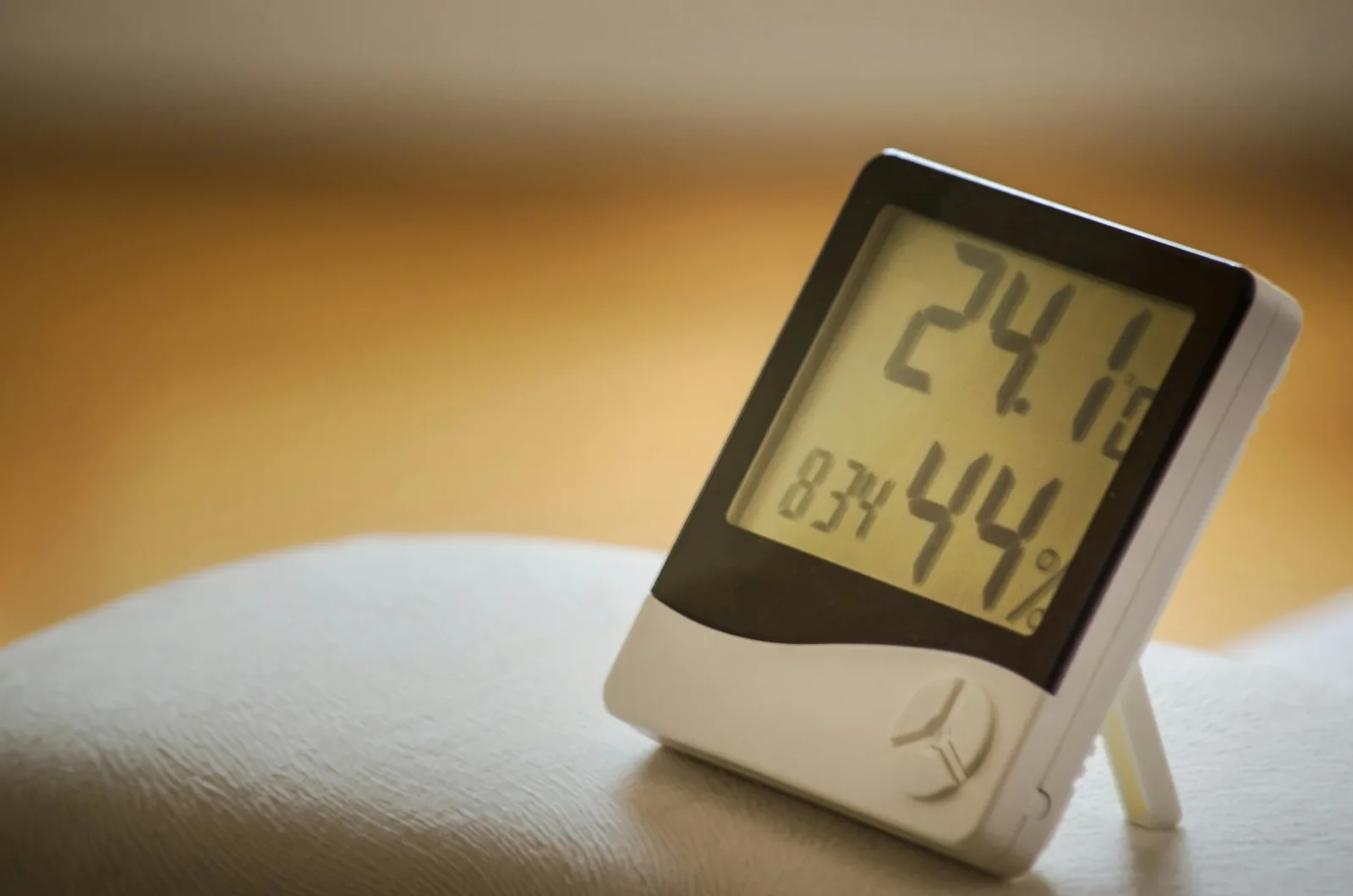
A dehumidifier for home use is a machine that pulls water out of the air of a closed room and collects it in a tank or sends it down a drain. In Goa it earns its place in specific rooms: a bedroom full of wardrobes, a room of books or old furniture, a media room with equipment, and above all a house that stands closed through the monsoon. It does very little for a room with the windows open, and it is often unnecessary in a bedroom that is air-conditioned every night.
The need is real. IMD's normals for Panjim put morning relative humidity at 88–91% from June to September, while the US Environmental Protection Agency advises keeping indoor humidity below 60%. The question is not whether Goan air is damp, but which rooms need protecting and what kind of machine will do it well in a warm climate.
This guide covers that choice: compressor or desiccant, how to size a unit, how to drain it in a closed house, and what to expect from noise, power use and power cuts. For the free and low-cost steps to take first, see our companion guide on how to reduce humidity in a room.
When a dehumidifier is worth buying, and when it isn't
A dehumidifier is worth buying where three things are true: the room can be closed, it holds things that damp will damage, and nothing else is already keeping it dry. Rooms with wardrobes of clothes and leather goods, a library, a room of antique furniture, a store for monsoon-season curtains and cushions, and a closed holiday house all fit. So does a ground-floor room that smells musty every August however often it is aired.
It is usually not worth buying for an open, ventilated living room, because it would be trying to dry the outdoors. It may not be needed in a bedroom where the air conditioner runs every night, since an air conditioner removes moisture as it cools. In the dry season, from about November to May, a Goan house that is aired at the right times of day often stays comfortably below the level where mould is likely without any machine.
There is also a cost of ownership beyond the purchase. A dehumidifier needs emptying or a drain, a clean filter, floor space with air around it, and electricity for many hours a day through the wet months. If the room's damp comes from a leak, a dehumidifier will run constantly and lose. Fix the water first; our guide to fungus on walls explains how to tell seepage from condensation.
- Worth it: closed wardrobe rooms, libraries, rooms of antiques or leather, closed houses, musty ground-floor rooms
- Probably not needed: open, ventilated sitting rooms; bedrooms air-conditioned nightly
- Fix first: leaks, seepage, blocked gutters and plumbing faults
Compressor or desiccant: which works better in Goa
Most home dehumidifiers are compressor, or refrigerant, units. They work like a small air conditioner turned inside out: a fan draws room air over a cold coil, water condenses on the coil and drips into the tank, and the air passes over the warm side of the system before it returns to the room. The US Department of Energy's Building America Solution Center notes that the exhaust air from a portable unit is slightly warmer than the room air.
Compressor units lose performance in cool rooms. ENERGY STAR warns that frost can form on the coils if the air drops below about 65°F (around 18°C), and Natural Resources Canada advises buying a model designed for low temperatures if the room is below 18°C. Goa rarely gets there: IMD's lowest monthly mean minimum at Panjim is 20.2°C, in January, and the monsoon months, when a dehumidifier does most of its work, are far warmer. In practical terms, a compressor unit suits Goan rooms well.
Desiccant units work differently. They pass air through a material that attracts water vapour, such as a silica gel wheel, and then use heat to drive the water back out of that material so it can keep working. Because they remove vapour without condensing it on a cold coil, they keep working in cold spaces where compressor units struggle, as a review of rotary desiccant systems in Renewable and Sustainable Energy Reviews explains. In a home unit, the heat comes from an electric element inside the machine, and that heat ends up in the room. In a warm Goan bedroom in August, extra warmth is usually the last thing you want.
| Compressor (refrigerant) | Desiccant | |
|---|---|---|
| How it removes water | Condenses water on a cold coil | Absorbs vapour into a material, then dries it with heat |
| Temperature it suits | Warm rooms; struggles below about 18°C | Works in cold spaces too |
| Heat added to the room | Slightly warmer outlet air | Adds the heat used to dry the desiccant |
| Fit for a Goan home | Usually the right choice | Rarely needed; consider for cool, enclosed stores |
Planning something like this?
We visit homes across North and South Goa, measure on site, and bring samples to see in your own light.
Sizing a dehumidifier for home use
Capacity is quoted as the amount of water a unit can remove in 24 hours. In India it is usually given in litres per day; ENERGY STAR, whose guidance is the most widely used reference, publishes its sizing advice in US pints per day. One pint is about 0.47 litres. The figure is a rating made under test conditions, so treat it as a way of comparing machines rather than a promise for your room.
ENERGY STAR sizes by how damp the space is and how large it is. A space that feels damp with an intermittent musty smell, at 50–75% relative humidity, is in its lowest band; one that consistently smells damp with damp spots on walls and floors, at 75–90%, is in the middle; one with sweating walls or floors, seepage, or laundry drying indoors, at 90–100%, is the wettest. A closed Goan room in the monsoon is often in the middle or top band. ENERGY STAR's own advice is that it is better to oversize than undersize.
Three adjustments matter here. Size for the room you will close, not the floor area of the house. A room that is opened often, or has gaps under doors and around old windows, needs more capacity than its size suggests, because the unit is drying the air that leaks in. And a unit that runs near its limit all day will struggle to hold the setting on the wettest days, so moving up a size buys headroom.
| Condition without dehumidification | Room under about 186 m² (2,000 sq ft) | Larger space |
|---|---|---|
| Damp, intermittent musty smell (50–75% RH) | 20–30 pints (about 9.5–14 L) | 30+ pints (14 L+) |
| Very damp, damp spots on walls and floors (75–90% RH) | 25–40 pints (about 12–19 L) | 40+ pints (19 L+) |
| Wet: sweating walls or floors, seepage, indoor laundry (90–100% RH) | 30–50 pints (about 14–24 L) | 50+ pints (24 L+) |
Drain hoses for a house closed through the monsoon
The tank is where dehumidifiers fail in Goa. In monsoon air, a portable unit can fill its tank in a day or less, and a full tank switches the machine off. In an occupied house that means a daily chore. In a house closed from June to September, it means the unit runs for the first day of the monsoon and then sits idle for the rest of it.
The answer is continuous drainage. Many units have a fitting for a hose, which Natural Resources Canada and ENERGY STAR both describe as a way to run the water straight to a floor drain. For gravity drainage, the unit has to stand higher than the outlet, with the hose falling all the way and no loops or kinks. A bathroom or utility floor trap is the usual destination; a hose through a wall to the outside is another, if the rain cannot run back in. Some units have a small built-in pump to lift water to a sink or higher drain.
Test the set-up before leaving the house: run the unit for a day with the hose connected and check the floor trap is taking the water and nothing is leaking. Then make a check of the unit part of every caretaker visit, along with the filter and the room's hygrometer reading. Our guides to the closed-house season and managing a Goa home from abroad cover the rest of that routine.
In a closed house, a dehumidifier without a drain hose is a dehumidifier that stops on day two.
Getting the most from a unit: wardrobes, libraries and media rooms
Close the doors and windows. Both ENERGY STAR and Natural Resources Canada make this the first rule, because outdoor air flowing in cuts a unit's effectiveness. Stand the unit clear of walls and furniture so it can draw air freely, and away from dusty corners that will clog its coil and filter. Set the built-in humidistat, which every ENERGY STAR model has, to around 50–55%, and let it cycle on and off by itself.
For wardrobes, put the unit in the room and leave the wardrobe doors slightly open so the dry air reaches the clothes; a unit cannot dry the inside of a shut cupboard from across the room. For a library, keep books a hand's width from external walls, which stay damp longest. For a media room, a unit helps protect equipment and the acoustic panels and fabric that usually line such rooms. In each case, an inexpensive digital hygrometer on a shelf tells you whether the setting is being held.
Fabric is often what a dehumidifier is really protecting. Curtains left hanging in a closed, damp room, sofa cushions, rugs and stored linens all mildew in Goan monsoon air. If the house is being closed, the safest plan is a dry room with a running dehumidifier, curtains taken down, cleaned and stored, and upholstery covered in breathable cotton rather than plastic. Our monsoon take-down and storage service handles the curtains and soft furnishings.
Noise, power use and power cuts
A compressor dehumidifier sounds like a fan with a refrigerator's hum behind it, and it switches on and off as the humidistat cycles. That is unremarkable in a wardrobe room or an empty house and can be irritating in a bedroom at night. If a unit must run where people sleep, look for a quiet or night mode, and stand it on a firm, level floor so it does not vibrate.
Efficiency is quoted as the integrated energy factor, in litres of water removed per kilowatt-hour; a higher figure means more water for the same electricity. ENERGY STAR says its certified units use about 20% less energy than comparable conventional models. A unit drawing a few hundred watts for many hours a day through the monsoon adds a noticeable amount to the bill; our article on humidity in Goa works through what that costs on the state's tariff.
Power cuts are part of the Goan monsoon, and they matter more for a dehumidifier than for most appliances because it is often left unattended. Check how a unit behaves when the power returns. Some restart automatically with their previous settings; others come back on standby, or reset to a default humidity, and will sit idle until someone presses a button. For a closed house, automatic restart with memory is the feature to insist on.
When ventilation and AC dry mode are enough
For many rooms, a dehumidifier is the last step rather than the first. In the dry season, opening the house when outside air is driest and closing it in the damp early morning keeps most rooms in reasonable shape. In occupied bedrooms through the monsoon, an air conditioner removes moisture as it cools, and the dry mode on many split units runs it gently to favour drying over cooling.
The limits are worth knowing. The Building America Solution Center explains that when an air conditioner meets its temperature setting quickly and cycles off, it removes proportionally less moisture, and indoor humidity tends to rise. And air conditioning only helps while it is on. Once it is switched off in the morning, the room drifts back towards the humidity of the air leaking in. For rooms that must stay dry when nobody is in them, a dehumidifier with its own humidistat is the tool that does that job.