 Drape Haus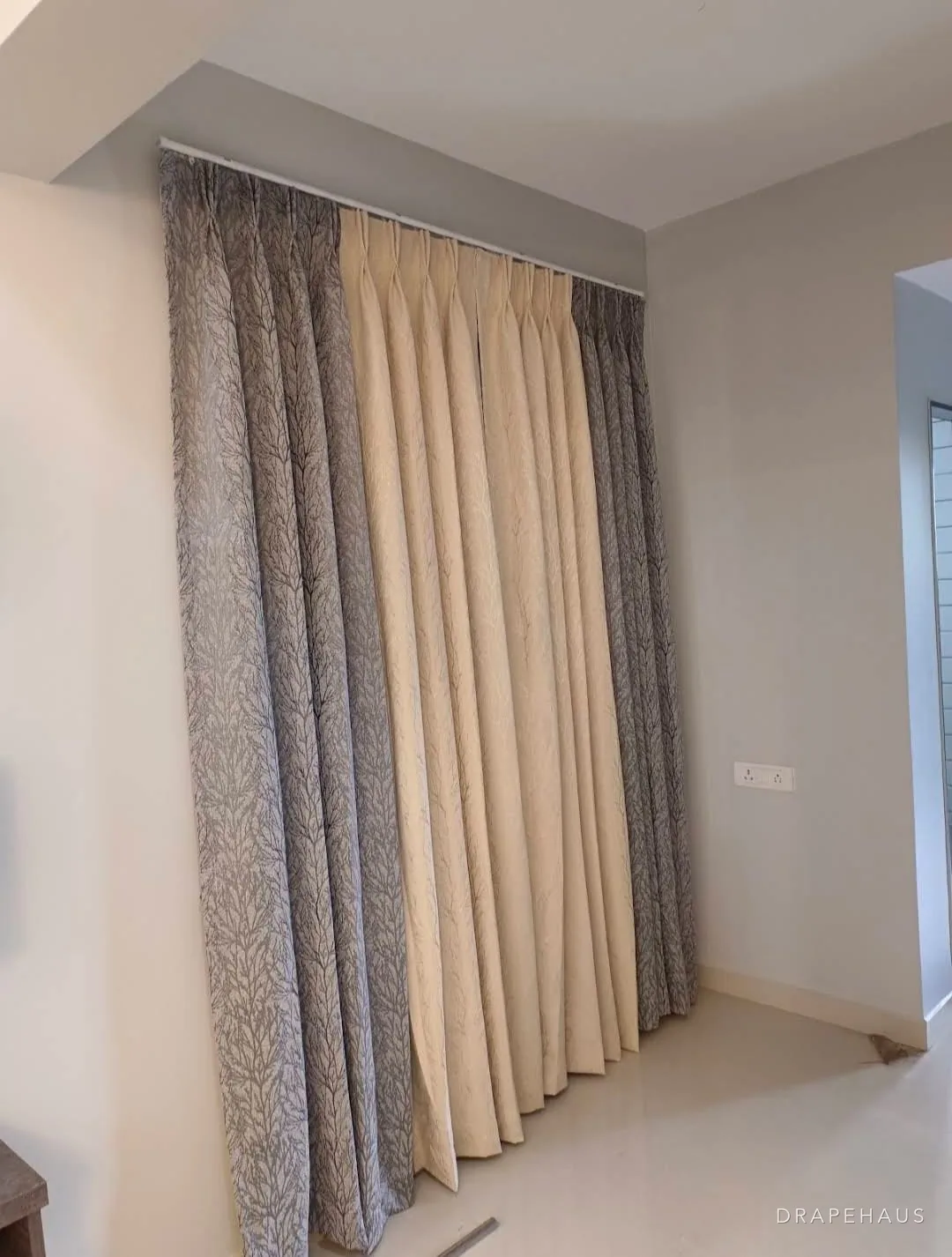
To reduce humidity in a room, do three things before spending money: find out how humid it really is, stop adding moisture to it, and move air through and around it at the right times. A hygrometer, a few changes of habit and the ceiling and exhaust fans you already have will make a measurable difference in most rooms. Air conditioning and, for some rooms, a dehumidifier come after that.
The aim is a number, not a feeling. The US Environmental Protection Agency advises keeping indoor relative humidity below 60%, ideally between 30% and 50%. In Goa's monsoon, when IMD's normals for Panjim put evening humidity at 82–87% outdoors, the lower end of that range is not realistic without machines. What the steps below can do is keep living rooms from tipping into the damp zone where mould grows on walls, furniture and fabric, and make the most of every dry spell.
Our article on humidity in Goa explains the season-by-season picture. This one is the practical companion: what to do in a single room, starting tonight.
Measure first: what a hygrometer tells you
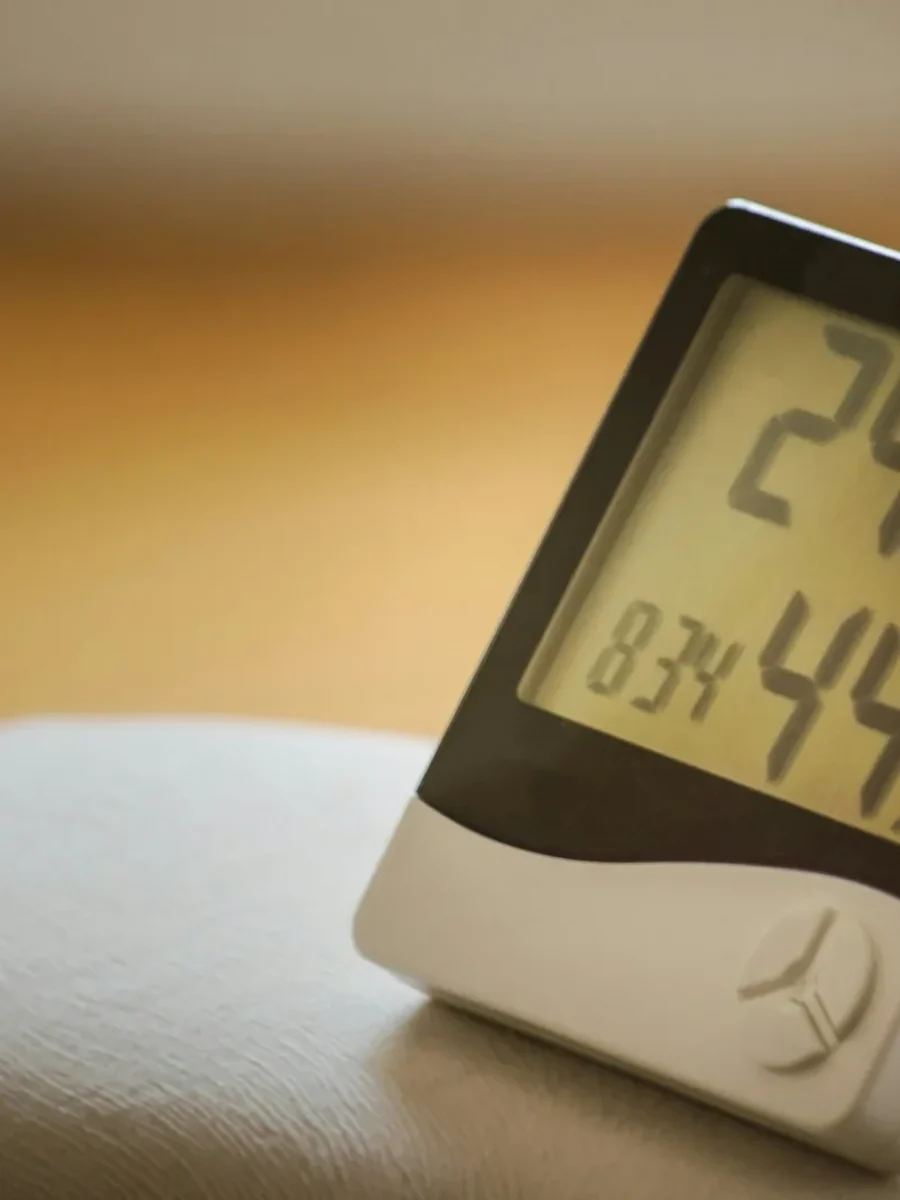
A digital hygrometer is an inexpensive instrument that shows temperature and relative humidity, and it is the most useful thing to buy before anything else. Without one, a room is either damp or not. With one, you can see that the bedroom sits at 72% in the morning and 64% by evening, that the wardrobe room never drops below 75%, or that opening the windows at noon lowered the reading by ten points. That is the information that decides whether a change worked.
Place it at about chest height, away from windows, kettles, bathrooms and direct sun, and give it a few minutes to settle when moved. Read it at the same times each day for a week: early morning, mid-afternoon and bedtime. If you have two, keep one in the room that matters most and move the other around the house, including inside a wardrobe, which will often read higher than the room.
Low-cost hygrometers are not lab instruments, so use them for comparison rather than absolute truth. A well-known check is to seal the hygrometer in a bag with a small dish of damp table salt for several hours. Salt solution holds the air around it at about 75%, the level the Canadian Conservation Institute gives for salt deliquescence, so a hygrometer that reads far from that is off by roughly the difference.
| Relative humidity | What it means | Source |
|---|---|---|
| 30–50% | The EPA's ideal indoor range | US EPA |
| Below 60% | The EPA's upper limit for indoor air | US EPA |
| 70% held steadily | Visible mould in roughly 100 days | Canadian Conservation Institute |
| 80% held steadily | Visible mould in roughly 10 days | Canadian Conservation Institute |
| 90–100% | Visible mould in roughly 2 days | Canadian Conservation Institute |
Find where the water in the room comes from
Every room has a moisture balance: water coming in from outside air and leaks, and water added by the people and activities inside it. Most advice concentrates on the first, but the second is the part you control completely. NDSU Extension puts the water a person breathes out at about three US pints a day, about 1.4 litres, and a ten-minute shower at about a pint, roughly half a litre. A family of four in a closed house therefore breathes several litres of water into its air every day, before a single shower or meal.
Then come the household sources. Clothes dried indoors release almost all the water that was in them after the spin. Pots boiling without lids, a pressure cooker venting, rice steaming and a kettle left to boil all add steam to the kitchen and anything connected to it. Floors mopped with plenty of water evaporate it into the room. An open aquarium and a large group of potted plants each add a steady trickle. In a dry month the outside air absorbs this easily; in the monsoon, it has nowhere to go.
None of this means living differently, only putting the moisture where it can leave. The EPA's advice is to vent moisture-producing appliances such as clothes dryers and stoves to the outside, and to use exhaust fans in kitchens and bathrooms. The steps below apply the same principle to the rest of the house.
- Laundry: dry it outdoors, on a covered balcony, or in a utility room with the window open and the door shut
- Cooking: lids on pots, the kitchen exhaust on, the kitchen door closed while cooking
- Bathing: exhaust fan on, door shut until the mirror clears
- Mopping: wring the mop well and run the fan until the floor is dry
- Aquariums: keep them covered; move large plant groups to a verandah in the monsoon
Planning something like this?
We visit homes across North and South Goa, measure on site, and bring samples to see in your own light.
Open and close windows by the reading, not the habit
Outside air dries a room only if it holds less water than the room's air. In Goa that is often true in the afternoons and often false in the early morning and during rain. IMD's normals show Panjim's 17:30 humidity below its 08:30 humidity in every month of the year. The gap is largest from December to February and smallest in the wettest months. October, a month many people treat as the end of the monsoon, still averages 86% in the morning and 76% in the evening.
Comparing two humidity readings is not quite enough, because relative humidity depends on temperature. Warm outside air brought into a cooler room will rise in relative humidity as it cools. A simple practical test works better: open the windows for an hour at the time you think is driest, then close them and read the room's hygrometer. If the reading has fallen, that was a good window of time. If it has risen, keep the windows shut at that hour and try another.
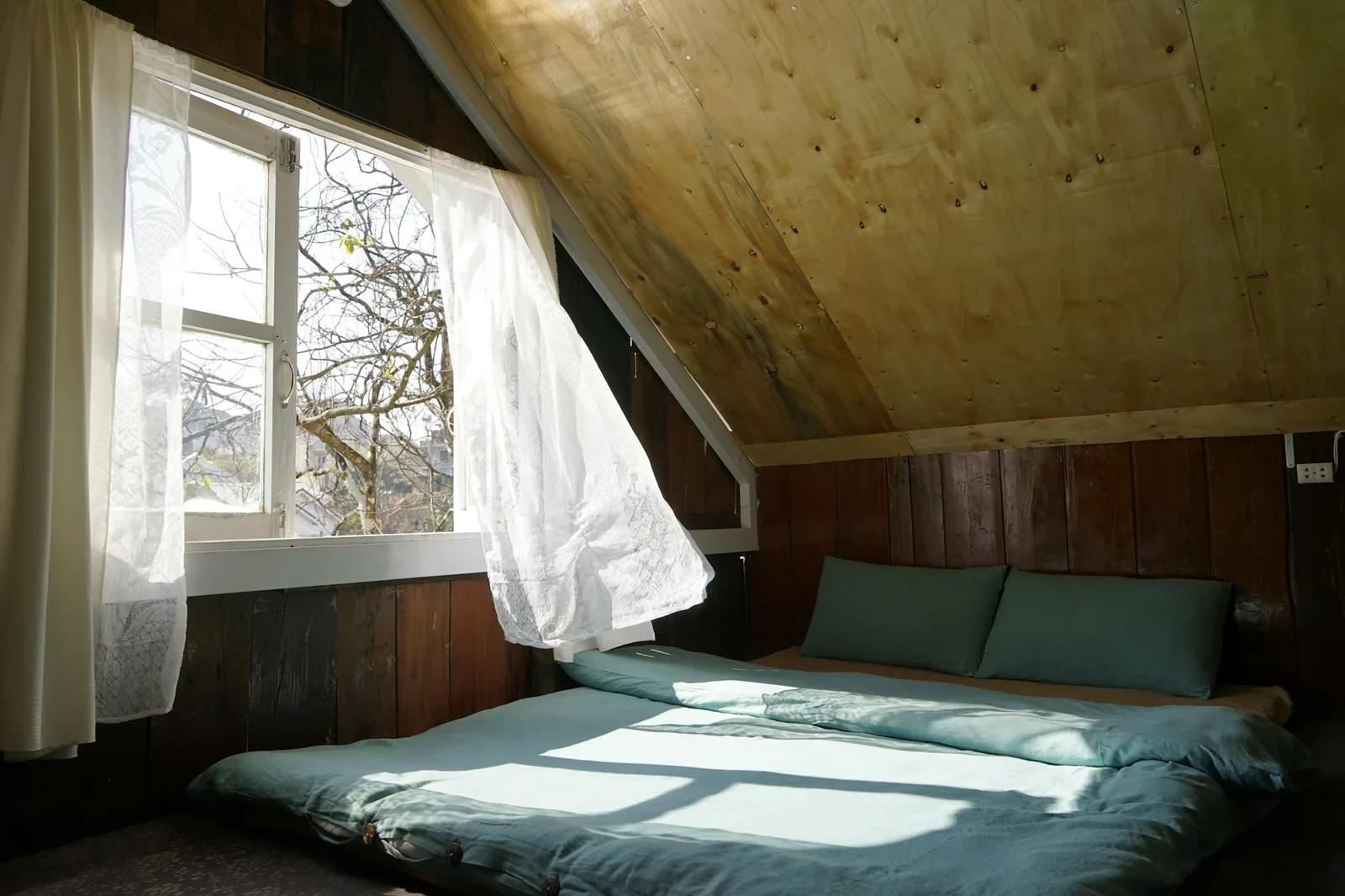
In the monsoon, close the windows of the rooms you are trying to keep dry during rain and on damp, still evenings, and open them on breezy dry spells for air movement. Sliding window nets make it practical to keep windows open in the dry hours without letting mosquitoes in, which is often the real reason windows stay shut.
Exhaust fans and ceiling fans: use them every time
Bathroom and kitchen exhaust fans are the most underused dehumidifiers in most houses. The EPA's guidance is to use them to remove moisture to the outside, not into a roof space or another room. Run the bathroom fan during and after every shower, with the door shut, until the mirror clears. Run the kitchen exhaust whenever something is boiling or frying, not only when there is smoke. A fan that has stopped working, or that vents into a false ceiling, needs fixing before the next monsoon.
Ceiling fans do not remove water from the air, but they help in two ways. They keep air moving across walls, furniture and fabric, breaking up the still, damp layer where mould starts. And they help surfaces give up moisture faster after a wet day. In a closed room, a ceiling fan running on low for a few hours on a dry afternoon does more for the wardrobe and the curtains than most people expect.
Inside the house, open the doors between rooms on dry days so air can circulate. The EPA specifically recommends opening closet doors, which are often colder and damper than the rooms around them. A wardrobe left shut all monsoon is a still, dark, humid box, exactly the conditions our guide to fungus on clothes and wardrobes describes.
An exhaust fan only helps if it is switched on and vents outside. Run it for every shower and every boiling pot.
AC dry mode, and why rooms bounce back
An air conditioner removes water as it cools: warm, humid air passes over a cold coil, water condenses and drains away. Many split units have a dry mode that runs at reduced output to favour moisture removal over cooling, which is often more comfortable than full cooling on a cool, wet monsoon day. Exact behaviour varies by manufacturer.
Two things limit it. The US Department of Energy's Building America Solution Center notes that an air conditioner that reaches its temperature quickly and cycles off removes proportionally less moisture, so indoor humidity tends to rise. A gentle setting left on for a few hours generally takes out more water than a blast of cold that stops after twenty minutes. And the effect lasts only as long as the unit runs. Switch it off and the room drifts back towards the humidity of the air leaking in from outside and the moisture its occupants add.
That rebound is why a room can feel dry at night and clammy by mid-morning. It is not a fault, just physics. For rooms that need to stay dry when nobody is using them, such as a closed wardrobe room or a house shut for the season, a dehumidifier with its own humidistat is the better tool; our dehumidifier guide explains how to choose one.
Free the air around wardrobes, sofas and beds
Mould in a house is usually found where air does not move: behind the wardrobe, under the bed, at the back of the sofa. The EPA notes that condensation commonly forms on cold walls in corners behind furniture. External walls are cooler and damper than the room around them in the monsoon, and furniture pushed tight against them traps a pocket of damp air with nowhere to go.
The fix is a few centimetres. Pull wardrobes, beds, sofas, bookcases and chests a hand's width off external walls, and lift anything that sits flat on the floor onto legs or small blocks so air reaches underneath. Leave a gap at the top of tall wardrobes too. It costs nothing, and it removes the most common hiding place for mould in a Goan house.
Fabric in the room needs the same thinking. Draw curtains back on dry days so air reaches both the fabric and the glass behind it, and wipe condensation from window frames rather than letting curtains soak it up. Turn sofa cushions and stand them on end to air. For rooms that stay damp despite all this, choose fabrics that tolerate it: solution-dyed acrylics and good polyester blends resist mildew far better than most natural fibres. Our coastal fabric advisor narrows the options, and the guide to monsoon damp and mildew covers the rest of the house.
How to reduce humidity in a room, in order of effect
Start at the top. Each step costs less and takes less effort than the one after it, and each makes the next work better.
Put a hygrometer in the room
Read it morning, afternoon and bedtime for a week. Note the highest and lowest readings and when they happen. This is your baseline.
Check for water getting in
Look for damp patches, tide marks, a leaking window frame, a dripping pipe or a blocked gutter outside. A leak will beat every other step; fix it first.
Stop adding moisture
Move laundry drying out of living rooms and bedrooms, put lids on pots, wring the mop well, cover the aquarium and move big plant groups outside for the monsoon.
Use the exhaust fans every time
Run the bathroom fan during and after showers with the door closed, and the kitchen exhaust whenever anything boils. Make sure both vent outside.
Time the windows
Open up in the driest hours, usually afternoon to early evening, and close the room you are drying during rain and on damp, still nights. Check the hygrometer to confirm.
Move the air
Run the ceiling fan on low on dry afternoons, open internal doors and wardrobe doors, and keep curtains drawn back so fabric and glass can dry.
Pull furniture off external walls
Leave a hand's width behind wardrobes, beds and sofas on external walls, and lift anything sitting flat on the floor so air reaches underneath.
Use AC wisely, then decide on a machine
Use dry mode or moderate cooling for longer rather than hard cooling in bursts. If the hygrometer still sits above about 60–65% in a room that matters, that room needs a dehumidifier.