 Drape Haus
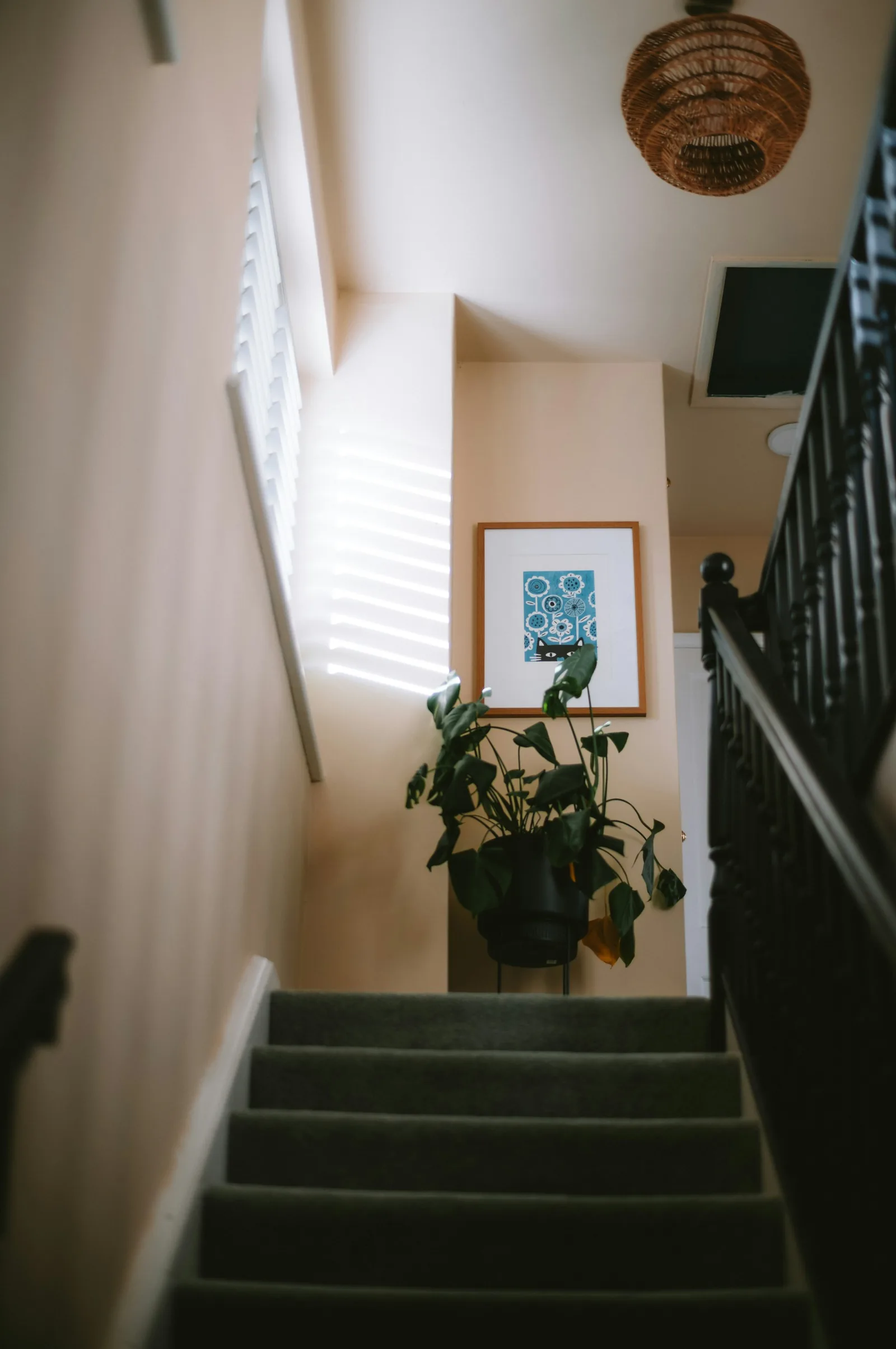
Staircase wall design starts with two facts about the wall. It is usually the tallest uninterrupted wall in the house, seen from below, from the landing and from the floor above. And it takes more wear than any wall of its size: hands trail along it at hip height, bags and furniture are carried past it, and children run their fingers up it on the way to bed.
In a Goan duplex or villa, add two more. The stair often sits against an external wall, so it can take driving rain in the monsoon. And many stairs have a tall window that nobody can reach. A good stair wall answers all four: it looks right at full height, survives touch, stays dry and lets the window be used.
This guide covers wallpaper on tall stair walls and the safe access it needs, panelling and wainscoting that take the knocks, moulding grids for classic and heritage stairs, dressing stair windows, lighting the stair safely, and checking an external stair wall for damp before you finish it.
Read the stair wall before choosing a finish
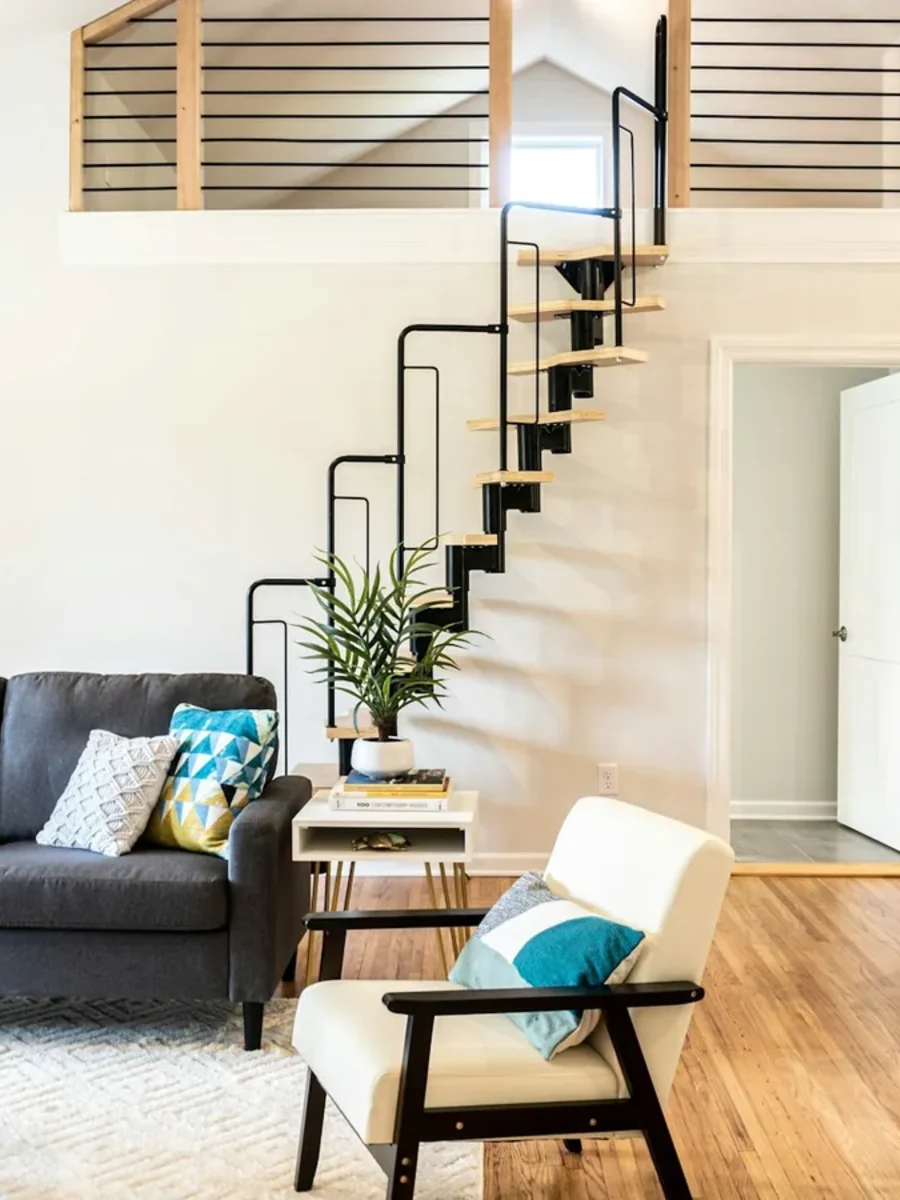
Stairs come in a few common shapes, and each gives the wall a different job. A straight flight against one wall gives a long raking wall with the handrail on the other side, so the wall itself gets brushed by shoulders and bags. A dog-leg stair with a half landing gives two shorter flights and a landing wall that is seen head-on from below, the natural place for one strong feature. An open stair in a double-height hall gives a wall that is part of the living room, seen from the sofa as much as from the stair.
Then look at where hands go. On most stairs there is a band roughly at hip height, running parallel to the stair, where fingers, bags and laundry baskets touch the wall. Corners at the landings take knocks when furniture is carried up. Near the bottom step, the wall gets kicked and scuffed by shoes. Those zones want a tough, wipeable finish; the wall above them can be anything you like.
Finally, check the light and the weather. A stair window facing west throws low afternoon sun across the flight, which fades finishes and puts glare in the eyes of anyone coming down. A stair against a south-west wall takes the monsoon full on. Our guide to duplex house interior design looks at the stair hall as the centre of a two-floor home, and double-height living room design covers the open version.
Wallpaper on a tall stair wall, and the access it needs
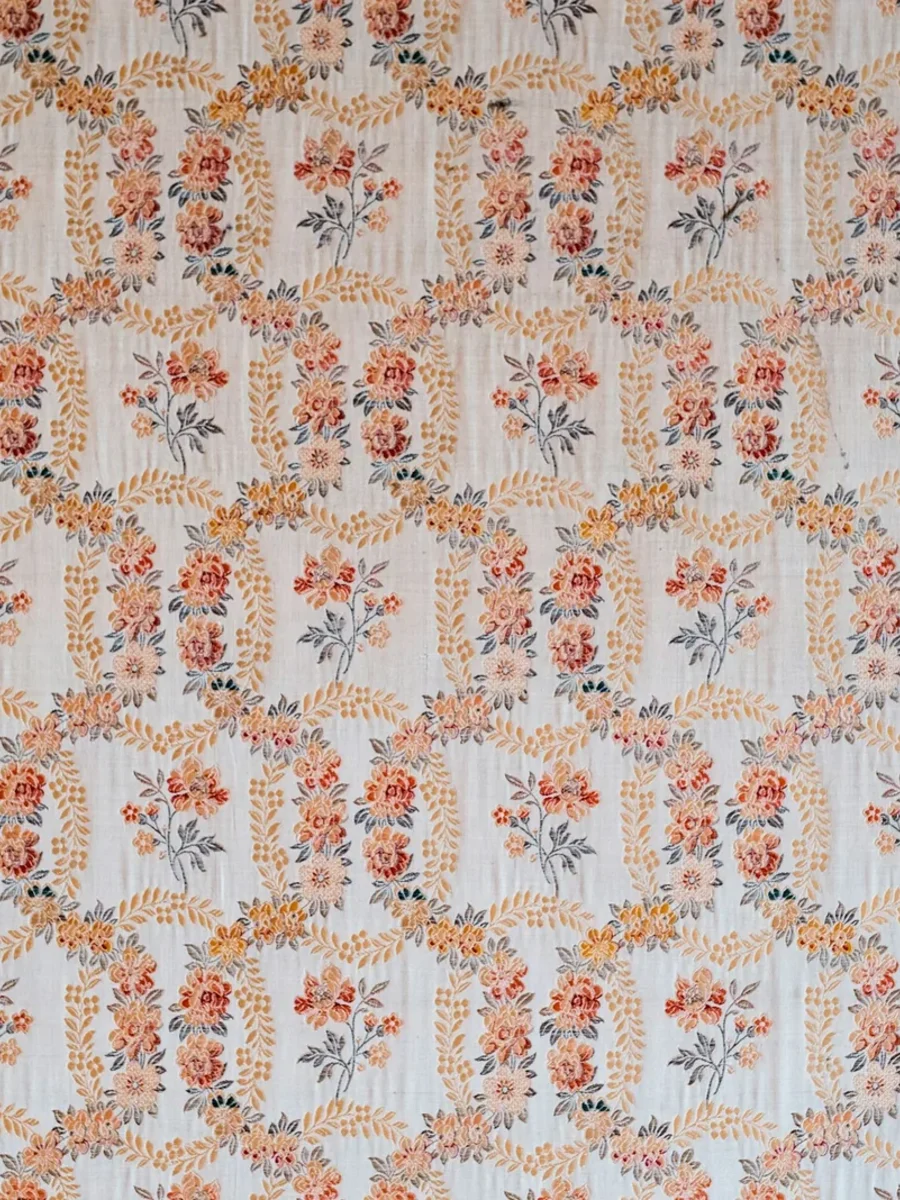
Wallpaper suits a stair wall well: one large pattern, a texture or a mural can run the full height and make the stair a destination rather than a passage. It also makes the counting harder. Each drop on a raking wall is a different length, shortest at the bottom of the flight and longest at the top, and the longest can be well over five metres in a double-height hall. Large pattern repeats cost more paper on tall drops; our guide to wallpaper roll sizes shows how one change of repeat can double the rolls on a 4.5-metre wall. Count the drops one by one, and use the wallpaper calculator for the tallest section.
Pattern choice matters more on stairs than in a room. University of Kentucky extension guidance notes that wallcoverings with definite plaids or stripes accentuate walls that are not perfectly straight with floors and ceilings. On a stair, where the eye follows the rake against vertical drops, a strong stripe or a geometric grid shows every wall that is out of plumb. Organic patterns, textures and large, loose designs are more forgiving. Keep anything delicate above the hip-height band, or paper above a dado and protect the lower wall with panelling.
The access is the part people underestimate. Hanging a long drop needs both hands, and it means working at height over a flight of stairs. The UK Health and Safety Executive's guidance is that ladders suit only low-risk, short tasks, that a task needing more than 30 minutes up a leaning ladder or stepladder calls for other equipment, and that a ladder should only be used where it is level and stable. It also asks for three points of contact wherever possible at the work position, and says other measures are needed where a handhold cannot be kept for more than a brief moment. Hanging paper takes both hands for minutes at a time. On a stair, that means a proper platform: a stair-access work platform or a small tower set up to suit the steps, or boards on trestles across the landing, put up and checked before the paper is opened. A stepladder balanced on a step is how stair walls become accidents.
If the job needs both hands for more than a few minutes, it needs a platform, not a ladder.
Planning something like this?
We visit homes across North and South Goa, measure on site, and bring samples to see in your own light.
Panelling and wainscoting that protect stair walls from scuffs
The traditional answer to hands and bags on a stair is a dado: panelling on the lower part of the wall, finished with a rail, running parallel to the stair. It puts a tough surface exactly where the wall gets touched and leaves the upper wall free for paint or paper. On a stair, set the dado line by the handrail and by how the stair is used, not by a fixed figure: the rail should sit above the band where hands and bags rub, and run at a constant height above the nosings so it reads as one sloping line.
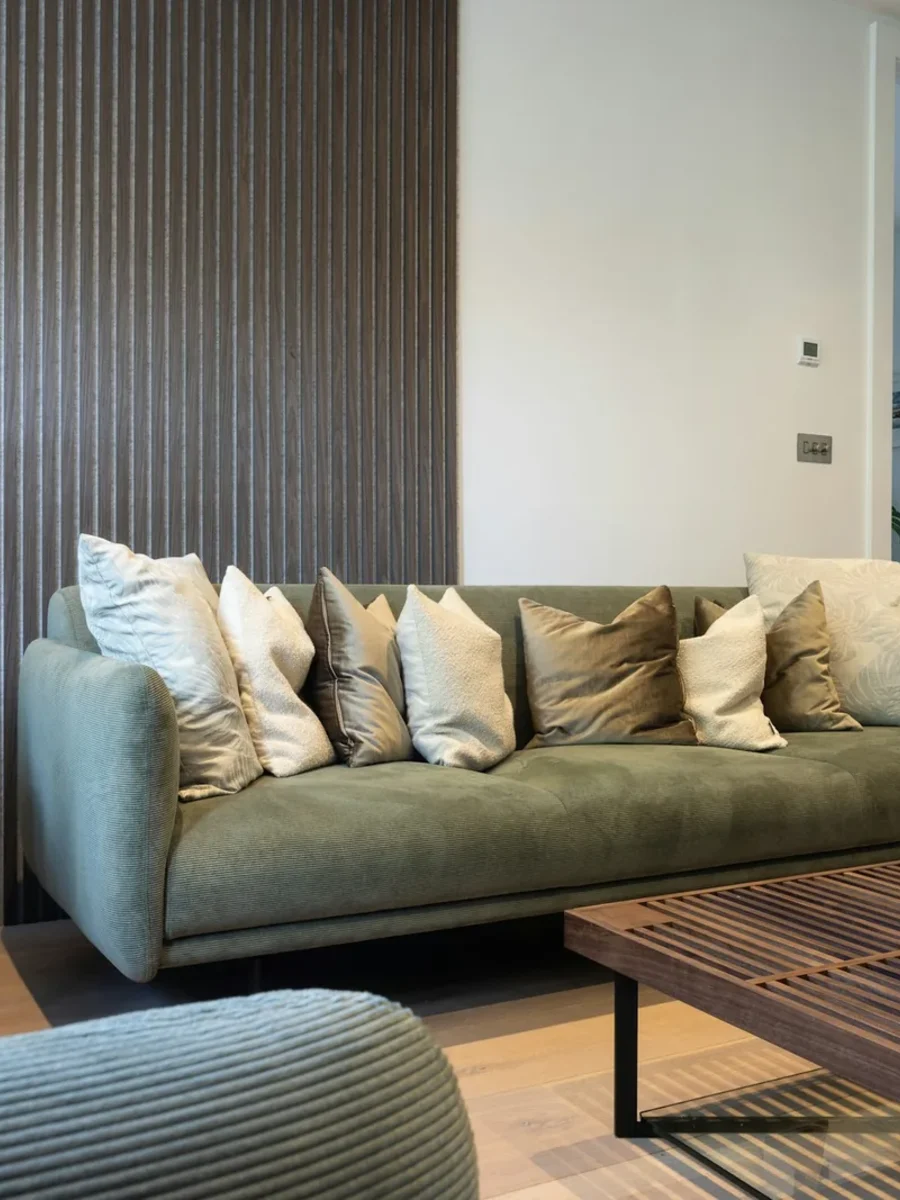
The material depends on the wall. Painted MDF or timber panelling gives the crispest, most classic look and suits a dry, internal stair in an air-conditioned house. On a wall that might see damp, PVC or WPC wall panels do the job without swelling or interesting termites, and a wipeable surface takes muddy fingers and suitcase wheels in its stride. Tongue-and-groove boards running vertically, cut to the rake at the top, give a cottage feel; flat panels with a capping rail feel more formal.
Two details make the difference. A skirting that follows the stair, called the string in joinery, protects the bottom of the wall from shoes and mops and gives the panelling a clean line to stop on. And outside corners at landings deserve a corner guard or a solid timber edge, because that is where furniture strikes first. Above the dado, a scrubbable paint makes life easier still; our article on dining room wall decor explains how paint sheen affects washability.
- Painted MDF or timber: crisp, classic; dry internal stairs only
- PVC or WPC panels: wipeable, termite-resistant; suits damp-prone walls on battens
- Vertical tongue-and-groove: relaxed look; cut to the rake at the top
- Corner guards and a stair-following skirting: protect the points that take knocks
Moulding grids for classic and heritage-style staircases
Applied moulding gives a stair wall the panelled look of an older house without covering the plaster. On a stair, the grid has to deal with the slope, and there are two ways to do it. Raking panels are parallelograms whose top and bottom edges run parallel to the stair, so the whole grid slopes with the flight; this reads as one composition and suits a long straight stair. Stepped panels are ordinary rectangles set at rising heights, each a step up from the last; they suit dog-leg stairs, where each flight is short, and walls where the moulding continues onto a level landing.
Set the grid out on the wall in tape before anything is fixed. The panels need equal margins from the string, the ceiling and the corners, and the spacing between them should stay constant as the stair turns. Align the grid with the window if there is one, and with switches and light fittings, which otherwise end up cut in half by a moulding line. Painted the same colour as the wall, mouldings read as architecture; picked out in a lighter shade, they read as decoration.
Heritage houses deserve restraint. In a Goan house with an original timber stair and lime-plastered walls, the stair itself is the feature, and a heavy moulding grid can compete with it. Light profiles in PVC or polyurethane, fixed with an adhesive suited to lime and as few mechanical fixings as possible, leave the plaster able to breathe. Our wall moulding page shows the profiles, and the guide to laterite and old walls explains why old plaster needs care.
Dressing tall stair windows with blinds or long curtains
A stair window is often the hardest window in the house to operate. If you would have to lean over a handrail or stand on a step to reach it, it should not depend on being reached. A motorised blind inside the frame, on a wall switch at the landing or a remote, solves that. In Goa, where monsoon power cuts are common, put the blind on a circuit backed by the inverter or choose a battery-powered motor; our guide to power cuts and motorisation covers both.
Long curtains on a stair need somewhere to fall. A curtain that hangs into the stair void, with no floor beneath it, sways, gathers dust and is brushed by every hand on the rail. If the window sits above a landing, a full-length curtain that just clears the landing floor works well and softens a hard, echoing stair hall. If it sits over the flight, a roller blind or a Roman blind inside the frame is cleaner and safer.
Cords and chains need care on a stair, where small children sit and play on the landing. The UK's Royal Society for the Prevention of Accidents warns that looped blind cords and chains can kill a toddler, advises that blinds sold today with looped cords should come with a safety device, and urges checking every blind in rooms children use, not just their bedroom. On a stair window, a motor or a cordless blind removes the risk altogether. For a west-facing stair window, a blackout or solar-screen blind also cuts the glare that can hide the edge of a step from someone coming down.
Lighting stairs safely with step lights and wall washers
Light on a stair is a safety matter first. The US Centers for Disease Control and Prevention's home fall-prevention checklist asks for a light and a light switch at both the top and the bottom of every stair, suggests switches that glow in the dark, and asks for handrails on both sides of the stair running its full length, with nothing left on the steps. Two-way switching, so the stair light can be turned on from either end, is the single most useful thing to plan into a stair wall.
Low step lights are the next layer. Small fittings set into the wall just above the treads, or into the risers, light each step without shining into anyone's eyes, and they can stay on at a low level through the night. They also show the edge of each step clearly, which matters most for older family members and guests who do not know the house. Avoid bright fittings at eye level on a landing wall that face down the stair; they dazzle the person descending.
Then light the wall itself. A wall washer, a row of ceiling fittings set back from the wall, spreads even light across wallpaper or a moulding grid. A grazing strip set close to the surface brings out texture in panelling. A pendant dropped into a stair void lights both the stair and the hall. Plan every cable route before the wall is panelled or papered, so nothing has to be chased into a finished surface later, and keep at least the step lights on the inverter so the stair is never dark during a power cut.
Checking external stair walls for damp before finishing them
Many Goan stairs run up an external wall, and that wall takes the weather. The India Meteorological Department's climate summary for Goa notes winds that are mostly westerly to south-westerly from June to August, with morning humidity across the state of 87 to 91 per cent through the monsoon. A stair wall facing west or south-west takes driving rain for months, and the bottom of the stair, near the ground, is where rising damp shows first.
Look before you choose a finish. Bubbling or flaking paint near the bottom steps, tide marks, white crystalline salts on the plaster, a musty smell in the stair hall, or black spotting in the corner under a landing all point to water in the wall. The US Environmental Protection Agency notes that mould can grow hidden on the back of wallpaper and panelling, which is exactly what a stair wall finish becomes if it goes over a wet surface. A moisture meter used at several heights along the flight shows whether damp is rising, coming in around the window or spread across the wall.
Fix the water first, then let the wall dry through the dry months before finishing it. On a wall that may stay borderline, panels on a batten frame with a ventilated air gap are safer than glue, and a breathable paper is safer than vinyl. Our guide to monsoon damp and mildew covers the usual causes. When the wall is ready, we can survey it, bring panel and wallpaper samples, plan the access and measure for a written quote; the wall panels and home wallpaper pages show the range.