 Drapehaus
Drapehaus
Preparing the room
Drapehaus
Preparing the room
Problem
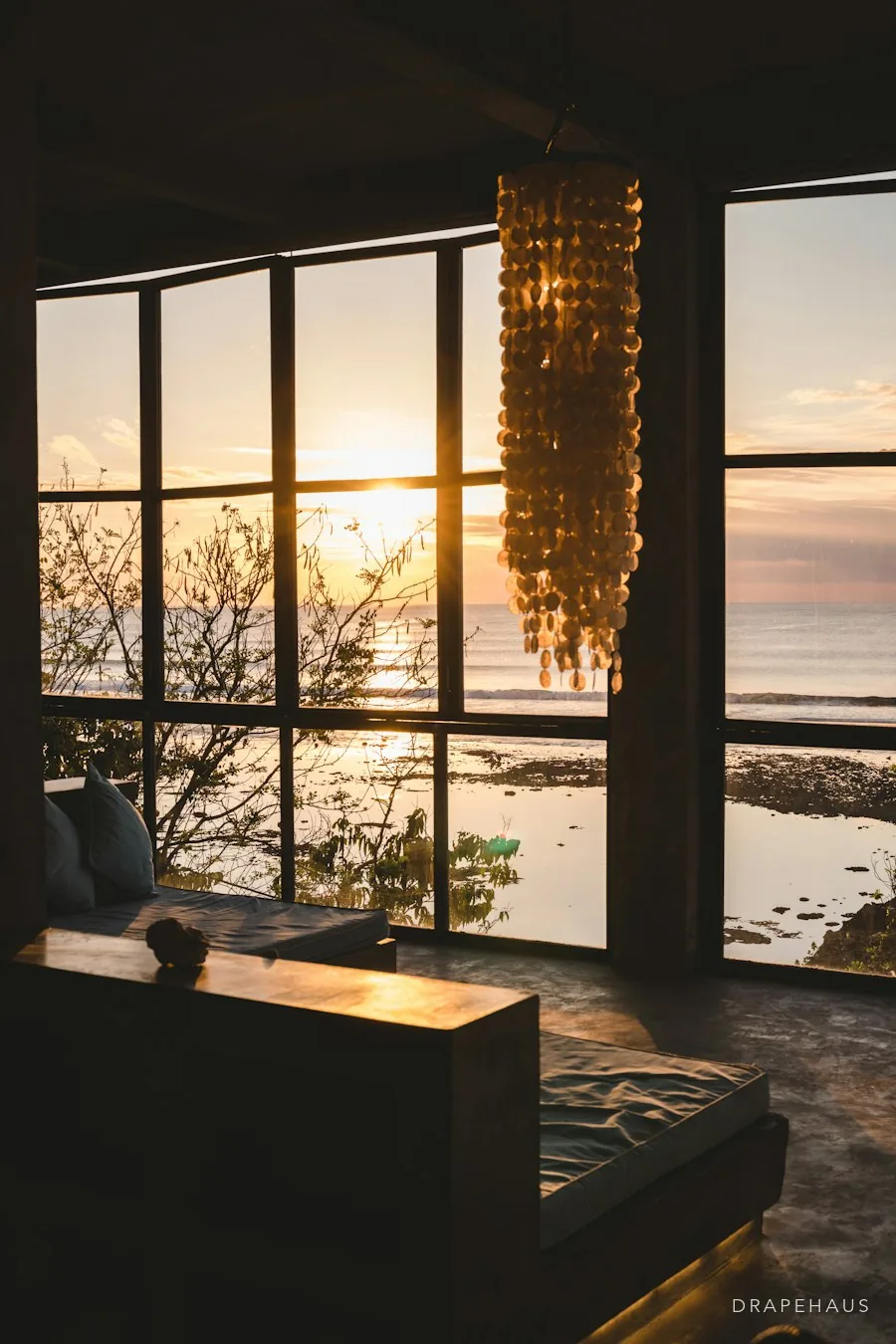
Every villa and most modern Goan houses have at least one window that cannot be reached from the floor. A stairwell, a double-height living space, a glazed gable. These are usually the windows contributing most heat and glare to the house, and the ones most often left bare because covering them seems like too much trouble.
By the Drapehaus studio · 19 September 2026 · How we write
The governing rule is simple and rarely stated: any mechanism requiring a ladder will be operated during the handover demonstration and then effectively never again. If the answer is not motorised or automatic, the honest choice is usually to leave the window uncovered and address the problem at the glass instead.
On an unreachable window, motorisation is the difference between a treatment that works and an ornament. This is the clearest case for it in domestic work, and the objections that used to apply have largely gone away.
The old barrier was wiring. Running mains power to a window in a finished wall meant chasing plaster, making good and redecorating. Battery motors have changed that completely — a unit on a window cycling once a day will typically run for a year or more between charges, and a small solar panel on the glass makes even that irrelevant.
Control matters as much as the motor. A wall switch at the bottom of the stairs is more useful day to day than a remote that gets lost, and scheduling — down at two, up at six — means the window manages itself without anyone thinking about it.
A five-metre drop in lined fabric is a serious load, and one that behaves dynamically every time it moves. Track for these windows has to be specified well above what the span alone suggests, with intermediate brackets at closer centres than normal.
Fixing has to go into structure. On a double-height wall the head of the window is often in blockwork infill between frames, which will not hold a heavy track under repeated load. Establishing what is actually behind the plaster at high level is part of the survey, not an assumption.
Where the drop is very long, splitting into two stacked treatments — one covering the upper glazing, one the lower — is often better engineering than a single enormous curtain, and it gives finer control over light.
Rather see it in your own room?
We bring samples to the house, measure every window, and specify for the light and exposure you actually have.
More on this — tap a heading to read
Whatever goes up there has to come down again eventually, for washing or repair, and if that requires scaffolding then it will be deferred indefinitely.
This argues for systems where the fabric detaches from the mechanism easily — a roller whose tube stays in place while the fabric is replaced, or a curtain on gliders that unhook rather than being sewn to a tape that must be dismantled.
It also argues for fabric that does not need frequent cleaning. On an unreachable window, a solution-dyed acrylic that tolerates dust and sun for years is a better choice than a fabric that looks marginally nicer and needs washing every season.
A tall window has to be measured properly, and that usually means a tower or a secure ladder on the day of the survey rather than a laser measure from the floor. Frames at height are rarely square to the ones below, reveals taper, and a ceiling that looks level from the landing can fall by a noticeable amount over a five-metre span.
We also look for what else is up there: ceiling fans whose blades sweep near the curtain line, beams, light fittings, sprinkler heads in newer buildings and sensors on the wall. Any of these can stop a treatment stacking or travelling freely, and they are far easier to design around at survey than at installation. Finally, the survey records where power is, or could be. A socket at high level, a lighting circuit in the ceiling void or a sunny pane for a small solar panel all change which motor is the sensible choice.
Roller blinds are the most practical answer for most tall glazing. The fabric is light for its area, the mechanism is compact, and a motor sits entirely inside the tube. Very wide rollers need a heavier tube so the fabric does not sag in the middle, and very long drops need a weighted bottom bar so the fabric hangs flat.
Curtains on a motorised track give the softest result on a double-height living wall and suit rooms where the window is the architectural centrepiece. The trade-off is weight, the need for a strong fixing and a much larger stack at the side when open. Pleated and cellular blinds can work on tall, narrow panes, and top-down, bottom-up versions let you shade only the upper glass. They need guide wires on long drops to stop the fabric swinging when windows are open.
Many tall windows in Goan houses include opening sashes or louvres that are left open for air. When the monsoon wind blows onshore, a long lightweight blind in front of an open window can swing and slap against the frame, which damages the fabric and the mechanism and is noisy through the night.
Side channels or tensioned guide wires hold the fabric in place, and a motor controller with an obstacle-detection setting will stop rather than force a blind that has caught. Where the upper panes open, it is worth deciding whether they really need to be covered or whether shading only the fixed lower glazing is enough. Heavy rain driven onto a high window can also wet the fabric through a poorly sealed frame. Check high-level seals before the monsoon, because a wet treatment at five metres will not dry quickly.
High-level installation needs dry weather, scaffolding or a tower, and fixings into masonry that is not saturated. The months from November to May are the sensible time, and in a new build the ideal moment is before final decoration, when running a cable or setting a fixing block costs nothing in making good. If the window's main problem is glare or heat, it is worth having the treatment working before April. Motors and schedules can be programmed once and then left, which is exactly what an unreachable window needs.
In a let property, guests will not climb anything and should not be asked to. A clearly labelled wall switch at the bottom of the stairs, grouped with the other controls for the room, is the most reliable interface for people unfamiliar with the house. Remotes go missing; phone apps need an account the guest does not have.
For managers, scheduling does most of the work. Tall glazing can be set to close in the hottest hours and open again by early evening regardless of occupancy, which protects floors and furniture from sun in the days between bookings. A single maintenance visit after the monsoon to check motors, wipe tubes and test the schedule keeps the system dependable. The cost of neglect here is visible: a stuck blind half-down in the most prominent window of the house, photographed by every guest who walks in.
Diagnosis
WhyManual operation requiring a ladder. It gets demonstrated once and then abandoned.
FixMotorise anything above reach, and add scheduling so it operates without anyone deciding to.
WhySpecified for span rather than for dynamic load, and often fixed into blockwork infill rather than structure.
FixUprated track, closer bracket centres, and fixings into verified structure. Survey what is behind the plaster before quoting.
WhyThe motorisation decision came after decoration was finished.
FixBattery or solar-charged motors. A once-daily cycle typically runs a year or more per charge, and solar removes the question entirely.
WhyThe fabric is integral to a mechanism that needs scaffolding to dismantle.
FixSpecify systems where fabric detaches from the mechanism, and choose fabric that tolerates long intervals between cleaning.
WhyThe tube is too light for the width and deflects in the middle, or the fabric was wound unevenly during installation.
FixUprate the tube diameter for wide spans, check the brackets are level, and re-tension the fabric so it tracks straight.
WhyA long, light drop in front of an opening sash moves freely in the onshore monsoon wind.
FixAdd side channels or guide wires, or close the opening panes when the blind is down during the rains.
WhyThe track was placed without allowing for the fan's blade sweep, which was not noted at survey.
FixReposition the track or treatment, fit a fan with a shorter sweep, or switch the window to a blind inside the reveal.
Checklist
Assume anything manual above reach will never be used
Verify what is behind the plaster at high level before specifying
Uprate track and tighten bracket centres for long drops
Prefer battery or solar motors over chasing walls for power
Add scheduling so the window manages itself
Plan how the fabric will come down for cleaning
Measure tall windows from a tower or ladder, not only from the floor
Note fans, beams, sensors and lighting near the curtain line
Use guide wires or side channels where upper panes open
Put a labelled wall switch at the foot of the stairs in let properties
From the Journal
All articlesFAQ
Motorised, with either a wall switch at low level or a schedule so it operates itself. Anything manual on an unreachable window gets used during the handover demonstration and then never again — that is consistent enough to treat as a rule rather than a tendency.
Not any more. Battery motors on a window that cycles once a day typically run a year or more between charges, and a small solar panel on the glass removes even that. This is what makes motorisation practical as a retrofit in a finished house.
Considerably more than the span alone suggests. The load is heavy and it behaves dynamically every time the curtain moves, so uprated track, closer bracket centres and fixings into verified structure are all necessary. Blockwork infill at high level will not hold it.
Two is often better engineering on a very long drop, and it gives finer control — you can shade the upper glazing where the glare is without darkening the lower room. It also makes cleaning and repair far more manageable.
On a blind that goes up and down once a day, a rechargeable motor typically runs a year or more between charges, depending on the size of the blind and the model. On an unreachable window a small solar panel on the glass keeps the battery topped up, which removes the need to reach it at all.
Often, if the existing fabric and fixings are sound. The curtain is moved onto a motorised track, which may need stronger or additional brackets because it is heavier than the manual version. The survey needs to confirm what the track is fixed into and whether power or a battery motor is the practical route.
Usually a motorised roller blind in a durable, low-maintenance fabric, controlled from a switch at the bottom or top of the stairs or on a schedule. If the aim is glare control with a view, a solar screen fabric works well. If privacy at night matters, a dimout or blackout fabric may suit better.
Ideally without taking the whole system down. Specify curtains that unhook from their gliders so the fabric can be lowered with a pole or from a short platform, and a roller fabric that can be detached from its tube. Choose fabric that tolerates dust and sun so cleaning is needed only occasionally.
Keep reading