 Drape Haus
Drape Haus
Preparing the room
Drape Haus
Preparing the room
Wall Panels
Wood-plastic composite panels: wood fibre bound in a polymer, extruded into solid, rigid profiles. They give the warmth of timber with far less fuss about humidity and termites.
In short
By the Drape Haus studio · How we write
Is it right for you?
WPC stands for wood-plastic composite. Fine wood flour or fibre is mixed with a thermoplastic and extruded into profiles, often with a hollow or foamed core and sometimes with a tough co-extruded skin on the face. The result is heavier and stiffer than a PVC panel, closer to timber in weight and sound, and far less sensitive to water than solid wood or wood-based boards.
That combination is why WPC has become popular for fluted feature walls, slatted louvres and outdoor cladding. It gives the warmth and rhythm of timber battens without the swelling, splitting and repainting that real wood demands in a humid coastal climate. It cuts and screws like wood, accepts concealed clips, and can span between supports without sagging the way thinner plastic profiles do.
It is not wood, though, and it is not quite plastic either. Because it contains wood fibre, a poorly made or uncapped board can absorb some moisture at cut ends. It expands with heat, more than timber does along its length, and dark colours in full sun fade and move. The better grades handle all of this well; poorly made extrusions can disappoint. Knowing which you are buying, and where it is going, is most of the decision.
The details
WPC is heavier and stiffer than PVC, so it holds a straight line across a long wall and feels solid when you knock on it. The surface is usually a wood-grain film or a co-extruded cap, and the better profiles are convincing at a normal viewing distance.
For Goa the appeal is simple: the composite does not swell and rot the way plywood and MDF do in a long monsoon, and termites find little in it worth eating. That makes it a sensible choice on ground-floor walls, in homes that are closed for months, and in rentals that cannot be watched closely.
WPC still moves with temperature, more than timber in length. Long runs need expansion gaps at the ends, hidden under trims, and exterior grades need to be specified for verandahs and facades rather than borrowing an interior panel. On a wall that is damp or takes rain on its outer face, we fix on a batten frame with an air gap.
It is not real wood, and up close it does not age like real wood. If the patina of old timber is what you love, a sealed hardwood or veneer is the honest answer; if you want a wood look that stays the same through every season, WPC is.
Your options
The term covers a wide family of products. Core, skin and profile shape decide whether a panel belongs on a bedroom wall or a sea-facing verandah.
Swipe for all 5 →
The honest view
Timber character without the upkeep
The texture and weight read as wood, but there is no oiling, varnishing or repainting each year. It looks much the same after the monsoon as before it.
Rigid and solid underhand
WPC does not flex or sound hollow when knocked. On a living-room wall or a reception counter that people touch and lean on, that solidity is noticeable.
Far less termite risk than wood
The wood content is encapsulated in plastic, which leaves termites little to work on. It is a much safer choice than plywood or MDF against a Goan wall.
Exterior grades available
Capped profiles can go outdoors on verandahs, balcony screens and facades, where real timber would need constant care in salt air and rain.
Thermal movement
WPC lengthens in heat. Long runs need gaps at each end and fixings that let the board slide, or it will buckle on a sunny wall.
Colour shift in strong sun
Most composites lighten over their first months outdoors. Capped boards do this far less, but a dark board on a west-facing verandah will not stay its showroom shade.
Heavier than PVC
The weight needs a solid frame and good fixings. On a crumbling plaster wall, the frame has to reach sound masonry.
Not wood up close
Embossed grain repeats and the cut ends show the composite. Where you want genuine timber character at arm's length, real wood is still the honest choice.
Side by side
Most people choosing WPC are weighing it against a PVC panel on one side and real timber on the other. These are the trade-offs.
| WPC | PVC panel | Solid timber | Veneered board | |
|---|---|---|---|---|
| Rigidity | High | Low to moderate | High | High |
| Moisture tolerance | Very good | Excellent | Poor without finish | Poor at edges |
| Termite exposure | Very low | None | High unless treated | High |
| Outdoor use | Capped grades only | Not recommended | With regular care | No |
| Look at close range | Wood-like | Plastic-like | Genuine | Genuine face |
| Ongoing finishing | None | None | Oil or varnish | Occasional |
Swipe to compare →
For a feature wall that people touch in a humid house, WPC usually sits in the useful middle: more solid than PVC, far less work than wood.
Rather see it in your own room?
We bring samples to the house, measure every window, and specify for the light and exposure you actually have.
Room by room
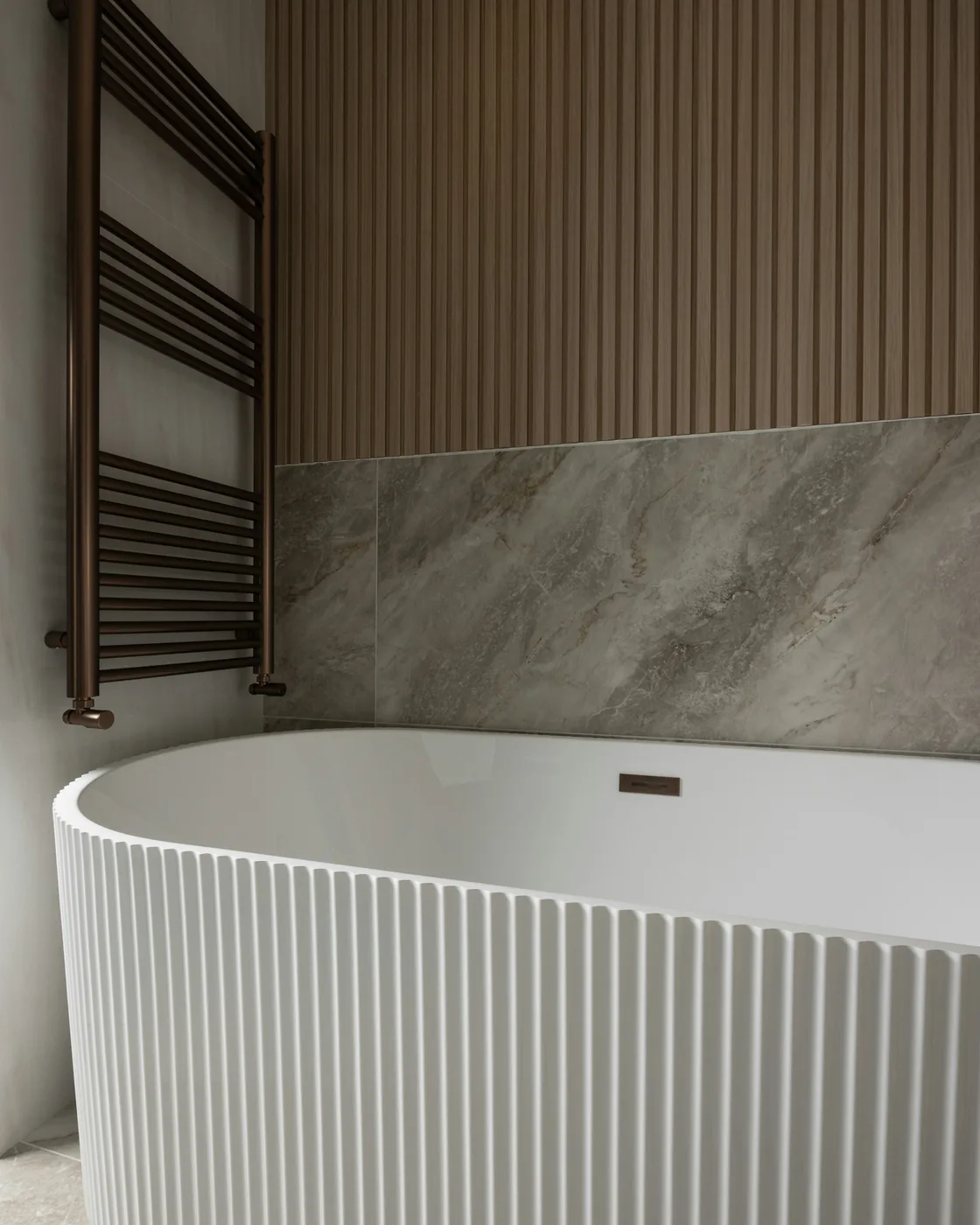
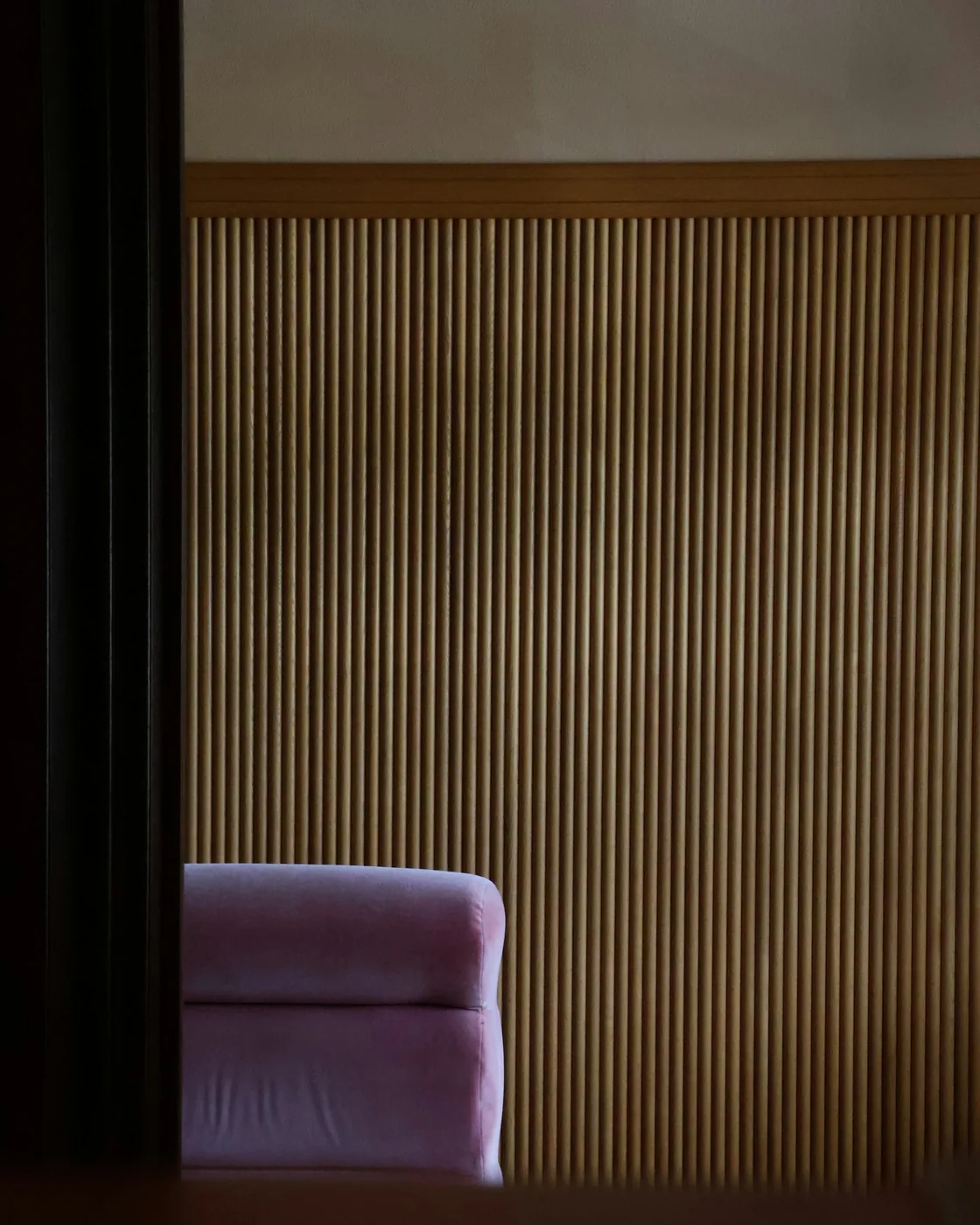
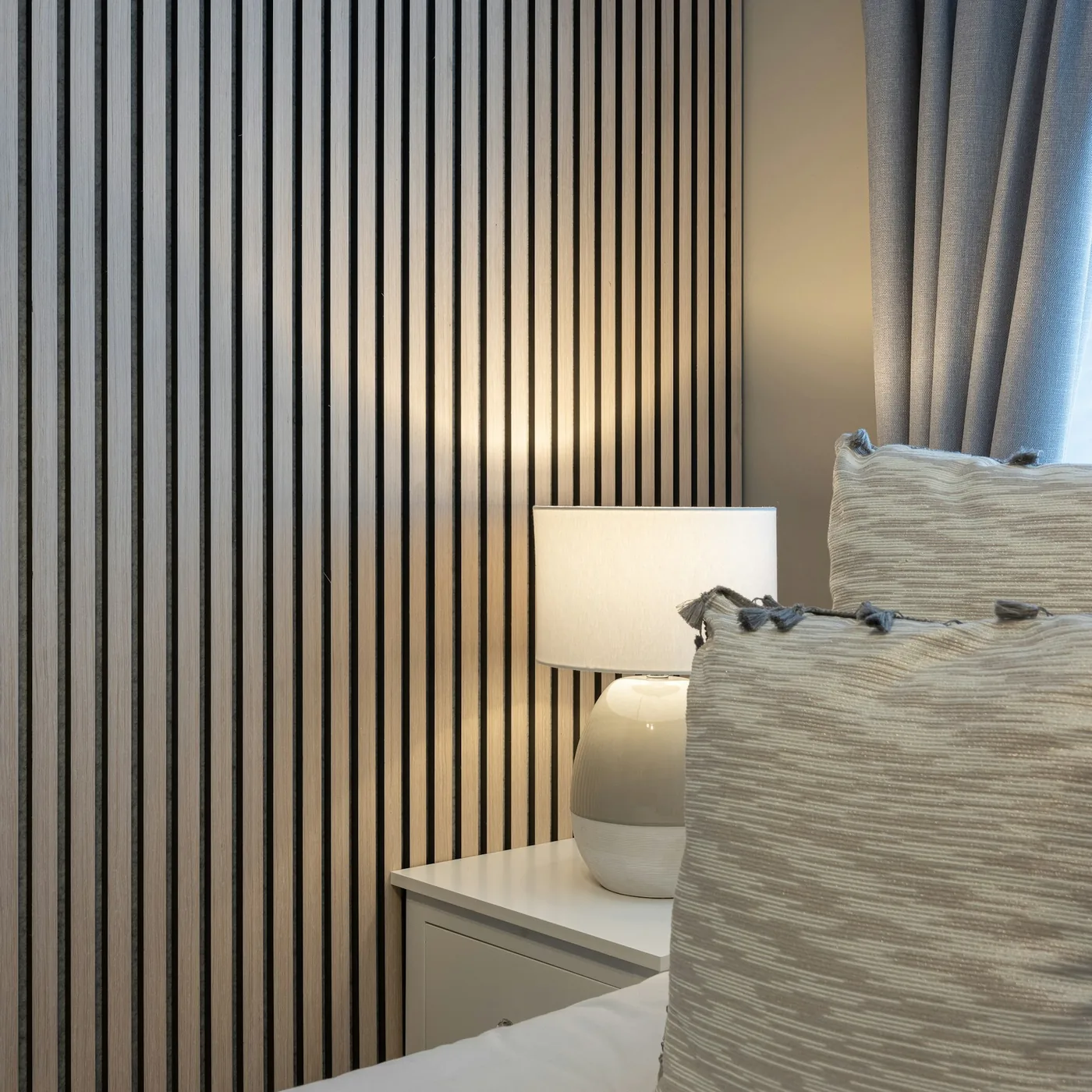
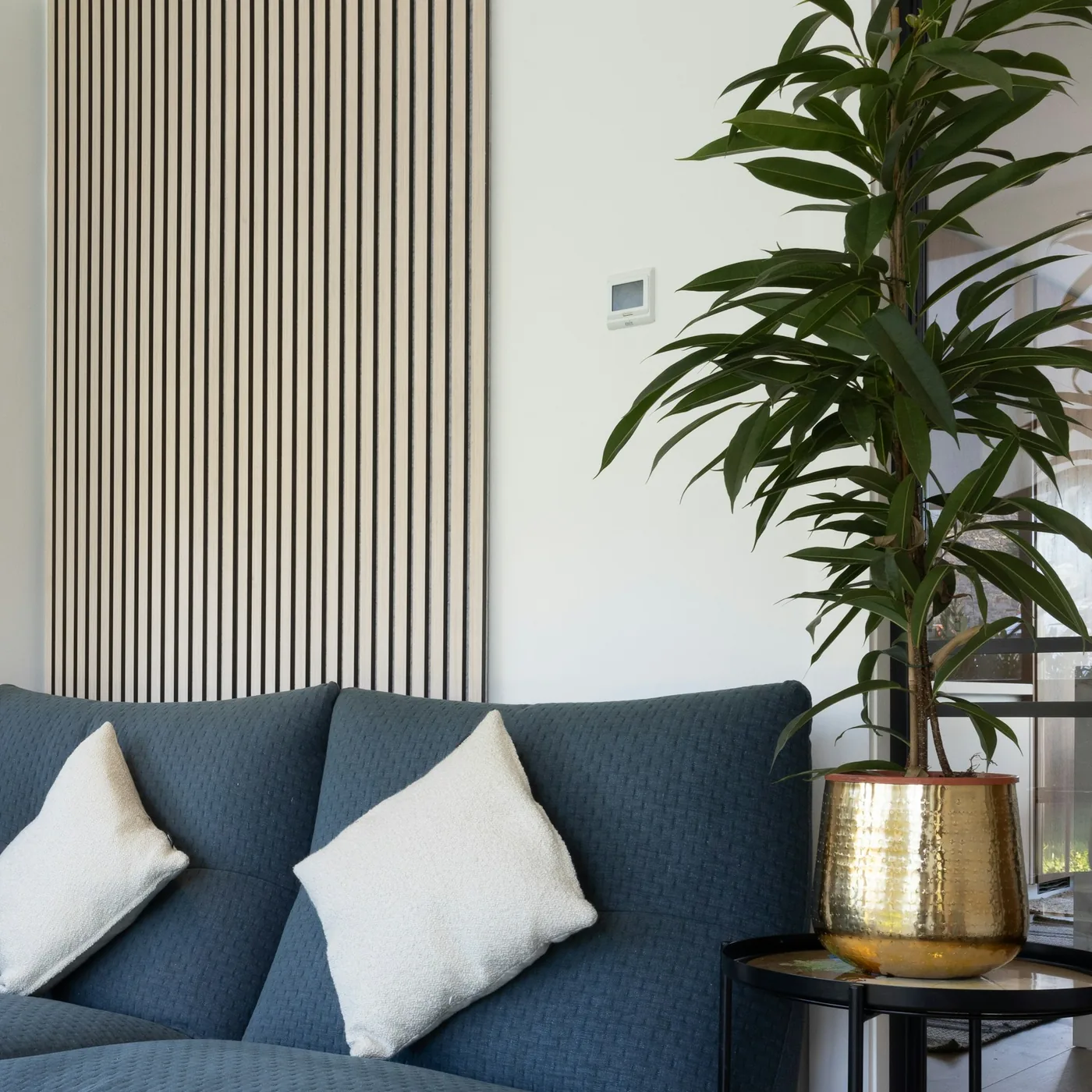
Fluted or slatted WPC behind a sofa or TV gives warmth and depth, holds up to daily contact and does not need refinishing.
A full-height fluted wall behind the bed is the classic use. Integrate reading lights and switches into the layout before fixing.
Capped exterior grades only, in a mid or pale tone, with stainless fixings and wide expansion allowances.
Robust enough for a front desk and corridor walls, and easy to clean. Slatted panels over acoustic backing also soften noise.
Fine outside the shower, on a ventilated frame. Inside a wet zone, PVC or tile remains the more forgiving surface.
Slatted WPC ceilings look warm in verandahs and lobbies but need close supports because of the weight.
Expect movement and fading. Choose a pale capped profile or keep the panels in shade.
In depth — tap a heading to read
WPC weighs enough that the fixing has to reach sound material. We start by tapping the plaster for hollow areas and reading moisture across the wall, particularly near the floor and under windows. Old laterite walls often have a lime or cement render that has lost its bond in patches; a frame screwed into that render will pull loose under load, so we drill through to the stone behind or cut back and repair first.
A wall with high readings is not ready, however solid it feels. The source, whether a cracked outside coat, a leaking sill or rising damp, has to be corrected and the wall allowed to dry through at least part of a dry season. Composite boards tolerate moisture far better than wood, but the plaster and paint behind them do not, and that is where trouble starts.
Fix through to masonry, not just into render. A heavy panel exposes weak plaster quickly.
We mount WPC on aluminium or composite battens rather than timber, set out plumb and level and fixed at spacings suited to the profile. The battens create a cavity of a few centimetres behind the panels. Kept open at top and bottom, that cavity lets air move and any moisture the wall releases escape rather than collecting against the back of the boards.
Expansion is the detail that decides whether a WPC wall stays flat. Each board needs a gap at its ends and where it meets a ceiling, floor or return wall, sized for the length of the run and how warm the wall gets. Concealed clips that allow the board to slide are better than face screws or a full bed of adhesive. Trims and shadow gaps then hide the allowance so nobody sees it.
Outdoor WPC is a different specification from indoor. Use only capped, exterior-rated profiles, which shed water and resist staining and colour change. Uncapped boards can absorb moisture at the surface, grow algae on the shaded face and bleach unevenly in sun. Pale and mid-tone colours handle heat better than near-black, and a slatted louvre with gaps between battens moves less as a whole than a continuous cladding surface.
Near the sea, every fixing must be stainless steel or a suitable coated equivalent. Plated screws rust within a monsoon and streak the boards below. Salt dries on the surface as a fine white film, so outdoor panels benefit from a fresh-water rinse after the rains and periodically through the dry months.
WPC is usually chosen for its rhythm: flutes, battens, a run of vertical lines. That rhythm is only convincing if it is set out properly. We start from the centre of the wall or a key feature such as the bed or TV, so cut boards fall equally at each end, and we plan where switches, sockets and lights land so they sit between flutes rather than cutting through them.
Lighting does a lot of the work. A strip light at the top or bottom of a fluted wall grazes across the profile and brings the texture alive at night. Keep the light source a little away from the surface and use fittings with good heat management, since composite and warm LEDs should not sit in direct contact.
Living with it
A soft cloth dampened with water and a little mild detergent is enough. Dry flutes with a clean cloth so streaks do not settle in the grooves.
Run a soft brush attachment along fluted and slatted panels every few weeks; dust sits in the profile more than on a flat wall.
Hose or wipe exterior panels with fresh water after the monsoon and occasionally in the dry season to remove salt and pollen before they bake on.
Shaded outdoor faces can grow algae in the rains. A soft brush and mild cleaner removes it; avoid pressure washers, which roughen the surface.
Once a year, look at the end gaps and clips on long or sunny runs. A board that has crept against a wall should be eased before it bows.
Avoid these
Uncapped interior profiles absorb moisture, fade and grow algae outdoors. Only exterior-rated, capped boards belong on a verandah.
Boards fitted tight between walls will push and bow on a warm day. Leave the gap and hide it with a trim.
The weight pulls a frame away from failing plaster. Fix through to sound masonry or repair first.
Dark colours take on the most heat, move the most and fade the most. Choose lighter tones where the sun reaches.
Rust streaks will appear within a season. Specify stainless fixings throughout.
Checklist
More in wall panels
PVC, WPC, wood, fluted, acoustic and marble-effect panels, chosen for the wall they are going on as much as for the look.
Our process
One team from the first visit to the last bracket, so nothing is lost between the person who specified it and the person who fits it.
FAQ
WPC contains wood fibre and is denser, stiffer and more wood-like. PVC is lighter, fully waterproof and easier to cut and fit. WPC suits living areas; PVC suits wet rooms.
Exterior-grade WPC can, with stainless fixings, expansion gaps and a frame that lets water drain. Interior panels should stay indoors.
They are highly resistant because the wood fibre is encapsulated in polymer. The battens behind them should also be termite-resistant, or the frame becomes the weak point.
No. They are wiped clean and never oiled or varnished like timber.
WPC contains wood fibre bound in plastic, so it is denser, stiffer and more wood-like to touch. PVC is lighter, simpler and completely indifferent to water. WPC suits feature walls and outdoor use; PVC suits wet rooms and ceilings.
Yes, if they are capped, exterior-rated profiles fixed with stainless hardware and allowed room to expand. Interior-grade WPC should stay indoors.
The risk is very low because the wood fibre is encapsulated in plastic. The usual weak point is timber framing behind the panels, so we use metal or composite battens.
Most composites lighten somewhat outdoors, especially in the first months. Capped boards in pale and mid tones change far less than dark, uncapped ones.
The panel tolerates moisture, but the wall behind should not be wet. Fix the source of the damp first, then use a ventilated frame so the wall can keep drying.
Next step
WPC succeeds or fails on the wall behind it, the gaps around it and the grade chosen for its position. We visit, check the plaster and moisture, note sun and sea exposure, and set out the panels around your furniture, lights and switches. You see the profiles and colours on your own wall before deciding, and our team frames and fits the panels with fixings suited to a coastal home. Book a visit to get started.