 Drapehaus
Drapehaus
Preparing the room
Drapehaus
Preparing the room
Wallpapers
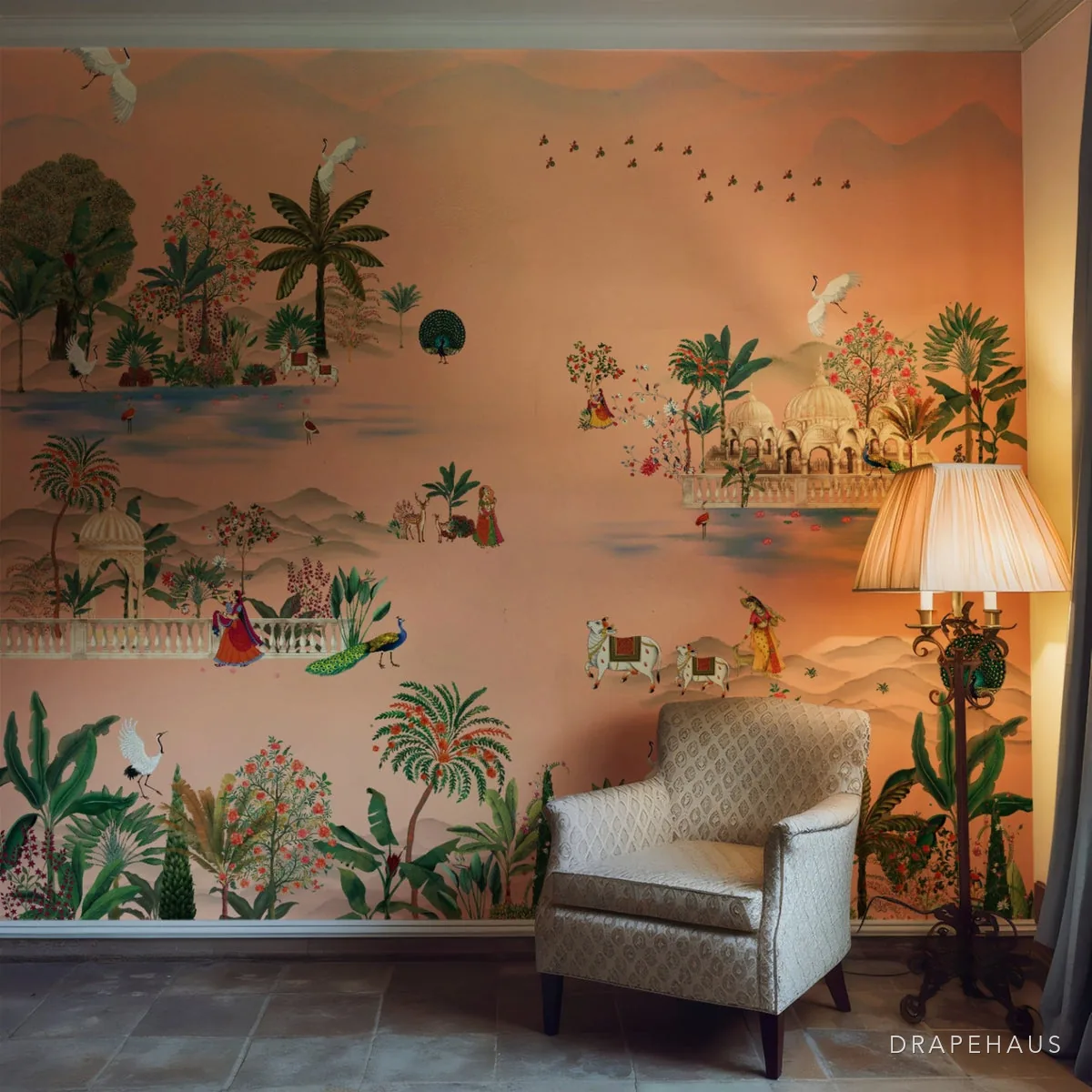
A feature wall behind a bed, a botanical in a dining room, a quiet texture through a whole living space — wallpaper changes how a room feels faster than almost anything else.
Pattern
Walls (width in metres)
Roll width
Pattern repeat
Rolls to order
5
4 + 1 spare, same batch
Drops
12
3 per roll
Wall area
17.4 m²
before doors and windows
An estimate for planning, assuming 10 m rolls. Doors and windows rarely save a whole drop, so they are not deducted. We measure and count drops on site before anything is ordered.
In short
By the Drapehaus studio · How we write
Is it right for you?
In a home, wallpaper is less about covering a wall than about setting the mood of a room. A deep botanical makes a dining room feel enclosed and candlelit; a fine texture makes a bedroom feel softer and quieter; a stripe gives a study order and height. The effect is immediate and it is permanent in a way that cushions and throws are not, which is why the choice deserves time.
It suits owners who want a room with a clear character, and houses with at least one dry internal wall that can carry it. Villas and second homes often have exactly the right candidates: the wall behind a bed, the end wall of a dining room, a passage that runs between rooms and never sees rain.
It suits less well where every wall is external and faces the weather, where the plaster is old lime over laterite and needs to breathe, or where a room is shut up for long stretches with nobody managing the air. There, a limewash or textured plaster gives the colour and texture without the risk, and we will propose it rather than push paper.
The details
In a home we start with the room: which wall draws the eye, how much light it gets and what the curtains and upholstery will be. A bold print often works best on a single feature wall, while textures and small repeats can run through the whole room.
For bedrooms and living rooms we favour breathable and moisture-tolerant papers, and in bathrooms and kitchens a washable vinyl that can take steam and cleaning.
Your options
The material decides how a paper looks up close, how it feels to the hand and how it copes with the room. These are the families we hang most in homes, with the rooms each suits best.
Swipe for all 6 →
The honest view
A room with a point of view
Wallpaper gives a room a character that stays after the furniture changes. A bedroom or dining room built around a paper feels designed rather than furnished, and the curtains and upholstery can take their cue from it.
Texture you can feel
Grasscloth, embossed non-wovens and hand-printed papers add a surface that changes with the light through the day, something flat paint cannot do however good the colour.
Can be as bold or as quiet as you like
From a large mural to a barely-there texture, the range is wide enough to suit a formal heritage dining room and a pared-back contemporary bedroom equally well.
Disguises tired plaster
A heavier or textured paper hides minor undulations and hairline cracks that would show under paint, provided the plaster beneath is sound and dry.
Harder to change on a whim
Repainting a wall takes a day; replacing a wallpaper takes stripping, preparation and rehanging. A bold paper should be one you are sure of, which is why we often start with a single wall.
Needs a dry wall
In a house with external walls facing the monsoon, the choice of wall may be narrower than you hoped. The paper goes where the wall can carry it, not only where it would look best.
Delicate papers need delicate living
Grasscloth, silk and hand-printed papers mark with water and fingers and cannot be scrubbed. In a busy family room, a washable non-woven or vinyl is the more realistic choice.
Side by side
A feature wall can be made several ways. These are the four we compare most often for a bedroom or living-room wall in a coastal house.
| Wallpaper | Painted wall | Limewash | Upholstered panels | |
|---|---|---|---|---|
| Pattern | Any pattern or scene | Colour, or hand-painted | Clouded colour only | Fabric pattern or plain |
| Texture | Flat to deeply woven | Flat | Soft, mineral | Soft, padded |
| Acoustic softening | Slight | None | None | Noticeable |
| Humidity risk | Depends on wall and paper | Low | Very low | Moderate, fabric absorbs |
| Ease of change | Strip and rehang | Repaint | Recoat | Panels removable |
| Suits lime plaster | Breathable papers only | Mineral paint only | Yes | Yes, on battens |
Swipe to compare →
Upholstered panels sit on battens off the wall, which lets an old wall breathe behind them. It is worth considering for a headboard wall in a heritage bedroom.
Rather see it in your own room?
We bring samples to the house, measure every window, and specify for the light and exposure you actually have.
Room by room
The headboard wall is the natural choice: internal, out of direct sun and seen from the bed. A texture or a soft large-scale pattern works better than anything busy in a room meant for rest.
A feature wall behind the sofa or around a fireplace or media wall works well. With doors open to the garden for much of the year, favour non-woven papers that tolerate humidity swings.
Dining rooms are used mostly in the evening, under lamplight, and take a darker, richer paper or a mural well. Keep a washable grade low down if chairs are pushed back against the wall.
Choose a washable paper and a design that will not be outgrown quickly; a playful pattern on one wall is easier to change than a whole room. Keep delicate textures well out of reach.
A study is often air conditioned, lightly used by visitors and suits a whole-room paper: a stripe, a grasscloth or a dark colour that makes the space feel focused.
A powder room is a good place for a bold vinyl. A full bathroom with a shower is possible only on internal walls well clear of splashing, with strong extraction.
A single wall of washable paper gives character without risk. Keep a spare roll in the house and choose a pattern that hides a small scuff.
In depth — tap a heading to read
A feature wall concentrates the paper where it has most effect and where the wall is in the best condition. It is usually the wall you face on entering, or the one behind the main piece of furniture: bed, sofa or sideboard. It lets you use a stronger pattern or colour, and the other walls, painted in a colour drawn from the paper, give the eye somewhere to rest.
A whole room is a bigger commitment and a quieter one. Papers used all round tend to be textures, small repeats or stripes, because a large pattern on every wall can make a room feel busy. The room becomes a single envelope, which works especially well in studies, dressing rooms and guest bedrooms.
The practical difference is the walls themselves. A whole room brings in every wall, including external ones and those around windows and doors where moisture tends to gather. Each has to be tested, and a room with one damp-prone wall may be better served by a feature wall on the dry side.
Every patterned paper has a repeat: the vertical distance before the design starts again. It is printed on the roll label along with the match type, and together they decide how much paper you need and how the drops line up. A small repeat wastes little; a large one can mean trimming away a good length from each drop to bring the pattern into line.
The match type tells the hanger how adjacent drops relate. With a straight match, the design lines up horizontally across every drop. With a half-drop match, alternate drops are offset by half the repeat, which gives a diagonal flow and uses more paper. A free or random match, common on textures and stripes, needs no alignment at all. Some plains and grasscloths are reverse hung, with every other drop turned upside down to even out shading.
A large half-drop repeat on a tall wall can need noticeably more rolls than the area suggests.
Good hanging begins with setting out, not pasting. A strong motif should sit centrally on the feature wall or centred over the bed, not start at a corner and fall wherever it lands. On a wall with a window, the pattern is often centred on the opening so it frames it evenly on both sides. We mark a true vertical with a plumb line, because old houses rarely have square corners.
The height of the pattern matters too. A large motif is usually placed so a full element sits just below the ceiling line rather than being cut in half, and any unavoidable mismatch is placed in the least visible corner, typically behind a door. On a whole-room scheme we plan the drops around the room before cutting, so the last join falls where nobody looks.
Coastal light is strong and often reflected off water, paving or white walls, so colours read brighter and cooler than they do in a sample book. A paper chosen under shop lighting can look harsh in a sunny living room. We bring samples to the room and look at them at different times of day, including after dark under the lamps you will actually use.
Scale should follow the wall and the viewing distance. A large-scale botanical needs a wall wide enough to show several repeats and a room deep enough to step back from it. A small, busy pattern on a large wall can vibrate at a distance. In high-ceilinged heritage rooms, larger patterns and vertical stripes suit the proportions; in lower modern rooms, a smaller repeat or texture feels calmer.
Keep light-sensitive papers out of direct sun. A wall opposite a large west-facing opening takes strong afternoon light, and natural fibres and some inks fade unevenly. A sheer or blind on that window protects both the paper and the upholstery.
The work before the paper is where a home wallpaper succeeds. We take moisture readings at several heights, check for hollow or salted plaster, and fill and sand the surface until it is smooth. A wallcovering primer goes on next; it seals the plaster so it does not draw paste unevenly, and it makes the paper removable later without lifting the surface.
The adhesive is chosen for the paper and the climate. Non-wovens are hung by pasting the wall, delicate papers need a paste that will not stain the face, and in a humid house we use adhesives with a fungicide. After hanging, the room should be kept ventilated or air conditioned for a few days so the paste dries evenly rather than slowly in damp air.
If a wall needs time to dry out, we would rather wait a few weeks than hang on schedule.
Living with it
A soft brush or microfibre cloth every few weeks keeps dust from settling into textured and woven surfaces, where humid air turns it into grime.
Vinyls and washable non-wovens take a barely damp cloth. Grasscloth, silk and hand-printed papers must stay dry; blot any mark gently rather than rubbing.
A bed or cabinet pushed tight against a papered wall stops air reaching it. Leave a gap so the paper behind stays dry, especially on external walls in the monsoon.
Draw sheers or lower blinds in the afternoon on walls that take direct light, so natural fibres and printed colours fade evenly, if at all.
In a second home, ask the caretaker to air wallpapered rooms on dry days or leave a dehumidifier running. Check the seams on your return and report any lifting early.
Avoid these
A pattern that charms in a hand-sized sample can overwhelm a wall. Look at a full-width length, or a large section taped up in the room, before deciding.
Hanging from the corner leaves the motif off-centre on the wall and over the bed. Set out from the centre of the feature so the pattern sits evenly.
Grasscloth in a family room with children and pets will mark within months. Choose a textured vinyl or non-woven for rooms that see real daily use.
If the headboard wall faces the monsoon, the bed blocks airflow and the paper behind it spots first. Move the feature wall, or fix the wall before papering it.
Without a spare from the same batch, one damaged drop can mean repapering a wall. Keep at least one roll, stored flat in a dry room.
Checklist
More in wallpapers
Wallpaper in this climate lives or dies on two things: whether the wall behind it is dry, and whether the paper and adhesive can cope with humidity.
Our work
From the Journal
All articlesOur process
One team from the first visit to the last bracket, so nothing is lost between the person who specified it and the person who fits it.
FAQ
Not if the wall is dry and the paper and adhesive suit the room. Peeling almost always means damp in the wall behind it, which is why we assess the wall before hanging.
Sometimes, but lime plaster needs to breathe. On a heritage wall we often recommend a breathable paper or finish rather than a vinyl that seals it.
Usually the wall you see first on entering, or the one behind the room's main piece of furniture: the bed, the sofa or the sideboard. In a coastal house it should also be a dry internal wall where possible. We look at the room's sightlines and the wall's condition together before recommending one.
Not necessarily. A light, small-scale texture or a vertical stripe can make a small room feel taller and more considered. A dark, large pattern will make it feel more enclosed, which can be exactly right for a study or powder room. Scale and colour matter more than whether there is wallpaper at all.
Yes, and it is one of the best places for it, as long as the wall is dry. Leave a small gap between the headboard and the wall so air can circulate, and if the wall is external and faces the monsoon, have it tested first because the paper behind a bed is the last to dry.
It is a match where every other drop is offset vertically by half the pattern repeat, so the motifs line up diagonally across the wall. It gives a more natural, flowing look for florals and botanicals, but it uses more paper than a straight match because more is trimmed away to bring each drop into line.
In the right room, yes. Grasscloth is porous and stains with water, so it belongs in an air-conditioned bedroom, study or formal living room, away from windows that are left open in the rain and out of reach of children. In a ventilated family room, a grasscloth-effect vinyl gives a similar look with far less risk.
Usually, if the paint is sound and well bonded. Glossy or flaking paint needs sanding or removing, and the wall is then primed with a wallcovering primer. Paint over a damp wall can hide moisture, so we still take readings before hanging.
Next step
Home wallpaper is chosen best in the room it will live in. At a Drapehaus visit we test the walls, look at the room's sightlines and light, and bring paper samples alongside curtain and upholstery fabrics so the scheme can be judged as a whole. We then measure each wall, plan the setting out and repeat, and hang the paper ourselves with the right primer and adhesive. Book a home visit, and we will help you find the wall worth papering and the paper worth putting on it.