 Drapehaus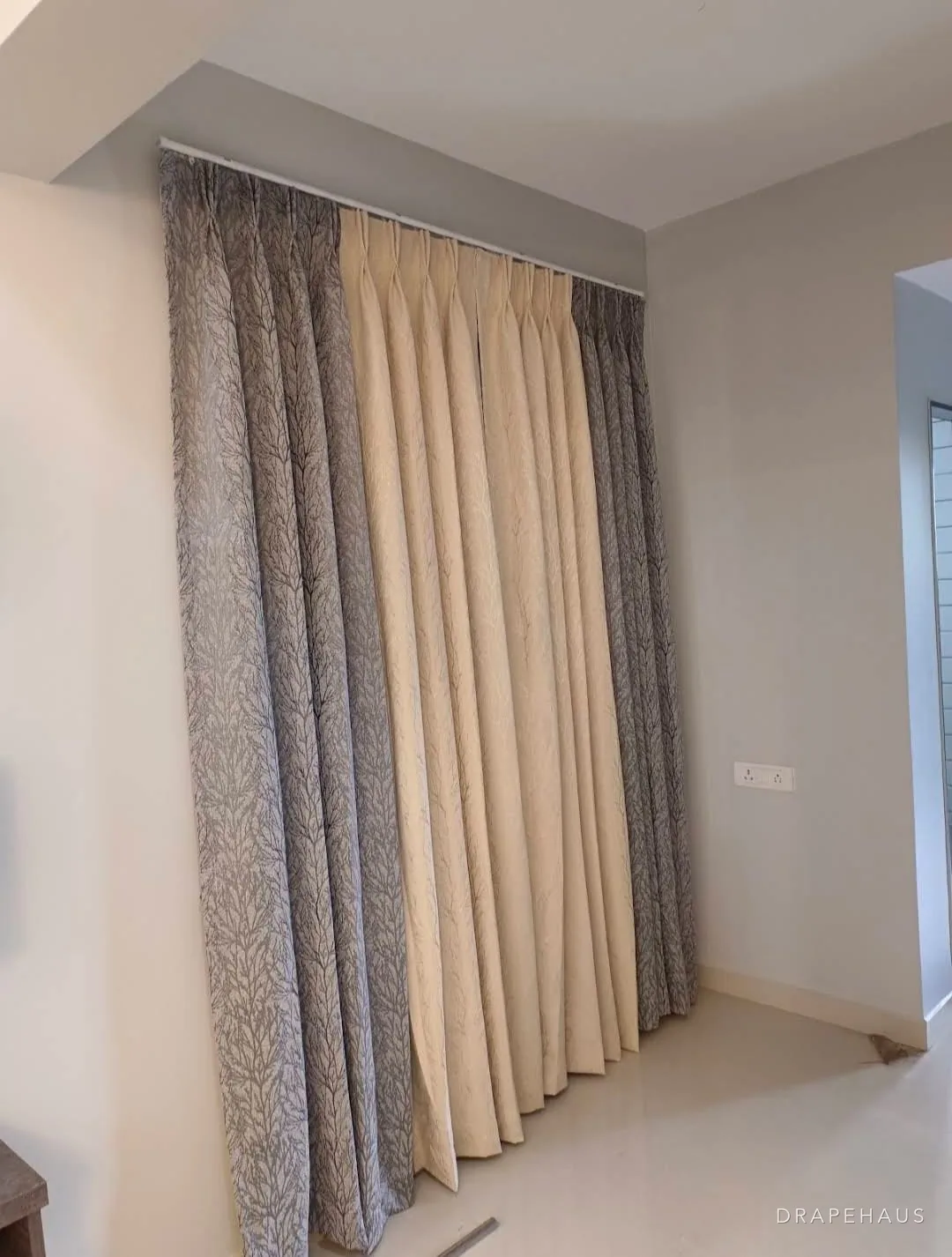
Drapehaus
Preparing the room
Drapehaus
Preparing the room
Problem
Curtain hardware is designed and tested against concrete, brick and plasterboard. Goa's traditional building material is laterite — a porous, iron-rich stone that is soft when quarried and hardens on exposure — often bonded with mud rather than cement and finished in lime plaster.
By the Drapehaus studio · 19 September 2026 · How we write
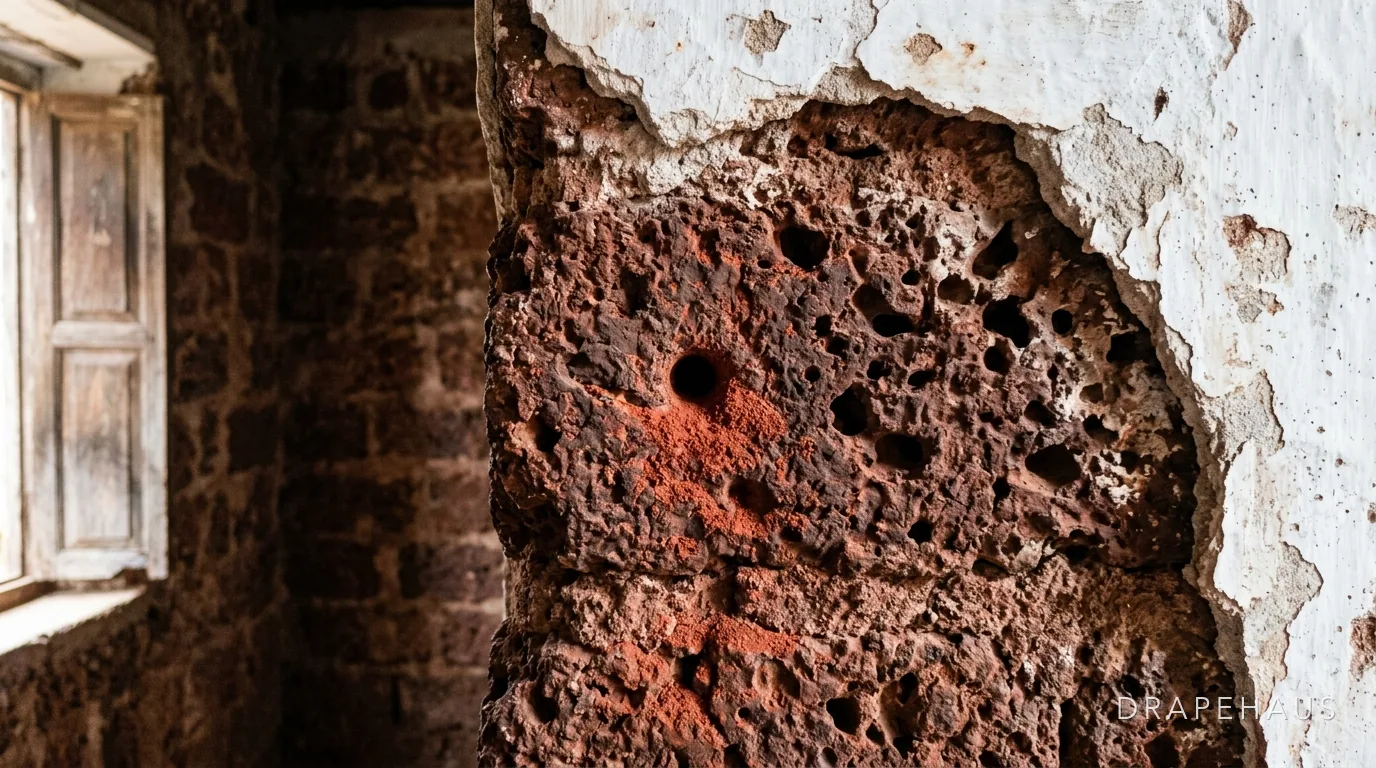
A standard plastic wall plug in that assembly does not hold. Worse, it does not fail gradually. It stays put for a few months and then pulls out under the cyclic load of a curtain being drawn daily, taking a fist-sized piece of wall with it. In lime plaster the damage then spreads outward from the hole.
This is the single most common reason we decline to quote from photographs. The wall has to be assessed by hand.
An expanding plastic plug works by being compressed against the sides of a clean, parallel hole in dense material. Laterite is neither dense nor clean-drilling: it crumbles at the hole edge, the bore ends up oversized and irregular, and there is nothing solid for the plug to expand against.
Mud-bonded joints make it worse, because a hole that happens to land on a joint has effectively no material around it at all. And lime plaster is not bonded to the substrate the way cement render is — it can separate as a sheet, so a failing fixing lifts a whole area rather than leaving a neat hole.
The load pattern matters too. A curtain is not a static weight. Every draw applies a sideways jerk at the bracket, and it is that repeated shear that eventually works a marginal fixing loose.
Chemical or resin anchors are the best answer in laterite. Resin is injected into the hole and bonds to the irregular bore rather than relying on compression, so the strength comes from adhesion over a larger area. For heavy tracks on old walls this is what we specify as standard.
Longer fixings reaching sound material behind any degraded surface layer help considerably. So does spreading the load: using six brackets where the span calls for four reduces the force on each one substantially, and it costs almost nothing.
Where the wall is genuinely unsound, the timber window frame is usually the better fixing point. In heritage Goan houses these frames are often excellent hardwood — teak, jackwood or matti — and far stronger than the masonry around them. Fixing to the frame also puts the load directly onto something designed to carry the opening.
Rather see it in your own room?
We bring samples to the house, measure every window, and specify for the light and exposure you actually have.
More on this — tap a heading to read
Some walls should not be drilled. Decorative lime plaster, original carved timber, azulejo tilework and anything structurally questionable are all situations where the right answer is to find another route.
Ceiling fixing is often available and overlooked. A track fixed to a sound ceiling avoids the wall entirely and, on a tall heritage window, usually produces a better line anyway.
Tension systems inside a reveal work for light curtains and leave no holes at all. They will not carry a heavy lined drape, and any supplier claiming otherwise is overselling.
Occasionally the honest answer is that the window should not have a curtain. In a heritage room with functioning shutters and oyster-shell panes, that is not a failure — it is the building already solving the problem.
We start by tapping along the line where the track will go. Sound, well-bonded plaster gives a sharp, solid note; plaster that has lifted from the stone behind it sounds hollow and drummy. Hollow areas are marked in pencil, because no fixing should rely on them. A small pilot hole in an inconspicuous spot tells the rest of the story. The colour and texture of the dust show whether the drill has reached laterite, brick, concrete or a mud joint. Red-brown grit with small hard nodules is typical laterite; soft, fine brown dust usually means mud mortar; grey powder means cement, often from a later repair.
We also look above and below the window for cracks, damp staining and any sign of previous fixings. A wall that has already had brackets pulled out has told you exactly how it behaves. Old repairs in cement are worth noting too, because the edge between a hard cement patch and the softer lime around it is a weak line that fixings should avoid.
Resin anchors give the most reliable result but need care. The bore must be cleaned of dust, the resin needs time to cure before any load is applied, and in the monsoon a damp bore can slow or weaken the cure. They are a considered job rather than a quick one, which is part of why they work.
Long frame fixings with a nylon sleeve are a reasonable choice in sounder laterite for lighter treatments. They reach through the plaster into the stone and spread load along their length, but they still depend on the stone around them being sound. Timber battens are a traditional and very effective option. A hardwood batten fixed to the wall at several well-chosen points, sealed and painted to match, lets the track be screwed anywhere along its length. It spreads load, avoids repeated drilling, and suits the proportions of a heritage room.
Old Goan houses were designed with tall windows, deep reveals and often high ceilings, and the hardware should respect that. Slim wrought-iron or bronze-finished poles on a few strong brackets look at home; heavy modern tracks with visible cords can look out of place. Weight matters as much as appearance. A lighter unlined or simply lined cotton curtain places far less load on a fragile wall than a heavy lined drape, and in Goa's monsoon it will also dry and breathe better. Choosing a lighter treatment is often the most effective way to protect the wall.
Near the sea, bear in mind that steel and iron hardware corrodes, and rust runoff on lime plaster is very hard to remove. Stainless, brass or powder-coated finishes are safer choices on an external wall. The same applies to the screws and wall fittings, which are hidden but corrode first and stain the plaster from behind the bracket.
Laterite and lime plaster absorb water through the monsoon, and mud-bonded joints soften when wet. Drilling and fixing in the dry months from November to May gives a cleaner bore, a better resin cure, and the chance for any patched plaster to set before the rains. If a fixing has failed during the monsoon, the priority is to make the curtain safe, often by taking it down, and then to wait for the wall to dry before making a permanent repair. Repairing a wet wall usually means doing the same job twice.
In a cement-rendered wall, a failed bracket leaves a hole that is filled and painted. In a lime-plastered heritage wall, the failure often lifts a larger area of plaster, and patching lime properly needs matching materials and a skilled hand. Where the wall carries original colour or kaavi decoration, the damage may not be fully repairable.
There is also the question of what falls. A heavy track coming away at height can bring a pole, fabric and plaster down together. That is a safety concern in any home and a serious one in a guest room. Treating fixing as a structural decision rather than an afterthought is what prevents it.
Diagnosis
WhyExpanding plug in porous laterite with nothing solid to compress against, failing under repeated shear from daily use.
FixResin anchor into a cleaned bore, longer fixings into sound material, and more brackets to spread the load.
WhyLime plaster is not chemically bonded to the substrate and can separate as a layer rather than failing locally.
FixFix through the plaster into sound masonry behind, or move to the timber frame. Never rely on plaster to carry load.
WhyLaterite is inconsistent in density and crumbles at the bore edge, particularly on a mud-bonded joint.
FixResin anchors tolerate an irregular bore because the bond area does the work. Avoid hammer action where it makes the hole worse.
WhyDegraded masonry, decorative plaster or protected original fabric.
FixCeiling-fixed track, tension systems inside the reveal for light curtains, or accepting that the window works better undressed.
WhyThe bore was not cleaned of dust, or the anchor was loaded before the resin had fully cured, often in damp conditions.
FixClean the bore thoroughly with a brush and blower, follow the curing time for the temperature and conditions, and avoid fixing into wet walls.
WhyHammer drilling close to the edge of a weak plaster or near an existing crack shocked the surrounding material.
FixUse rotary drilling without hammer action, keep fixings away from edges and cracks, and consider a timber batten to spread the load.
WhyPrevious hardware was fixed at different points, and the new layout does not reuse or cover them.
FixPlan the new layout to reuse sound fixing points where possible, and patch the old holes with a lime-compatible filler.
Checklist
Tap and press the wall before assuming anything about it
Identify whether plaster is lime or cement render
Use resin anchors rather than expanding plugs in laterite
Add brackets beyond what the span requires
Check the window frame as an alternative fixing point
Never drill decorative plaster, carved timber or tilework
Take a pilot hole and read the dust before choosing a fixing
Clean every bore thoroughly and respect resin curing times
Consider a sealed hardwood batten to spread the load on weak walls
Do fixing work in the dry months, never into a saturated wall
From the Journal
All articlesFAQ
Laterite is porous and often mud-bonded, so an expanding plastic plug has nothing solid to compress against. It holds briefly, then works loose under the sideways jerk of the curtain being drawn daily, and takes wall material with it when it goes.
Resin or chemical anchors. The resin bonds to the irregular bore over a large area rather than relying on compression, which is exactly what a soft, inconsistent material needs. Combine that with more brackets than the span strictly requires.
Often it is the better option. Heritage Goan window frames are usually excellent hardwood and considerably stronger than the masonry around them. It also puts the load onto something already designed to carry the opening.
Ceiling-fixed track avoids the wall entirely and often looks better on a tall window. Tension systems inside the reveal leave no holes at all but will only carry light curtains — they are not suitable for anything lined and heavy.
It depends on the stone, the joints and the plaster, which vary widely even within one house. Sound laterite with a well-installed resin anchor holds a heavy curtain track reliably. Degraded, mud-bonded or hollow-plastered sections may hold very little. That is why we assess each wall by hand rather than quoting a general figure.
Gently, and often better not at all. Hammer action can crumble the edges of the bore and loosen plaster around the hole. Rotary drilling with a sharp masonry bit gives a cleaner, more controlled hole. Where hammer action is necessary, use it briefly and keep well away from edges and existing cracks.
Remove loose material, dampen the area slightly, and fill with a lime-based mortar or filler rather than cement or gypsum, which are too rigid and can trap moisture. Build it up in thin layers, let each set, and finish to match. Large or decorated areas may need a specialist in lime work.
Either can work. Poles usually need fewer, stronger brackets, which suits walls with few sound fixing points. Tracks often need more brackets but can be ceiling-fixed or mounted on a batten. The choice should follow what the wall can safely carry, and then what looks right in the room.
Keep reading