 Drape Haus
The standard wallpaper size is the Euro roll: 10.05 metres long and 53 centimetres wide, about 5.33 square metres of paper. The German wallpaper industry's institute explains that the European standard EN 233 fixes that nominal size for finished wallcoverings and allows it to vary by no more than 1.5 per cent either way. Much of the wallpaper on sale follows it, but not all. American papers come in different formats, some papers come in double-width rolls, and the label on the roll is always the number to trust.
Knowing the roll size is only half the job. Wallpaper is hung in drops, full-height strips cut from the roll, and a roll only gives as many whole drops as fit in its length. Add trimming at top and bottom, then the extra paper lost to matching a pattern, and a roll covers less wall than its area suggests. That is why dividing the wall area by 5.33 almost always undercounts.
This guide sets out the common roll formats, how drops and pattern repeats decide the count, a worked example for a typical Goan bedroom, and how to use our wallpaper calculator to get the figure for your own walls.
Common wallpaper roll sizes, and why labels differ
The Euro roll is the one most people in India will meet, and it is the format behind the standard setting on our calculator. At 0.53 by 10.05 metres it holds 5.33 square metres. The paper itself grows slightly when pasted; the German institute's hanging notes give a typical 53-centimetre strip as about 54 centimetres wide once soaked with paste, which is why pasting times on the label matter for tight joints.
American formats work differently and cause most of the confusion in online calculators. The Wallcovering Installers Association, the American trade body for paperhangers, describes a single roll as anywhere from 18 to 36 inches wide, about 46 to 91 centimetres, and four to eight yards long, about 3.7 to 7.3 metres, and a double roll as two single rolls in one continuous strip. University of Kentucky extension guidance adds that American prices are usually quoted per single roll even though most papers are packed and sold as double or triple rolls. The same Association counts a Euro roll as 28 to 30 square feet per single roll, roughly 2.6 to 2.8 square metres, which means an American listing can count one full 10.05-metre European roll as about two of its single rolls.
Wide rolls are a third format. Some papers are made wider than the standard, which means fewer seams on the wall. Our calculator offers a 1.06-metre option, twice the standard width, for these. Widths and lengths of imported and specialist papers vary, so read the label, and if a price is quoted per roll, ask exactly how long and how wide that roll is.
| Format | Width | Length | Area | Notes |
|---|---|---|---|---|
| Euro roll (EN 233) | 0.53 m | 10.05 m | 5.33 m² | Nominal size; may vary by 1.5% either way |
| American single roll | about 46–91 cm | about 3.7–7.3 m | varies | Usually priced singly, sold as double or triple rolls |
| American double roll | as single roll | twice a single roll | twice a single roll | Two single rolls in one continuous strip |
| Euro roll counted the American way | about 53 cm | about 4.9 m per single roll | about 2.6–2.8 m² | One real Euro roll is roughly two such single rolls |
| Wide roll | wider than 0.53 m; check label | check label | check label | Fewer seams; heavier to hang |
Why paperhangers count drops, not square metres
Every drop is cut a little longer than the wall is high. The German institute's tip is the room height plus five to ten centimetres, which is trimmed off at the ceiling and skirting once the paper is on the wall. Our calculator allows ten centimetres. On a three-metre wall, each plain drop is therefore 3.10 metres, and a 10.05-metre roll gives three of them, with 75 centimetres left over. That leftover is too short for another full drop, so for a full-height wall it is waste.
Then count the drops each wall needs. Its width divided by the roll width, rounded up, gives the number of strips. A 3.6-metre wall on 53-centimetre paper takes seven drops, because six would only cover 3.18 metres. Add the drops for every wall, divide by the drops each roll gives, and round up again. That is the number of rolls, before any spare.
On that 3.6-metre wall, three metres high, the area is 10.8 square metres. Divided by 5.33, that suggests just over two rolls. Counted in drops, it needs seven drops at three per roll: three rolls. The area method would have left you a whole roll short, and a short order on a patterned paper is not a small problem, as the section on batches explains.
Divide wall area by roll area and you will almost always order too little. Count drops.
Planning something like this?
We visit homes across North and South Goa, measure on site, and bring samples to see in your own light.
How pattern repeat increases the number of rolls
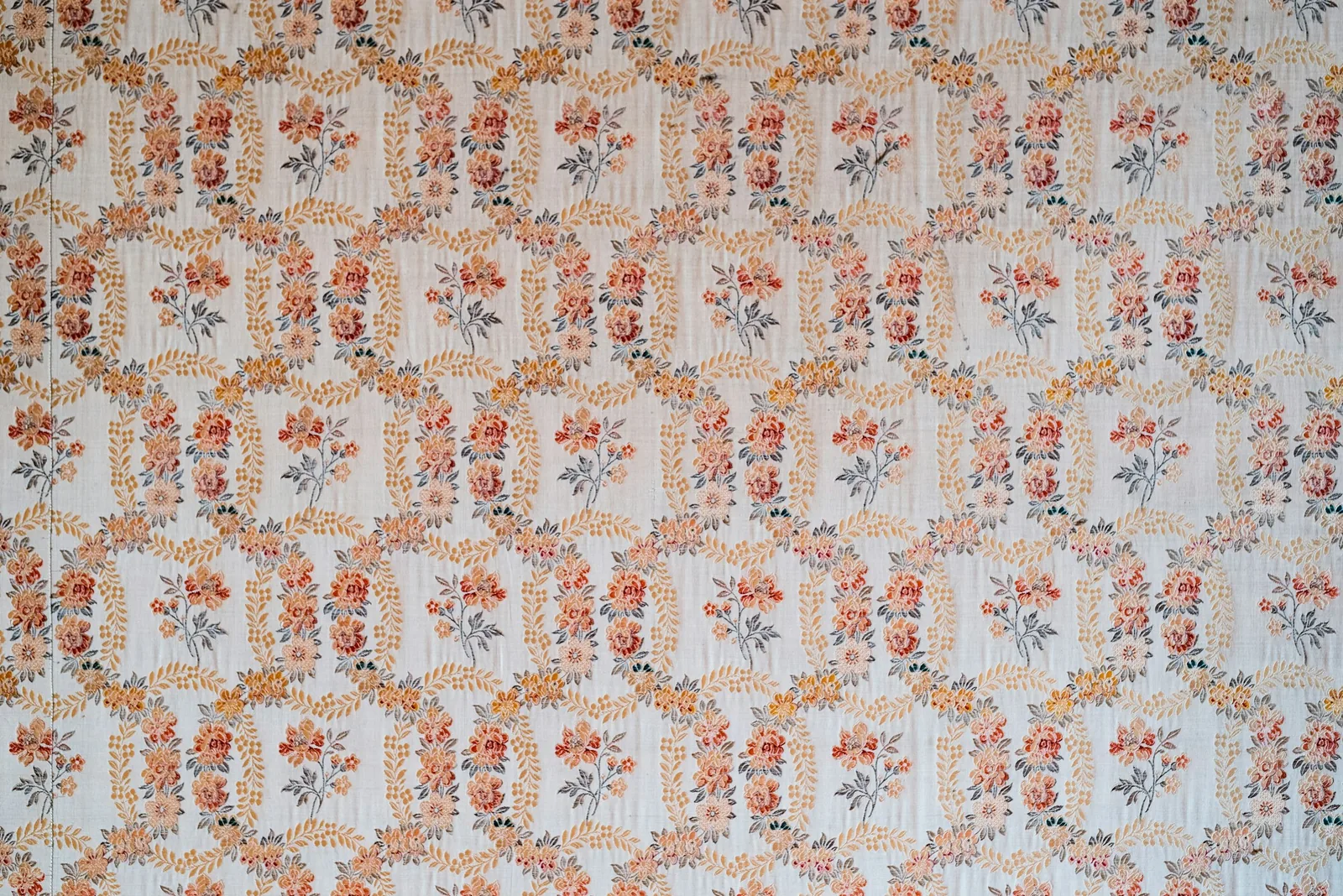
The pattern repeat is the distance down the roll before the design repeats itself. The Wallcovering Installers Association defines it as the distance from the centre of one motif to the centre of the next. When drops sit side by side, the design has to line up across each joint, so every drop has to start at the same point in the pattern. Paper between the end of one usable drop and the start of the next matching point is cut off and lost.
Labels show how the pattern matches using symbols set out in the European standard EN 235, which the German institute explains. A random match needs no matching at all, and drops can be cut one after another from the roll. A straight match has the same motif at the same height on every drop, with the repeat printed on the symbol, for example 50 centimetres. An offset or half-drop match shifts the design by half a repeat on every second drop, shown as two numbers such as 50/25, so every other drop is identical. A reverse-hang symbol means every second drop is hung upside down, which is common on plain and textured papers.
Our calculator handles the repeat the cautious way: it rounds each drop up to a whole number of repeats before adding the trim. On a 2.4-metre wall, a plain paper gives four drops per roll. With a 64-centimetre repeat it gives three, because each drop has to be 2.66 metres long. On tall walls the effect is larger, and that is where it catches people out. University of Kentucky guidance notes a trick professionals use with large repeats: cutting alternate drops from two rolls, so the offcut from one roll lines up with the next match on the other, which can reduce waste. A good paperhanger will look for savings like that on site; the calculator gives you the safe figure to plan with.
| Roll and repeat | Drop length cut | Drops per roll | Drops needed | Rolls, plus one spare |
|---|---|---|---|---|
| 0.53 m, no repeat | 4.60 m | 2 | 8 | 4 + 1 = 5 |
| 0.53 m, 53 cm repeat | 4.87 m | 2 | 8 | 4 + 1 = 5 |
| 0.53 m, 64 cm repeat | 5.22 m | 1 | 8 | 8 + 1 = 9 |
| 1.06 m, 53 cm repeat | 4.87 m | 2 | 4 | 2 + 1 = 3 |
A worked example for a typical Goan bedroom
Take a bedroom of 3.6 by 3.0 metres in an older Goan house, with a ceiling three metres above the skirting, papered in a design with a 53-centimetre repeat. Each drop is cut to six repeats, 3.18 metres, plus ten centimetres of trim: 3.28 metres. A 10.05-metre roll gives three such drops, with about 21 centimetres to spare.
For the wall behind the bed alone, 3.6 metres wide, that is seven drops, so three rolls, and four with the spare. For the whole room, the walls take seven, six, seven and six drops: 26 in all. At three per roll that is nine rolls, ten with the spare. The area method would have said 39.6 square metres divided by 5.33, or about seven and a half rolls. In wide 1.06-metre rolls the same room needs 14 drops at three per roll: five rolls, six with the spare.
Now move the same room into a modern flat with a 2.7-metre ceiling. A plain paper's drops are 2.8 metres, still three per roll, so the count stays at nine plus a spare. With the 53-centimetre repeat each drop still has to be cut to six repeats, so nothing changes there either. A lower ceiling only saves paper when it lets a roll give a fourth drop, which for a plain paper happens at about 2.4 metres. This is why the repeat and the height matter more than the floor area.
| Choice | Drop length cut | Drops per roll | Drops needed | Rolls to order |
|---|---|---|---|---|
| Bed wall only, 0.53 m, 53 cm repeat | 3.28 m | 3 | 7 | 3 + 1 spare = 4 |
| Whole room, 0.53 m, no repeat | 3.10 m | 3 | 26 | 9 + 1 spare = 10 |
| Whole room, 0.53 m, 53 cm repeat | 3.28 m | 3 | 26 | 9 + 1 spare = 10 |
| Whole room, 1.06 m, 53 cm repeat | 3.28 m | 3 | 14 | 5 + 1 spare = 6 |
| Area method for comparison | — | — | — | 39.6 ÷ 5.33 ≈ 7.4, too few |
Doors, windows, stairs and walls that are not square
Our calculator does not deduct doors and windows, and neither should you, in most rooms. A door takes away the width of one or two drops, but the paper above it and below a window still has to be cut, and the pattern has to carry on across the opening at the right point. Those short pieces usually come from offcuts, which is fine when there are offcuts to spare and a problem when the order was cut to the bone. A wall that is mostly glass is the exception, and that is something to count on site.
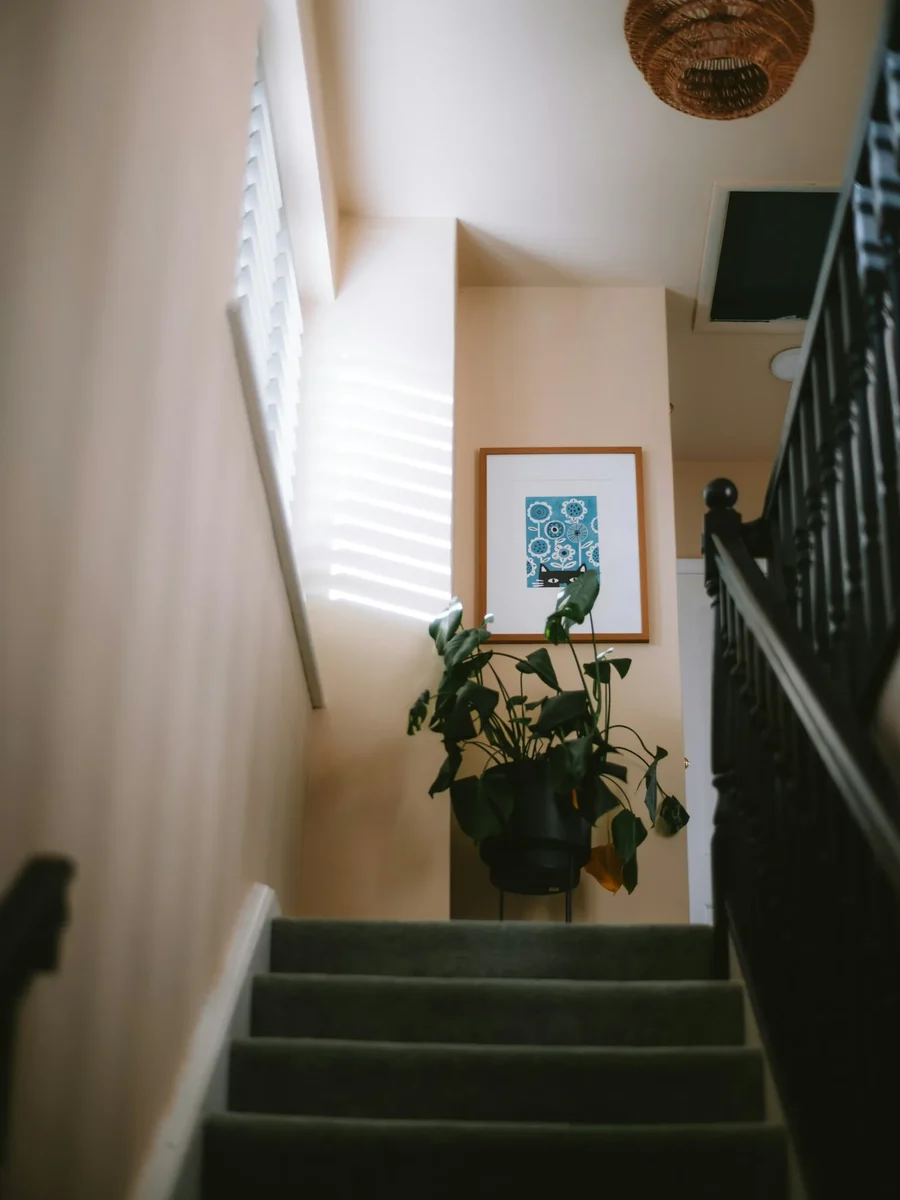
Walls in older Goan houses are rarely perfectly square or plumb. A wall can measure differently at the top and the bottom, and ceilings in old houses can slope from one end of a room to the other. Measure width at several heights and height at several points, and use the largest figure each time. Very tall walls, such as a staircase wall or the end wall of a double-height living room, need their drops counted one by one, because the drop lengths change as the stair rises or the ceiling slopes.
Wallpaper also only stays up on a dry wall. Before ordering anything for an older house, have the wall checked for damp and loose plaster; our guide to the best wallpaper for humid walls explains the checks and which paper suits which room.
Order every roll from one batch, plus a spare
Wallpaper is printed in runs, and the colour can shift slightly from one run to the next. Every roll's label carries a batch or production number for that reason. The German institute's advice is that one continuous wall should only ever be papered with rolls of the same number, because small differences in shade cannot be ruled out between runs. The American trade calls the same thing the dye lot. Check the number on every roll before the first one is cut, not halfway round the room.
That is the case for ordering a spare. University of Kentucky guidance recommends buying an extra roll or two because wallcoverings are made in batches, and if you run short you may not get an exact match later. A spare from the same batch also lets a damaged drop be replaced years later without a visible change of shade. Our calculator adds one spare roll to every count for exactly this reason.
Store the spare carefully. The US federal wallcovering specification asks for wallcovering to be kept flat, protected from damage and moisture, at 30 to 60 per cent relative humidity, labelled with its pattern and dye lot. In a Goan monsoon that means a shelf in an air-conditioned room, wrapped, with the label kept with the roll. A roll left in a cupboard on an outside wall through the rains can be spotted with mould by the time it is needed.
How to measure your walls and count the rolls
Measure in metres, write every figure down, and use the largest measurement each time.
Measure each wall's width
Measure the width of every wall you want to paper at three heights: near the skirting, at waist height and near the ceiling. Older walls are often not square, so note the largest figure for each wall.
Measure the height
Measure from the top of the skirting to the ceiling or cornice at each end of every wall and in the middle. Use the largest figure. In old houses, ceilings can slope or step between rooms.
Read the roll label
Note the roll width and length, the pattern repeat, the match symbol (random, straight, offset or reverse hang) and the batch number. If the label gives an offset such as 50/25, the first number is the repeat.
Enter the walls in the calculator
In the wallpaper calculator, type each wall's width, set the wall height between 2.2 and 6 metres, choose the roll width and the nearest repeat at or above your paper's. It counts drops per roll, drops per wall and the rolls to order.
Add the spare and check the batch
Order the calculator's figure, which already includes one spare roll, and ask for every roll from the same batch. For a large repeat or a tall wall, consider a second spare.
Have the count checked on site
Before ordering, have the walls measured and checked for damp. A paperhanger counts drops wall by wall, allows for openings and out-of-square corners, and confirms the figure.