 Drape Haus
Drape Haus
Preparing the room
Drape Haus
Preparing the room
Blinds
A small motor hidden in the roller or headrail raises, lowers and sets the blind at the press of a button, on a timer or when the sun comes round. In Goa the real questions are how it is powered, what happens when the electricity goes, and how the motor copes with damp and salt.
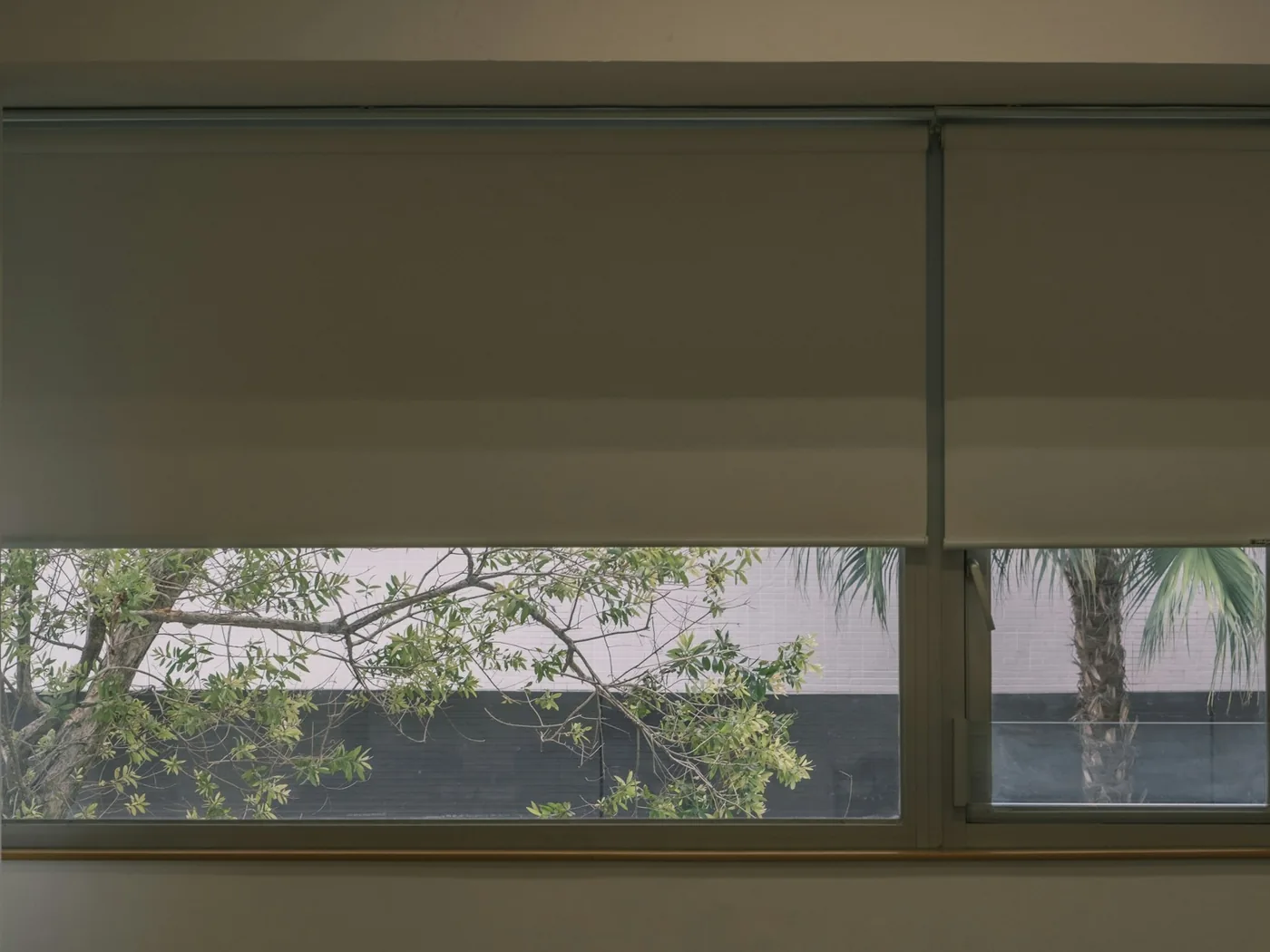
Roller · Midday
Treatment
Time of day
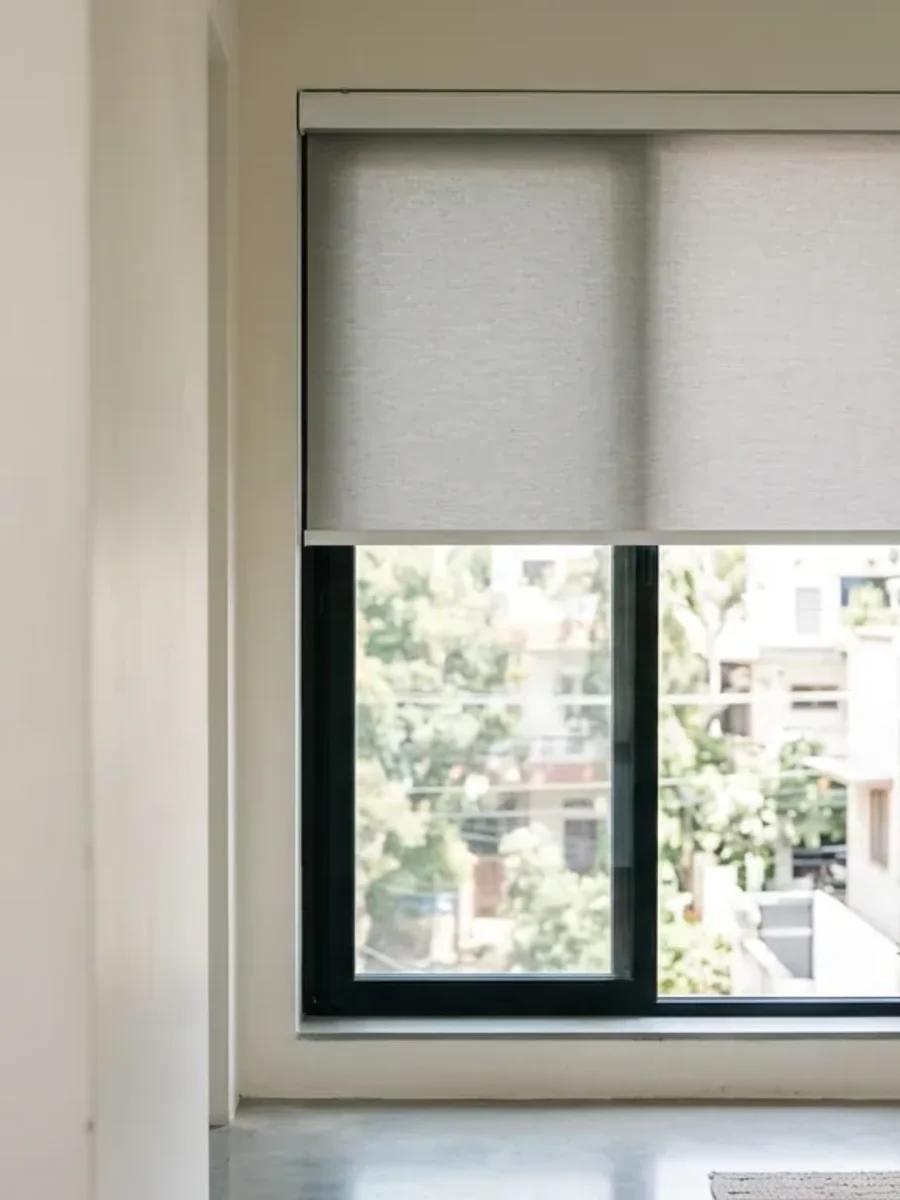
Light-filtering roller fabric: soft, even light and daytime privacy. For a bedroom, choose blackout fabric and side channels.
In short
By the Drape Haus studio · How we write
Is it right for you?
Motorising a blind changes how it is used more than how it looks. A blind that is awkward to reach, heavy to raise or one of eight along a glazed wall tends to be left in one position all year. Put a motor in it and it starts doing its job again: down for the afternoon glare, up for the evening breeze, closed at night without anyone walking the length of the room.
The strongest cases are easy to spot. Windows above normal reach, double-height glass, skylights, a bank of blinds across a sea-facing living room, a bedroom where you want the blackout to lift gently in the morning, and a villa or homestay that sits closed for weeks while the owner is away. In each, the motor solves a problem a chain or cord cannot.
The weaker cases are worth naming too. A single small window you pass every day gains little from a motor. A blind that is rarely moved does not justify the charging or the wiring. And a heavy blind that was never sized for a motor will be a disappointment however good the control system is. We would rather tell you which windows to leave manual than motorise the whole house by default.
The details
Most motorised blinds are rollers or zebras with a tubular motor slid inside the tube, so nothing shows at the window but the fabric and a slim bracket. Romans, honeycomb blinds and the tilt of a Venetian use a different arrangement: a compact motor sits in the headrail and winds the lift cords or turns the tilt rod. Both are reliable when they are sized to the weight of the blind, which is the first thing we calculate.
Power is the decision that shapes everything else. A rechargeable battery motor needs no wiring at all and carries on through a power cut; it is topped up with a charging lead or a small solar panel on the glass. A mains-wired motor never needs charging, but the cable has to reach the head of each window, which is easy in a new build or renovation and disruptive once walls are plastered and painted.
Power cuts are part of life in Goa, so we plan for them from the start. Battery motors simply keep running. Wired motors can be put on the inverter or UPS circuit, and where neither suits, we fit a motor with a manual override so the blind can still be raised by hand.
Control can be as simple as a handheld remote, or as complete as timers, sun sensors and scenes run from a phone or voice assistant through a home automation hub. Our Motorised Window Treatments service covers curtains and blinds together; this page is about blinds alone, and which of them are worth motorising.
Your options
A motorised blind is three decisions stacked together: which kind of motor suits the blind, how it is powered, and how you tell it what to do. Getting the first two right matters far more than the third, which can usually be changed later.
Swipe for all 6 →
The honest view
Windows you could never reach
Clerestory glass, stair windows and double-height living rooms become usable again, because the blind can be lowered for the afternoon and raised in the evening without a ladder or a long pole.
No cords in reach of children
A motorised blind has no chain loop or cord hanging at the window, which removes the main hazard of a manual blind in a nursery or family room.
The house looks after itself
Timers and sun sensors close the west-facing blinds before the heat builds, and lower everything at dusk whether you are home or not. In a villa left closed for months, that also makes the house look occupied.
Longer life for the blind
Motors lift evenly and stop at the same limits every time, so fabric is not dragged crooked or wound out of square by a hurried pull on the chain.
Planning matters more
A wired motor needs a cable at the window head, and a battery motor needs a way to be charged. Neither is difficult, but both are easier to solve before the walls are finished.
Not every blind suits a motor
Very wide vertical blinds, heavy timber Venetians and blinds with deep stacks put a lot of load on a motor and often work better split into smaller sections or left manual.
Electronics in a damp climate
Receivers, batteries and contacts dislike salt and humidity. The right motor and the right cable route avoid most problems, but a poorly sealed unit by the sea will show it within a few monsoons.
Side by side
The choice is rarely all one or the other. Most homes end up with battery motors in finished rooms, wired motors where a renovation opened the walls, and a few blinds left manual.
| Battery motor | Mains-wired motor | Manual chain | |
|---|---|---|---|
| Works in a power cut | Yes | Only on inverter or UPS | Yes |
| Wiring needed | None | Cable to each window head | None |
| Routine upkeep | Charge or solar top-up | None | Chain and clutch checks |
| Suits heavy, wide blinds | Moderate | Yes | Becomes hard work |
| Timers and sensors | Yes | Yes | No |
| Retrofit in a finished room | Easy | Disruptive | Easy |
| Child safety | No cords | No cords | Needs a tensioner |
Swipe to compare →
If you are renovating, run a cable to the head of every window you might motorise one day, even if you start with battery motors. It costs little to leave a capped cable in the wall and a great deal to cut it in later.
Rather see it in your own room?
We bring samples to the house, measure every window, and specify for the light and exposure you actually have.
Room by room
The clearest case for a motor. Tall glass is impossible to manage by hand, and a group control lowers every blind on the wall to the same height for the afternoon.
A blackout roller on a timer lifts slowly at the hour you choose and closes at dusk. Choose a quiet motor and a bedside remote.
Overhead blinds are out of reach by definition. A tensioned skylight blind with a motor is the only arrangement most people will actually use.
No cords at the window is a real advantage. Keep the remote out of reach of small hands, or use a fixed wall switch set high.
A sun sensor lowers a solar roller when glare would hit the screen and lifts it when the sun moves on, without breaking concentration.
Possible with a moisture-tolerant blind and the motor well away from splashing, but the electronics have a harder life. Many bathrooms are better served by a manual PVC blind.
A blind you pass and adjust every day gains little from a motor. Keep it manual and spend on the windows you cannot reach.
In depth — tap a heading to read
In much of Goa the electricity drops several times in a monsoon week and occasionally for longer. A blind that cannot move until the power returns is more than an inconvenience if it is stuck closed on the only bedroom window or stuck open on west glass at three in the afternoon. We treat this as a design question, not an afterthought.
Rechargeable battery motors are the simplest answer, because they run from their own cell and never notice the outage. Wired motors can be connected to the circuit your inverter or UPS already backs up; we confirm with your electrician which circuit that is and whether it has spare capacity for the motors, which draw little power and only for a few seconds. Where neither is practical, we specify motors with a manual override, so a crank or a gentle pull lets the blind be raised by hand.
After a long outage, wired motors sometimes need their limits checked. A good installation remembers them; ask for that before you choose.
Mains-wired motors need a supply at the top of each window, usually on the side where the motor will sit. In a new villa or a full renovation, that is a short conversation with the electrician before walls are plastered or false ceilings closed. We mark the motor end of each blind on the drawings so the cable arrives where the bracket will be, not a hand's width away.
In a finished room, cutting laterite or plaster to bury a cable is messy and leaves patching to repaint. That is where battery motors come into their own. We also keep cables out of walls that take driving rain, because a damp laterite wall carries moisture along a conduit and into a junction box. The motor end of the blind goes on the drier side of the opening wherever we have the choice.
The motor itself is sealed inside the roller tube, but the head, where the receiver, the charging port and the limit buttons sit, is exposed to the room. Near the sea, salt settles on it and draws moisture from the air through the monsoon. Over a few seasons that can corrode contacts and make a receiver unreliable.
We specify motors with well-sealed heads for coastal rooms, fit the head on the side away from an opening window, and use stainless or coated brackets. In a house that will be closed for weeks, a cassette or pelmet that covers the motor end keeps most of the salt and dust off it. These are small choices that decide whether a motor gives trouble in its third monsoon or carries on quietly.
Start with what you will actually use. A handheld remote with a channel for each room is enough for many homes. A wall switch by the door suits people who never want to look for a remote. Beyond that, a home automation hub lets the blinds join timers, phone apps and voice assistants, and groups them into scenes: everything down for a film, everything up for the morning, the west side closed at two.
Sensors are where motorised blinds pay back in Goa. A sun sensor on the west glass lowers the solar rollers when direct light strikes and raises them when the sun drops behind the trees, which keeps a room noticeably cooler and protects floors and furniture from fading. A wind sensor is essential for any motorised outdoor blind, retracting it before a pre-monsoon squall reaches it.
Many Goan houses are shut for months while the owners are abroad, then opened for a season of family or guests. Motorised blinds help in two ways. A timer raises and lowers them on a varied daily pattern, so the house never looks empty from the lane, and on west glass they stay down through the hottest hours to protect the interior from sun.
The thing to plan for is battery self-discharge. A battery motor that is barely used still loses charge slowly, and a long hot closure speeds that up. If you use battery motors in a house left empty, ask your caretaker to charge them before you arrive, or fit solar top-up panels on the windows that get light. Wired motors on a timer avoid the issue entirely.
For a homestay, label each remote by room and keep a spare in the welcome folder. Guests rarely read instructions, but they will use a clearly marked button.
Living with it
Top up battery motors before the monsoon and before you return to a closed house, rather than waiting for the blind to slow down halfway.
A film of salt or dust on a small solar panel cuts its output sharply. Wipe it with a damp cloth when you clean the glass.
In sea-facing rooms, wipe the visible end of the motor and the charging port cover with a barely damp cloth every few weeks, then dry it.
Interrupting a motor repeatedly mid-travel, or pulling the fabric by hand while it runs, strains the gearbox. Let it reach its stop, then adjust.
Fresh batteries in remotes and sensors avoid the most common fault call: a blind that seems broken because its remote has gone flat.
Avoid these
Wiring every blind to an unbacked circuit means none of them move when the grid goes. Plan battery motors, inverter circuits or overrides from the start.
Cutting laterite and plaster to chase cables leaves a mess. Decide on wired motors while the electrician is still on site, or choose battery.
A motor working at its limit runs hot, sounds strained and wears quickly. The motor must be sized to the weight and width of the actual blind.
A verandah blind needs a sealed outdoor motor and a wind sensor. Indoor motors fail fast in driving rain.
Motors belong on windows you cannot easily reach or use often. A small window by the door is better left manual.
Checklist
More in blinds
Blinds do what curtains cannot: tight light control in a shallow recess, a clean line on a busy window, and genuine blackout when they run in side channels.
Our work
Our process
One team from the first visit to the last bracket, so nothing is lost between the person who specified it and the person who fits it.
FAQ
Battery motors are unaffected because they never draw from the mains while running. Wired motors stop unless they are on an inverter or UPS circuit, so we either connect them to backed-up power or specify a manual override for the windows that matter most.
Sometimes. A good roller or zebra blind can often take a tubular motor if the tube diameter and bracket depth allow it. Romans, Venetians and older blinds usually need a new headrail, and at that point a new blind is often the more sensible answer.
It depends on the size of the blind and how often it moves. A blind used twice a day usually runs for months on a charge, and a small solar panel on the glass can keep it topped up indefinitely on a window that gets reasonable light.
A quality tubular motor makes a low, steady hum for the few seconds it runs. Quieter motors exist for bedrooms and nurseries, and correct sizing matters as much as the motor itself, because an overloaded motor strains and sounds it.
Rollers, zebras and blackout rollers motorise most easily, with a tubular motor hidden in the tube. Romans, honeycomb blinds and Venetian tilt use a headrail motor. Very wide verticals and heavy timber Venetians are possible but awkward, and are usually better split or replaced with a lighter blind.
Not for battery motors, which need no wiring at all. Mains-wired and low-voltage motors need a supply at each window head, which your electrician runs before we fit the blinds. We mark the motor end of each blind so the cable arrives in the right place.
Yes, through a home automation hub that talks to the motors. The hub adds timers, scenes and voice control on top of the remote. If you only want a remote and a timer, you do not need a hub.
The motor in the tube is well protected, but the head, receiver and charging port can corrode near the sea. Choosing well-sealed motors, placing the head away from the opening sash and covering it with a cassette in closed houses avoids most trouble.
That service covers motorised curtains and blinds together, including tracks and whole-house planning. This page goes deeper on blinds alone: which ones suit a motor, how to power them, and how they cope with Goan conditions.
Next step
The best motorised installations are planned early: which windows need a motor, how each will be powered, and what happens in a power cut. We visit, look at every window you find hard to manage, check the window heads, recesses and the inverter circuits with you, and recommend battery, wired or manual for each. We then size the motors to the blinds, make them to measure, fit them and set the limits, timers and scenes so they work from the first evening. Book a home visit, ideally while your electrician is still on site.