 Drapehaus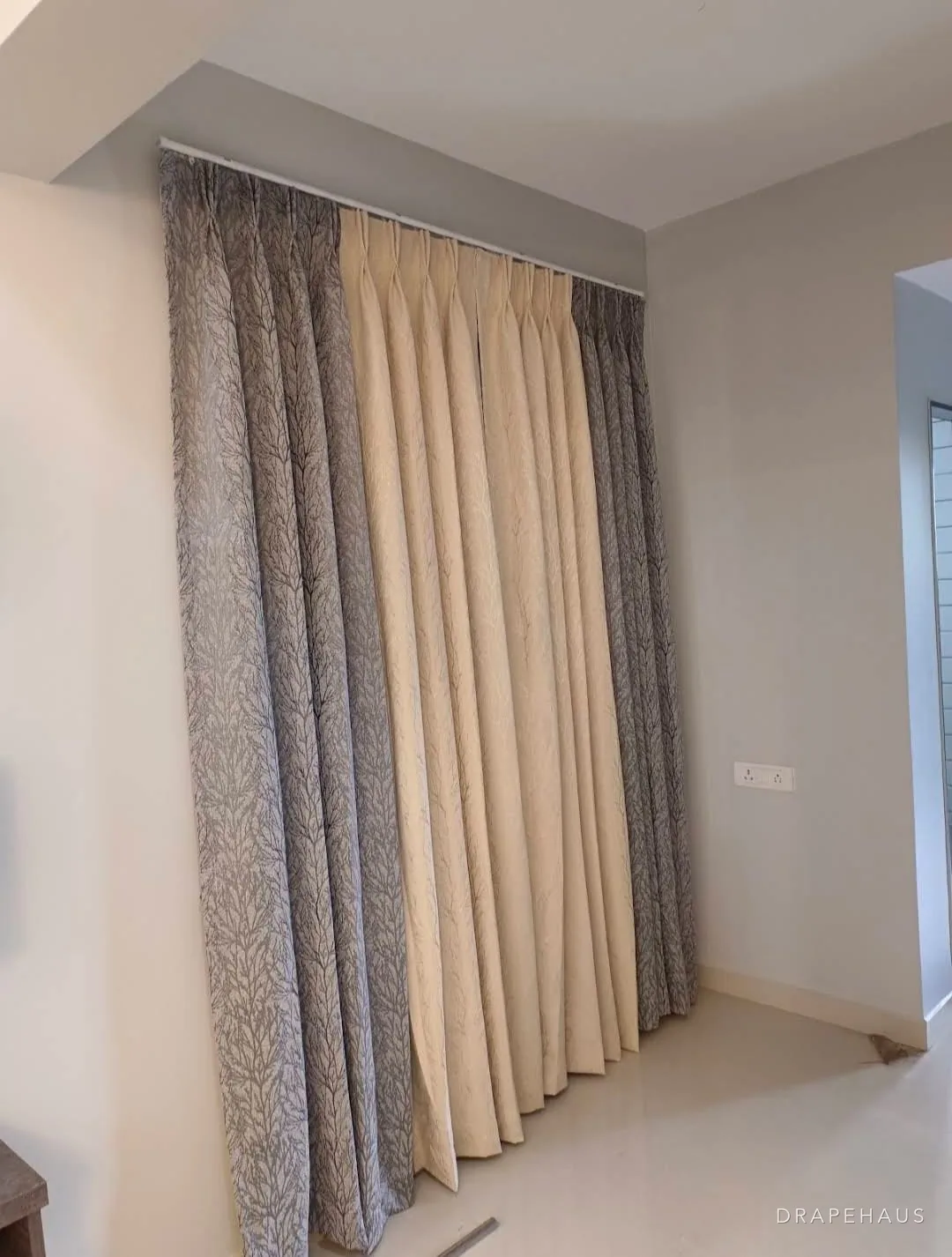
Drapehaus
Preparing the room
Drapehaus
Preparing the room
Material
Sheers do more useful work in a Goan house than any other single layer, and they are consistently asked to do two things they cannot: control heat, and provide privacy at night.
By the Drapehaus studio · 19 September 2026 · How we write
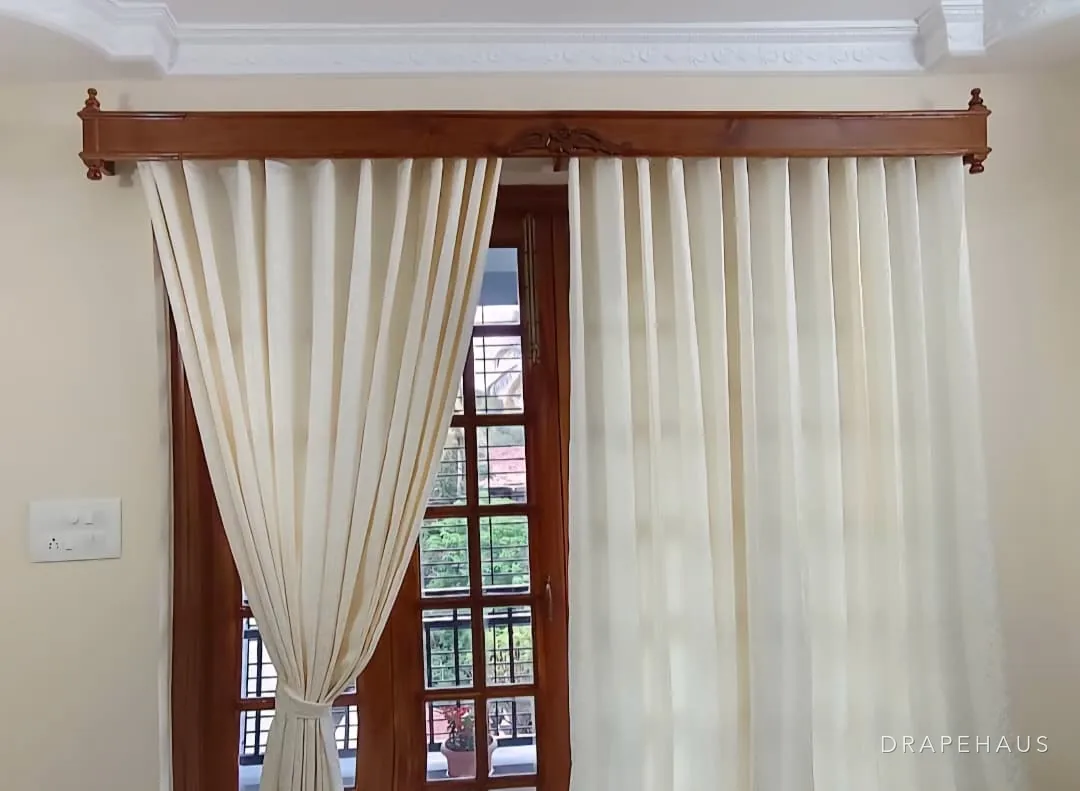
What they are genuinely excellent at is turning harsh direct sun into soft diffuse light, and screening a room from outside view during daylight hours while keeping the window visually open. In a climate with this much sun and this many houses close together, that is a great deal of value.
Understanding the limits is what makes them work, because a sheer specified as a complete solution disappoints, while the same sheer specified as one layer of two performs beautifully.
Diffusion is the main one. A sheer takes a hard directional beam and scatters it into soft ambient light, which removes glare, eliminates harsh shadows and makes a room far more comfortable to be in during the middle of the day.
Daytime privacy is the second. Because the outside is brighter than the inside during daylight, a sheer reads as opaque from outside and largely transparent from inside — which is exactly the asymmetry you want.
Wide-width voiles are worth asking for specifically. At 280 or 300cm, a single width runs a long window with no vertical seams, and on a full-height sliding door that difference in appearance is considerable.
They do not reduce heat meaningfully. Most solar energy arrives as near-infrared, and an open weave passes almost all of it. The room looks less glaring and stays just as warm, which is the single most common disappointment in this category.
They do not provide privacy after dark. The asymmetry that makes them work reverses completely once the interior is lit and the outside is dark — at which point the room is clearly visible from outside and the sheer is doing nothing.
Any room needing evening privacy needs a second closing layer. This is not a failure of the sheer; it is what the second track is for.
Rather see it in your own room?
We bring samples to the house, measure every window, and specify for the light and exposure you actually have.
More on this — tap a heading to read
A sheer is the most exposed fabric in the house. It usually hangs nearest the glass, it is rarely lined, and it is made from fine yarns. Fine yarns have a great deal of surface for the amount of fibre they contain, so sunlight reaches far more of the material, and any fibre that weakens in sun will weaken faster as a sheer than as a heavy curtain.
That is why polyester voile is the default for most Goan windows. It holds its strength well behind glass, keeps its whiteness, absorbs almost no moisture and washes and dries in hours. Linen and cotton sheers look softer and more natural, and in a shaded, well-ventilated room they are lovely, but on a bright window they can tear within a few seasons and mildew spots show vividly on a translucent cloth.
Linen-look polyester sheers are a sensible middle path near the sea. They carry some of the slub and irregularity of a natural sheer without its vulnerability, and they wash as easily as plain voile.
Sheers need more fullness than curtains to look right. A heavy curtain at twice the track width can look generous; a sheer at the same ratio looks thin and stretched. Two and a half to three times fullness is the usual convention, and at that ratio the folds overlap enough to give real diffusion and daytime screening rather than a flat, see-through panel.
The heading shapes how those folds read. A wave or ripple heading on a suitable track gives even, continuous folds that suit modern rooms and wide sliding doors. A pencil pleat is softer and more traditional. Either way, a ceiling-fixed track makes the most of the height and closes off the light gap above the fabric.
A weighted hem is worth specifying on almost every sheer in Goa. A fine chain or weighted tape sewn into the hem makes the fabric hang straight, stops it drifting in a light breeze and keeps the folds evenly spaced. Without it, a sheer on an open window spends much of its life blowing about.
Most Goan houses rely on moving air, and a sheer in moving air behaves like a sail. On an open window it will billow into the room, snag on furniture and, in a strong gust, reach a ceiling fan. On a sliding door it can be drawn into the track and torn as the door closes. These are the most common ways sheers are damaged here, and none of them is a fabric fault.
The fixes are mechanical. A weighted hem reduces billowing considerably. Tiebacks or a holdback allow the sheer to be gathered clear of a door that is in use. The track can be set so the stacked sheer sits beyond the door opening rather than across it. Where a ceiling fan is close to the window, the sheer should stop short of its reach even at full billow.
Sheers are also not insect screens. They catch and rest mosquitoes rather than stopping them, and they gather dust from open windows quickly. Where insects are the concern, fit proper mesh screens to the openings and let the sheer handle light and privacy.
Because a sheer is almost always one of two layers, the track arrangement has to be planned from the start. The usual arrangement puts the sheer on the window side and the closing curtain on the room side, so the curtain covers the sheer at night and the sheer handles daylight alone. Brackets need enough projection to carry both tracks with clearance between them.
Reversing the order, with the sheer in front, is a legitimate choice where the sheer is the main visual element and the second layer is a blind hidden inside the reveal. In that case a blackout or solar roller sits behind a full-height sheer, and the room shows a single soft layer by day and full privacy at night.
The stack-back matters too. When drawn open, both layers gather at the sides of the window, and on a narrow wall they can cover part of the glass. Extending the track past the opening lets them clear it completely, which keeps the view and the light that the window was designed to give.
White sheers are the reflex choice and they are often right, but on a west-facing window they can glow brightly in the afternoon sun and feel almost as glaring as the bare glass. Ivory and soft natural tones reduce that glow while keeping the room light.
Darker sheers, in greys and charcoals, work differently. They absorb more of the light that strikes them, which cuts glare more effectively and, counter-intuitively, keeps the view outside clearer, because a dark screen reflects less light back into the eye. For a sea view from a west-facing room, a mid-grey sheer is often the better answer.
Tinted sheers also colour the room. A warm cream sheer gives the light a golden cast; a cool white makes it read cleaner and brighter. It is worth holding the sample up to the actual window at the time of day the room is used most.
Diagnosis
WhySheers scatter visible light but pass most near-infrared, so the energy entering the room is barely reduced.
FixAdd a solar-control roller or shade externally. Sheers are a light-quality layer, not a thermal one.
WhyThe day/night asymmetry reverses once the interior is lit and the exterior is dark.
FixA closing curtain or blind behind the sheer on a second track. This is expected behaviour, not a defect.
WhyStandard-width fabric joined to cover a long run, and joins are conspicuous in a translucent fabric.
FixSpecify wide-width voile at 280 or 300cm so a single width covers the run.
WhyFine open fabric catches dust readily and shows soiling much more than a heavy weave.
FixWash more often than you would a curtain — they are inexpensive and easy to launder. Replace when washing stops restoring them.
WhyThe fabric billowed or stacked into the door track and was caught as the door closed.
FixAdd a weighted hem, fit a holdback, and extend the track so the stacked sheer sits clear of the opening.
WhyFine natural yarns expose a lot of fibre to sunlight, so they lose strength quickly on a bright window.
FixUse polyester or linen-look polyester voile on sunny windows. Keep natural sheers for shaded rooms.
WhyA bright white sheer lit by low western sun glows and becomes a large bright surface in its own right.
FixChoose ivory or a mid-grey sheer on west-facing glass. Darker sheers cut glare and keep the view clearer.
Checklist
Plan a second layer for evening privacy from the start
Do not expect any meaningful heat reduction
Specify wide-width voile for long runs
Use generous fullness — sheers look poor flat
Expect to wash them more often than curtains
Check night-time privacy before signing off
Specify a weighted hem on windows that are opened
Use polyester voile on bright or sea-facing windows
Keep the stacked sheer clear of doors and ceiling fans
Test sample colours at the window at the time of use
From the Journal
All articlesFAQ
Barely. They scatter visible light, which removes glare and makes a room feel more comfortable, but most solar energy arrives as near-infrared and passes straight through an open weave. For heat you need a solar-control roller or external shading.
Yes, clearly. Sheers work because the outside is brighter than the inside during the day. Once your lights are on and it is dark outside, that reverses completely and the room is visible. Any room needing evening privacy needs a closing layer as well.
Wide-width voile at 280 or 300cm, so a single width covers the run without vertical seams. Joins are far more conspicuous in a translucent fabric than in a heavy one, and on a full-height sliding door the difference is very noticeable.
More often than curtains. Fine open weaves catch dust readily and show soiling much sooner than heavy fabric. They are inexpensive and easy to launder, so treat washing them as routine rather than occasional.
Polyester voile for most windows. It absorbs almost no moisture, holds its strength and whiteness behind glass, and washes and dries in hours. Linen and cotton sheers are lovely in shaded, well-ventilated rooms, but on bright or sea-facing windows they weaken quickly and show mildew spots clearly.
Two and a half to three times the track width is the usual convention. Sheers need more fullness than curtains because the folds are what create the diffusion and daytime screening. At twice the width or less, a sheer looks thin and stretched and does neither job well.
Usually behind, on the window side, so the curtain closes over it at night and the sheer handles daylight on its own. Putting the sheer in front works when the second layer is a blind hidden in the reveal, giving a single soft layer by day and full privacy after dark.
No. A sheer has gaps at the edges, top and hem, and insects simply rest on it or fly around it. Where mosquitoes are a concern, fit proper mesh screens to the window or door openings and let the sheer do what it is good at, which is softening light and giving daytime privacy.
Often, yes. A white sheer lit by low afternoon sun glows brightly and can feel almost as glaring as bare glass. A mid-grey sheer absorbs more light, cuts glare more effectively and keeps the view outside clearer, because it reflects less light back towards the eye.
Keep reading