 Drapehaus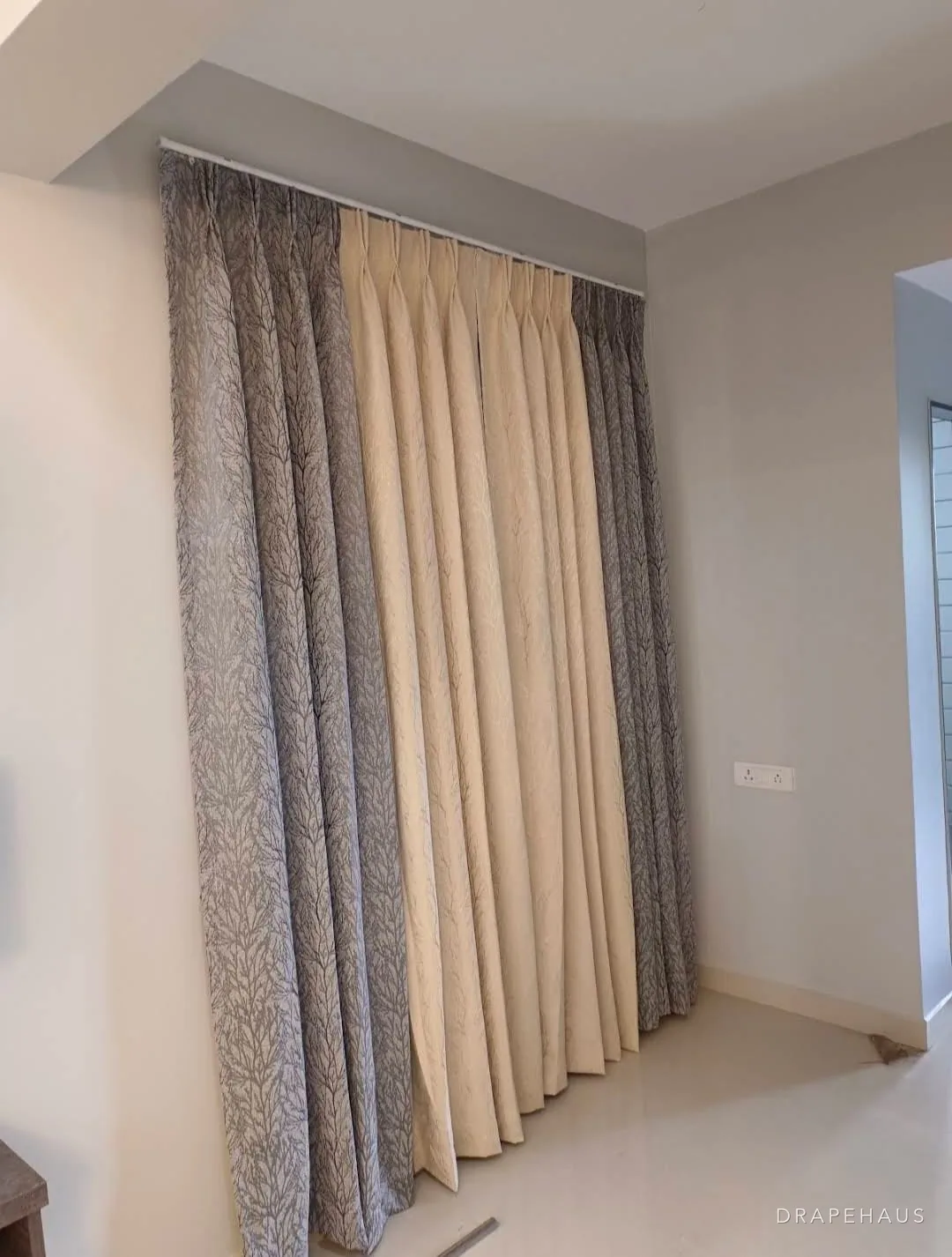
Drapehaus
Preparing the room
Drapehaus
Preparing the room
Home type
A Goan Portuguese-era house is the hardest building we work in, and the one where standard curtain advice does the most damage. The windows were designed as a complete environmental system long before anyone thought about curtains: deep reveals to hold off direct sun, internal timber shutters for storm and privacy, and in the oldest houses translucent oyster-shell panes that diffuse light rather than transmit it.
By the Drapehaus studio · 19 September 2026 · How we write
Hang a modern curtain carelessly in that system and you break it. A track fixed across the reveal stops the shutters closing. A heavy lined curtain over oyster shell kills the exact quality of light the panes exist to create. A bracket drilled into century-old laterite in the wrong place takes a fist-sized piece of wall with it.
The work here is subtractive as much as additive. Usually the right answer involves less fabric than the owner expected, hung further forward than they expected, on fixings chosen for the wall rather than the curtain.
Almost every heritage house we visit has functioning internal shutters, and in almost every one the owner has stopped using them because a previous curtain installation made them impossible to close. That is a genuine loss. Those shutters are the best storm protection and the best blackout the building has, and they cost nothing to operate.
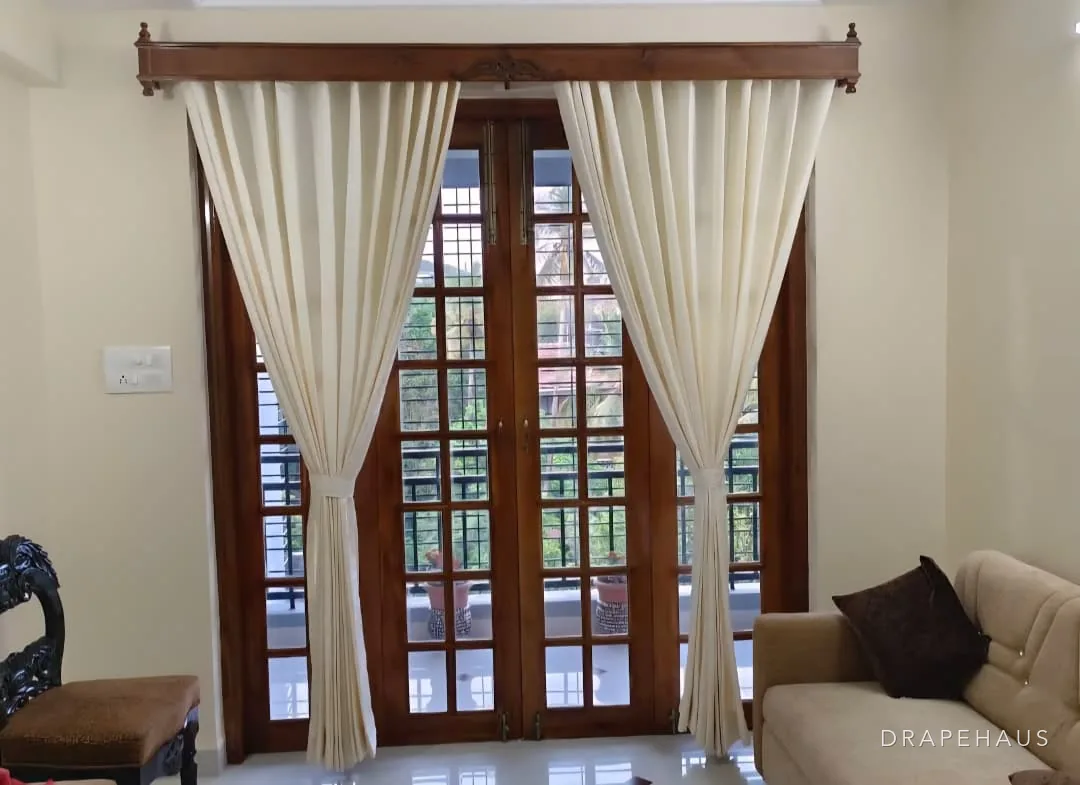
The fix is to move the curtain out of the shutter's swing entirely. That means a pole or track face-fixed onto the wall above the reveal rather than inside it, set far enough forward that the shutter leaf clears the fabric when it swings in. It usually reads better too — a curtain hung wide and high makes a tall window look taller, which is what the proportions want.
Where the reveal is genuinely too shallow to allow this, the alternative is a curtain that stacks completely clear of the opening when drawn back. That needs the track to extend 30 to 40cm past the reveal on each side, which some rooms simply do not have. In that case we would rather fit nothing than break the shutters.
Carepa windows — the translucent panes cut from the shells of the windowpane oyster — are the single most distinctive thing about Goan domestic architecture, and the least understood by anyone specifying window treatments. They are not glass. They do not give you a view. What they give you is a soft, even, slightly golden interior light with no glare and no hard shadow, which is precisely why the rooms behind them feel the way they do.
The instinct to add a sheer behind them is almost always wrong. The panes are already doing the job a sheer does, and doubling up just makes the room dim. If the window needs anything at all, it is usually a curtain that draws fully clear during the day and closes only for warmth or occasion.
Where oyster panes have been replaced with plain glass by a previous owner — which is common — you lose the diffusion and gain glare, and a sheer becomes genuinely useful. Worth checking which you actually have before specifying.
Rather see it in your own room?
We bring samples to the house, measure every window, and specify for the light and exposure you actually have.
More on this — tap a heading to read
Heritage walls are not the plasterboard or concrete that curtain hardware is designed for. Goan laterite is porous and friable, older walls may be mud-bonded rather than cement-bonded, and the surface is often lime plaster that separates from the substrate when stressed.
A standard plastic wall plug in laterite will pull out under the weight of a lined curtain, and it will not fail gently — it takes a crater of wall with it, and in lime plaster that crater spreads. We use longer fixings into sound substrate, spread the load across more brackets than the span strictly requires, and where the wall is genuinely unsound we fix into the timber window frame instead, which in these houses is usually excellent hardwood and far stronger than anything around it.
This is the single most common reason we decline to quote from a photograph. The wall has to be assessed by hand.
Heritage rooms have high ceilings and tall openings, and people consistently under-buy for them. A curtain sized to the window in a room with a 4.5m ceiling looks like a postage stamp. The drop should usually start well above the opening and finish at the floor, regardless of where the window actually stops.
Fullness matters more here too. In a big room with a lot of wall, a flat curtain reads as a flat panel of cloth. At 2.5 times fullness the same fabric reads as a column, which is what the architecture is asking for.
The counterweight to all this is restraint in pattern. These rooms already have a great deal going on — tiled floors, carved furniture, often strong wall colour. A plain or barely-textured fabric in a well-chosen tone almost always outperforms a print.
We start a heritage survey with the shutters, not the tape measure. Every leaf gets opened and closed, we note which way it swings and how far into the room it travels, and we check whether the bolts and hinges still work. That swing defines the space a curtain is allowed to occupy, and it differs from window to window even along the same façade, because these houses were built and repaired by hand over generations.
Next comes the wall. We press the plaster around the reveal and tap it lightly; a hollow note means lime render that has already separated from the laterite behind it. Old fixing holes, patched craters and hairline cracks radiating from a previous bracket all show where the substrate has failed before. The timber frame gets the same attention, because a sound hardwood frame is often the most reliable fixing point in the room.
Only then do we look at how the room is used and how the light moves through it across the day. A front sala used for evening visitors needs something very different from a bedroom that takes the afternoon sun. Measurement comes last, once we know what the window is for and where the hardware can safely go. Measuring first, and deciding afterwards, is how shutters end up blocked.
Heritage rooms reward natural fibres with some body: linen, heavier cottons and cotton-linen mixes. They fall into the soft vertical columns the proportions want, take muted earth colours well and age gracefully rather than looking tired. Silk and viscose look right in a photograph and wrong after a monsoon, because both weaken and water-mark in sustained humidity, and these houses are rarely sealed or air-conditioned.
Lining is where the real trade-off sits. Unlined linen lets light glow through and dries quickly, but it fades faster and gives little privacy after dark. A cotton sateen lining protects the face fabric and adds weight without trapping moisture. A coated blackout lining gives full darkness but behaves like a membrane against a damp wall, and we would use one only in a bedroom where the owner genuinely cannot sleep otherwise, hung well off the masonry.
Colour is best taken from the house itself. The ochres, lime whites, indigo blues and deep greens already on Goan walls and woodwork give a palette that looks settled from the first day. Strong contemporary brights tend to fight the floor tiles and carved furniture, and a busy pattern placed near kaavi work or painted mouldings will always lose the argument.
The monsoon normally reaches Goa in the first week of June and does not withdraw until around mid-October, and roughly nine-tenths of the year's rain falls between June and September. In a heritage house that is when walls are at their wettest, lime plaster at its softest and timber frames at their most swollen. It is the worst time to drill a fixing and the best time to watch how a room behaves.
Our preference is to survey during or just after the rains, when damp patches, sticking shutters and leaking sills are all visible, and to install between November and May when the masonry has dried. A bracket set into saturated laterite can feel firm on the day and loosen over the following months as the wall dries and shrinks away from it.
Before each monsoon it is worth drawing heavy curtains fully back, checking that every shutter still closes, and lifting any hem that touches the floor. Old tiled and lime floors sweat in humid weather, and a hem left pooling on them for three months will wick moisture upwards and leave a tide mark that rarely washes out. A hem finished just clear of the floor avoids the problem entirely.
More old houses are being restored as homestays and small guest properties, and the state's heritage policy now openly contemplates adaptive reuse for tourism. That changes the brief. Guests need reliable darkness and privacy, they will not know how the shutters work, and they will handle curtains far more roughly than a family who has lived with them for years.
The answer is not to abandon the heritage approach but to add a discreet functional layer. A blackout roller fixed on the wall face above the reveal, projecting just far enough to clear the shutter leaves, can sit behind a linen curtain and give genuine darkness without any fixing into fragile plaster inside the opening. A short note in the room explaining the shutters saves a surprising amount of forcing and broken hinges.
Anyone letting rooms to tourists must be registered with the Department of Tourism before operating, and hospitality use raises expectations on the fire performance of soft furnishings. Check the current requirements for your category and take advice before specifying. Inherently flame-retardant linings are one way to meet them where full contract fabric would look wrong in the room. They sit behind a linen face and are invisible from the room.
Diagnosis
WhyThe track was fitted inside the reveal, in the arc the shutter leaf needs to swing through.
FixRe-fix face-mounted above and wide of the reveal so the shutter clears the fabric. Where the room cannot take the extra width, we would rather leave the window bare than disable the shutters.
WhyStandard plugs cannot hold in porous laterite or mud-bonded masonry, especially under the cyclic load of a curtain being drawn daily.
FixLonger fixings into sound substrate, more brackets than the span requires to spread the load, or fixing into the hardwood window frame where the wall is unsound.
WhyA lined curtain or added sheer over oyster-shell panes doubles a diffusion layer that was already sufficient.
FixRemove the redundant layer. Specify a curtain that stacks fully clear of the opening in daylight, and rely on the original panes for daytime light control.
WhyHeavy lined fabric held against a thick masonry wall stops air moving over the surface, and in monsoon that wall is carrying moisture.
FixHang further off the wall on deeper brackets, skip interlining, and choose a lining that breathes rather than a coated blackout.
WhyThe fixings went into laterite saturated by the monsoon. As the wall dried it shrank away from the plug, and daily operation finished the job.
FixRe-fix in the dry months into sound, dry substrate, use longer fixings or resin anchors where the laterite is soft, and add intermediate brackets to share the load.
WhyStrong daylight falls on the same folds every day. Glass stops little of the UVA that weakens and bleaches natural fibre, and humidity accelerates the damage.
FixAdd a breathable cotton sateen lining to shield the face fabric, and draw curtains fully clear in daylight so the folds are not permanently exposed.
WhyVisitors do not know how the bolts and leaves work, and a curtain hung across the swing makes the shutters awkward to operate.
FixKeep the curtain clear of the shutter arc, give guests a simple explanation, and add a separate blackout layer so the shutters are never the only way to darken the room.
Checklist
Check whether the internal shutters still close, and protect that
Establish whether panes are original oyster shell or replacement glass
Test the wall — press the plaster, look for hollow or friable areas
Measure ceiling height, not just window height, before deciding the drop
Look at where the sun actually lands at 3pm, not at noon
Decide what the window is for: light, air, storm protection or view
Survey during or just after the rains, when damp and swollen timber are visible
Install fixings in the dry months, once the masonry has properly dried
Take the palette from the walls, floor tiles and woodwork already in the room
If the house takes guests, confirm registration and fire requirements first
From the Journal
All articlesFAQ
Yes, but the fixing method matters far more than the fabric. Laterite and lime plaster will not hold standard wall plugs under load. We face-fix above the reveal into sound substrate, or into the original hardwood frame, and spread the weight across more brackets than the span needs. Nothing should ever be drilled into decorative plaster or carved timber.
Rarely during the day. Carepa panes already diffuse light beautifully, and adding a sheer behind them usually just makes the room dim. A curtain that draws fully clear in daylight and closes in the evening gets the best of both. If your panes have been replaced with plain glass, the calculation changes and a sheer becomes useful.
Start the drop well above the window opening — often 30cm or more — and finish at the floor. Sizing the curtain to the window alone looks undersized in a room with a four-metre ceiling. Going high and wide also makes the opening read as taller, which flatters the original proportions.
They can. Thick interlined fabric pressed against a masonry wall stops air moving across the surface, and during monsoon those walls carry moisture. Hang further off the wall on deeper brackets, avoid interlining, and use a lining that breathes rather than a coated blackout.
Linen, heavier cotton or a cotton-linen mix, usually with a breathable cotton sateen lining. They drape well in tall rooms, suit the earth tones of a heritage interior and cope with humidity in a house that is not sealed. Avoid silk and viscose, which weaken and water-mark in the monsoon, and keep coated blackout for bedrooms only.
Survey during or just after the monsoon, when damp patches and sticking shutters show you how the room really behaves, then install between November and May. Laterite and lime plaster are saturated during the rains, and a fixing set into wet masonry can loosen as the wall dries out over the following months.
Yes. Fit a blackout roller on the wall face above the reveal, clear of the shutter swing, and hang a linen curtain in front of it. Guests get genuine darkness, the original shutters stay usable, and nothing is fixed into fragile plaster inside the opening. Check current registration and fire requirements for letting rooms before you specify.
Keep reading