 Drapehaus
Drapehaus
Preparing the room
Drapehaus
Preparing the room
Curtains
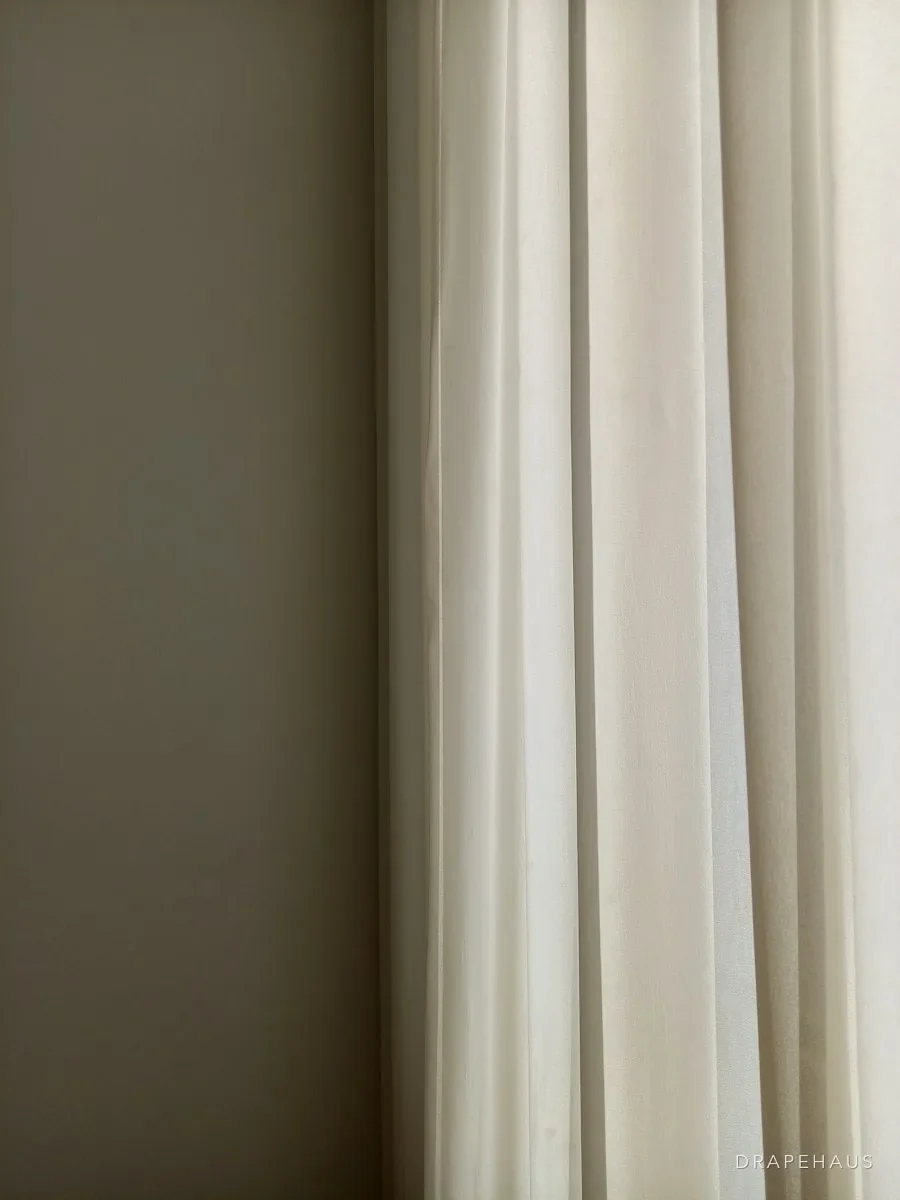
A sheer does more useful work in a Goan house than any other single layer: it softens glare, blurs the view in from the lane and moves with the breeze — all without shutting the day out.
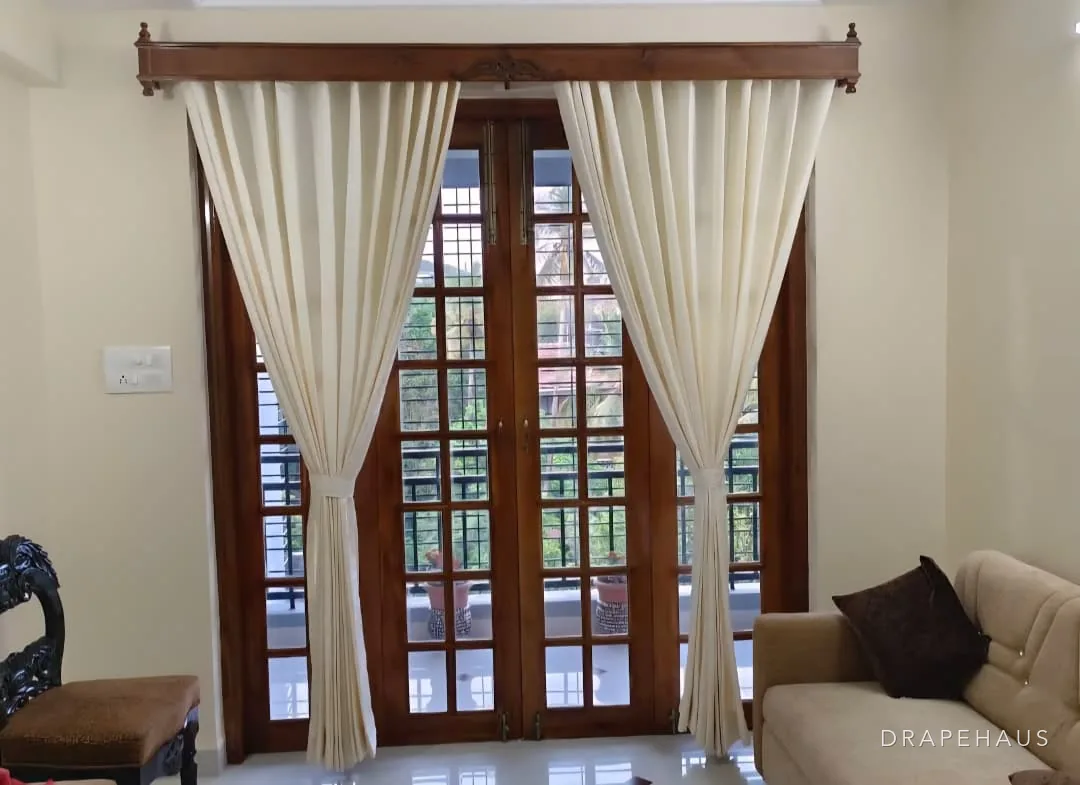
Sheer · Midday
Treatment
Time of day
Softens glare and keeps the view by day. After dark, with lamps on, a sheer on its own hides almost nothing — pair it with a lined curtain for the night.
In short
By the Drapehaus studio · How we write
Is it right for you?
A sheer curtain is a translucent fabric hung close to the glass to change the quality of the light rather than the quantity of it. It turns a hard beam of sun into an even glow, takes the edge off the view of a neighbour's wall or a passing road, and gives a large opening a soft, finished edge without making the room feel dressed.
It suits rooms that are used mostly in daylight, windows that look onto a lane or a neighbouring house, and big glazed doors where a solid curtain would feel heavy for much of the year. It is also the natural inner layer of almost every layered arrangement we make.
It is the wrong choice as the only treatment in a bedroom, in any street-facing room used after dark, or on a very hot façade where heat, not glare, is the complaint. In those windows a sheer can still play a part, but only alongside a lined curtain or a solar blind.
The details
Sheers are asked to do two things they cannot. They do not stop heat, and after dark they reverse: with the lights on inside, a sheer shows the room to the street. Specified as one layer of two — a sheer for the day, a closing curtain or blind for the night — they are the most rewarding treatment in the house.
We make them in wide-width voile so long runs have no seams, finish them with a weighted hem so they fall straight, and hang them on a wave or ripple-fold heading that stacks neatly when drawn back.
Your options
Sheer is a family, not a single fabric. The weave, the fibre and the weight change how much the curtain hides, how it moves and how it survives the climate.
Swipe for all 5 →
The honest view
Softens glare at the source
A sheer takes the harshness out of low sun before it reaches a screen, a polished floor or a face. The room stays bright but becomes far more comfortable to sit in through the middle of the day.
Keeps the window open
From inside, the garden, the trees and the sky remain visible through the fabric. Unlike a blind, a sheer never makes a room feel closed, which is why it suits windows people want to look through.
Light on the track and the wall
Sheers weigh little, so they run easily on slim tracks, suit ceiling fixing and put little load on old plaster or timber. Very long runs and tall drops are practical in a way heavier fabrics are not.
Easy to keep clean
Polyester sheers can usually be washed gently and rehung almost dry. That makes it realistic to clean them several times a year, which matters in a house where salt and dust settle constantly.
No evening privacy on its own
Once the lights are on inside, a sheer shows the room. Any window used after dark needs a second closing layer, which means a double track and more stacking space.
Takes the full force of the sun
An unlined sheer is the layer closest to the glass and has nothing protecting it. Over several dry seasons it will weaken and discolour first on the most exposed windows.
Shows every flaw
Because it is lit from behind, a sheer reveals uneven hems, poor joins, crooked pattern and marks. A badly made sheer looks worse than a badly made lined curtain.
Side by side
Several treatments promise soft daytime light. They differ in how they look, how they move and what they do after dark.
| Sheer curtain | Light-filtering roller | Unlined linen curtain | Sheer roman blind | |
|---|---|---|---|---|
| Look | Soft, moving folds | Flat, architectural | Textured, relaxed | Tailored folds |
| View out | Visible, softened | Blurred | Mostly hidden | Blurred |
| Night privacy | None | Partial | Fair | Partial |
| Clears the glass | Yes, stacks aside | Yes, rolls up | Yes, stacks aside | Stack sits in top of window |
| Suits wide doors | Very well | Needs several blinds | Well | Poorly |
| Humidity tolerance | Good in polyester | Good | Needs airflow | Good in polyester |
Swipe to compare →
A sheer curtain is the only one of these that dresses a wide run of glass in one continuous piece of fabric.
Rather see it in your own room?
We bring samples to the house, measure every window, and specify for the light and exposure you actually have.
Room by room
The room where a sheer does most. It softens afternoon light across sofas and screens while keeping the garden in view, and pairs with a lined curtain for the evening.
Useful as the day layer behind a blackout or lined curtain. On its own it offers neither darkness nor night privacy, so it should never be the only treatment.
Sheers on a covered verandah add softness and filter low sun, but they need solution-dyed or outdoor-grade fabric and a way to tie them back in wind and rain.
Screen glare is a light-quality problem, and that is exactly what a sheer solves. It keeps a working room bright without the reflections that make afternoons tiring.
A polyester sheer well away from the shower softens a frosted or high window and dries quickly after steam. Keep it clear of splash and above the floor.
Only as one layer of two. Guests expect darkness and privacy at night, and a room dressed only in sheers will attract complaints however attractive it looks.
Light enough to hang from very high tracks without strain, and wide-width fabric dresses tall glass with no horizontal joins. Motorised tracks are worth considering at this scale.
In depth — tap a heading to read
Most of the sheer fabric we use is woven in wide widths and made up railroaded, which means the width of the roll becomes the drop of the curtain. That is what allows a long sliding door to be dressed without vertical joins, but it also sets a ceiling on the drop. Where a double-height window exceeds the roll width, we plan a horizontal join or choose a narrower fabric deliberately, and decide where that join sits before cutting.
Sheers are light, so they are more affected by the breeze than any other curtain and more likely to kick out at the hem. A weighted hem — either a fine lead-weight cord run through the hem or a deeper folded hem — gives them the discipline to hang in straight lines and settle back after a gust. It is the detail that most separates a made sheer from a ready-made one.
We typically make sheers at around 2 to 2.5 times the track width. At the lower end on a wave heading the folds are crisp and regular; toward the upper end on a pinch pleat the curtain looks fuller and hides a little more. Too little fullness in a translucent fabric shows as flat, see-through panels with visible hems between them.
A sheer tints everything behind it. A bright optical white gives a cool, slightly clinical light and can look grey in shade; an ivory or natural gives a warmer, kinder light that flatters plaster and timber; a pale grey or taupe cuts glare more but can make a room feel duller on an overcast monsoon day. We always hang samples at the window, because a swatch in the hand says little about the light it will make.
The outside matters too. From the lane or the garden, a row of sheers is part of the façade. A single colour across the front of the house looks calm and considered, while a different sheer in each room reads as untidy from outside even if each looks right within. On a heritage house we usually suggest one quiet colour throughout.
Patterned and embroidered sheers throw their motif onto the floor when the sun is low. That can be a pleasure in a dining room and a distraction in a study, so think about where the shadow will fall at the hours the room is used.
Choose sheer colour with the fabric hanging at the window in daylight, never from a swatch held indoors.
Because a sheer is unlined and closest to the glass, it takes the full force of UVA through the window and of any salt that comes in when the window is open. It is effectively the sacrificial layer. Polyester and good linen-look sheers withstand this far better than pure natural fibres, but on a west or sea-facing window even these will soften and yellow over several dry seasons. Plan for renewal rather than hoping to avoid it.
Open doors are the other hazard. In the monsoon a sheer drawn across an open verandah door will blow out into the rain, pick up grit at the hem and come back in wet. A tieback, a holdback or a magnetic catch that keeps it clear when the door is open costs little and saves the fabric.
In a house that is closed for the season, a polyester sheer can stay up if the rooms are aired occasionally, but it will gather dust and salt against the glass. Washing it before the house is shut and again when it opens is enough to keep it clean.
Sheers are usually drawn many times a day, often by hand at the leading edge. A smooth-running track with good gliders matters more than decorative hardware, and a slim ceiling-fixed track lets the fabric start right at the ceiling line so the room looks taller. On a pole, rings slide less freely and the fabric can snag on the brackets when drawn.
For very tall windows, long runs or a sheer hidden behind a closing curtain on a double track, a wand or a motor is worth considering. Drawing an inner sheer by hand means reaching past the outer curtain, which soils both. Motorising the inner track also lets a sheer close automatically at the hottest hour of the afternoon.
In guest rooms and public spaces, sheers need to tolerate heavy handling and frequent laundering. Choose polyester or a sturdy linen-look, avoid delicate embroidery that snags, and keep a spare set in the same dye lot so a damaged panel can be replaced without a visible mismatch.
Hospitality operators are often asked for flame-retardant fabric. Inherently flame-retardant polyester sheers are available that meet standards commonly requested by hotels, such as BS 5867-2 Type B and NFPA 701, and in India IS 15741:2007 covers resistance to ignition of curtains and drapes. We confirm the certification a fabric carries before specifying it.
Living with it
Most polyester sheers wash well on a cool, gentle cycle with a mild detergent. Several light washes a year keep them brighter than one heavy clean.
Hanging a sheer back on its track while still a little damp lets its own weight and the weighted hem pull out creases. Avoid hot tumble drying.
Grit, water and mopping splash show at the hem first. A hem just above the floor stays clean far longer than one that touches.
A sheer that yellows or feels brittle on a sunny window has reached the end of its life. Replace it before it tears at the heading or hem.
If sheers come down for the monsoon, wash, dry fully and store loosely folded in breathable bags away from damp walls.
Avoid these
A sheer alone leaves a bedroom lit at dawn and a living room on show at night. Plan a second track for a closing layer from the start, even if the curtain comes later.
A white that looks crisp in the hand can look grey at the window. Hang a full-drop sample in the actual light before deciding.
Without weight, a sheer billows, twists and sits unevenly. A fine weighted hem keeps it straight in a breeze and costs very little.
Vertical joins in a translucent fabric are lit from behind and always visible. Use wide-width fabric for long runs and place any unavoidable join deliberately.
Checklist
More in curtains
Curtains measured on site, cut to the window and specified for what it actually faces — from airy sheers on a veranda door to full blackout in a bedroom that catches the sunrise.
From the Journal
All articlesOur process
One team from the first visit to the last bracket, so nothing is lost between the person who specified it and the person who fits it.
FAQ
No. With lights on inside and darkness outside, a sheer becomes see-through from the street. For evening privacy it needs a second closing layer — a lined curtain or a blind — which is why we usually fit sheers on a double track.
Very little. A sheer diffuses light and glare but lets most of the heat through. If heat is the problem, a solar-control blind or external shade does far more.
Polyester voiles and linen-look polyester hold up best to salt air and humidity. Pure linen sheers are beautiful but move with humidity and need more care in an exposed position.
Voile is one type of sheer: a fine, lightweight, plain-woven fabric, usually polyester or cotton. Sheer is the wider family, which also includes linen and linen-look sheers, open-weave and leno constructions, and embroidered or patterned fabrics. All are translucent; they differ in texture, how much they hide and how they wear.
It depends on the light and the room. Optical white gives a cooler light and can look grey in shade. Ivory and natural shades give warmer light that suits plaster, timber and terracotta. We hang samples at the window, because the colour of the light matters more than the colour of the swatch.
It depends on fibre, exposure and care. Sheers on a shaded or north-facing window can last many years; on a west or sea-facing window, the unlined fabric takes the full force of UV and will weaken sooner. Good polyester and linen-look sheers last longest, and regular gentle washing helps.
Yes. Sheers are light, which makes them easy to motorise on a quiet track, including as the inner layer of a double track. It is particularly useful on tall windows and for setting sheers to close at the hottest part of the afternoon.
No. Even a close voile has openings and gaps around its edges, and it moves with the air. For insects, a sliding net or a fixed screen on the opening is the answer. A sheer can then hang in front of it for softness.
Next step
Sheers are the one fabric you cannot judge from a swatch. When we visit, we measure each window, check the height against the fabric width and hang full-drop samples at the glass so you can see what the light actually does. We then specify the fabric, hem, heading and track together, and plan the closing layer alongside if the room needs one. Our workroom makes each sheer to measure and our fitters dress it on site. Book a home visit to start.