 Drapehaus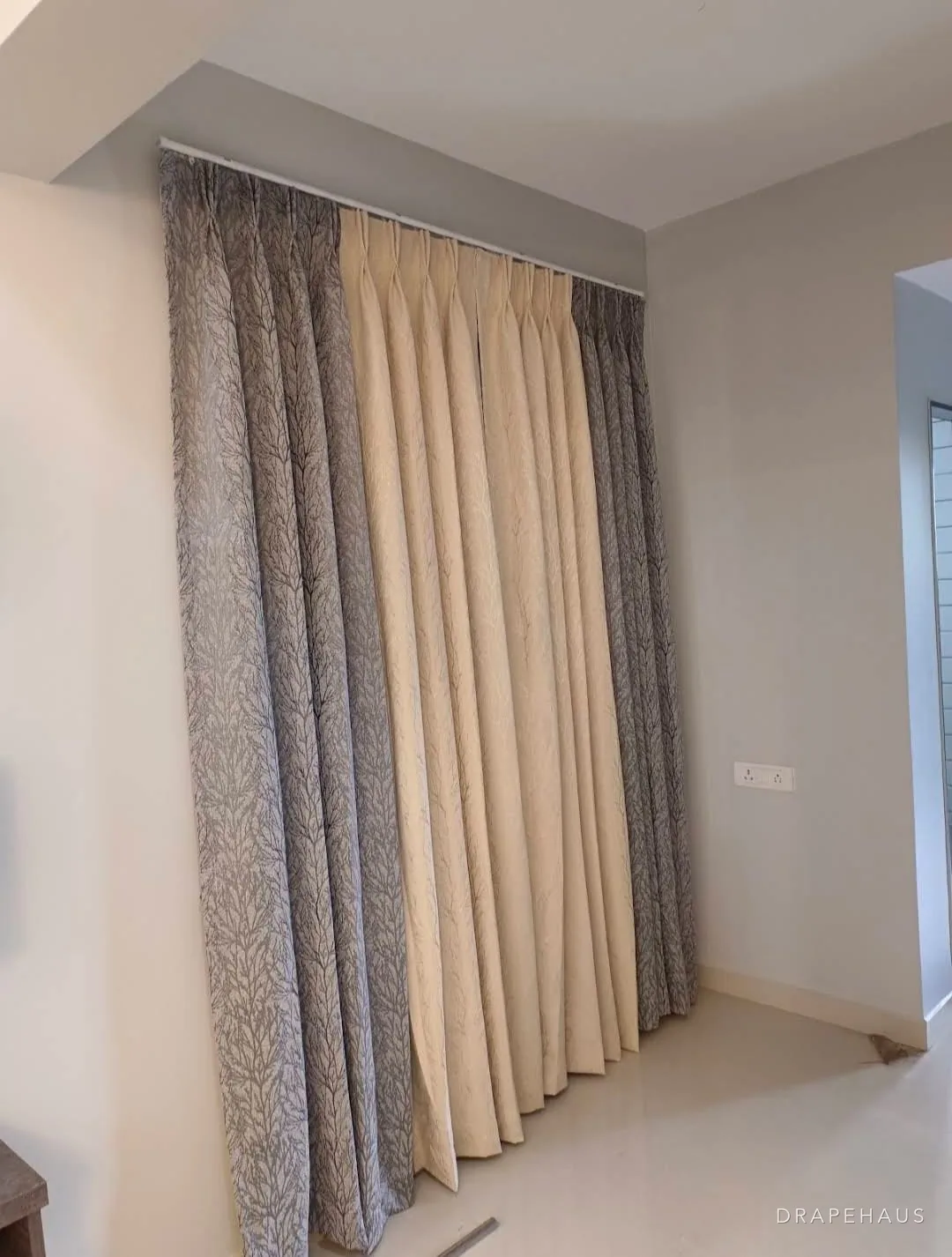
Drapehaus
Preparing the room
Drapehaus
Preparing the room
Home type
Apartments look like the easy job and frequently are not. The openings are regular, which helps, but almost everything else is constrained: the society has rules about what the building looks like from outside, the walls are structural concrete rather than something you can casually drill, and the balcony that sold the flat is also the thing making the living room unbearable from three in the afternoon.
By the Drapehaus studio · 19 September 2026 · How we write
The other constraint is that a great many Goan apartments are second homes or investments. They are furnished quickly, occupied intermittently and often let out, which pushes the specification towards things that survive neglect rather than things that reward attention.
Where apartments do have an advantage is repeatability. Openings within a block are usually identical, so once one flat is measured properly the rest follow, and residents talk to each other. Getting one right in a building tends to produce several more.
Most gated developments in Goa have something in their bye-laws about the external appearance of the building, and curtains are covered by it more often than owners realise. The usual requirement is that whatever faces outward is a consistent colour across the block, which in practice means a white or off-white lining regardless of what the room-side fabric is.
This is worth checking before ordering rather than after. A lined curtain is costly to remake, and a management committee that has asked twice tends to escalate. The requirement is easy to meet if you know about it — the lining is the outward face, and it can be white while the face fabric is anything you like.
Balcony enclosures and external blinds are more restricted still, and in many societies simply not permitted. If the plan depends on something fitted outside the building line, get it in writing first.
Apartment walls are usually reinforced concrete or dense block, which holds a fixing extremely well but requires the right tools and produces a lot of dust. Some societies restrict drilling hours; a few restrict it entirely near structural elements.
Where drilling is genuinely not an option — a rented flat, a society that will not permit it, a wall with post-tensioned cable runs — tension rods inside a reveal and adhesive-mounted track systems have improved enormously and will carry a light to medium curtain reliably. They will not carry a heavy lined drape, and anyone who tells you otherwise is selling something.
Ceiling-fixed track is often the better answer in apartments generally. It avoids the structural wall entirely, and on a full-height sliding door it produces a much better line than a pole fixed to the lintel.
Rather see it in your own room?
We bring samples to the house, measure every window, and specify for the light and exposure you actually have.
More on this — tap a heading to read
The single biggest complaint in Goan apartments is west-facing balcony glazing. A full-height sliding door is a large area of glass with no shading, and from mid-afternoon it turns the living room into a greenhouse and makes a television unwatchable.
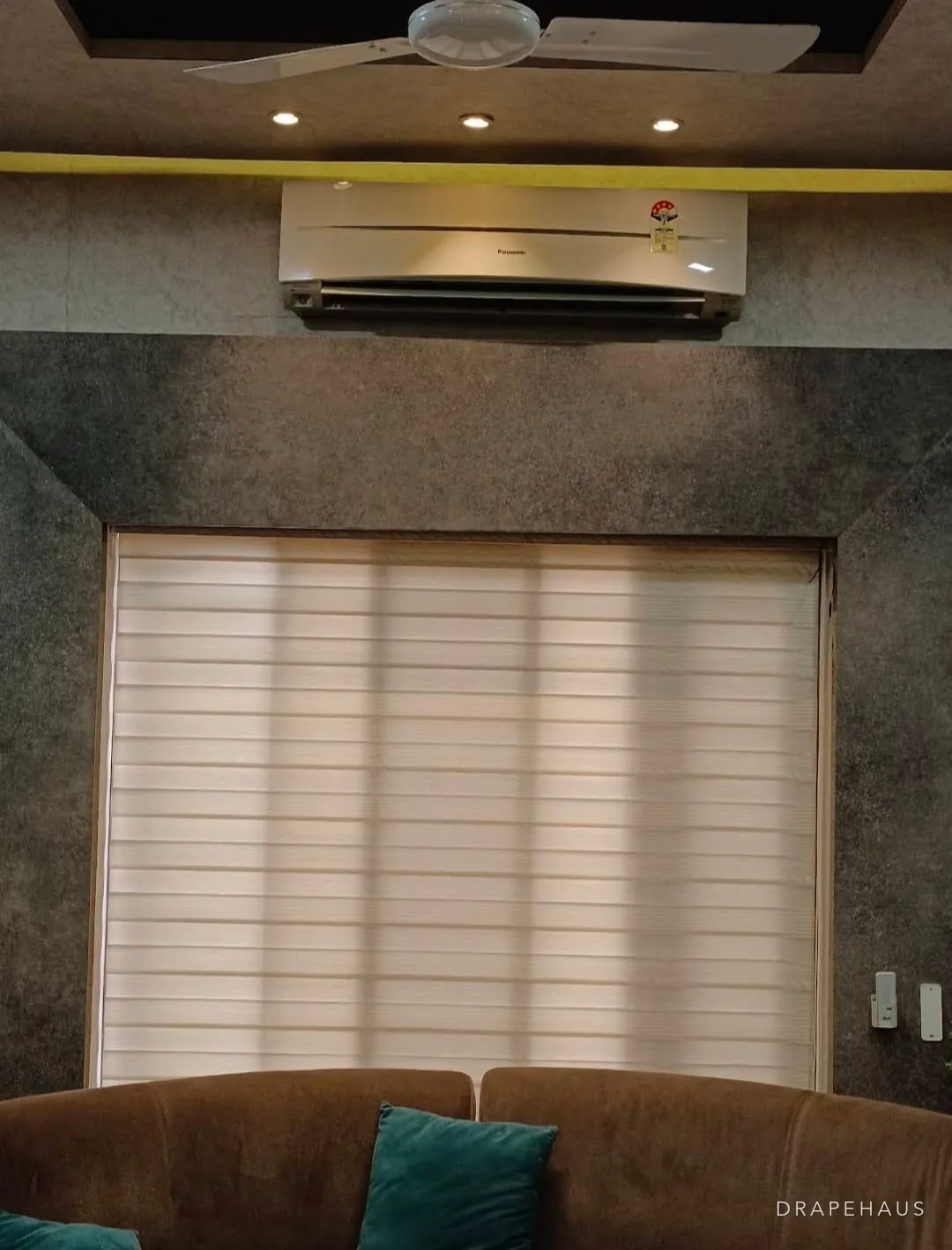
A sheer alone will not fix this. Sheers diffuse glare but they do very little about heat, because most of the heat is arriving as infrared that passes straight through an open weave. What works is either a solar-control roller blind with a low openness factor, which cuts heat while preserving some view, or a heavier curtain accepted as something you close for two hours a day.
Layering both is the usual answer in a room people actually live in: a solar roller for the afternoon, a curtain for the evening, on a double track.
Apartment surveys are mostly about what sits above and beside the window. Is there a beam dropping over the opening, a false ceiling with a void behind it, or a bare slab? Where does the air-conditioning unit sit, and does its airflow run straight down the glass? Is there a switch, a socket or a wardrobe that limits how far a curtain can stack? These decide the hardware long before fabric enters the conversation.
False ceilings deserve particular care. Gypsum board on a light frame will not hold a curtain track on its own, so either the track is fixed through to the slab above or a timber batten is built into the ceiling to take it. We check by locating the frame rather than guessing, because a track pulled out of a false ceiling brings a strip of board and paint with it.
We also check the sliding doors themselves: which panel moves, how far, and whether the frame projects into the room. A curtain has to clear the handle and the moving leaf, and on some systems that means setting the track further forward than it first appears. Projecting brackets or a ceiling track set slightly off the glass usually solve it, but only if the clearance is measured with the door fully open.
Most apartment living rooms end up with two layers: a sheer for daytime privacy and glare, and a heavier curtain or blind for heat and evening. The sheer is usually polyester, which is stable in humidity, washes easily and does not sag in the monsoon the way cotton voile can. Linen-look polyester gives much of the texture of natural fibre without the maintenance.
The heavier layer is where owners make real trade-offs. A lined curtain in cotton or a cotton blend feels warmer and softer but needs washing and fades on a west elevation. A solar-control roller is slimmer, more effective against heat and easier to live with, but it reads as functional rather than decorative. Many flats use the roller for the glass and a pair of dress curtains at the sides for softness.
Where society rules require a white or off-white external face, the lining does that job. Choose a breathable lining rather than a heavily coated one unless the room genuinely needs full blackout, because coated linings trap moisture against the glass in the wet months and crack in the heat of April and May. Where full darkness is essential, a separate blackout roller is the more durable choice.
Most Goan apartments rely on split air-conditioning in the bedrooms and often the living room too, and window treatments have a direct effect on how hard those units work. US Department of Energy guidance puts the heat-gain reduction from medium-coloured curtains with white backings at around a third, which is a meaningful share of the afternoon load on a west-facing wall of glass.
The effect depends on use. A curtain closed before the sun reaches the glass keeps heat out of the room; one closed after the room has warmed only slows the rise. Drawing the solar layer at lunchtime on a west elevation, rather than when the room already feels hot, is a habit worth building. Motorised timers can do it for flats that stand empty during the day.
Domestic electricity in Goa is charged in slabs, with the rate per unit rising as monthly consumption climbs, so a flat with several units running every afternoon spends much of its time in the upper bands. Reducing solar gain at the window is one of the few ways to bring that down without changing how the flat is used. It also makes the rooms more comfortable in the hours before the units are switched on.
April and May are the hardest months for afternoon heat, with May the hottest month of the year. That is when owners notice a balcony door that was bearable in January, and it is a sensible moment to add solar control. Ordering in March means it is in place before the worst weeks. Leaving it until the heat has arrived means waiting on stock and fitters while the room is at its worst.
The monsoon brings a different problem. Wind from the west and south-west drives rain against balcony doors, and water often finds its way under or through sliding door tracks. A curtain hem resting on the floor at that door will soak up whatever gets in. Tying curtains back from balcony doors through June to September, or hemming them just clear of the floor, avoids most of the damage.
After the rains withdraw in October, wash sheers and check linings for spotting before the festival and wedding season, when many families have guests and want the flat looking its best. It is also the time to check fixings in false ceilings, which can move slightly as humidity changes. A track that has begun to sag or rattle is far easier to re-fix before guests arrive than during a family gathering.
Diagnosis
WhySociety bye-laws commonly require a uniform external appearance, and the curtain lining is what the building sees.
FixKeep the lining white or the specified shade and put the colour on the room side. Check the bye-law before ordering, not after.
WhySheers scatter visible glare but pass most infrared, so the heat load barely changes.
FixAdd a solar-control roller with a low openness factor, or accept a heavier curtain for the worst two hours. Double track lets you have both.
WhyRented flat, society restriction, or structural elements that should not be penetrated.
FixCeiling-fixed track where the slab allows, tension rods inside the reveal, or modern adhesive track for light to medium curtains. Do not use adhesive systems for heavy lined drapes.
WhyPole fitted to the lintel rather than the ceiling, and a track sized to the door rather than the wall.
FixTake the track to the ceiling and run it well past the opening on both sides so the curtain stacks clear of the glass.
WhyMonsoon rain driven by onshore wind seeps under or through the sliding door track, and a hem resting on the floor wicks it up.
FixHem curtains just clear of the floor at balcony doors, tie them back during the monsoon, and choose a synthetic that dries without marking.
WhyThe track was screwed into gypsum board alone, which cannot hold the load of a curtain being drawn daily.
FixFix through to the slab above, or build a timber batten into the ceiling to take the track. Locate the frame rather than guessing.
Checklist
Read the society bye-laws on external appearance before choosing a lining
Confirm whether drilling is permitted, and during what hours
Check which direction the balcony faces and visit at 3pm
Consider ceiling track rather than a lintel-fixed pole
Measure the stacking space either side of a sliding door
If the flat is let, specify for neglect rather than for care
Find out whether a false ceiling can take a track or needs a batten
Check the sliding door handle and moving leaf clear the curtain
Hem balcony-door curtains just clear of the floor for the monsoon
Order solar control in March, before the heat of April and May
FAQ
Yes, for light to medium curtains. Tension rods inside a window reveal and modern adhesive-mounted track systems both work reliably at that weight. They will not hold a heavy interlined drape — if that is what you want, you need a mechanical fixing and the landlord's agreement.
Sheers reduce visible glare but let most infrared through, so the heat load hardly changes. To cut heat you need a solar-control roller with a low openness factor or a heavier closed curtain. Many people run both on a double track — roller for the afternoon, curtain for the evening.
Many do. The usual rule is that the outward-facing surface must be consistent across the block, which in practice means a white or off-white lining. It only affects the lining, so the room-side fabric can be whatever you want. Check the bye-laws before ordering.
Ceiling, in most cases. It avoids drilling structural walls, produces a far better line on a full-height sliding door, and makes the room read taller. The slab needs to be sound and the fixing appropriate, which is a five-minute check on site.
They can, if they are closed before the sun reaches the glass. US Department of Energy guidance suggests medium-coloured curtains with white backings cut heat gain by around a third. A solar-control roller on a west-facing balcony door is often more effective still, and it keeps some of the view while it works.
Keep the hem just clear of the floor and tie the curtains back from the door between June and September. Driven rain often seeps under sliding door tracks, and a hem resting on the floor soaks it up. Polyester dries without the tide marks that cotton and linen tend to show.
Not to the gypsum board alone. The track needs to go through to the slab above or into a timber batten built into the ceiling frame. If the false ceiling is still being built, ask for the batten or a recessed track pocket then; adding it afterwards means cutting into a finished ceiling.
Keep reading