 Drapehaus
Drapehaus
Preparing the room
Drapehaus
Preparing the room
Season
Diwali falls in October or November, just as the monsoon finishes, and from a practical point of view it is the best-timed festival in the Goan calendar for anything involving fabric. The weather is dry, the light is good, houses are being cleaned anyway, and everything that needed washing after the rains is being washed regardless.
By the Drapehaus studio · 19 September 2026 · How we write
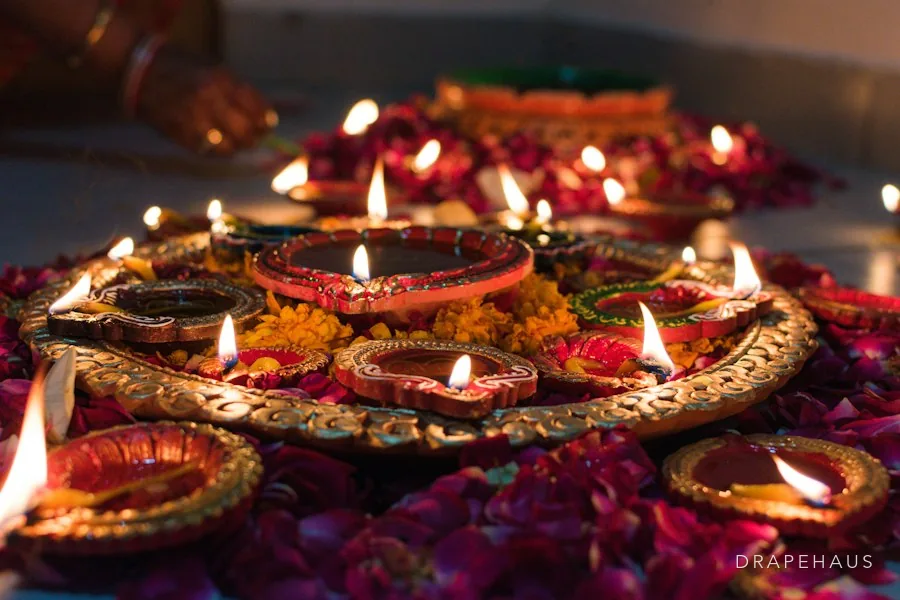
In Goa the festival carries its own character — the Narkasur effigies burned in the early hours before Naraka Chaturdashi are particular to the state, and the celebration sits alongside the start of the tourist season rather than in a quiet month.
The one difficulty is competition for workshop time, because October is when everyone in Goa wants the same thing at once.
Everything that makes the monsoon difficult for fabric work stops being a problem in October. Walls are dry enough to drill cleanly, fixings cure properly, fabric can be transported without getting wet, and washed curtains dry in a day rather than a week.
The post-monsoon clean and the festival clean are the same clean, which means the disruption of taking everything down happens once rather than twice. If new curtains are going up, this is the moment when the old ones are coming down anyway.
Light also changes. October light in Goa is clear and strong after months of grey, and colours that looked reasonable under monsoon skies can look quite different. It is worth reassessing a scheme in this light rather than committing during the rains.
The difficulty is that every household, guesthouse and villa in the state reaches the same conclusion in the same fortnight. Workshops are at capacity, fitters are booked, and lead times that are three weeks in June become six or more in October.
The solution is to specify during the monsoon and install in October. A decision made in August puts you at the front of the queue rather than the back, and the work still lands exactly when you want it.
For anyone who has left it late, blinds are generally faster than made-to-measure curtains, and standard sizes faster still. It is a reasonable compromise if the alternative is missing the festival.
Rather see it in your own room?
We bring samples to the house, measure every window, and specify for the light and exposure you actually have.
More on this — tap a heading to read
Diwali refreshes tend to be about brightness rather than reinvention. Households replace what has faded, add cushions and runners, and freshen the rooms guests will see rather than redoing the whole house.
That makes it a good moment for the things that are quick to change and visually disproportionate — cushion covers, table linen, a set of sheers that has gone grey. Replacing those costs a fraction of new curtains and changes a room substantially.
Where curtains are being replaced, the post-monsoon assessment is the natural starting point. Anything that came through the rains badly is already a candidate, and doing it now means it is right for the whole season ahead.
Diwali is a festival of light, and in many homes that means oil lamps on sills, thresholds and ledges, often close to the windows where curtains hang. It is worth walking each room before the festival and deciding where lamps will go, rather than placing them wherever there is space on the evening itself.
Sheers and light cottons are the most vulnerable because they move easily in a breeze or a fan's draught. Where a lamp sits on a sill, tie the curtain back well clear of it or hook it to one side for the festival nights. A few centimetres of clearance is not enough if the fabric can swing.
Strings of electric lights draped along curtain tracks and poles are common too. They are generally safer than flame but still warm up, and loose, unrated wiring taped to a heading is a poor combination. Use lights rated for the purpose, keep plugs and transformers off the fabric, and switch everything off when the room is empty.
In Goa, the Narkasur effigies are paraded through the streets in the evening and burned with firecrackers in the early hours, and fireworks continue on and off through the festival. Smoke from crackers and from oil lamps finds its way indoors, particularly through windows left open for the evening air.
Pale fabric shows this first. Sheers near windows can pick up a faint grey cast over a few nights, and upholstery close to a doorway may do the same. It is rarely permanent, but it is worth knowing that the festival itself is one more reason to wash lighter fabrics once it is over.
On nights when fireworks are close by, closing the windows on the street side of the house keeps out most of the smoke and any stray sparks. Anything outdoors — veranda cushions, awnings, outdoor curtains — is better brought in or rolled up for those nights rather than left exposed.
Diwali marks the point where the Goan year turns towards strong, clear sunshine. Humidity drops steadily through October and November, and by December the afternoons are properly dry. The light that follows is the most intense of the year, and it arrives at a lower angle in the afternoons. Humidity falls, rooms become brighter and the sun starts to work on fabric in earnest.
That makes a Diwali refresh a good moment to think about fading. Ordinary window glass blocks most UVB but lets through a good deal of UVA, which is a major cause of colour loss in fabric. South and west-facing rooms with new curtains will start to fade from the first week of the dry season.
Practical answers include a lining that protects the face fabric, solution-dyed fabrics for the most exposed windows, a sheer layer that takes the direct sun, and UV film on the glass itself. Deciding this at Diwali means the new curtains are protected from the start rather than after the first season has done its damage.
Diwali invites warm, saturated colour — deep reds, golds, saffron and rich pinks — and it is tempting to bring that into curtains. The trade-off is that curtains stay up for years and are seen in every season, including the grey monsoon months, when strong festive colour can feel heavy.
A useful approach is to let the curtains carry the room's lasting character and put the festive colour into cushions, runners, table linen and throws. Those can be changed each year, stored when the festival is over, and replaced without touching the window treatment. It also means the festive look can change from one year to the next without any sewing.
Where people do want a strong colour at the window, it is worth checking how that colour holds up in sun. Deep reds and bright pinks in particular can fade noticeably over a dry season if they are not protected, and a lining or a sheer in front makes a real difference.
Diagnosis
WhyOrdered in October, when every workshop in Goa is already at capacity and lead times have doubled.
FixSpecify in August during the rains for an October installation. If it is already late, blinds and standard sizes are quicker.
WhyGoan light changes dramatically after the rains, from soft grey to clear and strong.
FixAssess samples in the light the room will actually have. If deciding during monsoon, check again before cutting.
WhyPost-monsoon cleaning and festival cleaning treated as separate jobs.
FixCombine them. Whatever is coming down for washing is the moment to replace or repair it.
WhyFull replacement chosen where the visible problem was faded accessories.
FixCushions, runners and sheers are quick to change and change a room disproportionately. Replace those first and see.
WhyLight fabric moved in a breeze or a fan's draught towards a flame placed too close to it.
FixPlan lamp positions before the festival and tie curtains well clear of any sill or ledge holding a flame.
WhySmoke from lamps and firecrackers drawn in through windows left open on festival nights.
FixClose street-side windows when fireworks are close by, and wash light fabrics once the festival is over.
WhyDeep reds and bright pinks hung unprotected in a south or west-facing room through the dry season.
FixPut strong colour in cushions and runners, or protect curtains with a lining, a sheer or UV film.
Checklist
Specify in August for an October installation
Combine post-monsoon cleaning with the festival refresh
Reassess colour choices in clear October light
Start with cushions and sheers before committing to curtains
Use the post-monsoon damage assessment to set priorities
If running late, consider blinds or standard sizes
Decide where lamps will sit and tie curtains well clear of them
Use lights rated for the purpose, with plugs kept off the fabric
Bring veranda cushions and outdoor fabric in on firework nights
Protect new curtains in sunny rooms with lining, sheers or UV film
From the Journal
All articlesFAQ
It is the best-timed opportunity in the calendar. The monsoon has finished so walls are dry and fabric dries quickly, houses are being cleaned anyway, and anything damaged by the rains is already coming down. The only difficulty is competing for workshop time.
August, during the monsoon. Ordering in October puts you behind every household, guesthouse and villa in the state, and lead times roughly double. Specifying while the workshops are quiet gets the same installation date with far less stress.
Cushion covers, table runners and any sheers that have gone grey. They cost a fraction of curtains and change how a room reads out of all proportion to the spend. Save full curtain replacement for what the monsoon actually damaged.
Goan light changes substantially once the rains stop — from soft and grey to clear and strong. A colour chosen under monsoon skies can look quite different in October, so it is worth reassessing samples in the room before anything is cut.
Decide where lamps will go before the festival, and tie back or hook aside any curtain near a sill or ledge holding a flame. Check with fans running, because sheers can swing further than expected. Never let fabric hang directly above a lamp, and keep electric light plugs off the fabric.
Smoke from oil lamps and firecrackers drifts indoors, especially through windows left open on festival evenings, and pale sheers show it first. It is rarely permanent and usually washes out. Closing street-side windows when fireworks are close by keeps most of it out in the first place.
It depends how long you want them to feel right. Curtains are seen in every season, including the grey monsoon, and strong reds and pinks can fade over a Goan dry season if unprotected. Many households put festive colour into cushions and runners, and keep the curtains calmer.
In south and west-facing rooms, yes. Ordinary glass lets through much of the UVA that fades fabric, and the dry season brings the strongest light of the year. A protective lining, a sheer layer, solution-dyed fabric or UV window film all help, and fitting them from the start avoids a faded first season.
On nights when fireworks are being let off nearby, it is better to bring veranda cushions indoors and roll up outdoor curtains or awnings. Stray sparks and ash can mark or scorch fabric, and anything left out also collects smoke. Put them back once the fireworks are over for the night.
Keep reading