 Drapehaus
Drapehaus
Preparing the room
Drapehaus
Preparing the room
Home type
A sea-facing top floor gets the best of the building and the worst of the weather. There is no floor above to shade it, no neighbouring structure to break the wind, and usually a large terrace with full-height doors onto it. Sun exposure, salt load and wind loading are all at their maximum simultaneously.
By the Drapehaus studio · 19 September 2026 · How we write
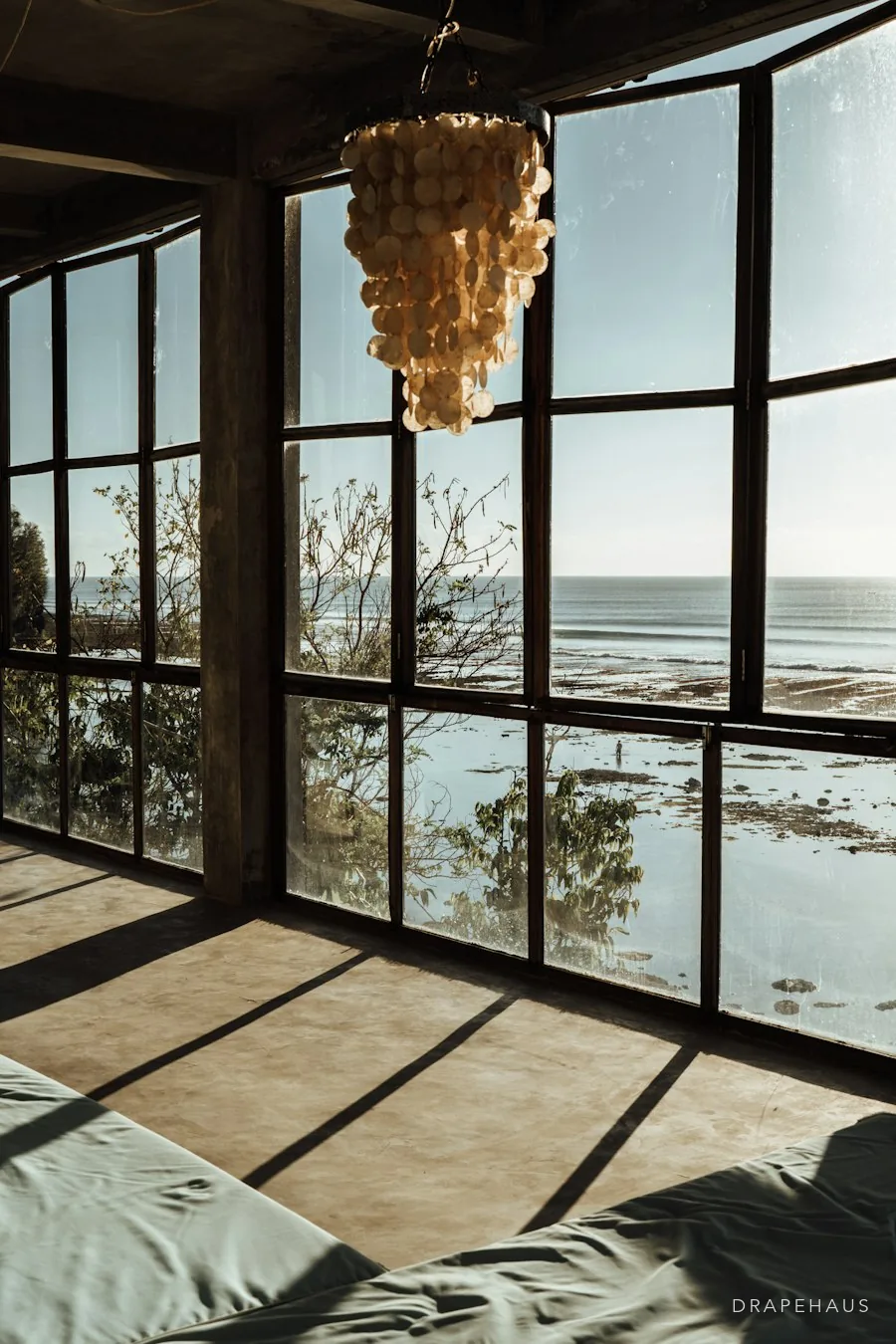
The view is also the entire reason the flat exists, so any treatment that intrudes on it is a failure regardless of how well it performs technically. This is the sharpest version of a tension present in most coastal work.
The practical answer usually involves separating functions across layers — something for heat, something for privacy, something for evening — rather than asking a single treatment to do all three, because the one that does all three always compromises the view.
A west-facing top-floor glass wall in Goa is an enormous solar gain. Curtains can reduce the discomfort but they cannot stop the heat arriving, because by the time it is inside the glass it is already in the room. Anything that works on the inside is managing a problem that has already happened.
That means the honest first conversation is about the glazing, not the fabric. Solar-control film, or replacement glazing with a low solar heat gain coefficient, does more for a room like this than any curtain will. We say so even though we do not sell it.
Where the glazing cannot change, a solar-control roller with a low openness factor is the most effective interior option. It cuts a substantial share of the heat while retaining enough transparency that the view survives — which a closed curtain does not.
Full-height sliding or folding doors onto a terrace are the defining feature and the main technical headache. They are wide, they are used constantly, and when they are open the wind through them is considerable.
Track has to be generously specified and fixed into structure, with enough stacking space that an open door is not obstructed by gathered fabric. Weighted hems are close to essential — an unweighted curtain at an open terrace door on the eighth floor will not stay where it is put.
Where the doors are used daily, a curtain that has to be handled every time quickly becomes an irritation. This is one of the clearest cases for motorisation on a domestic job, not because the window is out of reach but because the frequency of use makes manual operation tiresome.
Rather see it in your own room?
We bring samples to the house, measure every window, and specify for the light and exposure you actually have.
More on this — tap a heading to read
A top floor facing the sea with no shelter gets the heaviest salt load of any position we work in. Everything in the earlier coastal guidance applies here at its strongest: synthetic fibres only, marine-grade or anodised hardware without exception, and sealed motors rated for humid environments.
The terrace itself compounds this. Doors are open frequently, so salt-laden air moves directly into the room rather than depositing on the outside of sealed glazing. Interior treatments in a penthouse are effectively exposed to outdoor conditions.
Plan for cleaning access. Anything that cannot easily be taken down and rinsed will accumulate salt permanently, and on a high floor with no easy ladder access that is a real constraint on what should be specified.
A penthouse survey starts with the roof above it. A top-floor slab takes the full sun all day and radiates heat downwards into the evening, so rooms can stay warm long after the glass is shaded. That affects how much the window treatments can realistically achieve, and it is worth knowing whether the roof has insulation or a reflective finish before promising results from curtains alone.
Then come the terrace doors. We measure their full travel, check which leaves slide or fold, note the height of thresholds and the path water takes in driven rain, and look at how exposed each door is to the prevailing wind. We also check the fixing zone above each opening, because top-floor ceilings often carry services, drainage runs or false ceilings.
Logistics matter more than people expect. Long single lengths of track may not fit in a residential lift or up a stair, and a splice in the wrong place shows. We plan track lengths, joints and delivery before ordering, so nothing arrives that cannot physically reach the flat. Splices, where needed, are placed behind the stacked curtain or at a natural break in the glazing so they disappear when the curtains are open.
By day, a high floor feels private because the glare outside makes it hard to see in. After dark the effect reverses. A lit room on the top floor of a tower is visible from the beach, the road and every neighbouring block, and a sea view in one direction usually means being on view in that direction too. Few owners notice until their first evening in.
Reflective and tinted window films are sometimes suggested as a privacy solution, but they only work while it is brighter outside than in. At night they become ordinary glass, or worse, a mirror on the inside. The honest answer for evening privacy is a sheer or a curtain drawn at dusk. Film still has a place for heat and UV, just not for privacy.
A good polyester sheer on its own track gives soft privacy in the evening while keeping some of the lights and horizon visible. For bedrooms, a full curtain or blackout roller is still needed, because sunrise over open sea reaches a top-floor room early and without obstruction. Side returns or channels matter here, because low early light finds every gap around a blind or curtain.
Penthouses are often second homes, and an empty top floor facing the afternoon sun heats up hour by hour. Motorised solar rollers on a simple timer, lowered before the sun reaches the glass and raised in the evening, keep the flat far cooler for the owner's return and protect floors, furniture and fabric from fading. The same timer can raise them again for airflow in the evening.
Sun and wind sensors add another layer. A sun sensor lowers the rollers only when there is real sun on the glass. For any external blind or awning on the terrace, a wind sensor that retracts it automatically is close to essential, because nobody may be there when a squall arrives. Ideally the system should retract by default if power fails.
Choose motors sealed for humid environments, with local service and spare remotes held by whoever manages the flat. An automated system that fails and cannot be reset remotely is worse than a manual one, because the blinds are left stuck wherever they stopped. A simple manual override, and a manager who knows how to use it, is worth specifying alongside any automated system on a flat that stands empty for part of the year.
The dry season from November to May brings long hours of strong sun and a slow build-up of salt on everything facing the sea, with no rain to rinse it away. May is the hottest month, and it is also when terraces take the first pre-monsoon squalls. That is the deadline for retracting and securing external blinds, checking motors and washing curtains.
From June to September onshore wind from the west and south-west peaks, reaching its strongest in July, and rain drives straight at the terrace doors. Curtains should be kept clear of thresholds where water gets in, and any external fabric should be removed or fully retracted. An empty penthouse should be left with blinds raised and air moving if at all possible.
After the monsoon withdraws in October, rinse or wash sea-facing fabric, check fixings for corrosion and service any motors before the season begins. It is the best time of year to install anything new, while the weather is settled and the flat is not yet in heavy use. Fixings set then have months of dry weather to bed in before the next monsoon tests them, and any problem shows up while there is still time to put it right.
Diagnosis
WhySolar gain happens at the glass. Interior fabric manages discomfort after the heat is already inside.
FixAddress the glazing first with solar film or low-SHGC glass. Internally, a solar-control roller with low openness beats a closed curtain and keeps the view.
WhyUnweighted fabric at a frequently opened full-height door on an exposed elevation.
FixWeighted hems as standard, generous stacking space, and track fixed into structure rather than into infill blockwork.
WhyTerrace doors open frequently, so salt air enters the room directly. Interior treatments are effectively outdoors.
FixSpecify marine-grade or anodised hardware throughout and sealed motors. Plan for periodic rinsing.
WhyA single treatment is being asked to handle heat, privacy and evening closure at once.
FixSeparate the functions into layers on a double track — a solar roller for daytime, a curtain for evening — so neither has to compromise.
WhyReflective film or a light solar roller gives privacy only while it is brighter outside than in. After dark the lit room is on show.
FixAdd an evening layer — a sheer on its own track, or a curtain drawn at dusk — rather than relying on film or daytime rollers.
WhyA motor failed or lost its settings with nobody on site to reset it, and no local service or spare remote was arranged.
FixChoose sealed motors with local support, keep spare remotes with the manager, and have the system tested before and after each monsoon.
WhyThe track was ordered as a single length that could not reach the flat, and was cut and joined on site without planning.
FixPlan lengths and joint positions before ordering, placing splices behind the stack or at a natural break in the glazing.
Checklist
Investigate solar film or glazing upgrades before specifying fabric
Weight every hem at terrace doors
Fix track into structure, not infill
Specify marine-grade hardware and sealed motors without exception
Layer functions rather than asking one treatment to do everything
Plan how anything installed will be taken down and cleaned
Check roof insulation before promising results from curtains alone
Confirm long track lengths can reach the flat by lift or stair
Add an evening privacy layer; reflective film does not work after dark
Fit wind sensors or agree a retraction routine for anything on the terrace
From the Journal
All articlesFAQ
Deal with the glazing first — solar-control film or low solar heat gain glass does more than any curtain, because heat that has passed the glass is already in the room. Internally, a solar-control roller with a low openness factor cuts heat substantially while keeping enough transparency that the view survives.
No weight in the hem, on an exposed high-level elevation with doors that open frequently. Weighted hems are close to essential in a penthouse, along with generous stacking space so an open door is not obstructed by gathered fabric.
Yes. With terrace doors opening constantly, salt-laden air moves straight into the room, so interior treatments are effectively exposed to outdoor conditions. Marine-grade stainless or anodised aluminium throughout, and sealed motors rated for humid environments.
Layers, almost always. Asking a single treatment to handle afternoon heat, daytime privacy and evening closure forces a compromise that usually costs you the view. A solar roller plus a curtain on a double track lets each do one job well.
No. Reflective film works only while it is brighter outside than inside. Once the lights are on in the evening, people outside can see in, and from inside the glass can turn into a mirror. For night-time privacy in a penthouse you need a sheer or curtain drawn at dusk.
Yes. A sun sensor or a simple timer can lower solar rollers before the afternoon sun reaches the glass and raise them in the evening. In a penthouse that stands empty, this keeps the flat cooler and protects floors and furnishings from fading. Choose sealed motors with local service support.
Retract or remove anything on the terrace, raise blinds and tie curtains clear of the terrace doors so water and damp are not trapped against the fabric. If someone can visit, ask them to air the flat and test any motors. Wash sea-facing fabric and check fixings for corrosion once the rains withdraw in October.
Keep reading